The Best RS3 Audi Has Ever Made
Audi didn’t need to build the RS3 CL. The standard RS3 already embarrasses cars twice its size and three times its price. It hits 60 mph in the mid-threes, hauls four people in reasonable comfort, and does it all with the kind of understated style that lets you decide when to show your hand.
But Audi Sport built it anyway, and not just to celebrate a sales milestone or hit a production quota. The Competition Limited arrived because there are still people at Audi who genuinely care about driving. That much is obvious the moment you start digging into what they actually changed.
The CL isn’t a cosmetic package with a numbered badge. It’s a sharper, more focused, more emotionally connected version of a car that was already doing a lot right. For enthusiasts, that distinction matters.
Why the Five Cylinder Still Matters
The heart of the RS3 CL is the same 2.5-liter turbocharged five-cylinder that has powered Audi’s compact performance flagship for years, and that’s the whole point.
In a segment increasingly dominated by turbocharged four-cylinders and electrified powertrains, Audi has refused to let this engine die. Production numbers are 394 horsepower and 369 lb-ft of torque, which places it comfortably in the modern performance sedan category. But spec sheets miss what makes this engine worth celebrating.
The firing order of a five-cylinder creates a slightly uneven, asymmetrical pulse that produces one of the most distinctive engine notes in the automotive world. It doesn’t sound like a four-cylinder. It doesn’t sound like a six. It occupies its own space, a sharp and rapid rhythm that traces its lineage directly to Audi’s legendary quattro rally cars of the Group B era. Every time that engine climbs through the rev range, you’re hearing echoes of one of motorsport’s most storied chapters.
Audi knows the sound is the draw. On the Competition Limited model, they deliberately reduced sound insulation to let more of that engine note into the cabin. It’s a small decision with an outsized impact. Instead of filtering the experience through layers of dampening material, the car puts you directly in contact with what’s happening under the hood. The result is a car that communicates through sound in a way that most modern performance sedans have spent years trying to eliminate.
That choice reveals something about the RS3 CL’s entire philosophy. This is a driver’s car, not a numbers car.
Suspension That Actually Adjusts
The most significant engineering upgrade on the Competition Limited is the chassis, specifically the fully adjustable coilover suspension that Audi Sport fitted as standard equipment.
That’s worth repeating. Factory coilovers. On a sedan. Standard.
Drivers can independently adjust compression damping and rebound settings, which allows meaningful tuning for different environments. Softer settings suit daily driving and longer road trips. Firmer settings transform the car on track or on a canyon road. Most performance sedans offer electronically controlled adaptive dampers with preset modes. The RS3 CL gives you a more fundamental kind of control, the type that enthusiasts who spend time on track actually use.
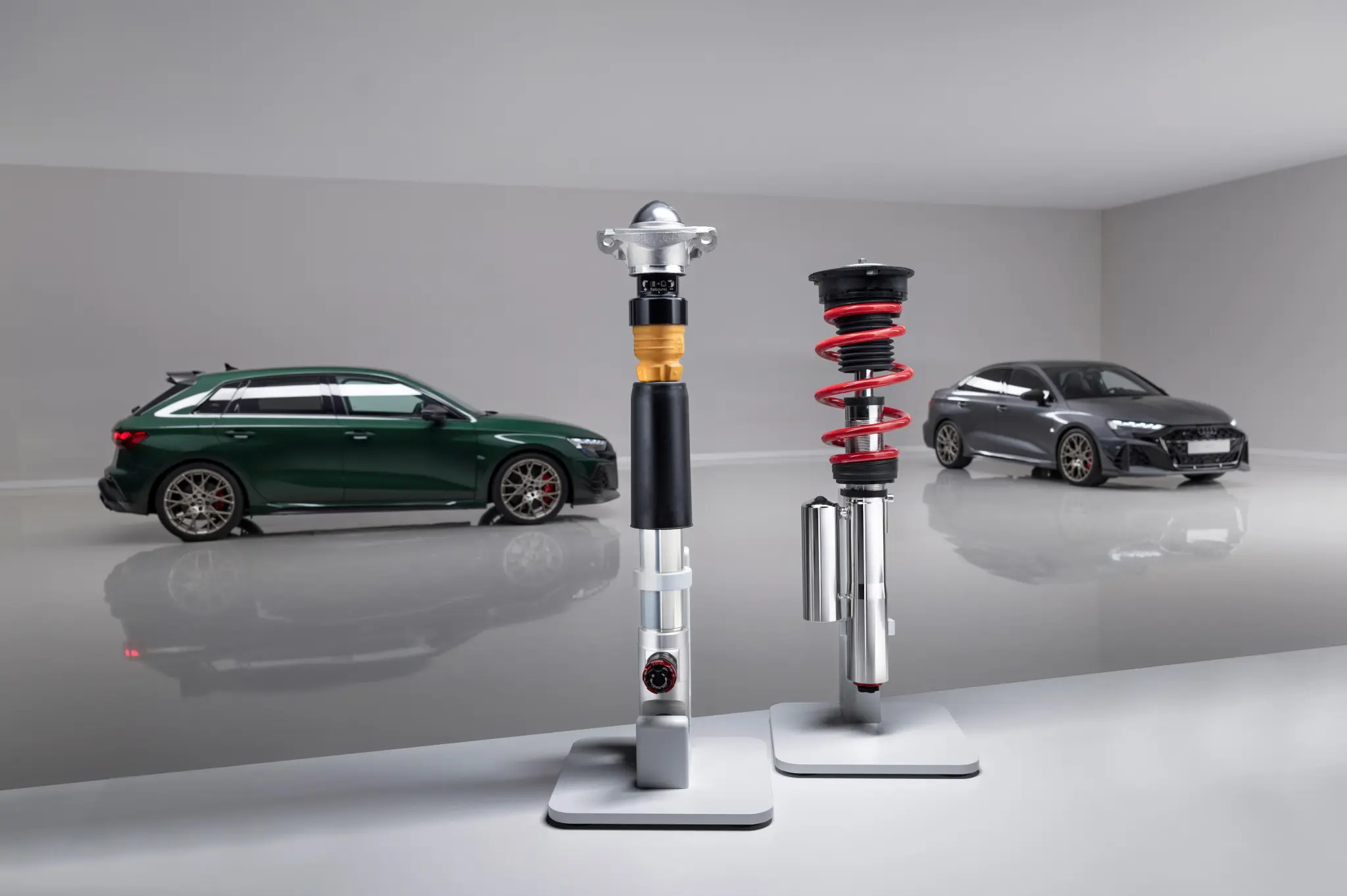
Audi also stiffened the rear stabilizer bar, addressing a behavioral tendency in earlier RS3 models to push toward understeer at the limit. With the revised setup, the rear of the car is more willing to rotate during aggressive cornering, giving the driver a more interactive and responsive feel through the steering.
The RS torque splitter handles the rear axle, distributing power between the left and right rear wheels independently and continuously. Under hard cornering, it sends extra torque to the outside rear wheel, helping the car rotate through the corner rather than simply gripping and pushing. Combined with the quattro all-wheel drive system managing front-to-rear distribution, the result is a sedan that feels genuinely playful when you push it. Not just planted and fast, but actively communicating and rewarding driver input.
That’s a meaningful distinction. Fast is easy to find. Fun is harder.
Subtle Aggression, Carbon Details
Visually, the RS3 CL follows a philosophy that has defined Audi performance cars for decades. Look sharp, not loud.
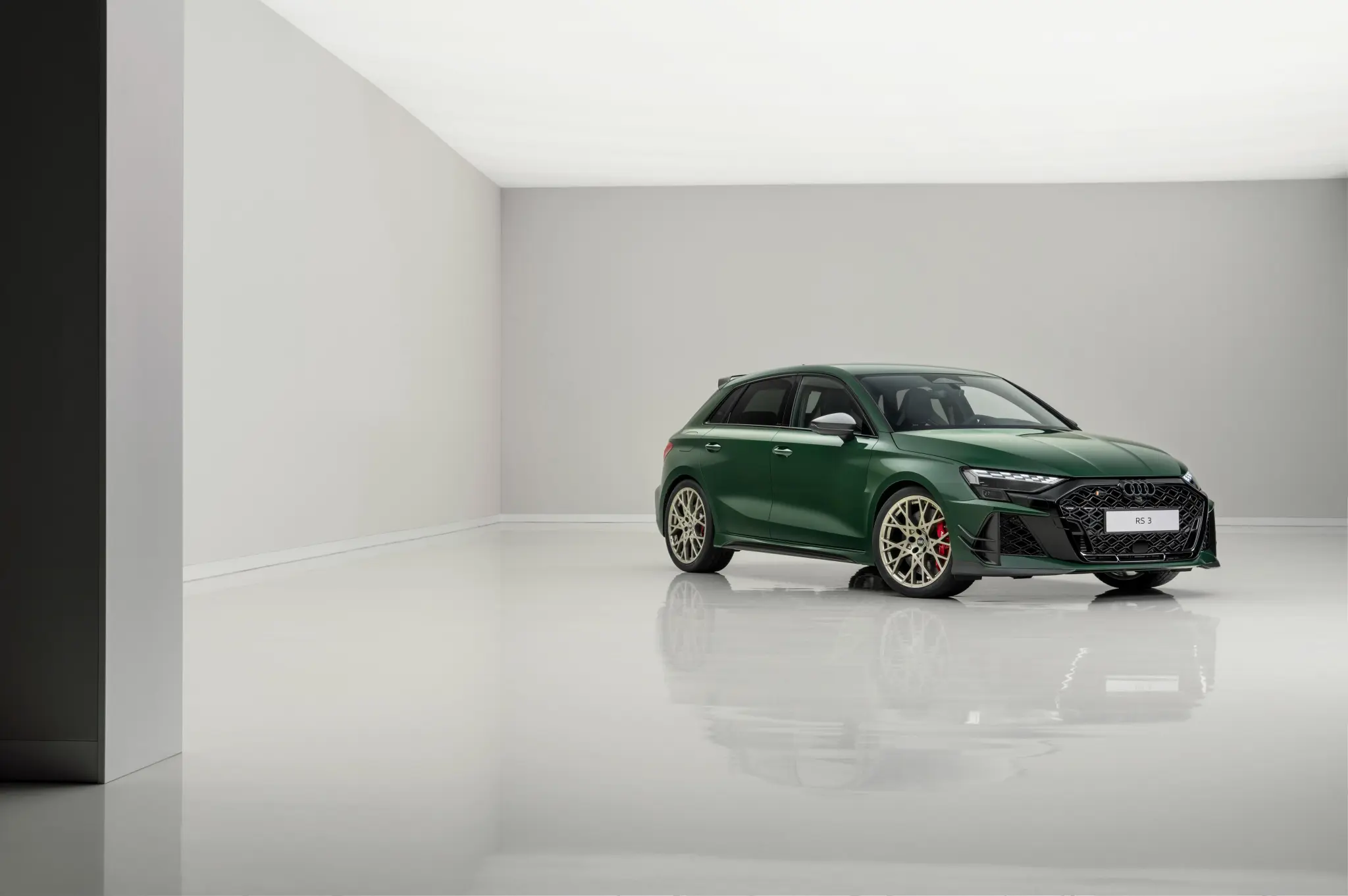
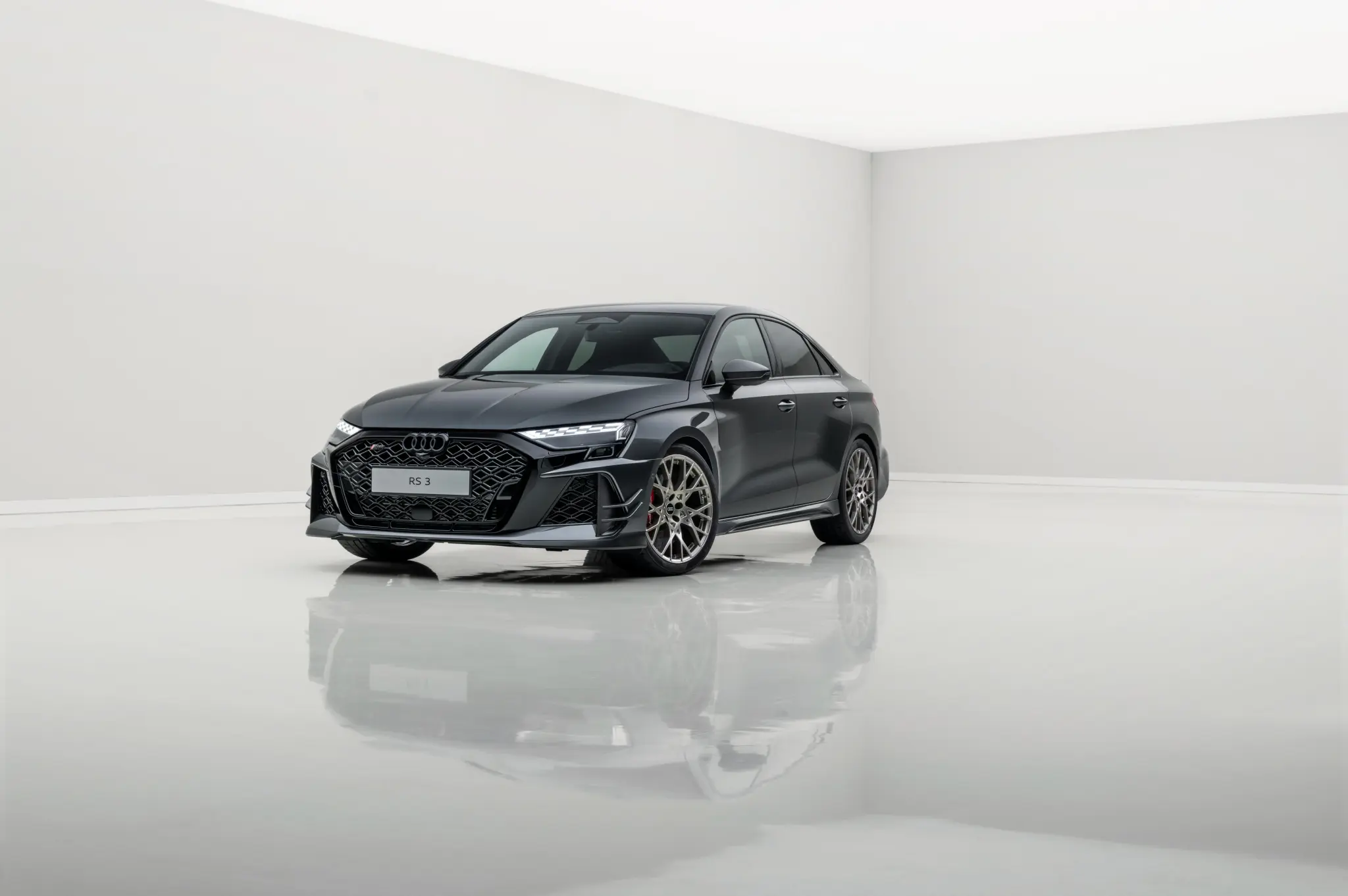
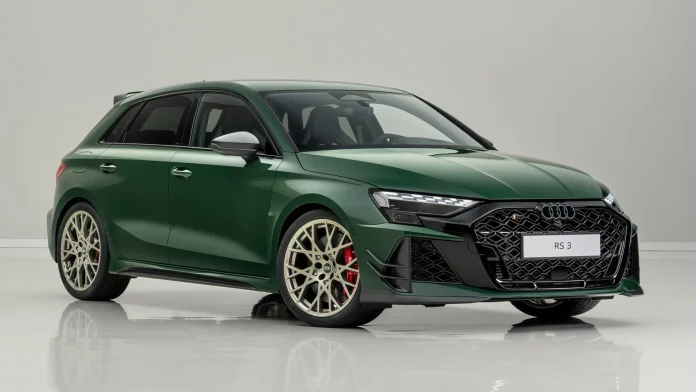
Carbon fiber appears throughout the exterior including mirror caps, aerodynamic trim pieces, and a rear spoiler that adds downforce without demanding attention. The car sits on aggressive 19-inch wheels that fill the arches properly and give it a wider, more planted stance without crossing into the territory of an aftermarket build. The overall design remains clean and purposeful. Nothing on the exterior is there for decoration.
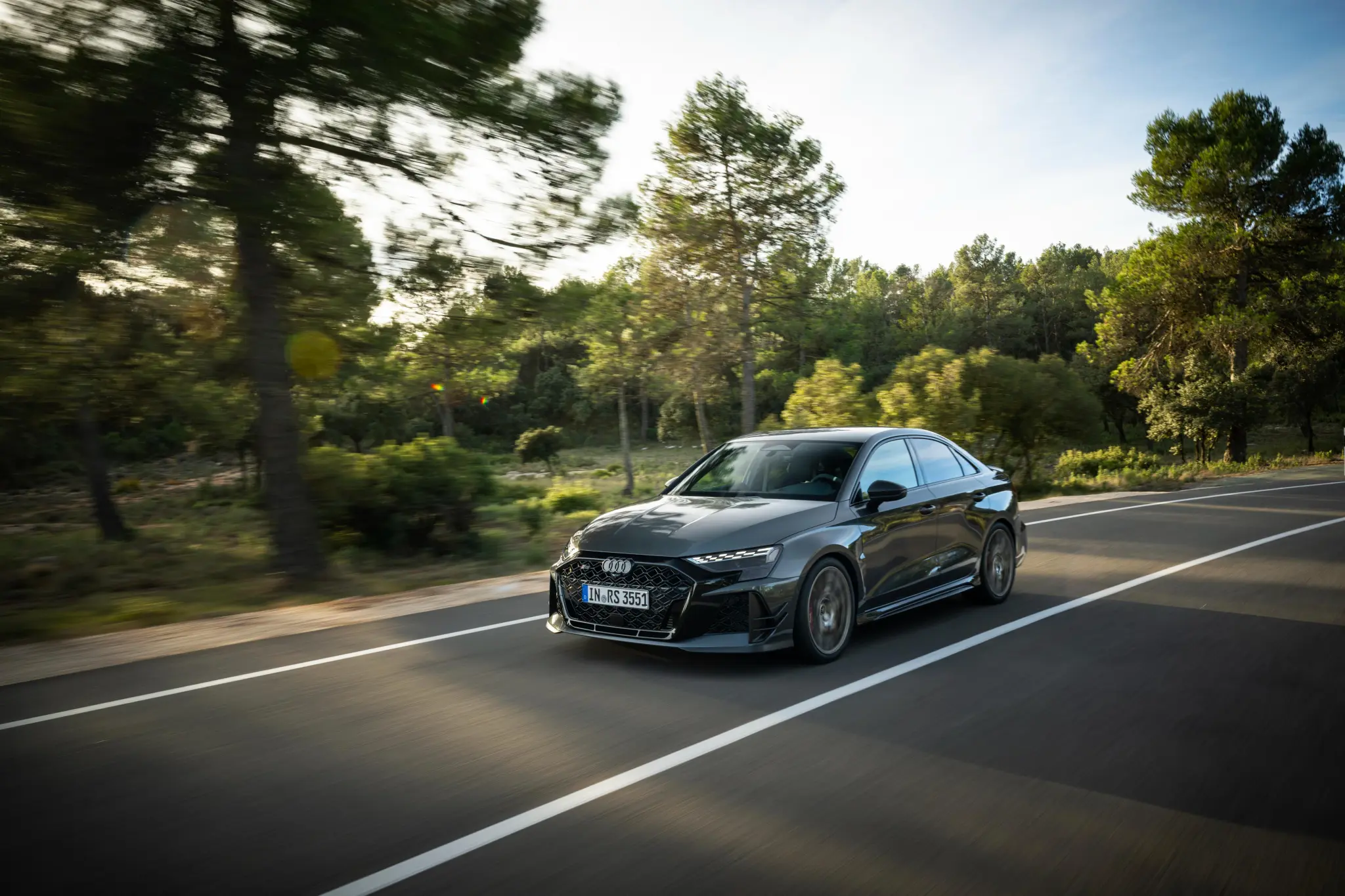
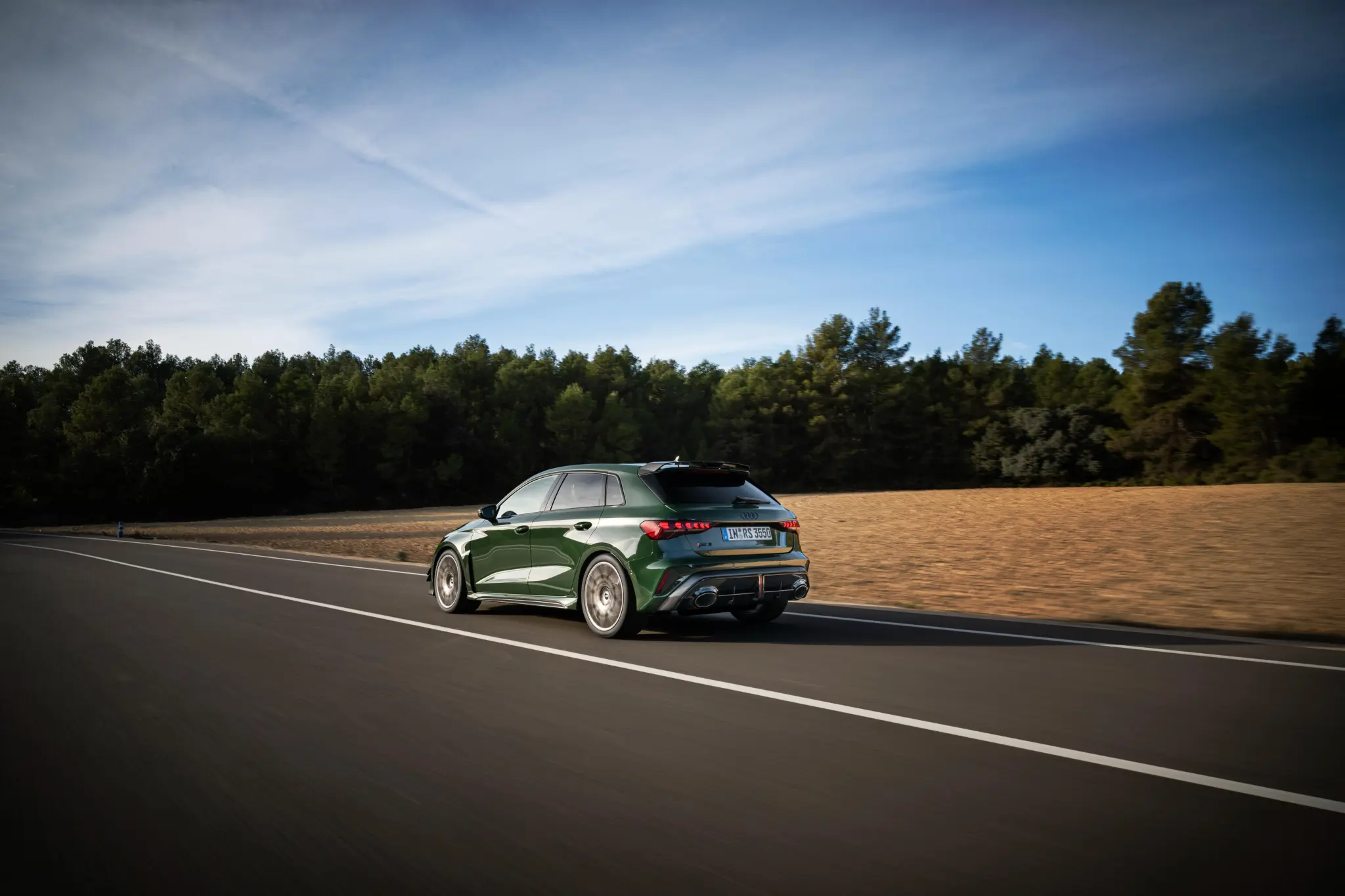
The subtle approach suits the car’s personality. At a glance, the RS3 CL looks like a well-sorted compact sedan. Pull up next to the right car at a traffic light and the reality becomes clear fast. That gap between appearance and capability has always been part of the RS3’s appeal, and the CL leans directly into it.
Limited production numbers add another layer. Exclusivity matters to this kind of buyer, not because scarcity is a marketing trick, but because it signals genuine intent. Audi didn’t build a hundred thousand of these. They built enough to reward the people who were paying attention.
A Cockpit Built Around the Driver
Inside, the RS3 CL maintains the balance between performance focus and premium quality that Audi has spent years refining.
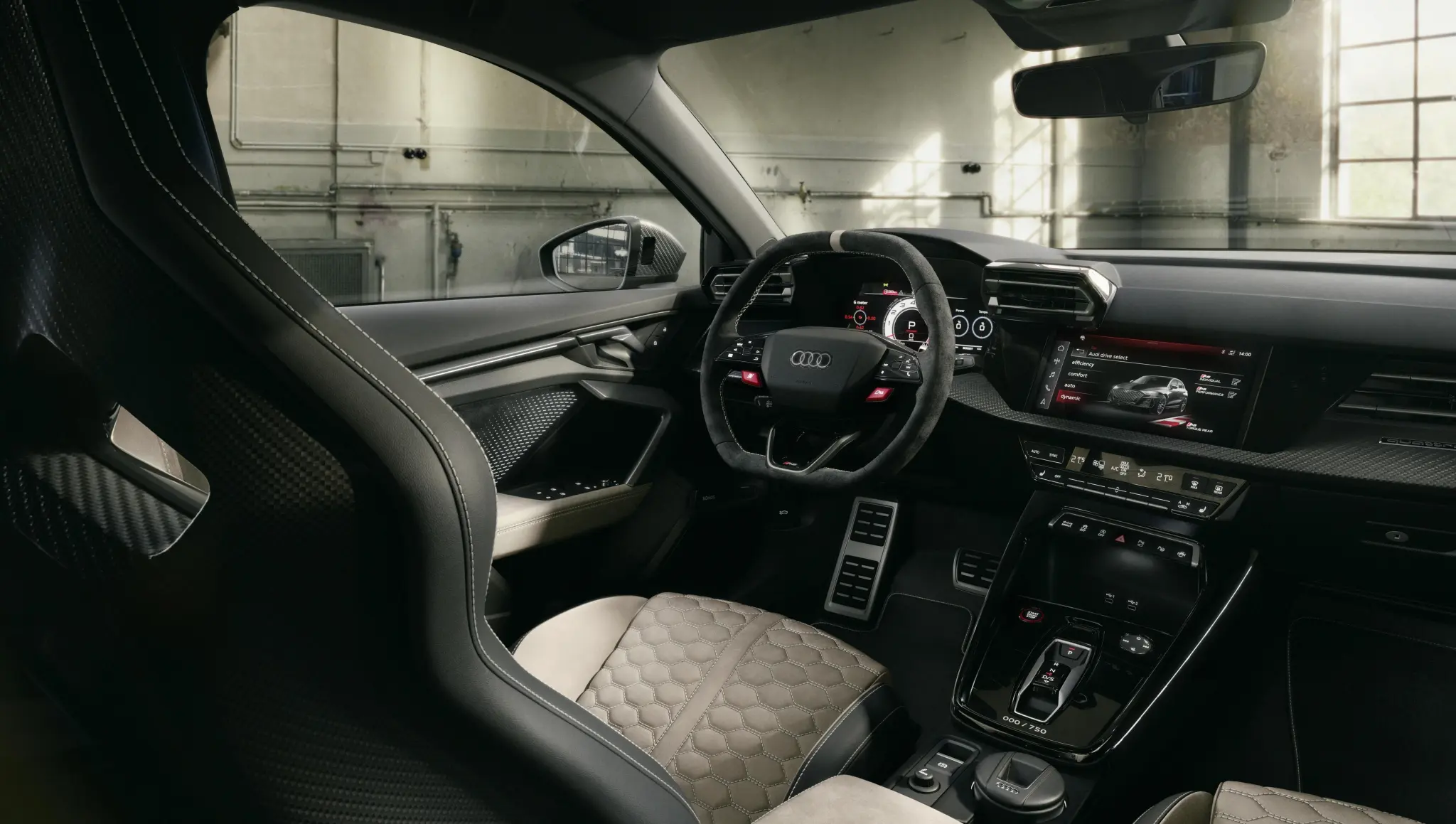
The digital virtual cockpit dominates the driver’s view, presenting performance data, navigation, and driving metrics in a highly configurable format. A flat-bottomed steering wheel with RS-specific controls reinforces the sporting character without abandoning usability. The layout is driver-focused without being spartan. Everything you need is close and intuitive, and the things that aren’t needed during a hard drive stay out of the way.
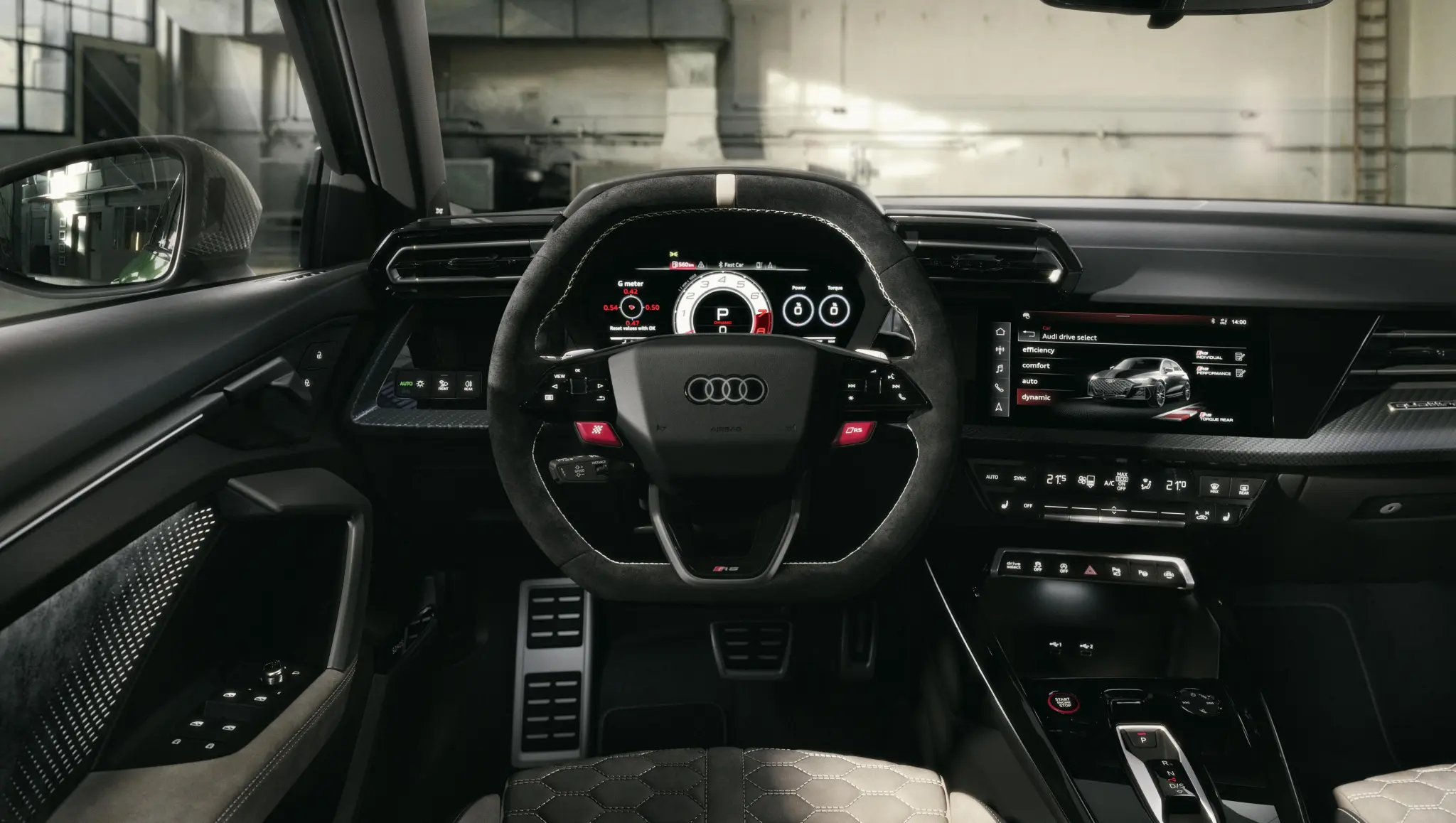
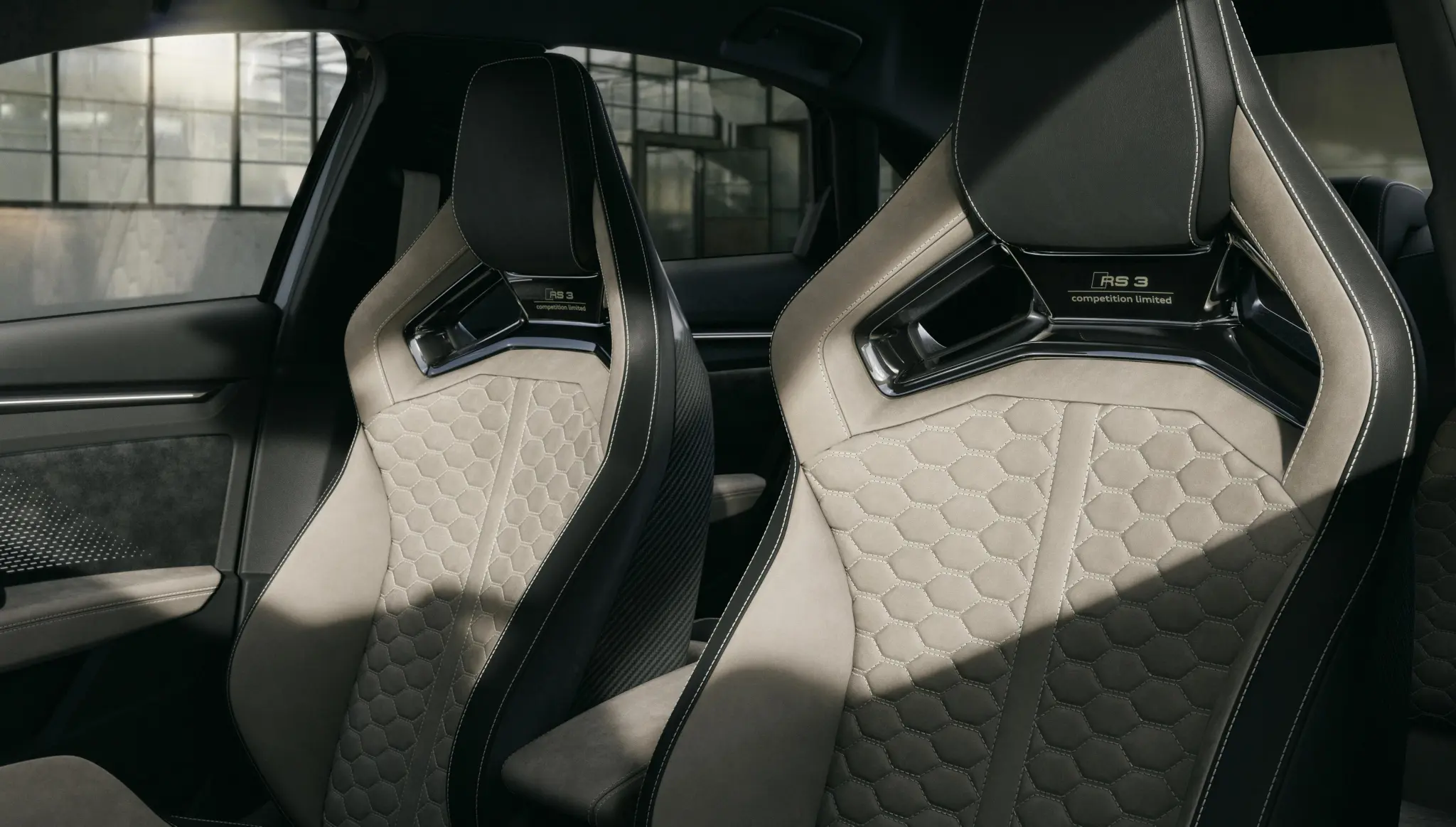
Performance seats with honeycomb stitching provide serious lateral support during aggressive driving. Microfiber surfaces and carbon fiber accents trim weight while keeping the interior quality at a level that justifies the price. The cabin feels purposeful rather than clinical, and there’s a real difference between a racing interior and one that simply looks like it means business.
Despite everything Audi Sport changed under the skin, the RS3 CL remains a genuinely usable sedan. Rear seats accommodate real adults. The car rides comfortably on a normal day and handles with precision when you choose to push it. That dual personality, daily driver and performance machine occupying the same body, is what the RS3 has always done better than most of its rivals. The CL doesn’t sacrifice any of it.
Mid-Three-Second Performance. Every Day.
Zero to 60 mph in the mid-three-second range is where the RS3 sits. The Competition Limited maintains that figure while sharpening everything around it.
The turbocharged five-cylinder delivers strong mid-range torque that makes the car feel explosive in everyday driving. Pull onto a freeway on-ramp, downshift, and the car moves with a sense of urgency that competes with machines from a much higher price bracket. The all-wheel drive system plants the power with remarkable efficiency, and the torque splitter ensures that hard corners don’t become exercises in understeer management.
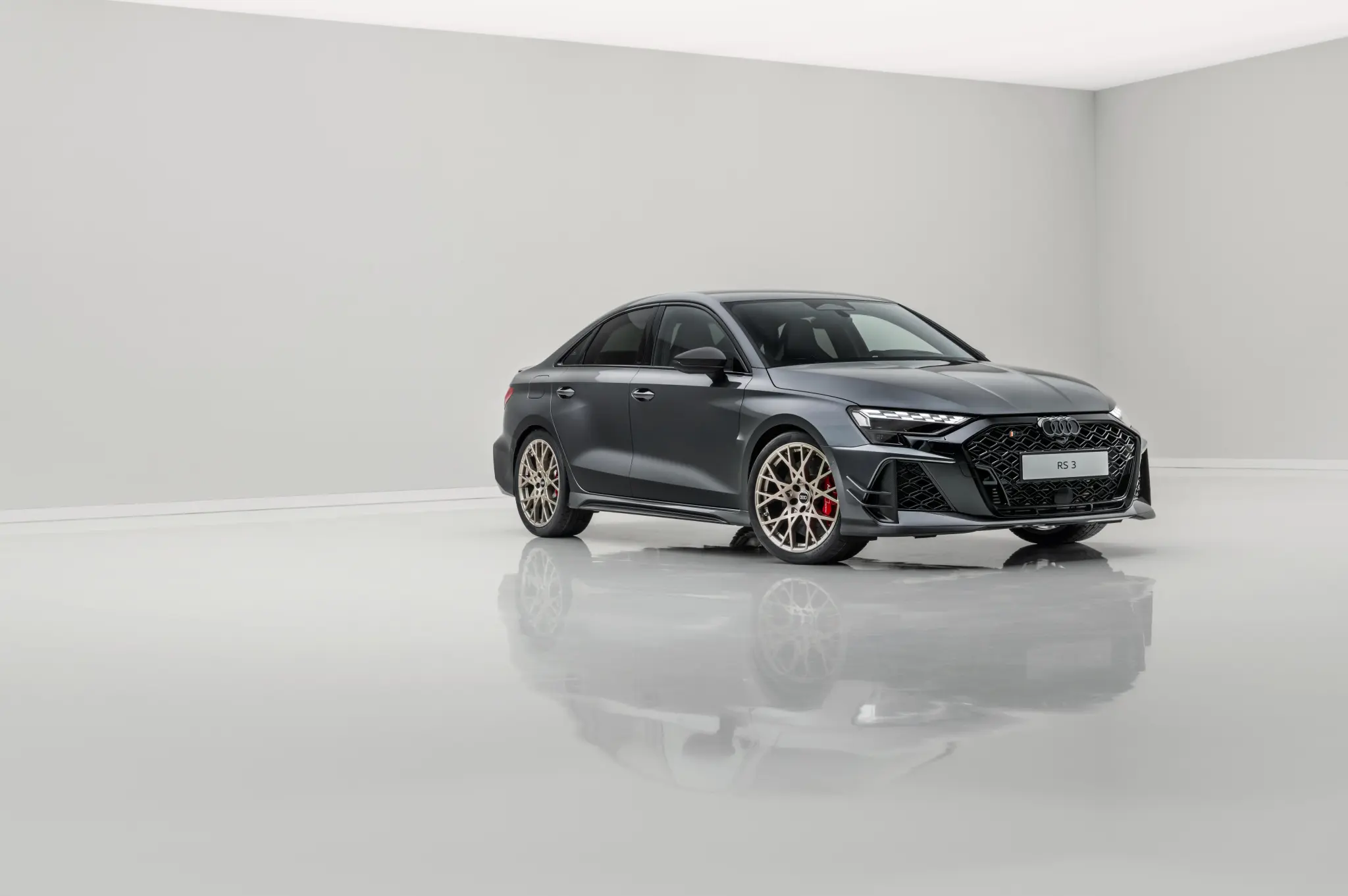

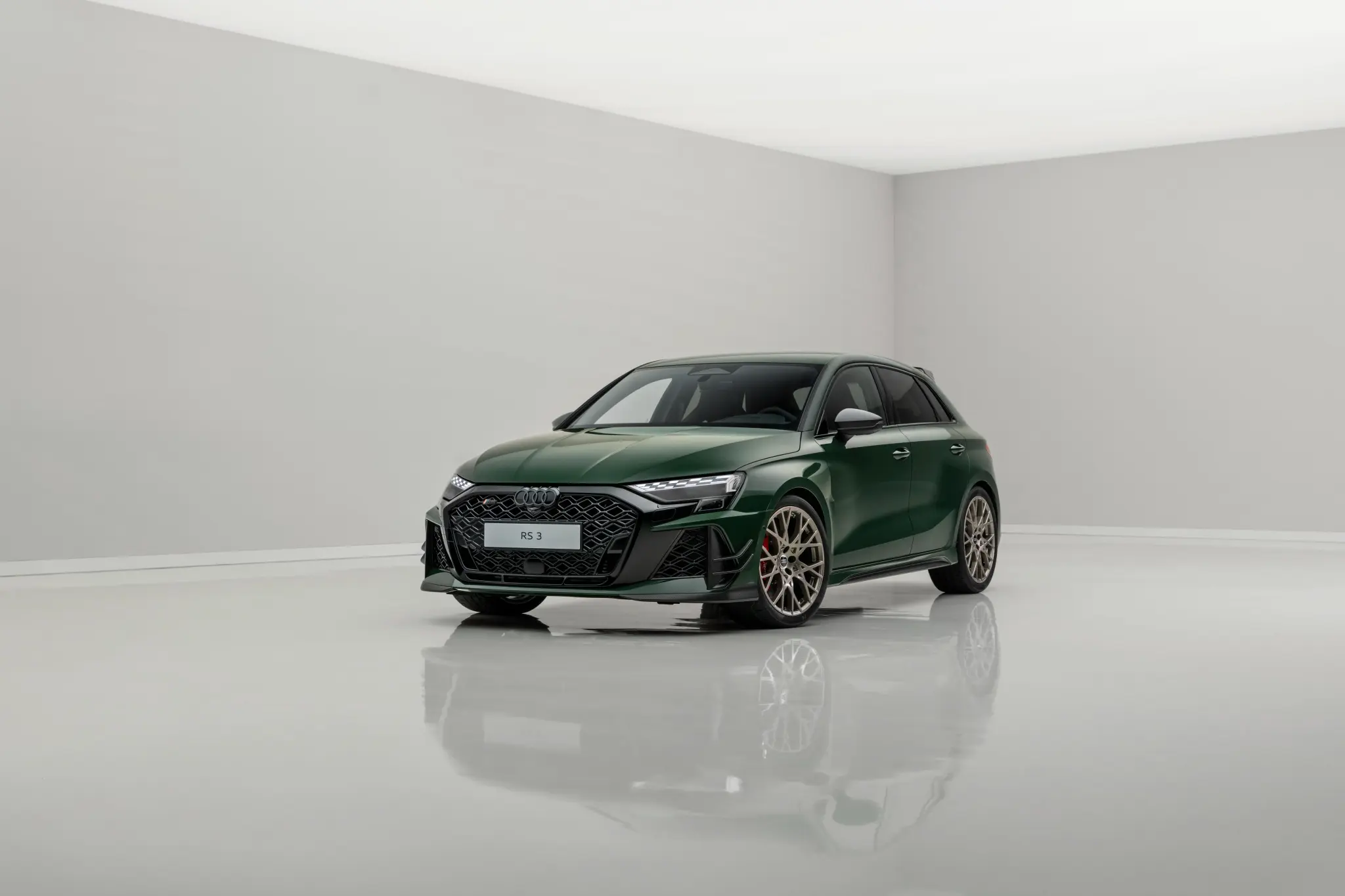
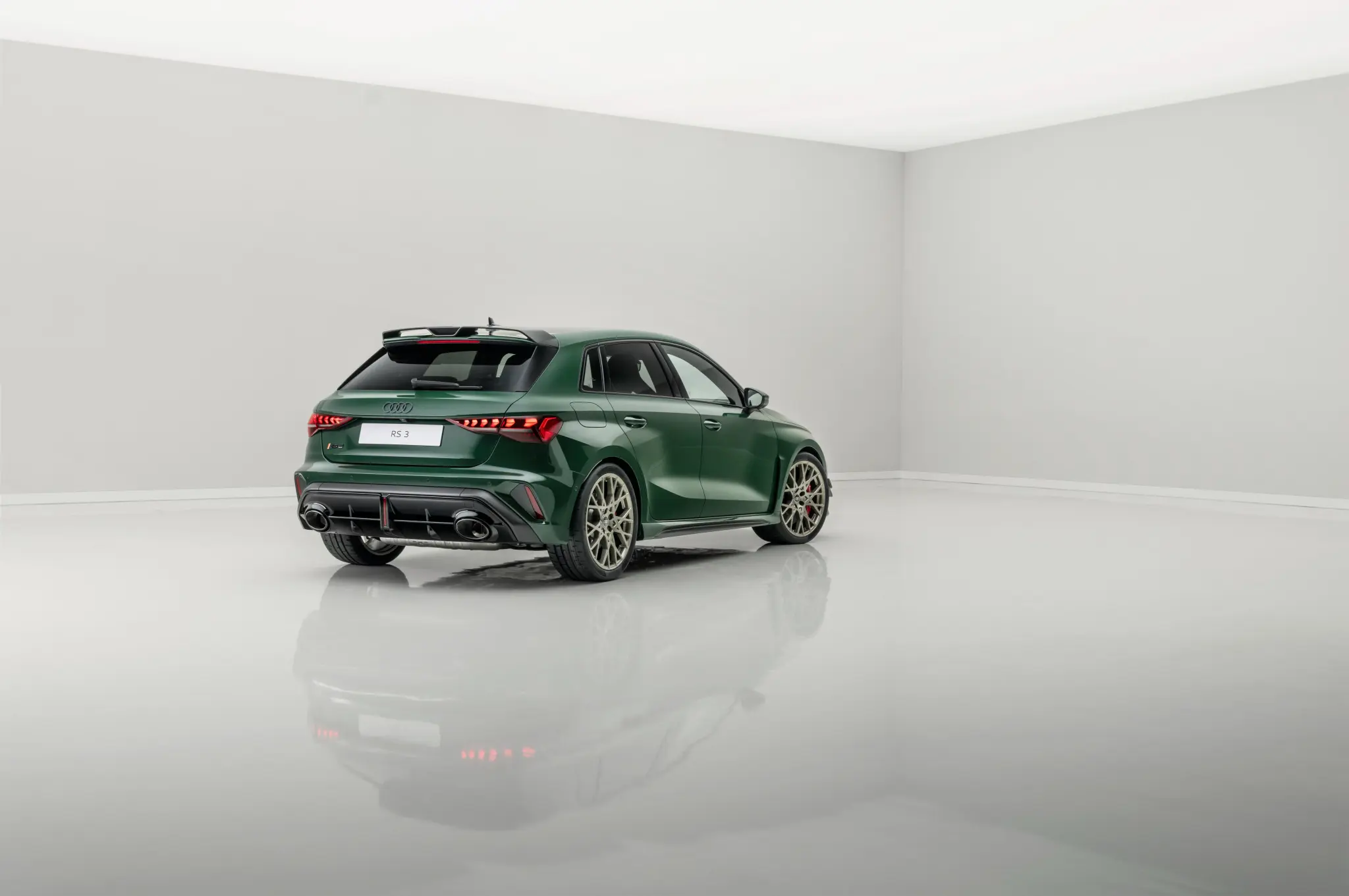
What the CL improves is precision. The chassis upgrades mean the car responds more directly to driver inputs, rewards smoother technique, and communicates more clearly about what the tires are doing. You can feel the suspension working. You hear the engine reacting to throttle inputs. The gap between driver and machine gets smaller, and in a world full of cars that increasingly try to handle everything automatically, that feeling is increasingly rare.
On a track, the coilover adjustment becomes genuinely useful. On a canyon road, the stiffer rear bar and torque splitter work together in ways you can feel. In city driving, the five-cylinder sounds good at almost any speed. The RS3 CL has something to offer in every environment, and that breadth of capability is one of its strongest arguments.
An Icon Arriving at the Right Moment
The 2026 Audi RS3 CL arrives at a specific and significant moment in the automotive industry.
Electrification is reshaping the performance landscape at an accelerating pace. Many manufacturers are moving their flagship performance models toward hybrid or fully electric powertrains. The results are impressive on paper, with instant torque, brutal acceleration, and sophisticated traction management. But those technologies also change the emotional texture of performance driving in ways that are hard to quantify and easy to feel.
The RS3 CL is unapologetically analog in comparison. It revs. It sounds like something is happening under the hood because something genuinely is. The suspension responds mechanically to road inputs. The engine note changes with throttle position. The car communicates in the language of internal combustion, and for a certain kind of driver, that language is irreplaceable.
Audi is aware of where the industry is heading. Building the Competition Limited isn’t a denial of that direction. It’s a deliberate acknowledgment of what will be left behind. This is the brand’s performance division making the case for why these machines deserve to be celebrated before the next generation fully takes over.
Why the RS3 CL Still Gets It Right
The 2026 Audi RS3 CL is not the most powerful Audi ever built. It’s not the most expensive, and it won’t dominate every conversation about performance at this price point.
What it does is harder to replicate. A compact, four-door sedan with Group B rally roots, factory coilover suspension, a torque-vectoring rear differential, and one of the most distinctive engines in the business is a rare formula. The market doesn’t produce many cars like this, machines that feel authentic rather than engineered, that reward skill rather than just rewarding speed.
In a future filling rapidly with silent electric crossovers and screens replacing switches, the RS3 CL stands out by doing the opposite of what most of the industry is chasing. It sounds like a car. It behaves like a driver’s machine. When that five-cylinder engine starts climbing through the rev range and the exhaust note fills the cabin, the rest of the industry’s direction feels, for a moment, entirely beside the point.
That’s worth something. And right now, you can still buy it.