
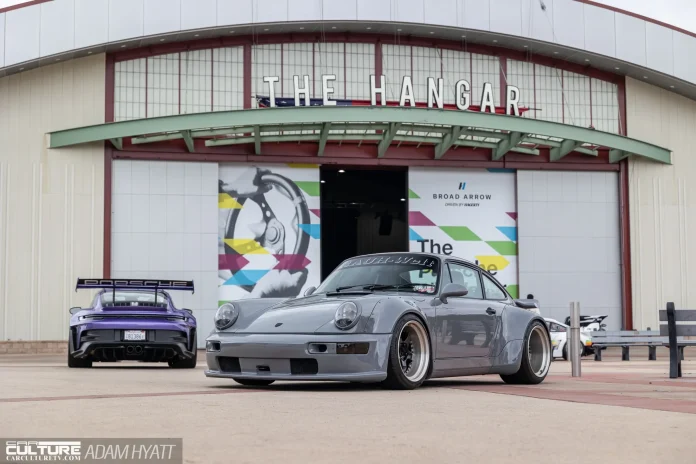
Southern California has no shortage of car events, but Air | Water occupies its own lane. April 25 brought the fourth installment back to its permanent home at the OC Fair & Event Center in Costa Mesa, and the formula has clearly taken hold. Over 9,500 people showed up. Around 800 cars filled the grounds. The Porsche world, in all its breadth and depth, had a home base for the day.
This is not a show that needs explaining anymore. Born in 2023 as an add-on day to Luftgekühlt, the highly curated air-cooled showcase co-founded by Patrick Long, Air | Water carved out its own identity fast by doing what Luft intentionally leaves out: welcoming everything. Water-cooled, hybrid, electric, diesel, vintage race cars, modern supercars. If it carries the Stuttgart crest, there is a place for it here.
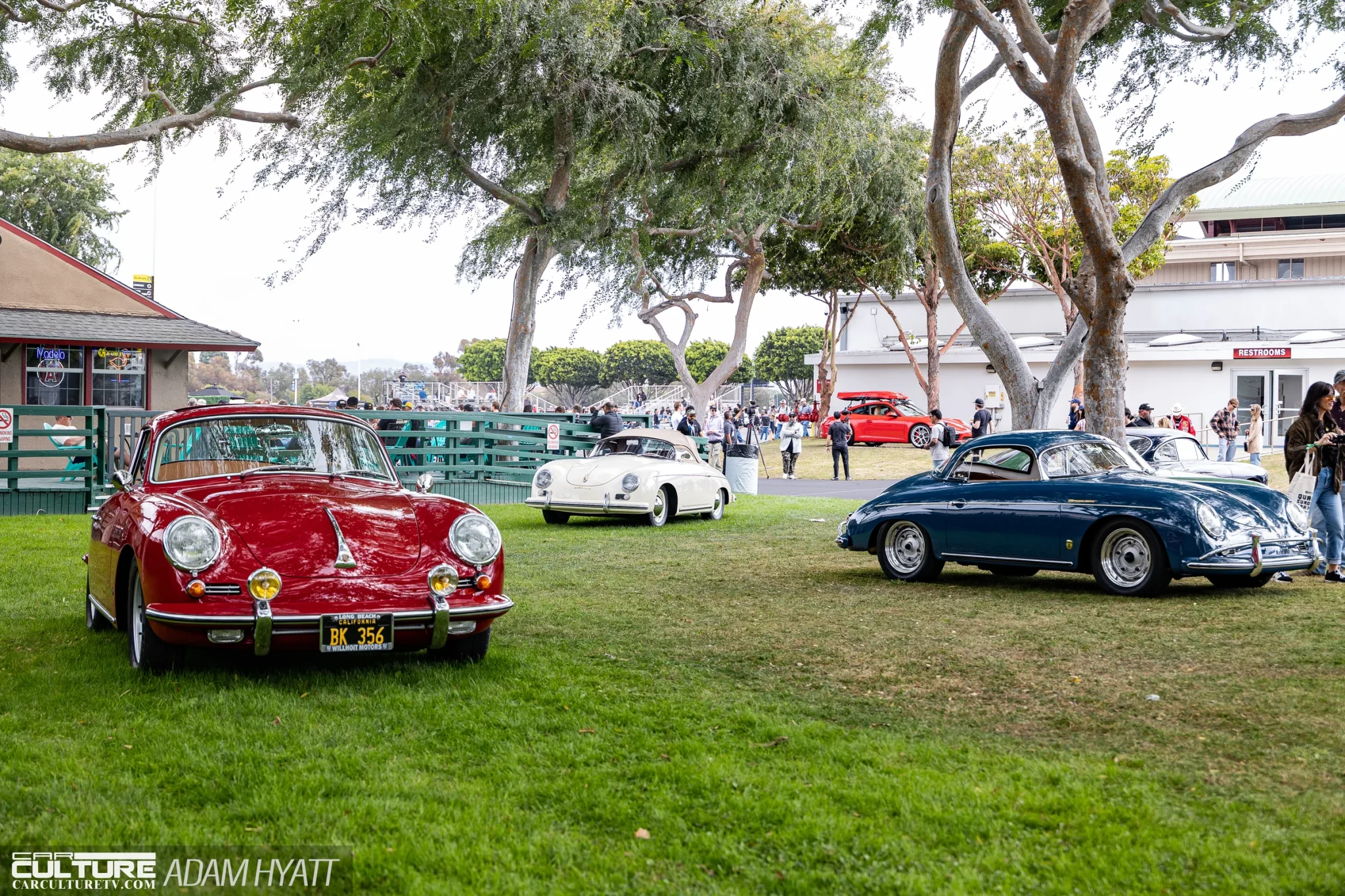
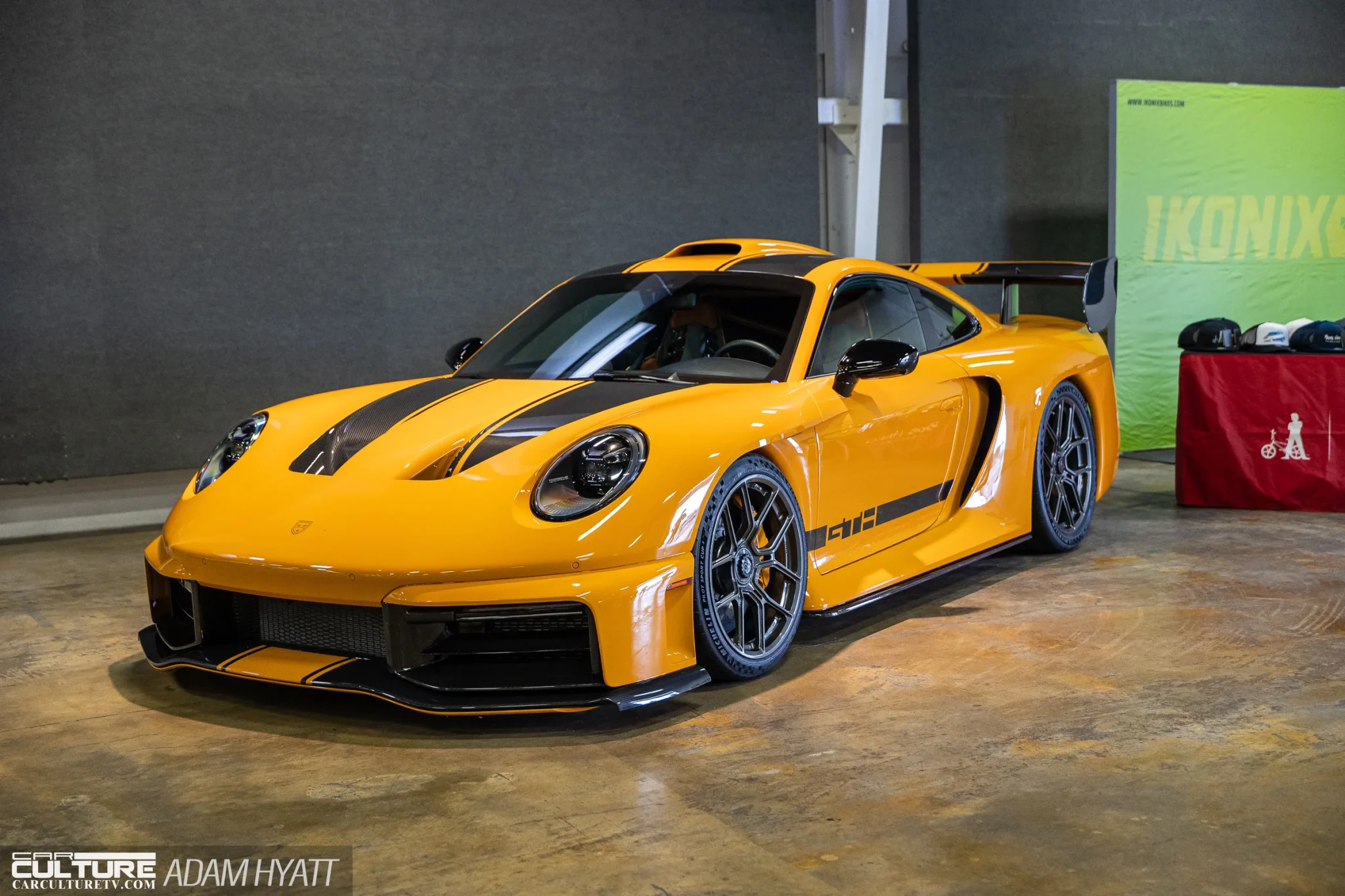
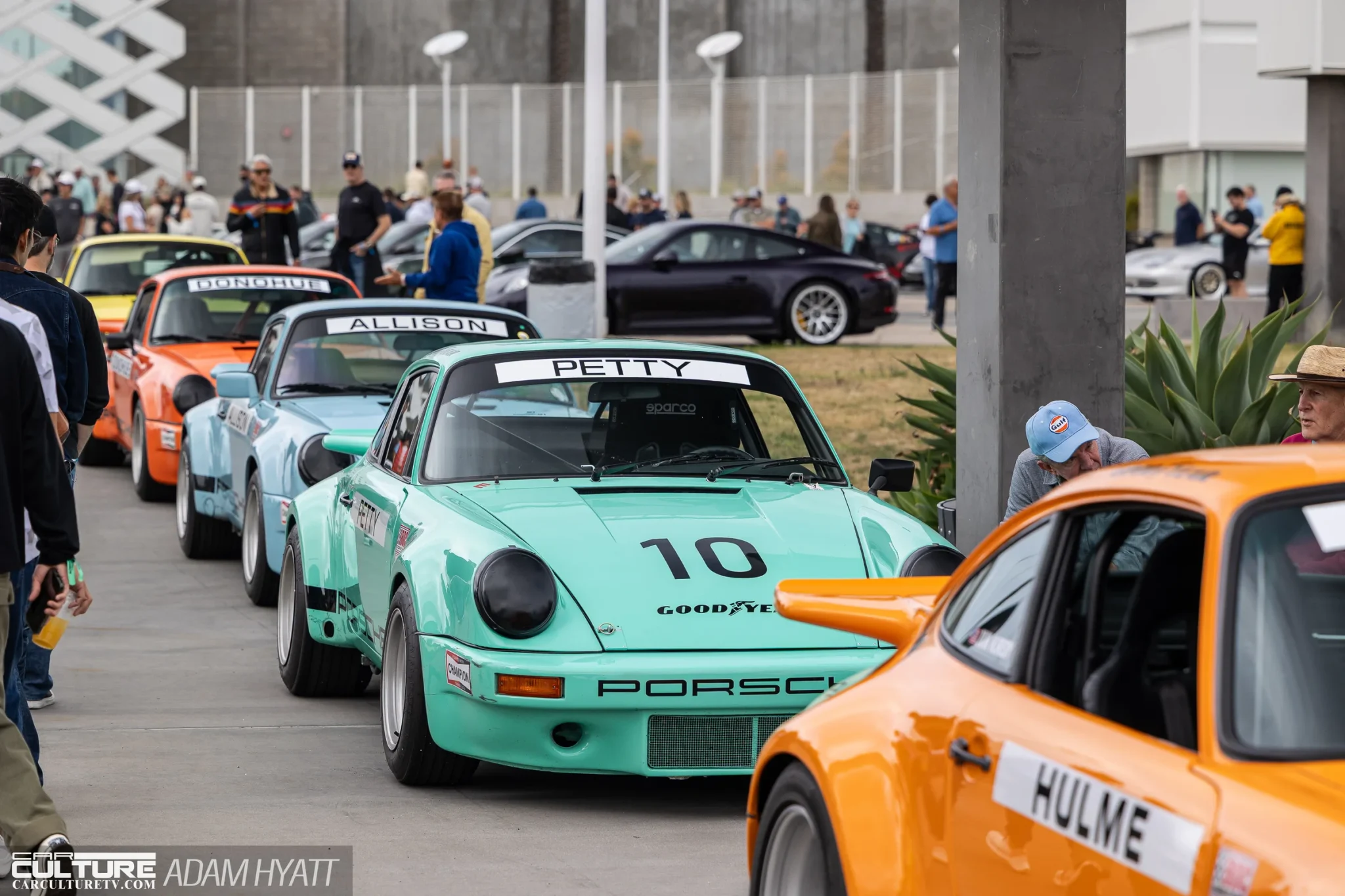
“It’s an event that now has momentum,” said Luftgekühlt and Air | Water creative director Jeff Zwart. “We show where it’s come from, through the air-cooled world of the 356 and early 911, and bookend that with a new generation of enthusiasts who get to have their moment.”
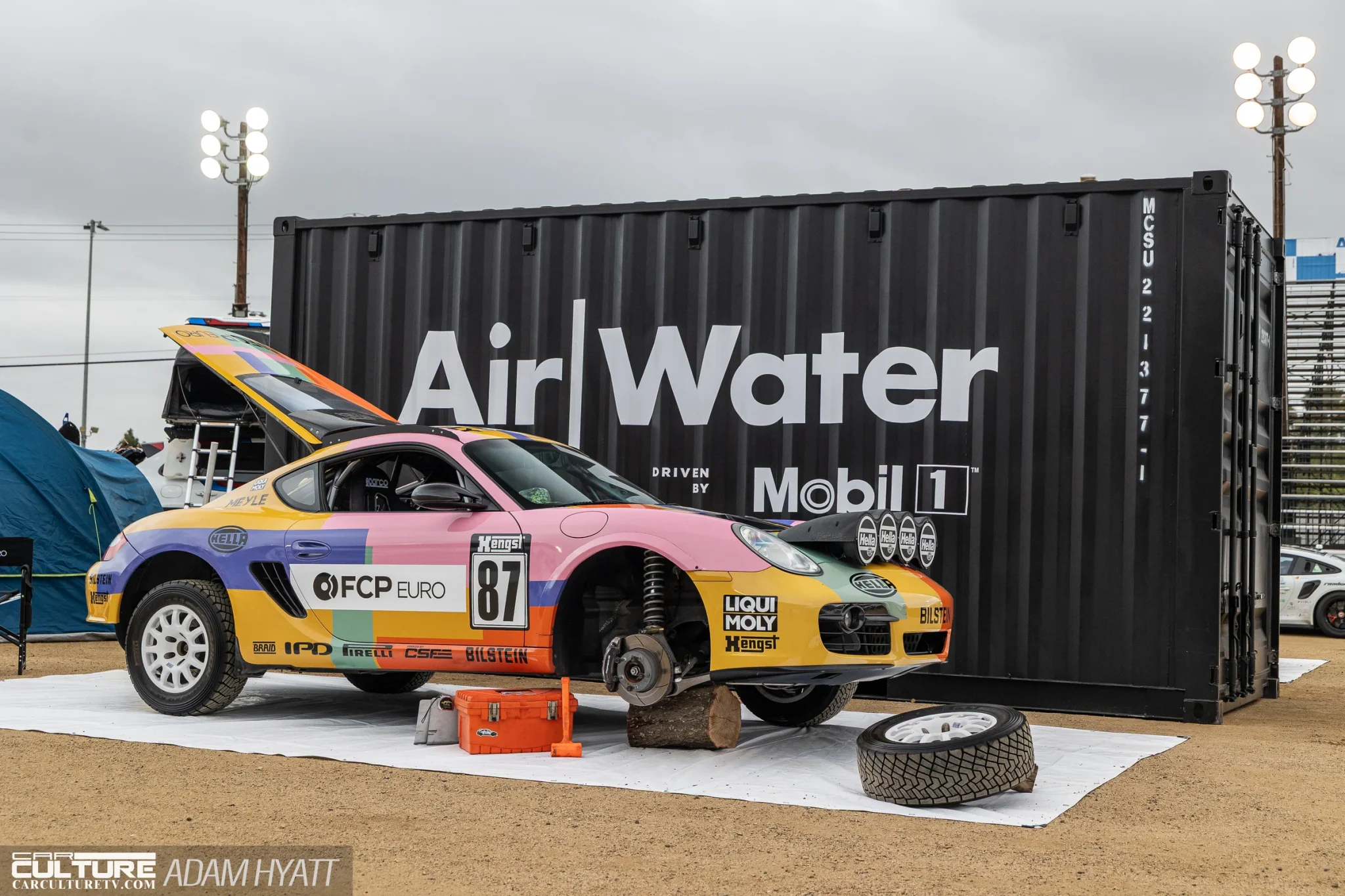
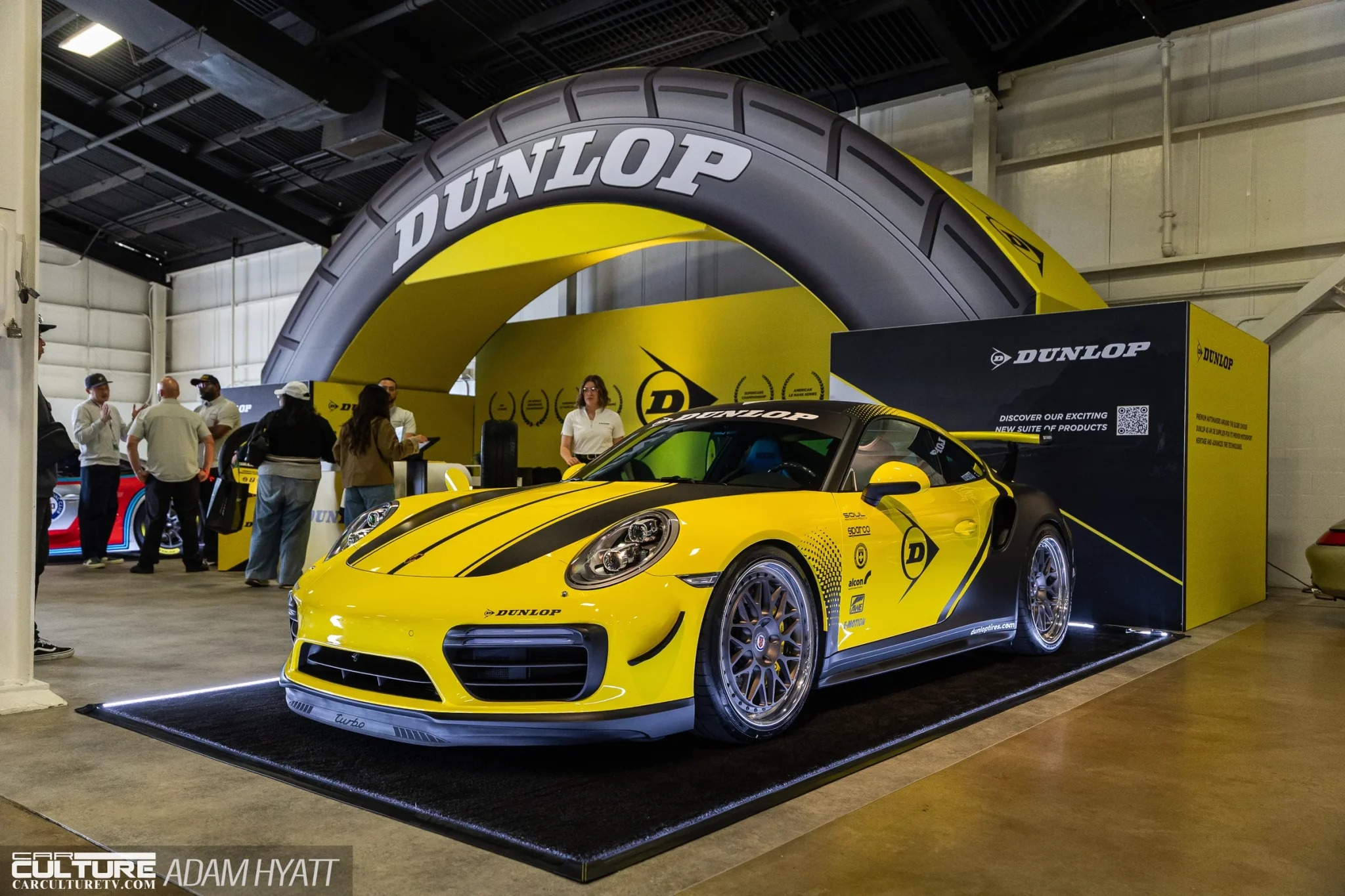
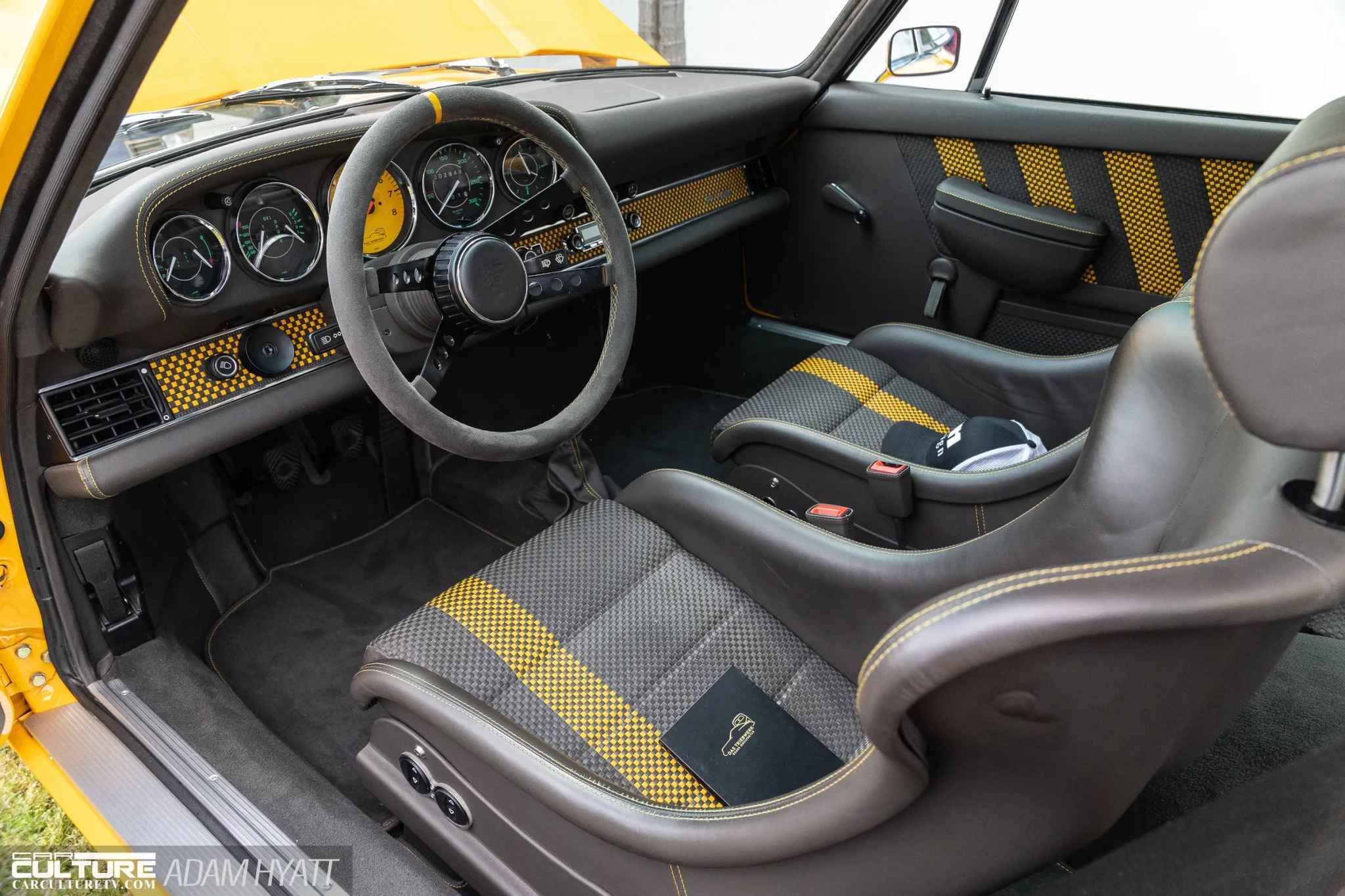
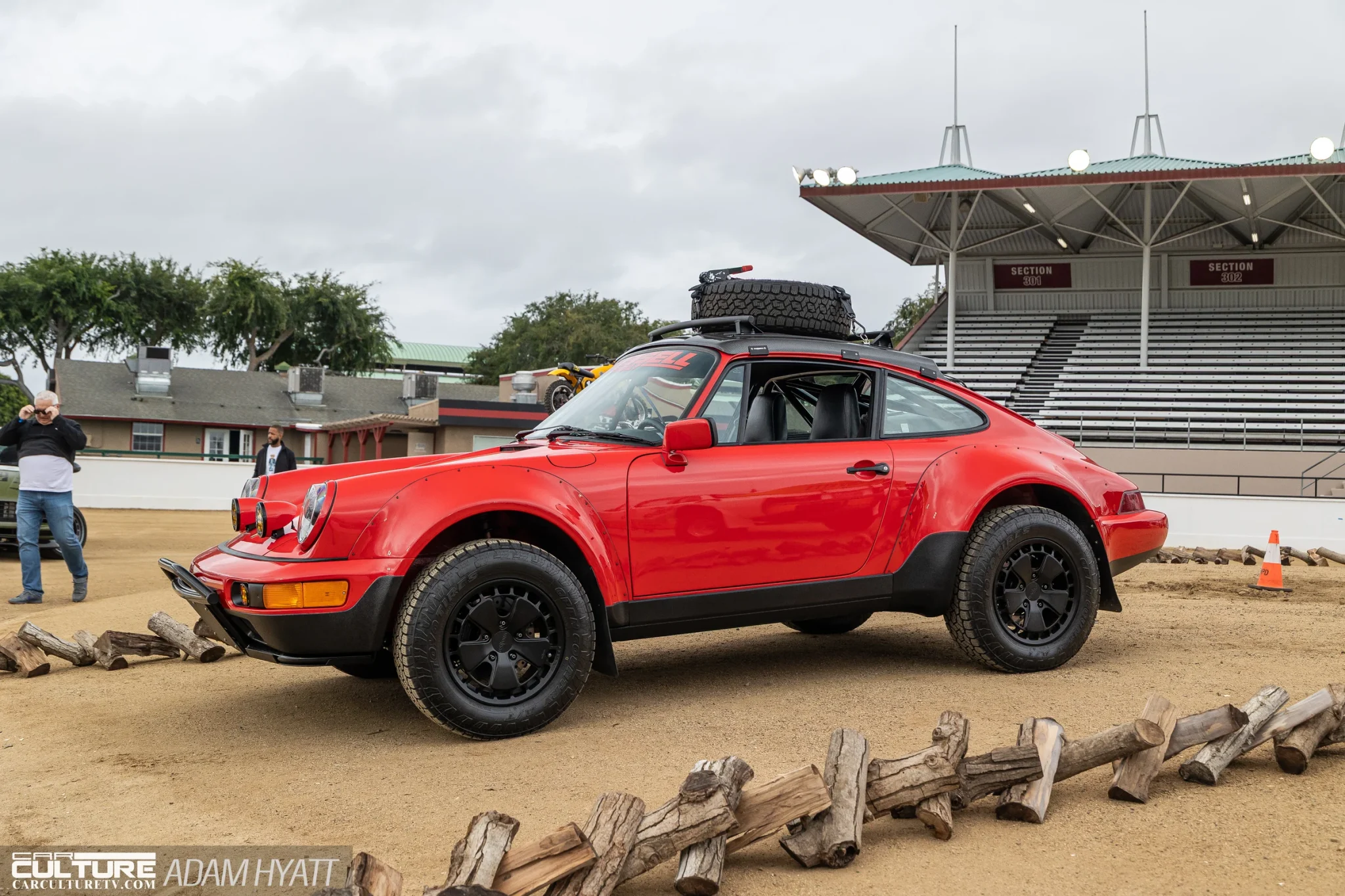
That range is exactly what makes walking the grounds here different from most single-marque events. One row can take you from a survivor-spec early 911 to a GT3 RS that looks like it rolled out of Weissach this morning. The variety is the point.
75 Years of Motorsport Gets Its Moment
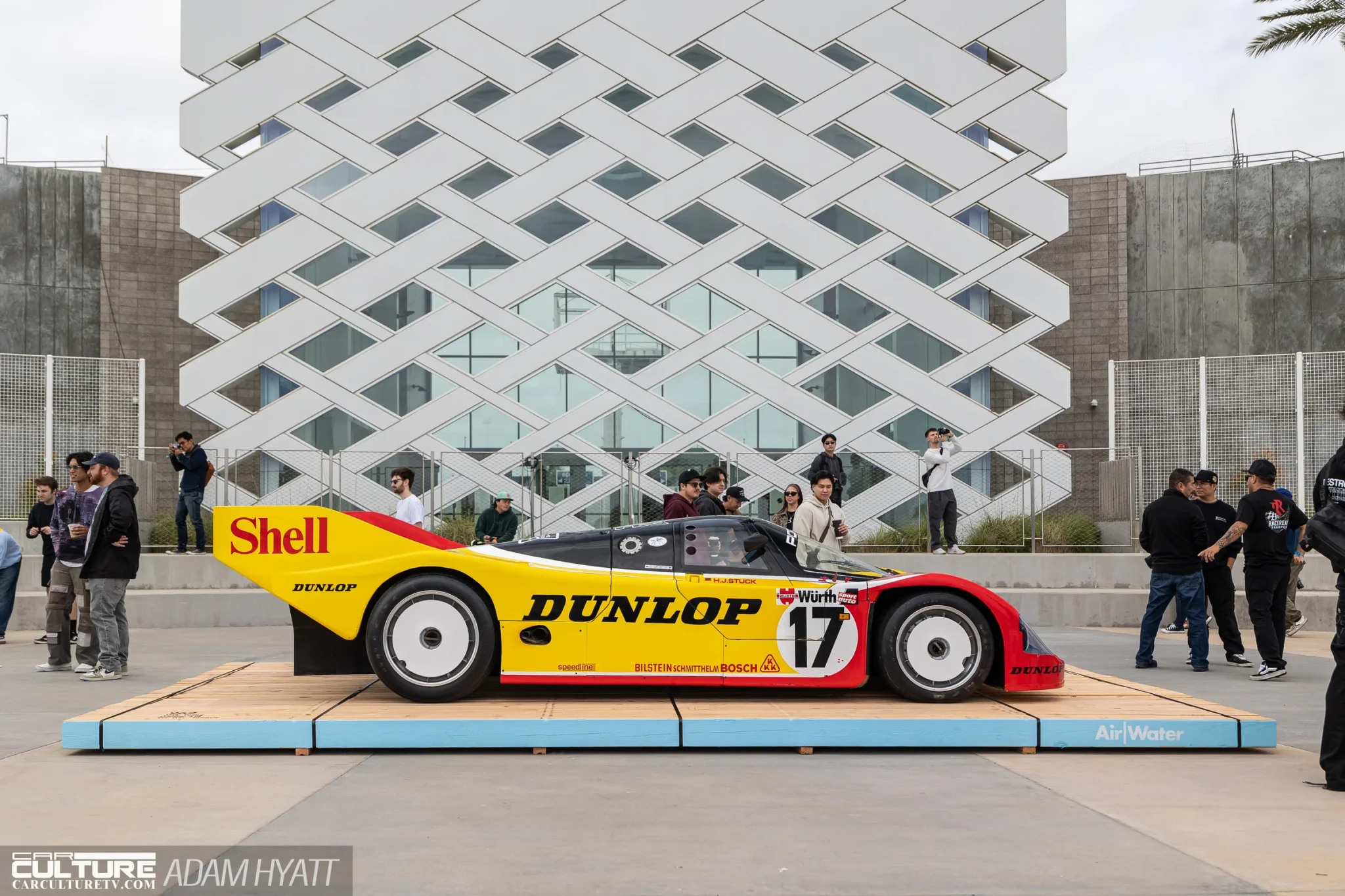
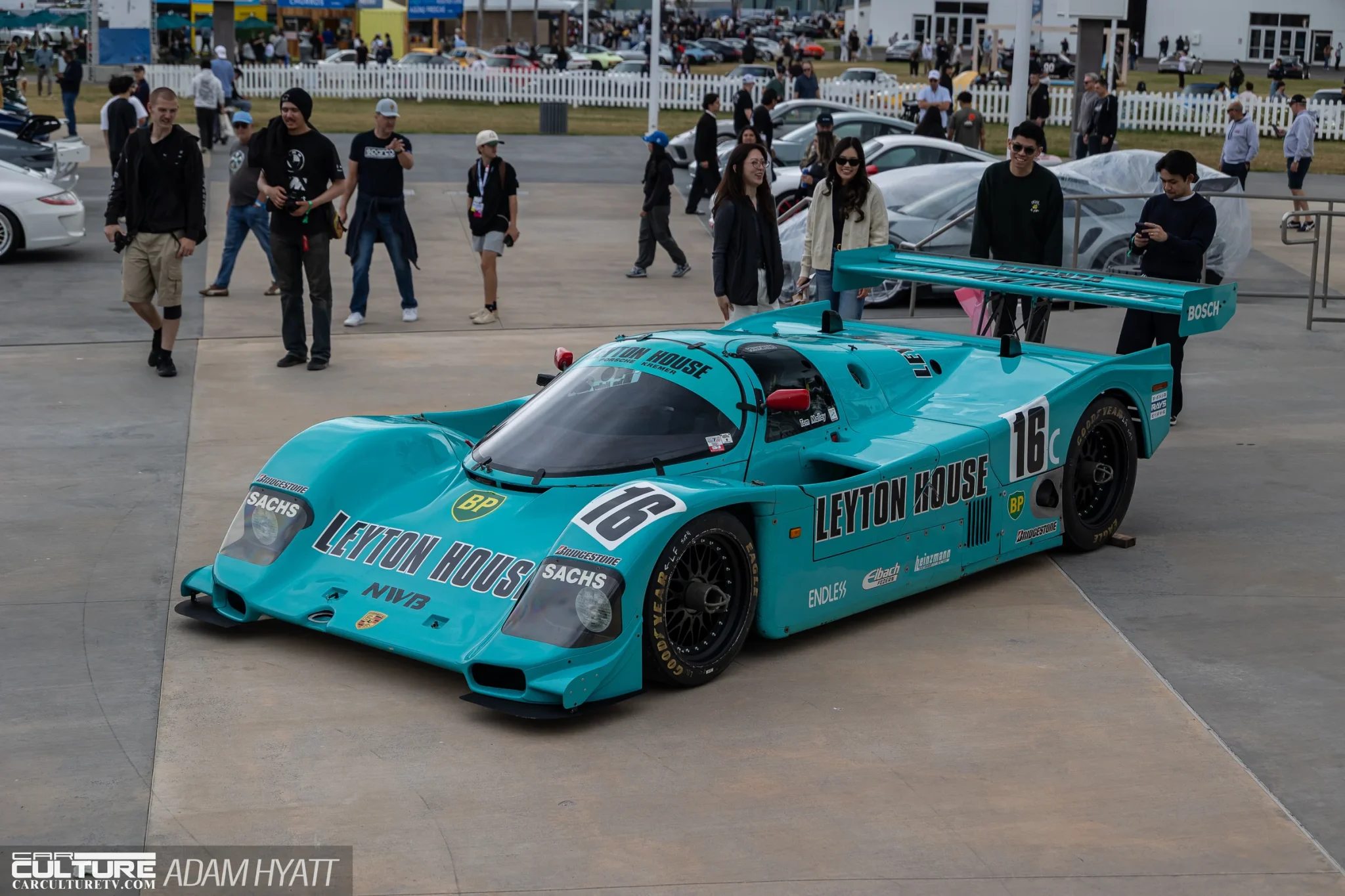
This year’s show leaned into Porsche’s motorsport legacy with real intention. A dedicated Group C display anchored the event in recognition of 45 years of the GTP racing class and 75 years of Porsche Motorsport overall. The centerpiece was a trio of 962s representing different chapters of the car’s racing life.
The 1988 962C in full Dunlop yellow WEC livery set the tone. Parked alongside it was the teal Leyton House 962, number 16, in Bridgestone rubber with Bosch, BP, Endless, and Eibach branding covering the bodywork. The third car in the group was the one with the deepest story attached to it.
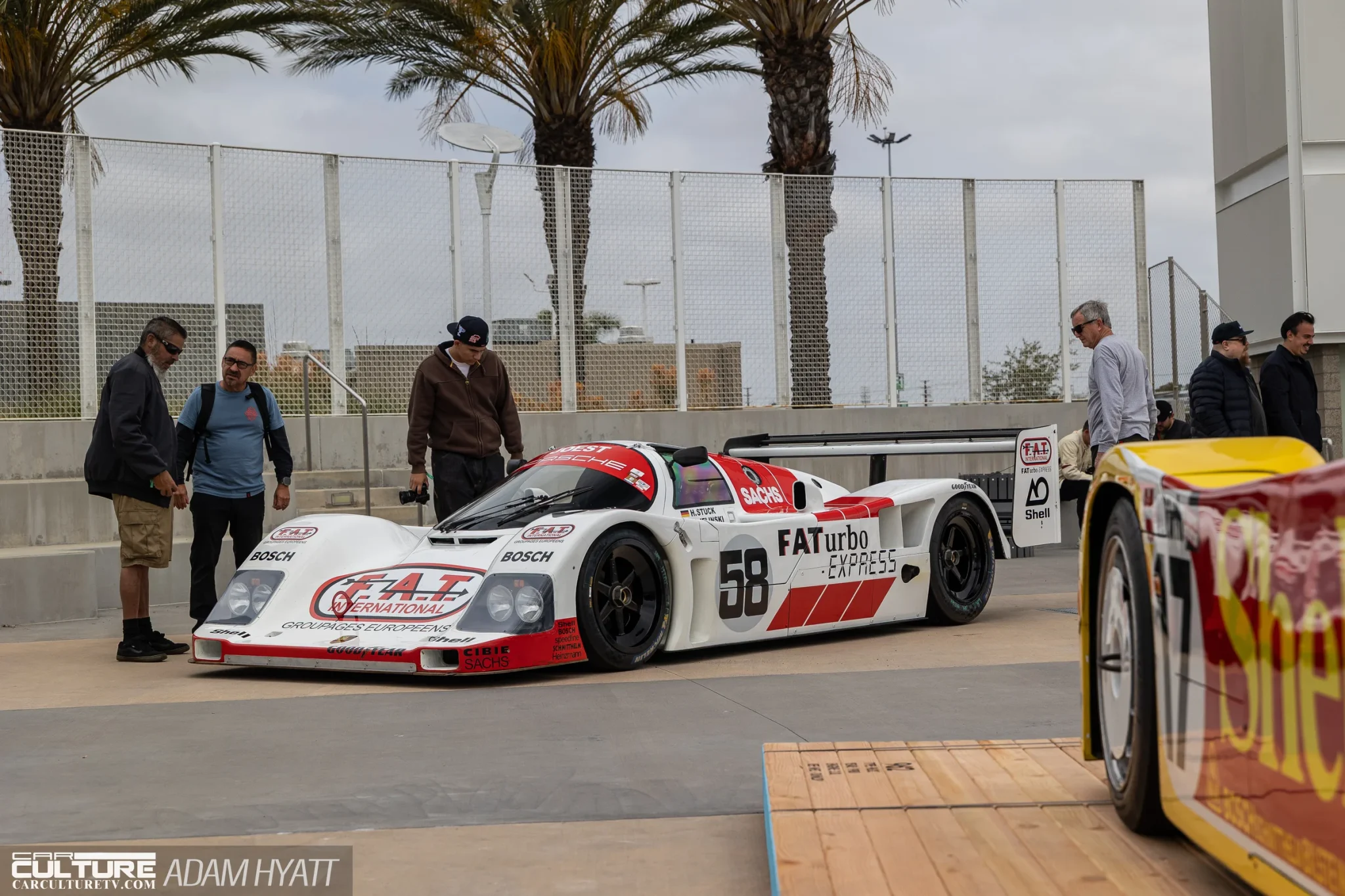
FAT International’s 962C, number 58, wore the white and red FATurbo Express livery exactly as it appeared when Hans Stuck, Frank Jelinski, and Derek Bell campaigned it across Europe from 1990 to 1992. FAT International is the revived motorsport brand led by Ferdinand “Ferdi” Porsche, great-grandson of the company’s founder. Seeing the Porsche family name attached to a car that raced at this level, displayed right there on the show floor in period-correct trim, was one of those moments that only happens at an event with the curatorial ambition Air | Water has developed.
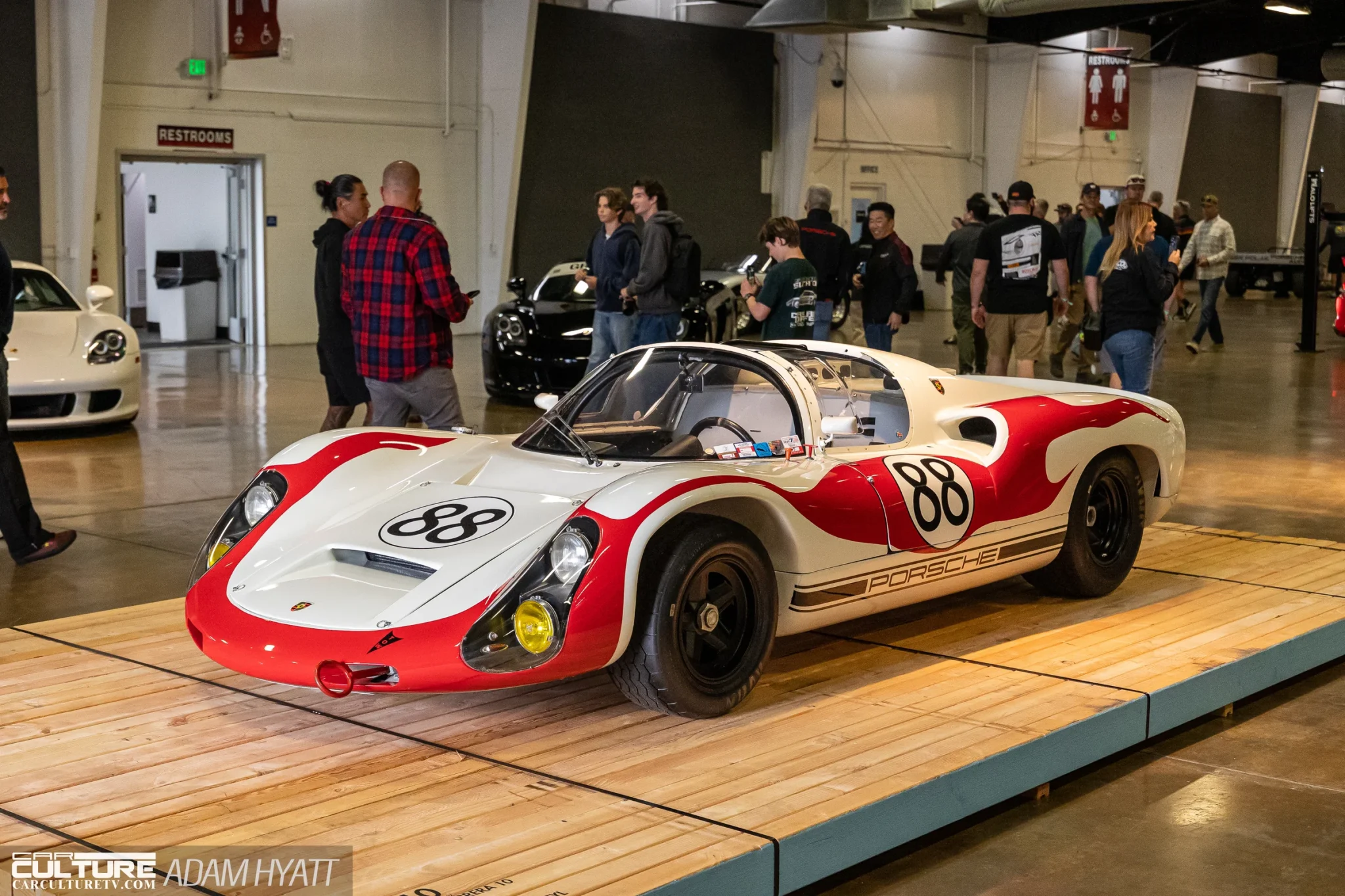
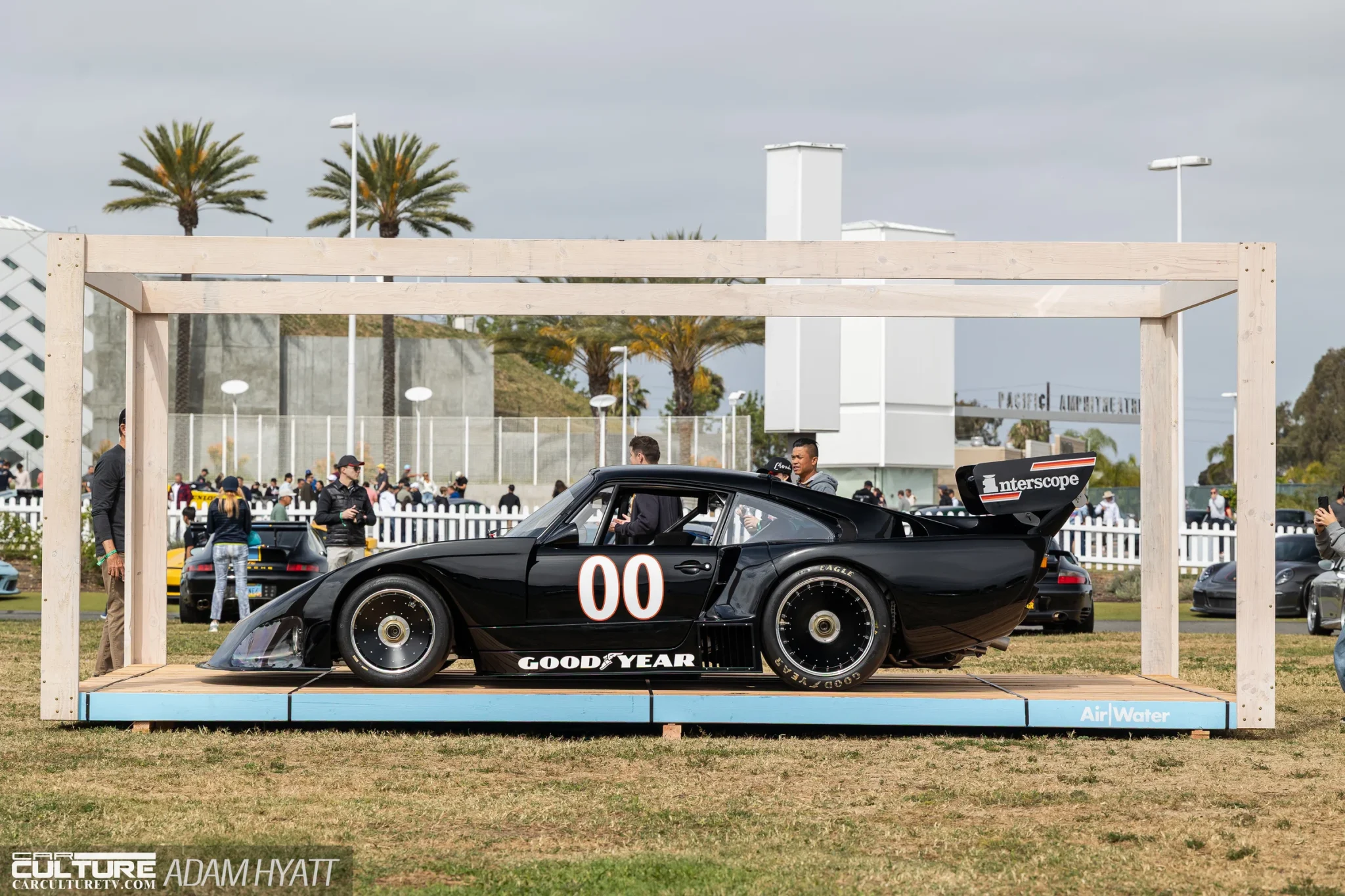
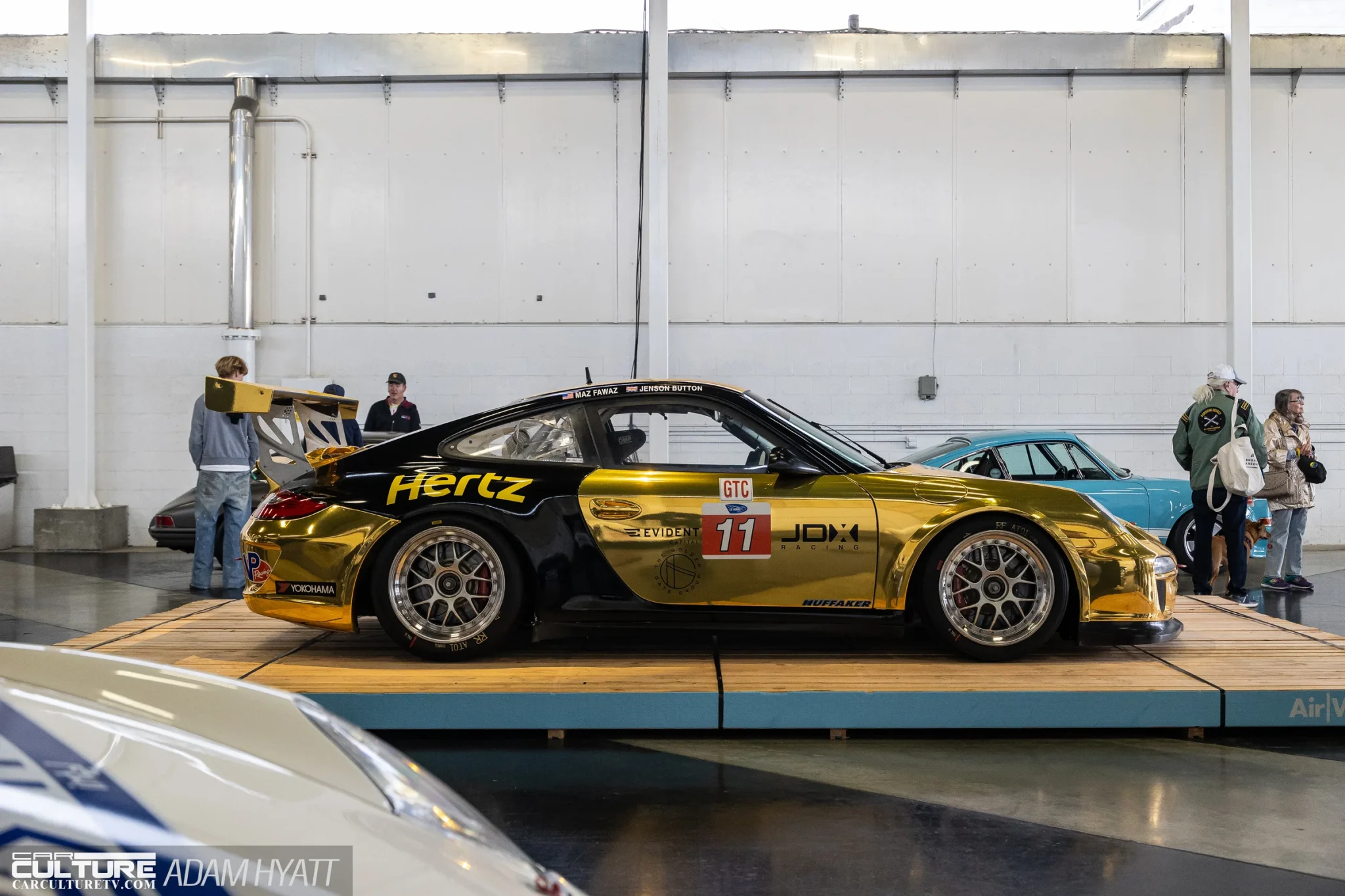
The broader motorsport display extended well beyond the 962 group. A 1967 Porsche 910 Carrera 10 with a 2.2-liter Type 771 eight-cylinder sat on the blue-trimmed wooden platforms that became a signature visual of the event’s presentation. A 1981 911 935 K4 with a 3.2-liter engine wore its IMSA / Interscope Racing reference. A 2011 997.2 GT3 Cup with its 3.8-liter engine carried American Le Mans Series provenance. Each car had its story told simply and directly on the platform beneath it.
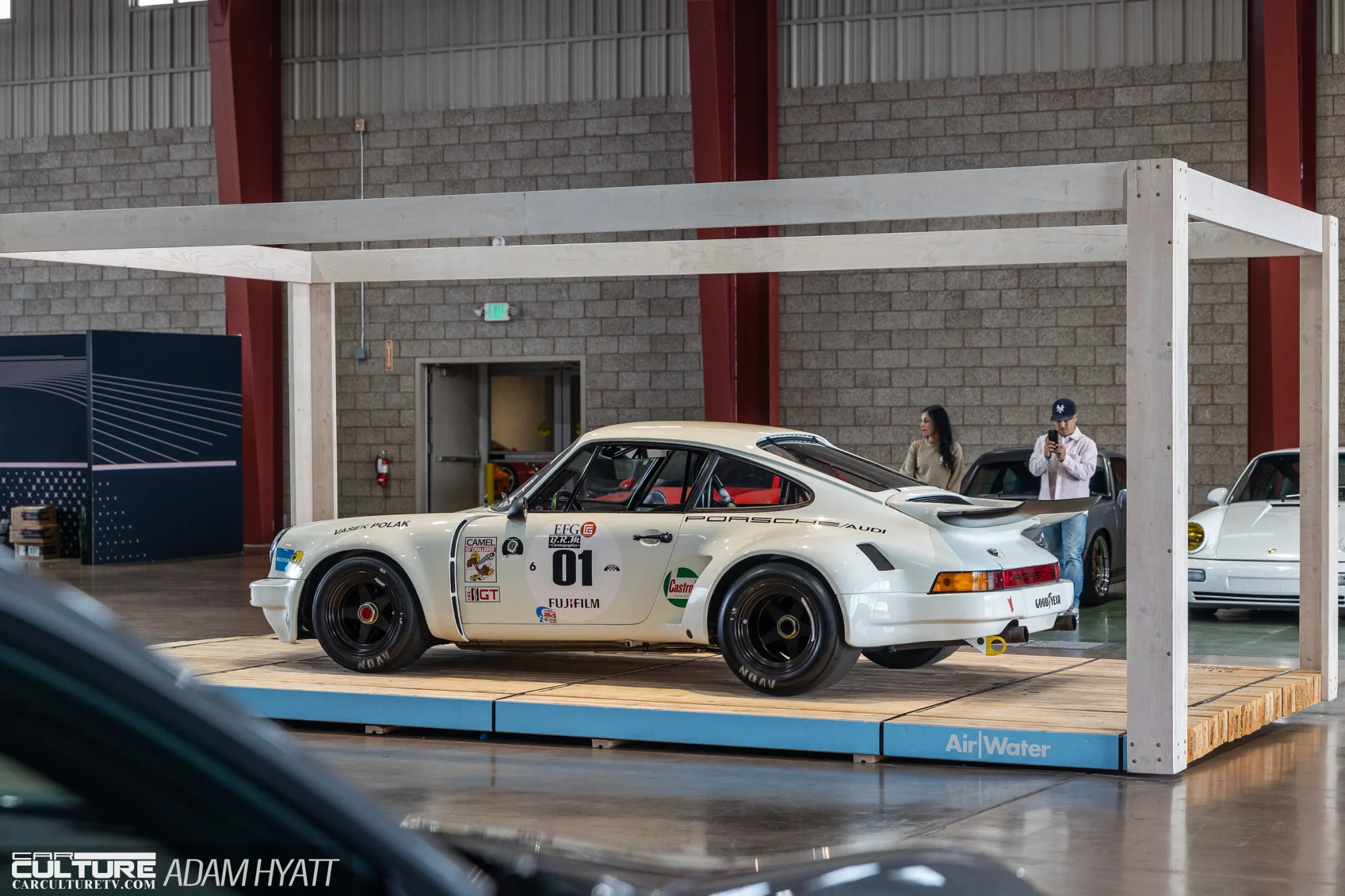
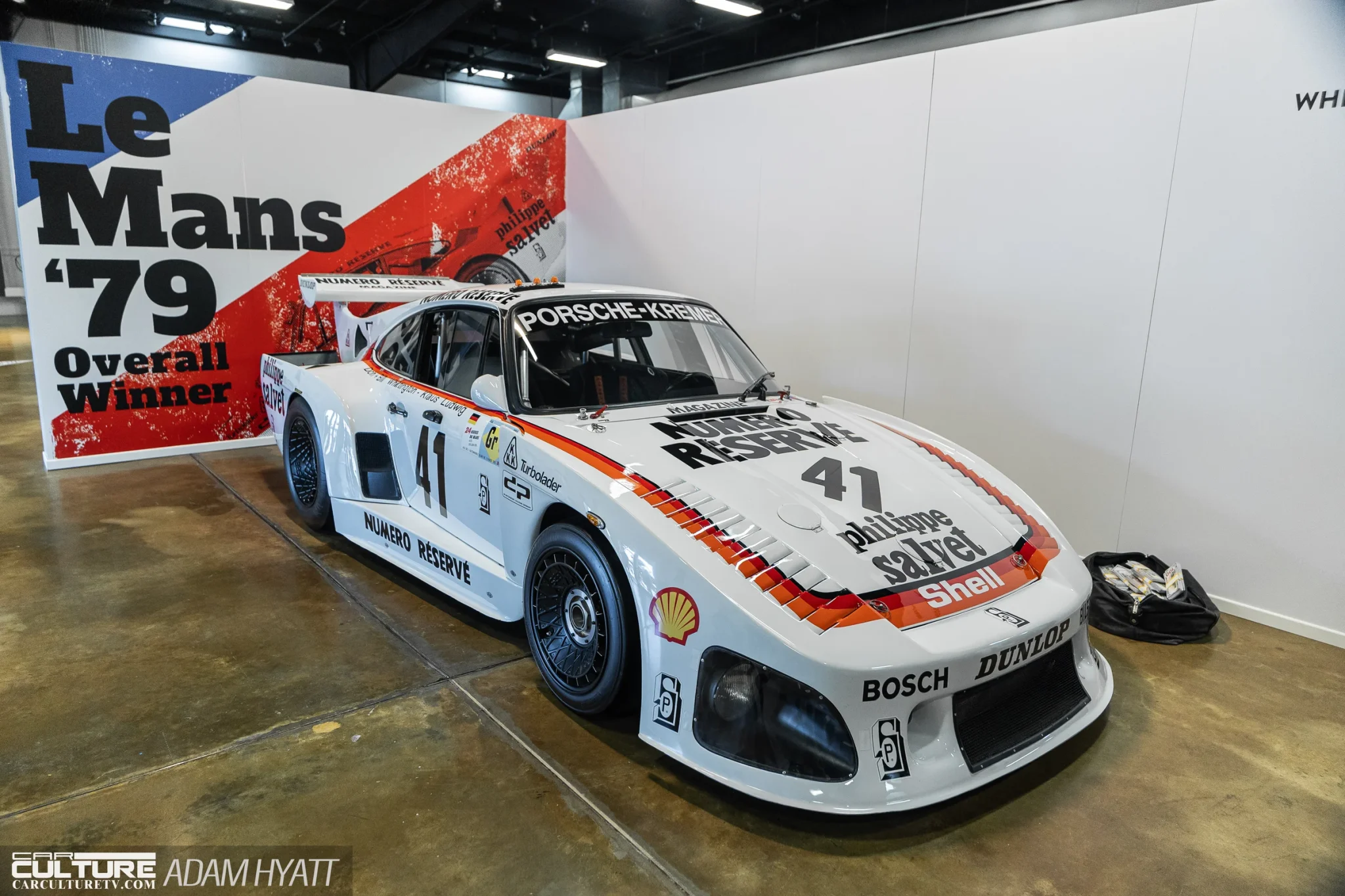
The Vasek Polak Racing 911 RSR, number 01, got its own indoor display frame. White with Camel GT, IMSA, Castrol, and Fujifilm decals intact, this is one of the most recognized names in American Porsche racing history sitting exactly as it competed. The Bill and Don Whittington 1979 Porsche 911 935 K3 also had a placard that told its story plainly: the Whittington brothers paid $200,000 to buy the car from teammate Klaus Ludwig, then went out and won overall at Le Mans. It remains the only 911 to ever win outright at Le Mans.
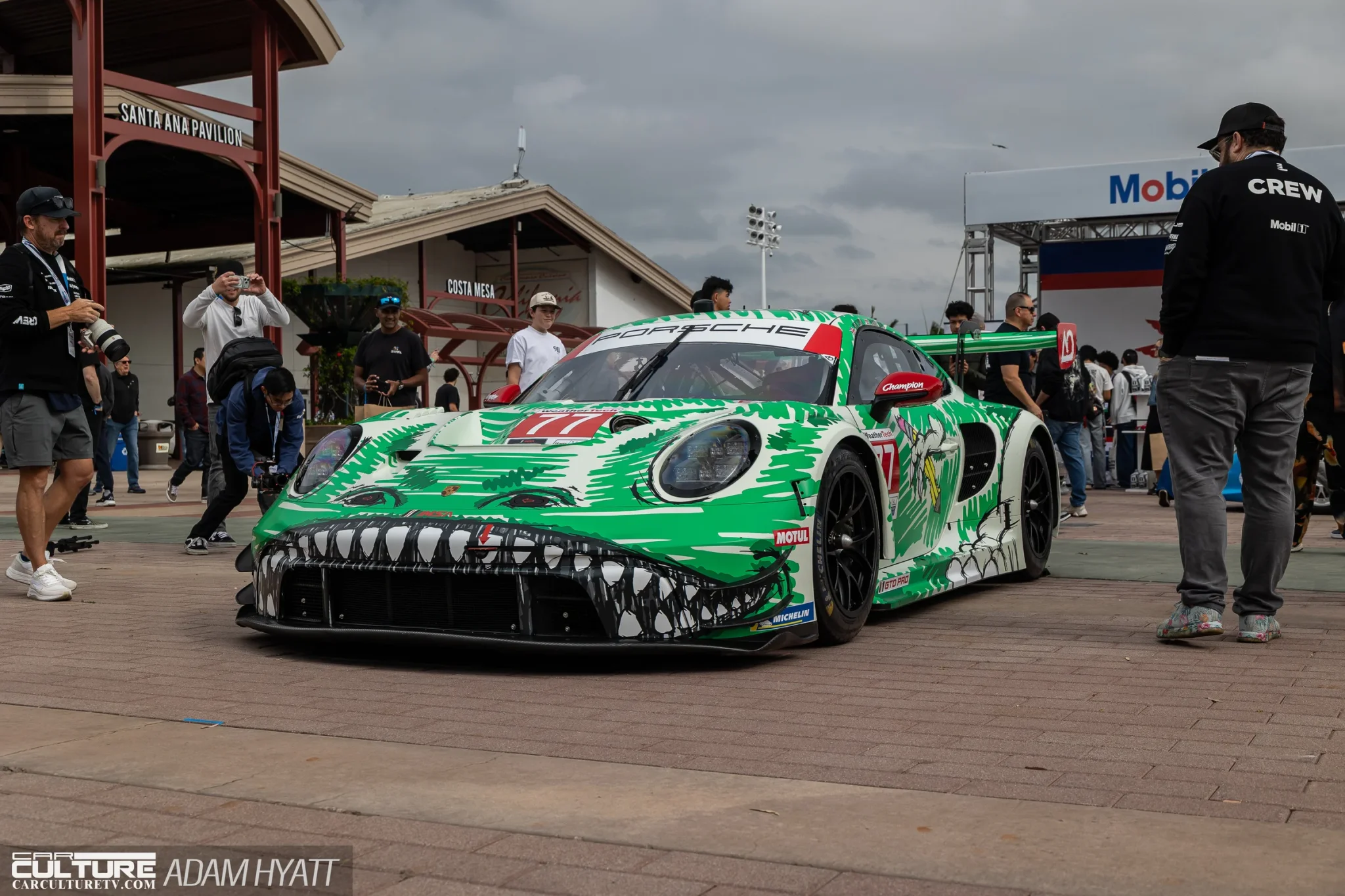
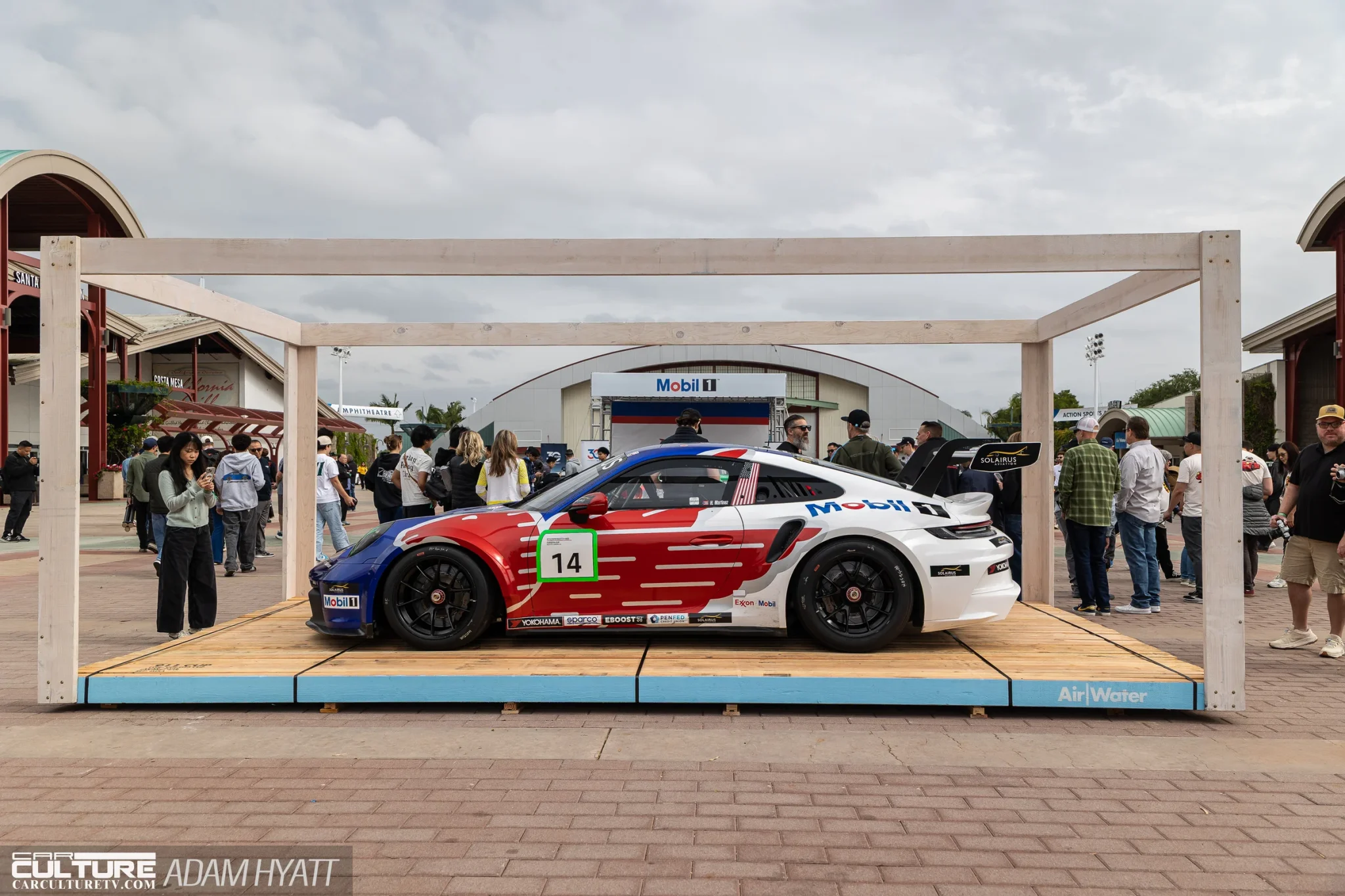
AO Racing rolled in with the fan-favorite Rexy GT3 R, number 77, in its unmistakable green and white shark-mouth livery. Crowds gathered around it all day while also getting a chance to shop Rexy merchandise. A red, white, and blue Mobil 1 liveried 992 GT3 R, number 14, with Solairus Aviation and Exxon Mobil sponsorship, was displayed on an Air | Water platform directly outside The Hangar entrance. Both cars put current-generation Porsche motorsport front and center alongside the historic machinery.
The Builds That Earned a Second Look
Beyond the race car displays, the show floor rewarded anyone willing to cover ground. The cars that stopped people cold were the ones that did something unexpected with the platform.
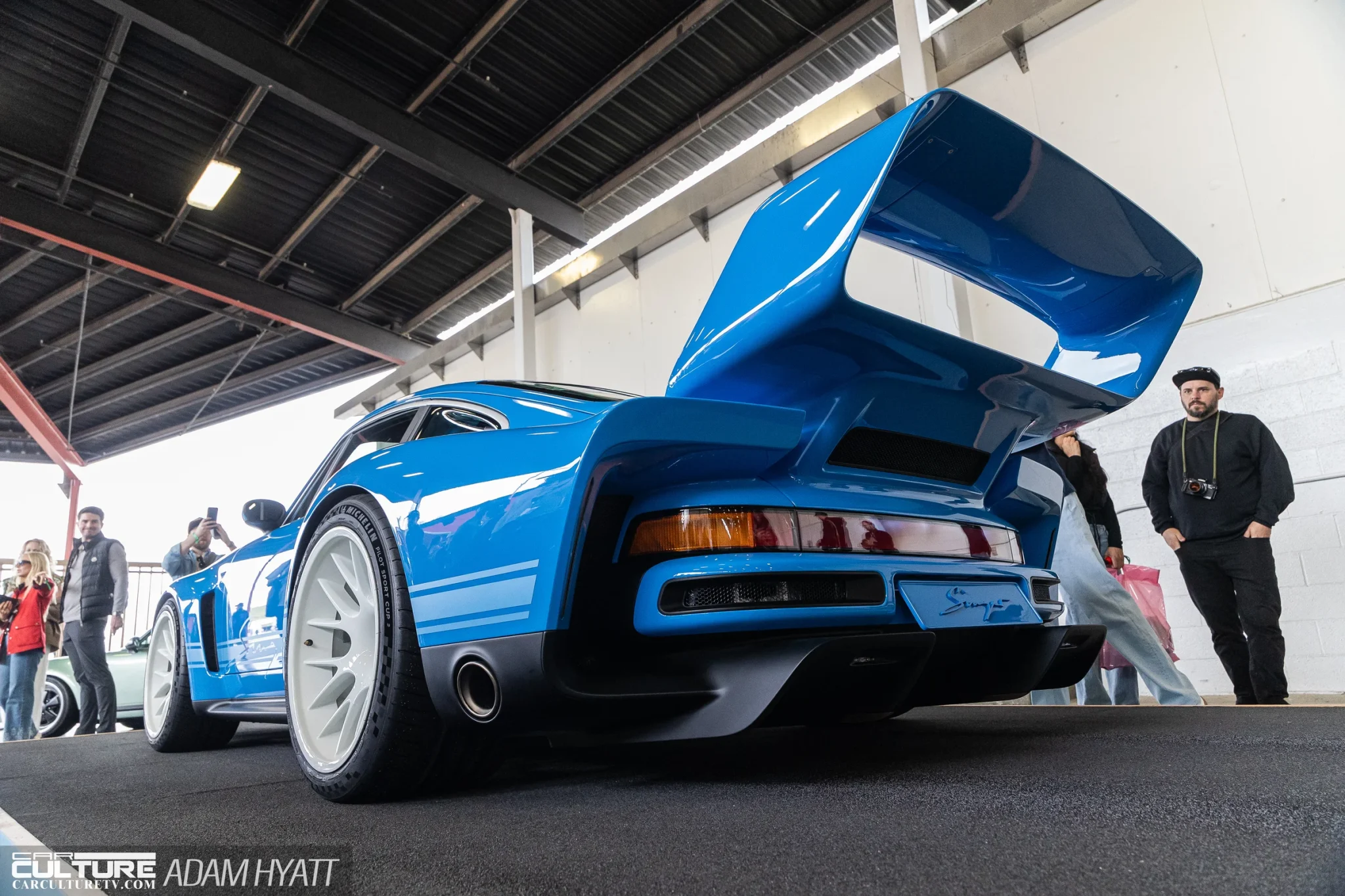
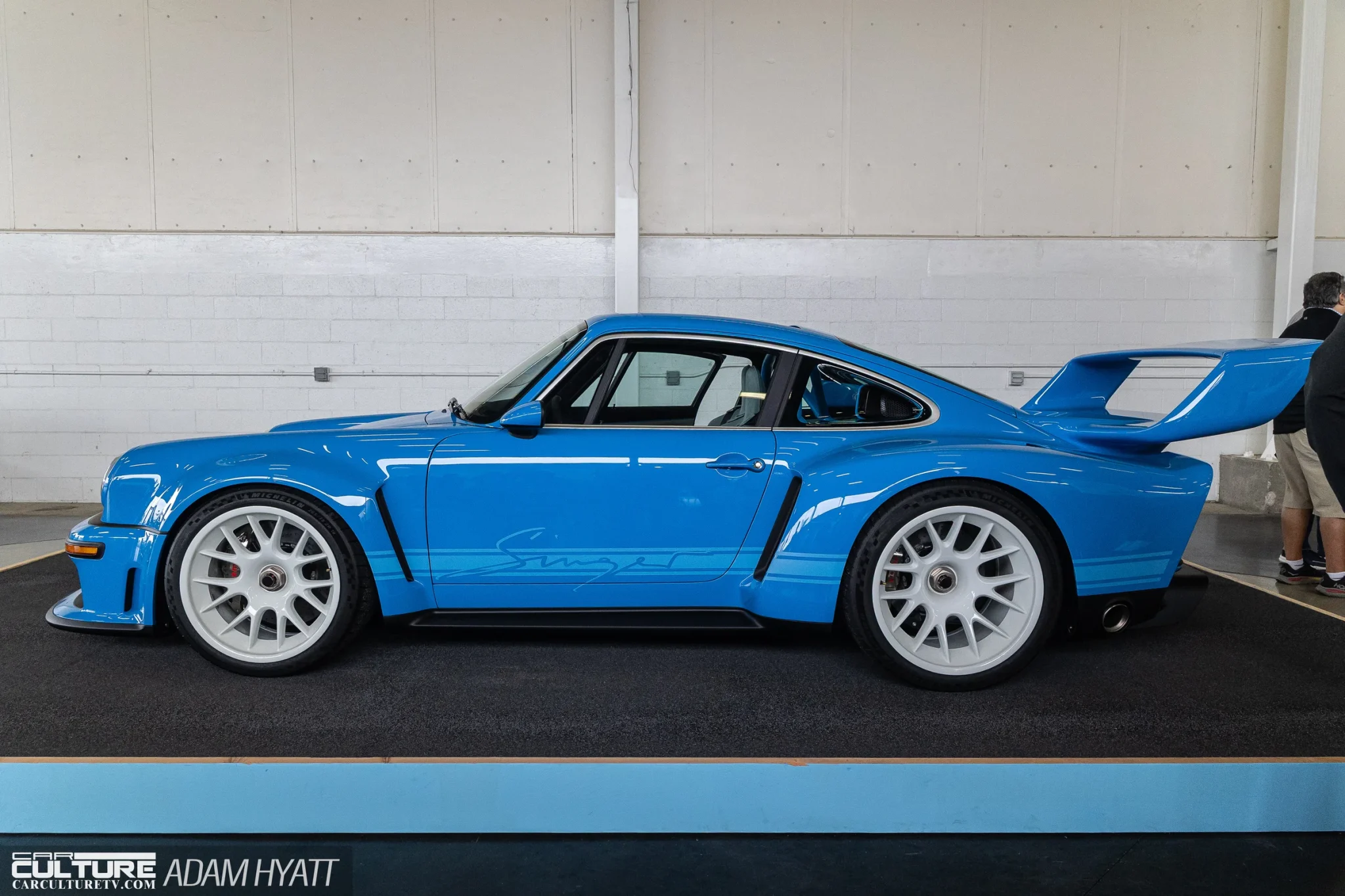
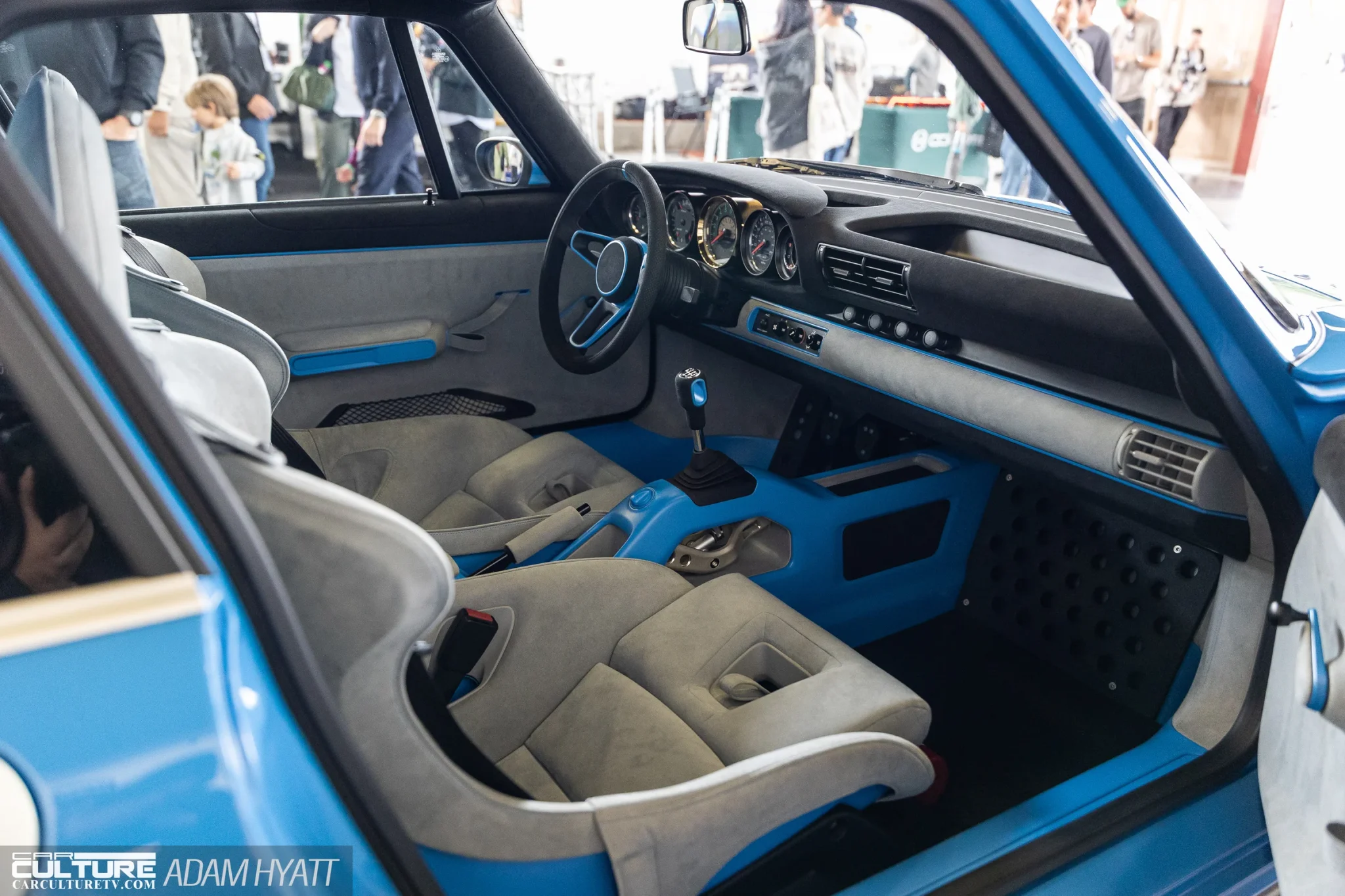
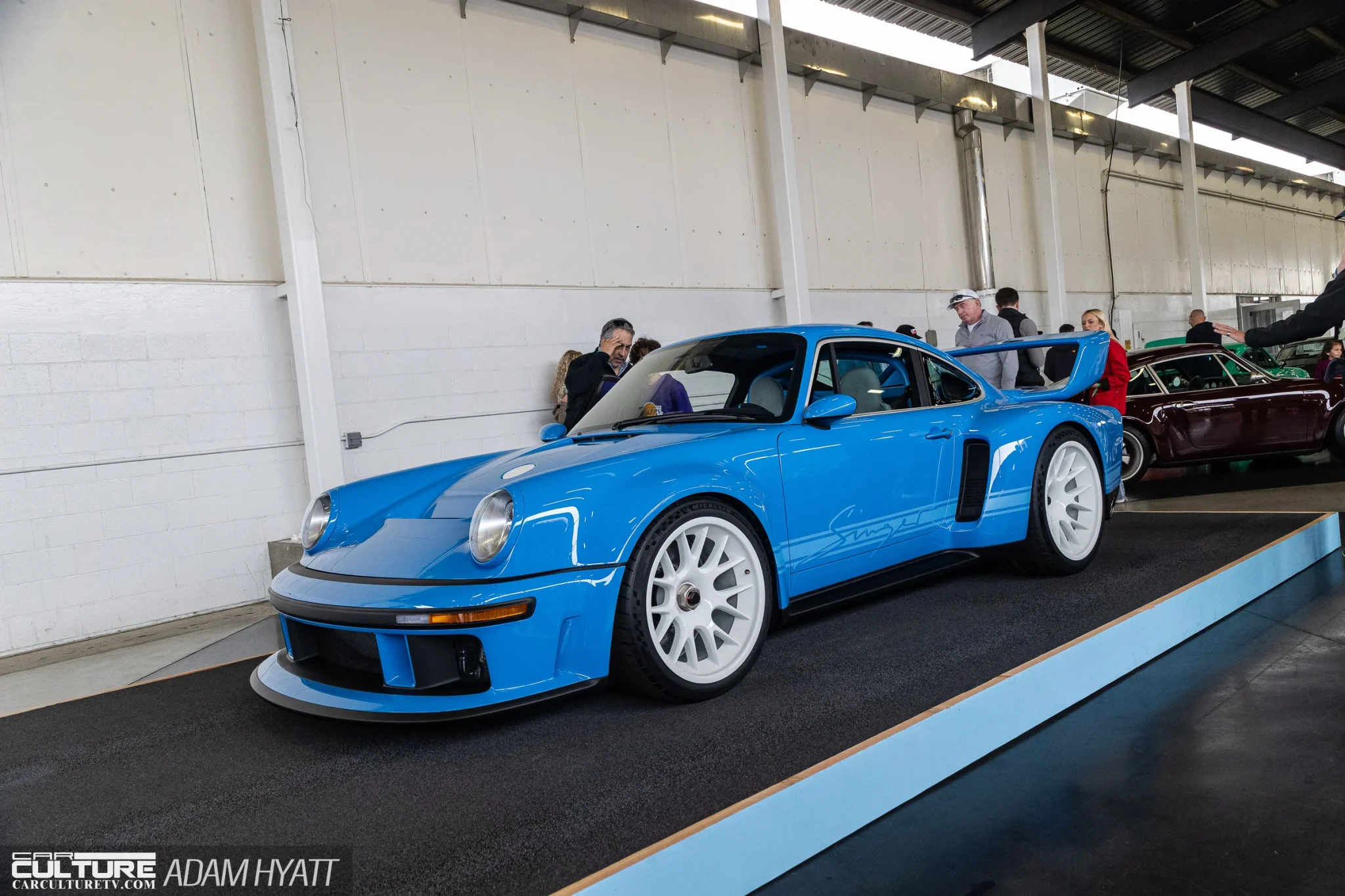
A vivid sky blue Singer DLS Turbo, one of the very first examples of the program ever completed, was displayed indoors on a raised platform. The DLS was developed in collaboration with Williams Engineering and represents the most technically ambitious program Singer has undertaken. Seeing one of the earliest cars from that project in the flesh, surrounded by a crowd that clearly understood what they were looking at, was a genuine highlight.
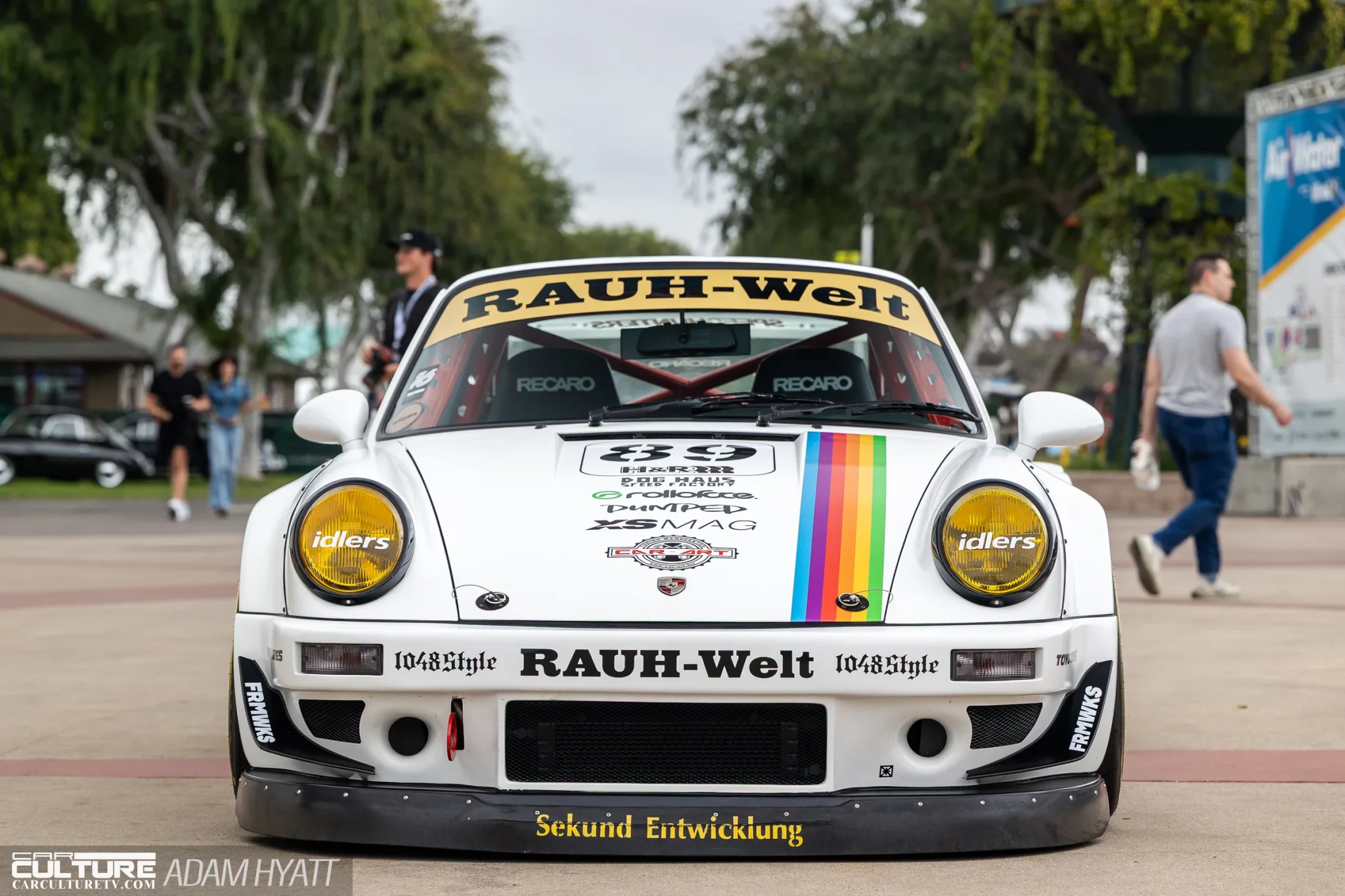
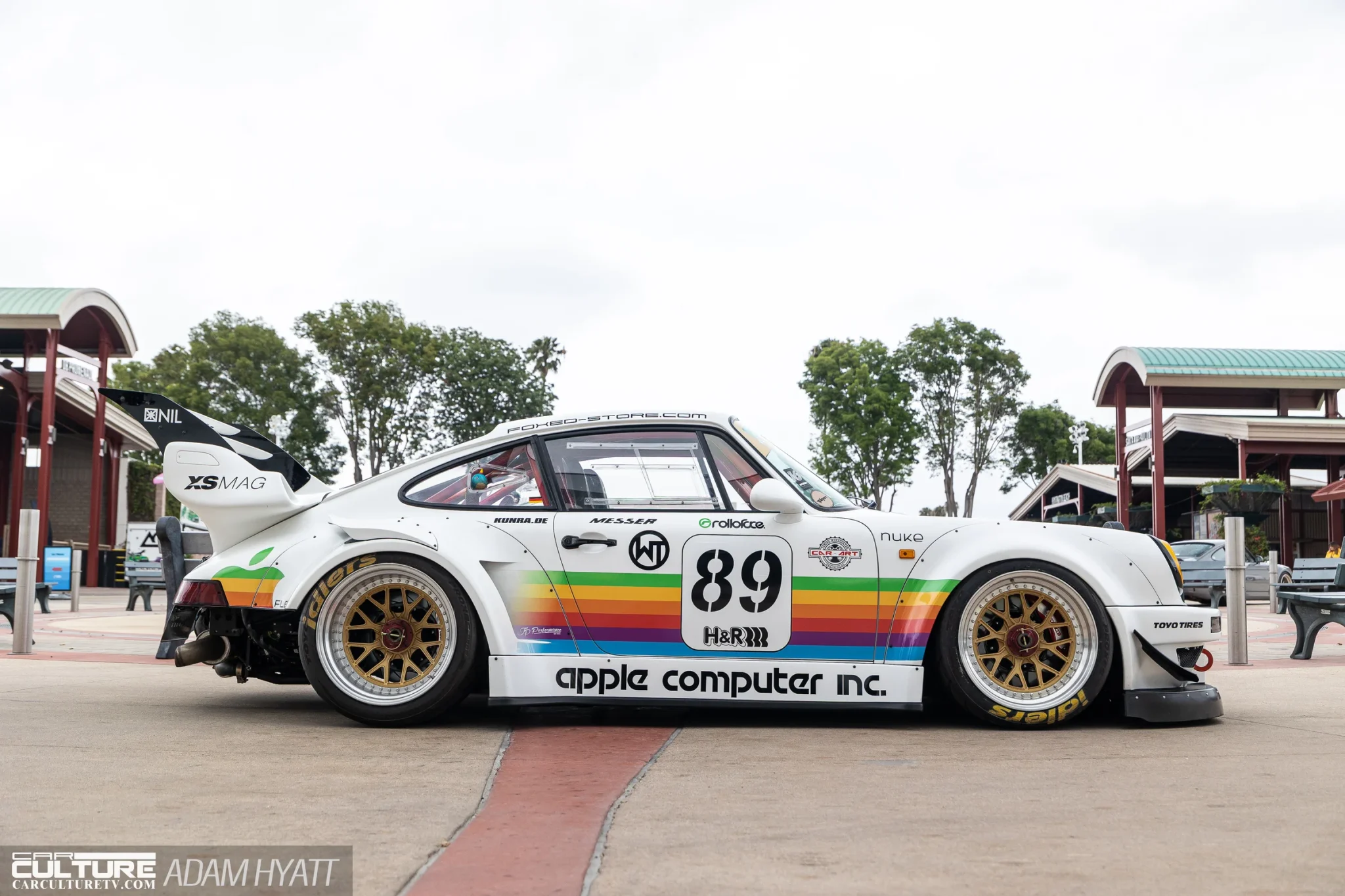
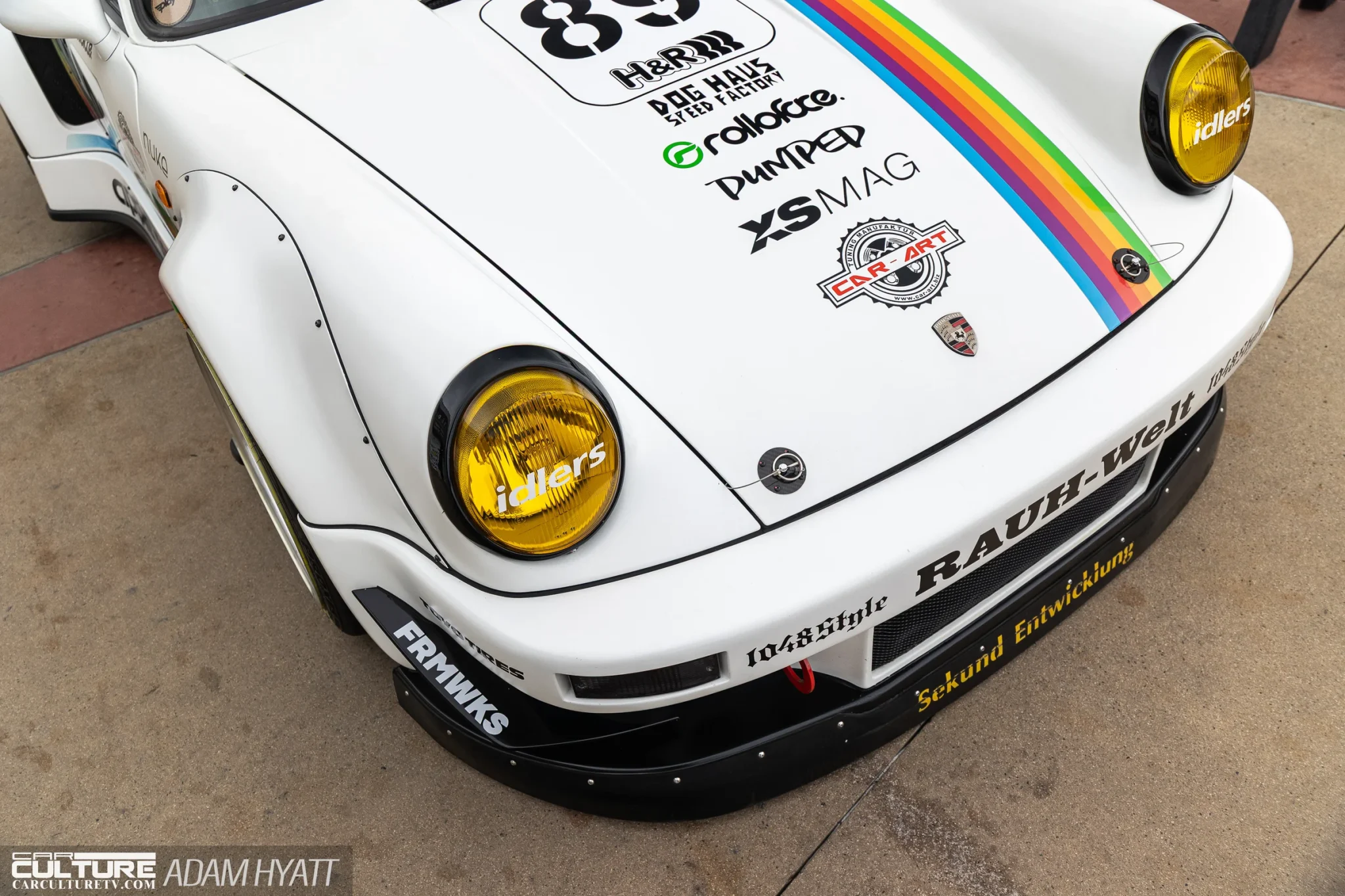
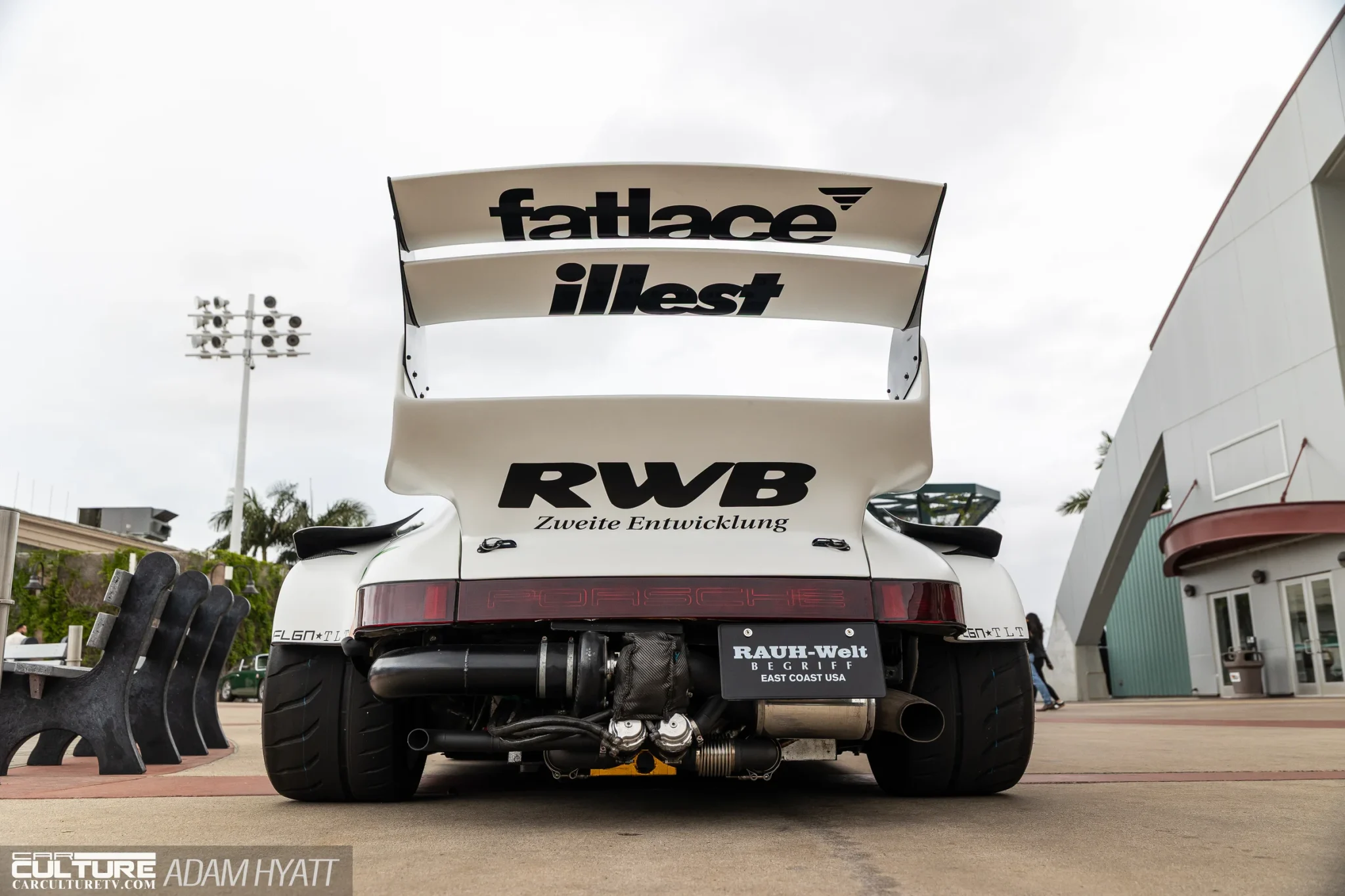
The Apple Computer Inc. 930, number 89, attracted a completely different crowd. Wearing the rainbow stripe livery across a Rauh-Welt Begriff, also known as RWB, wide-body 930-era 911 in white, rolling on Messer ME15-3 gold three-piece wheels with Toyo tires. It read like someone dropped a piece of early Silicon Valley history into a Porsche show. The H&R, Rolloface, and XS Mag sponsorship stickers indicate a heavily built track-day machine wearing the livery as a tribute rather than an original period car. It did not matter. People could not leave it alone.
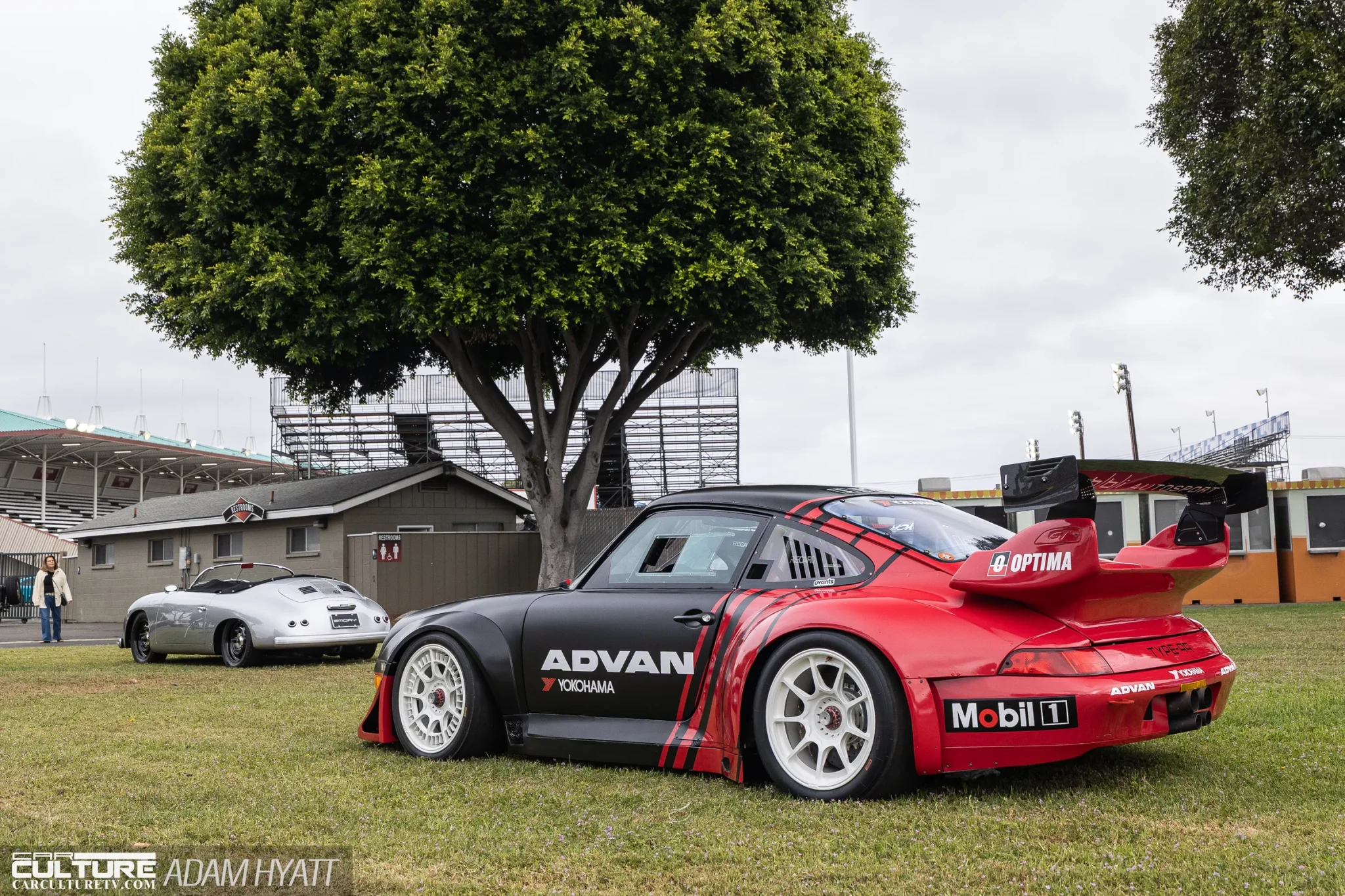
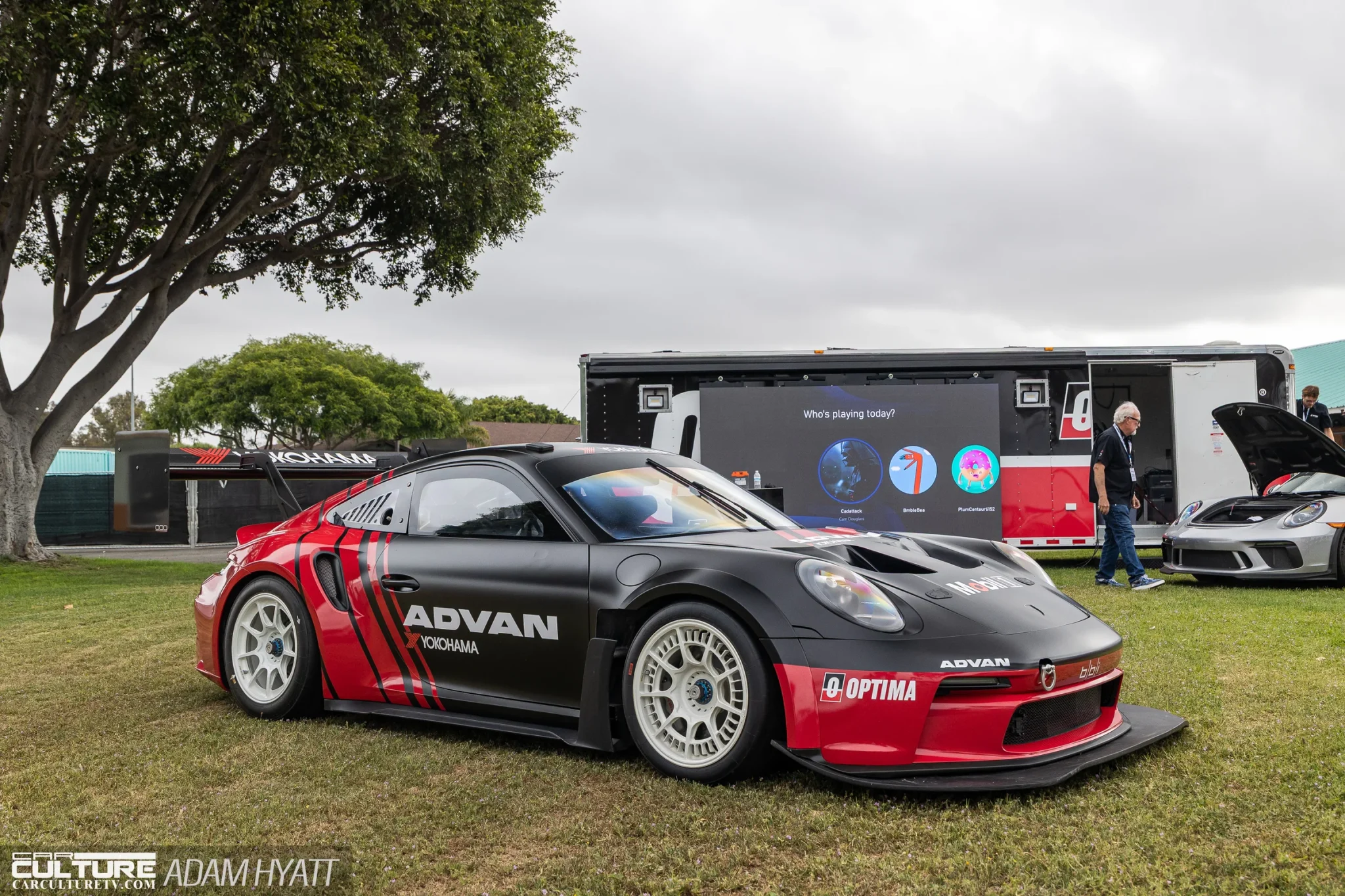
BBi Autosport showed up with a two-car Yokohama Advan livery display that put old and new side by side. A 993-generation 911 in black and red Advan Yokohama wide-body trim sat on white multi-spoke wheels with full cage and Mobil 1 and Optima Batteries support. Parked alongside it was a 992-generation 911 in matching livery, same color scheme, same white wheels, the same aggressive intent expressed forty years apart. The pairing worked.
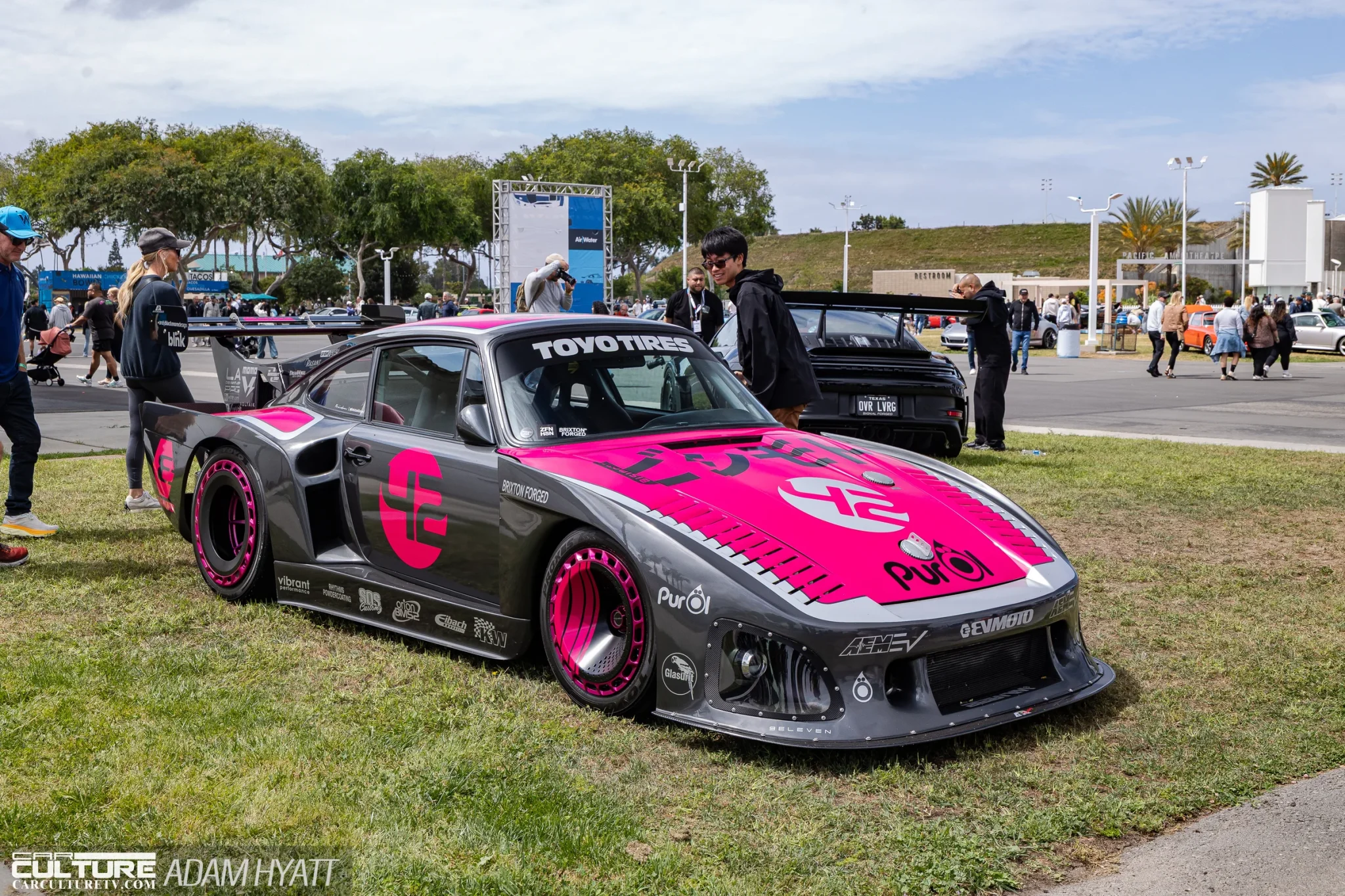
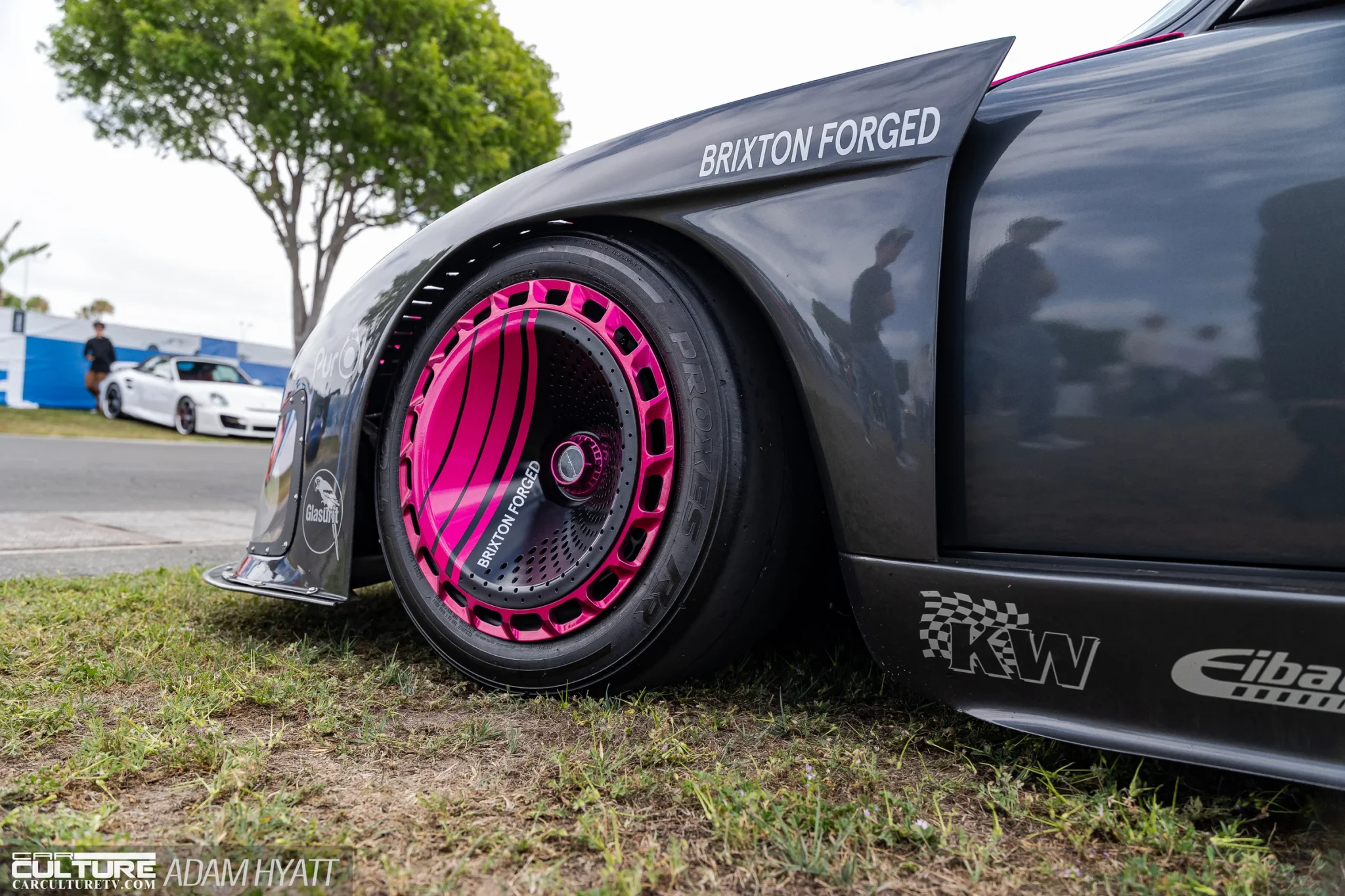
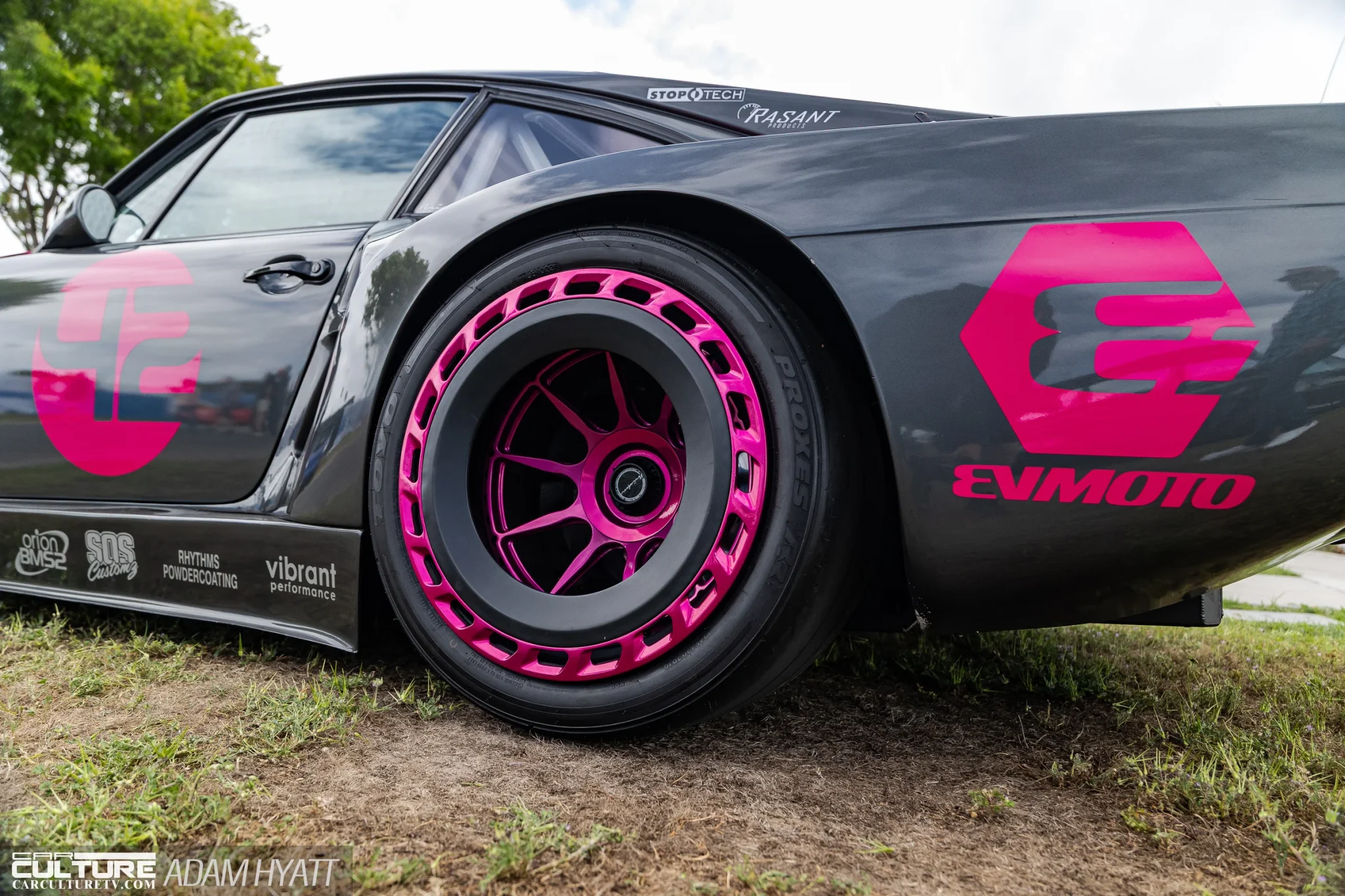
Bisi’s of Bisimoto’s gray and pink 935-style wide-body build, number 42, pulled up on Brixton Forged wheels in matching hot pink and immediately drew a crowd for a different reason. The AEM EV and EVMoto sponsor stickers tell the story: this is an electric-powered 935-body build. In a show full of flat-sixes, that combination demands attention. Toyo Tires, KW and Eibach suspension, with StopTech Brakes, round out some of the build sheet.
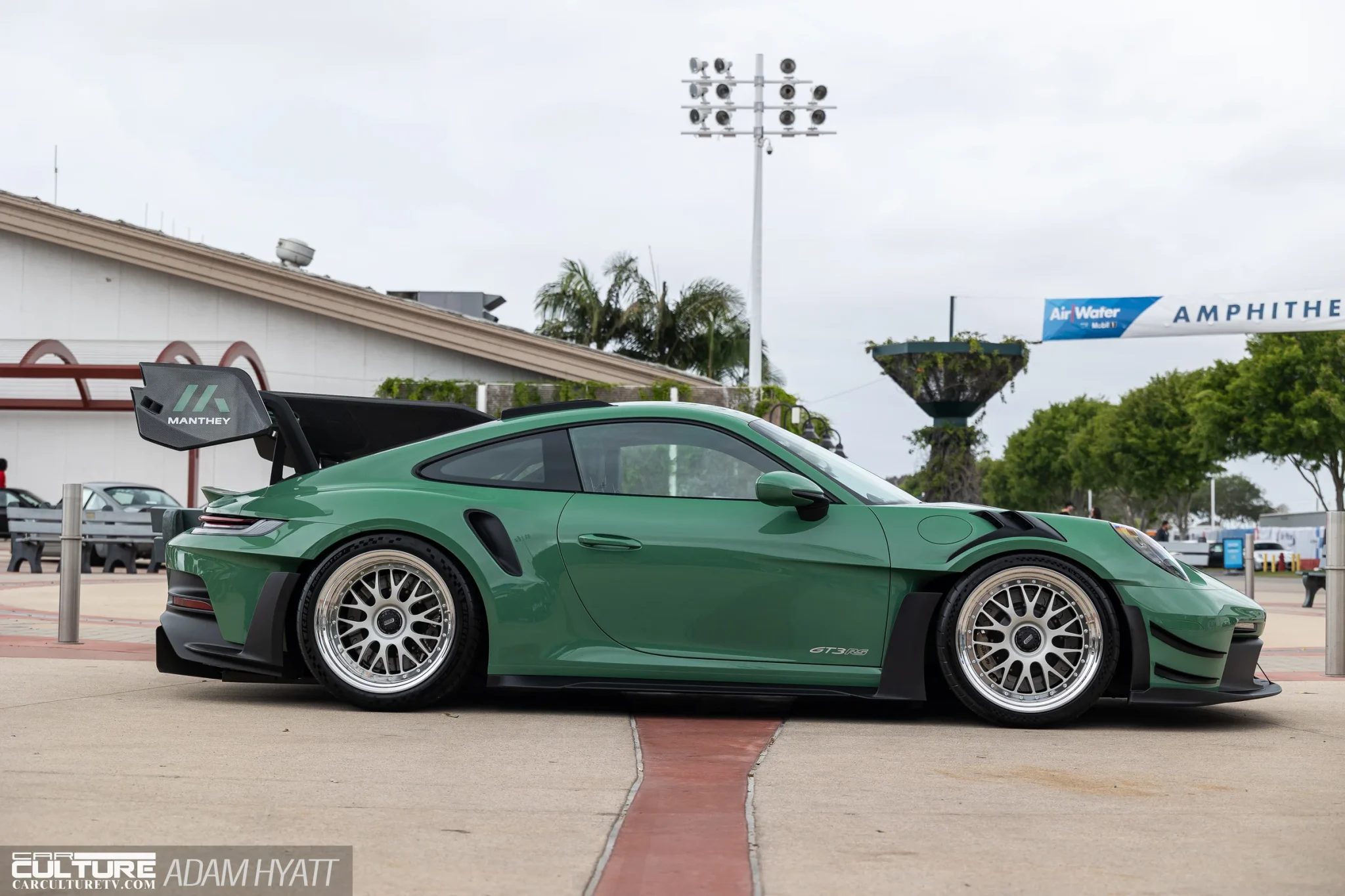
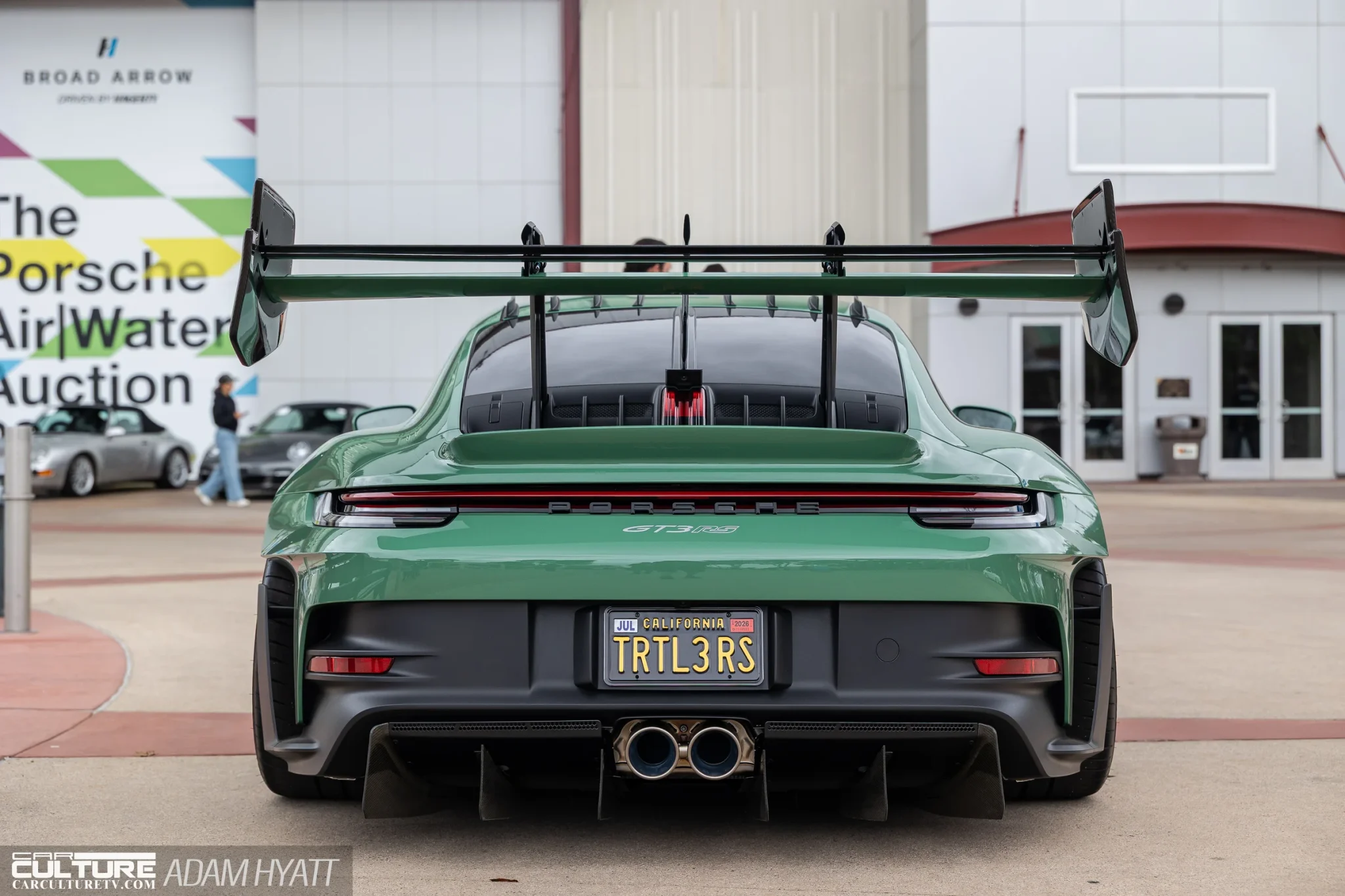
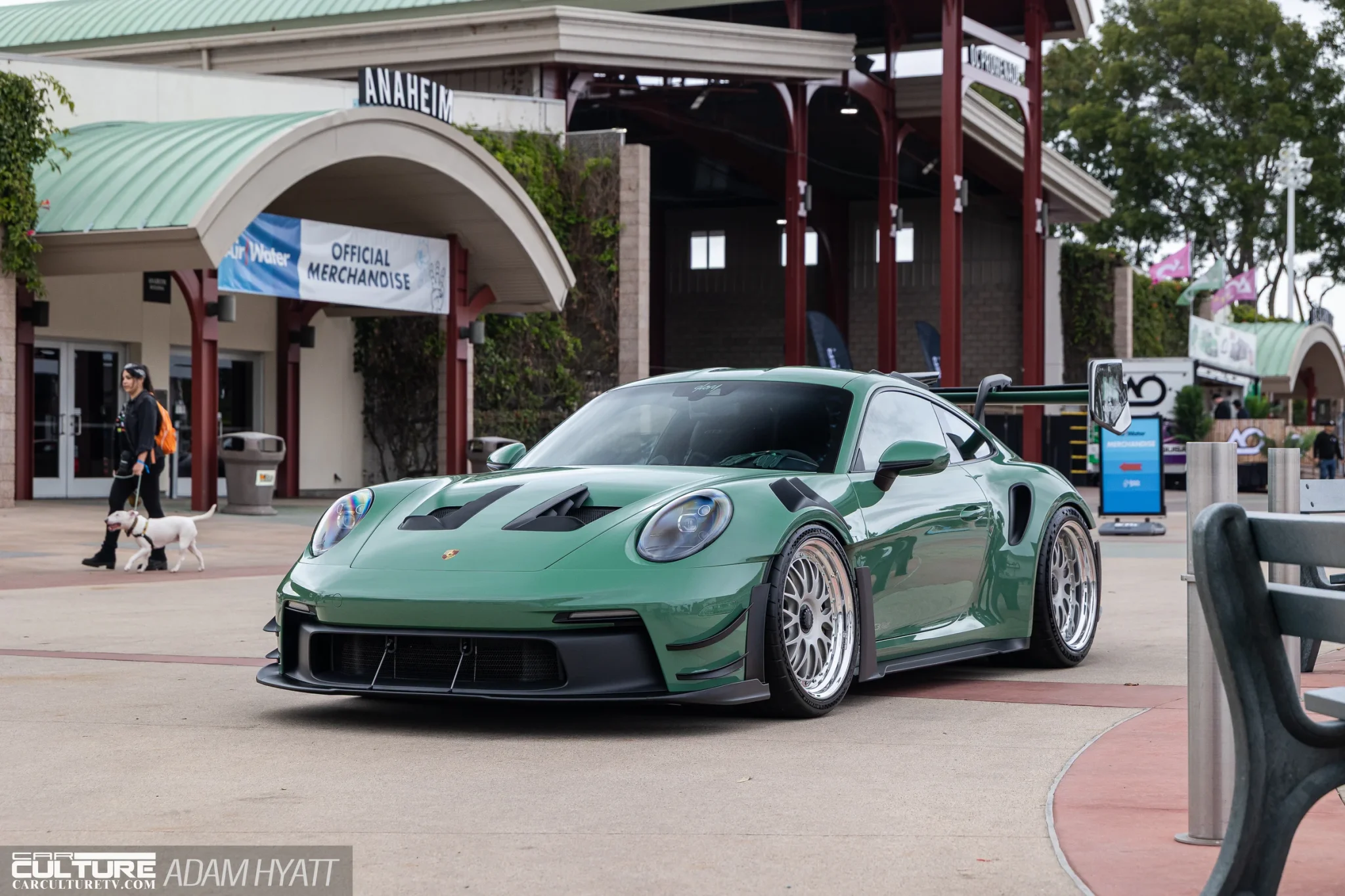
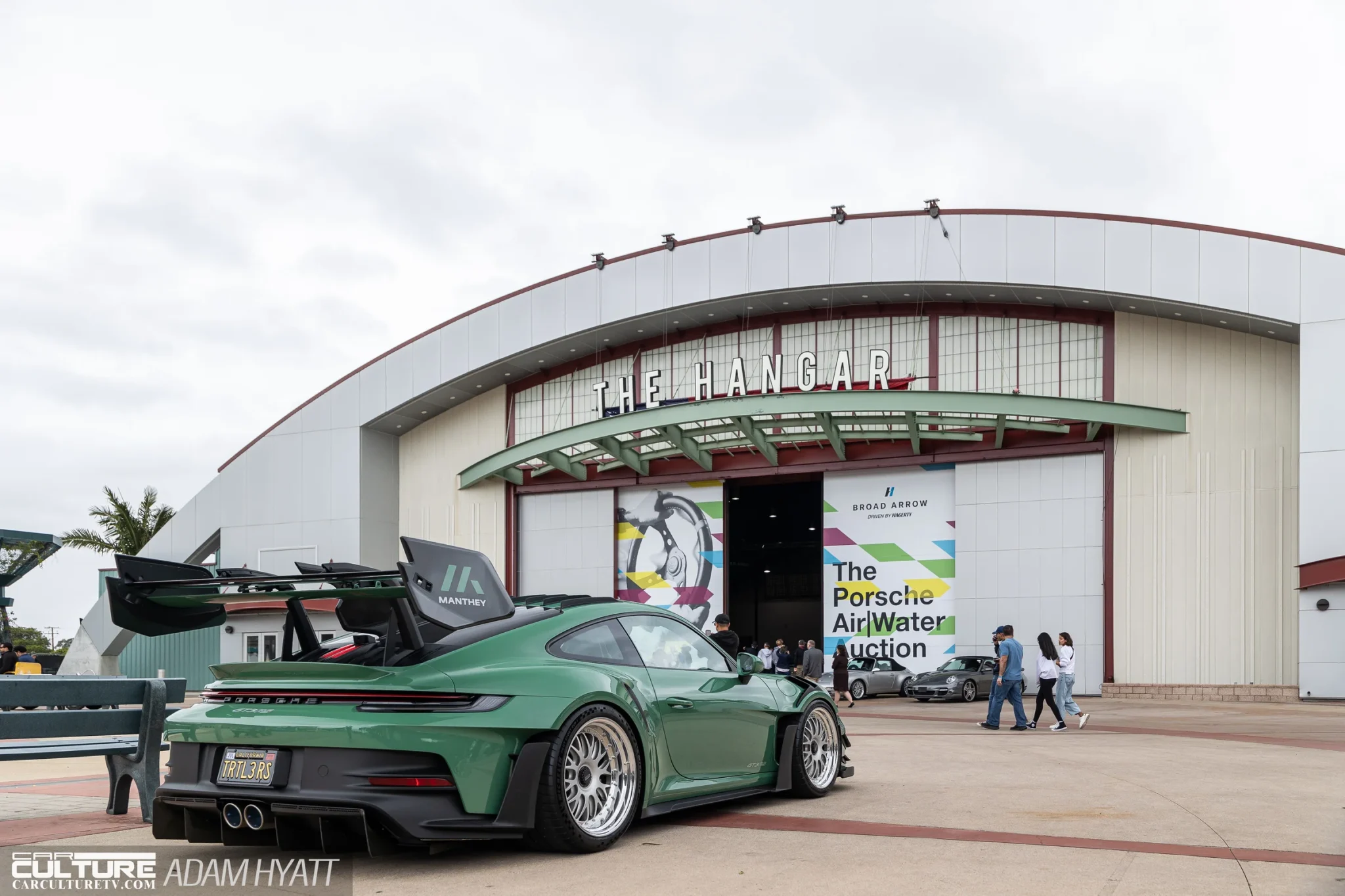
The Manthey Racing kitted 992 GT3 RS in dark forest green, California plate reading “TRTL3RS,” was parked directly outside The Hangar framing the background. Swan-neck rear wing, full Manthey aero, three-piece wheels. A street-registered car wearing full factory-backed race development hardware, parked casually in the middle of everything. That is Air | Water in a single image.
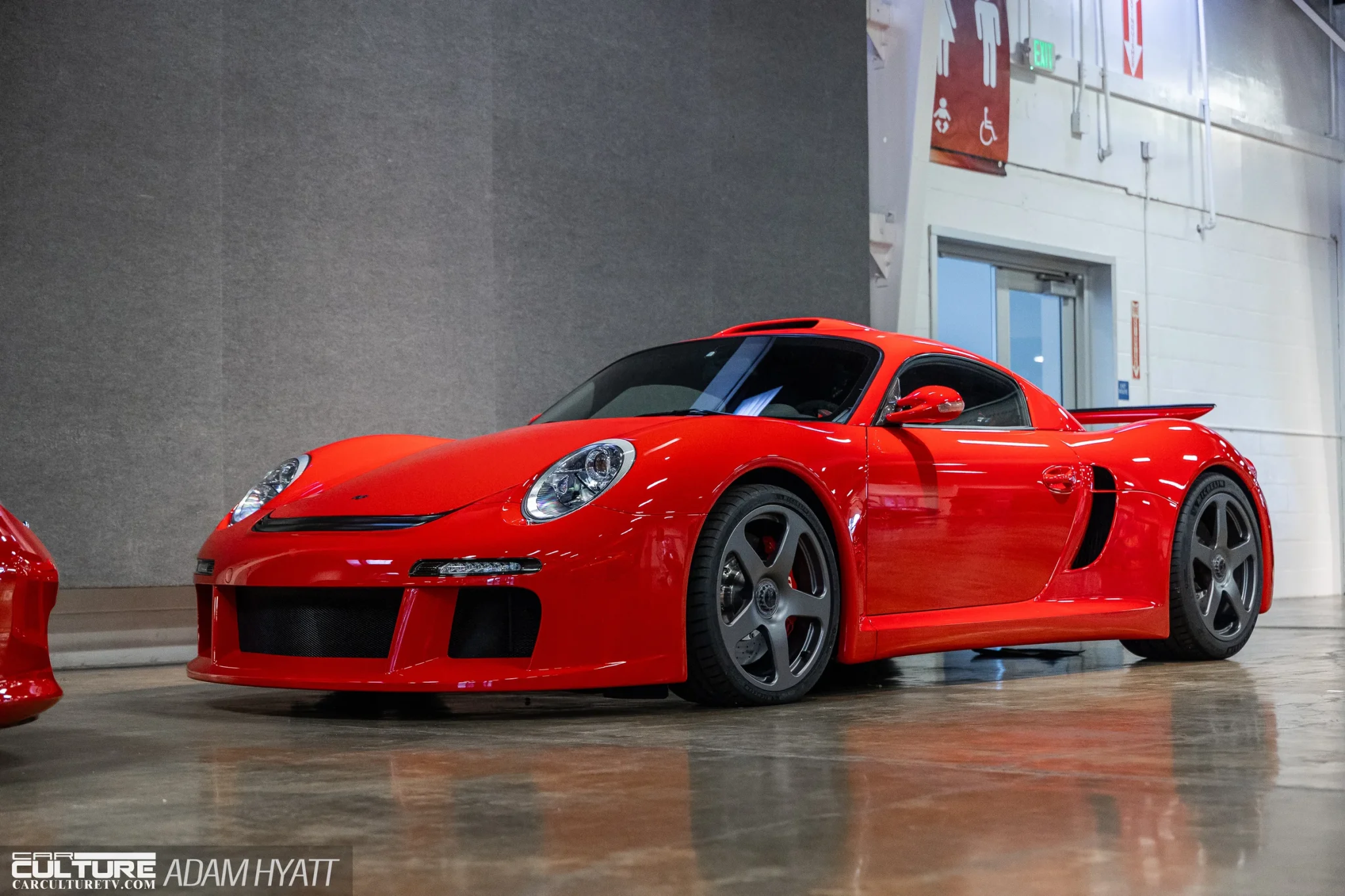
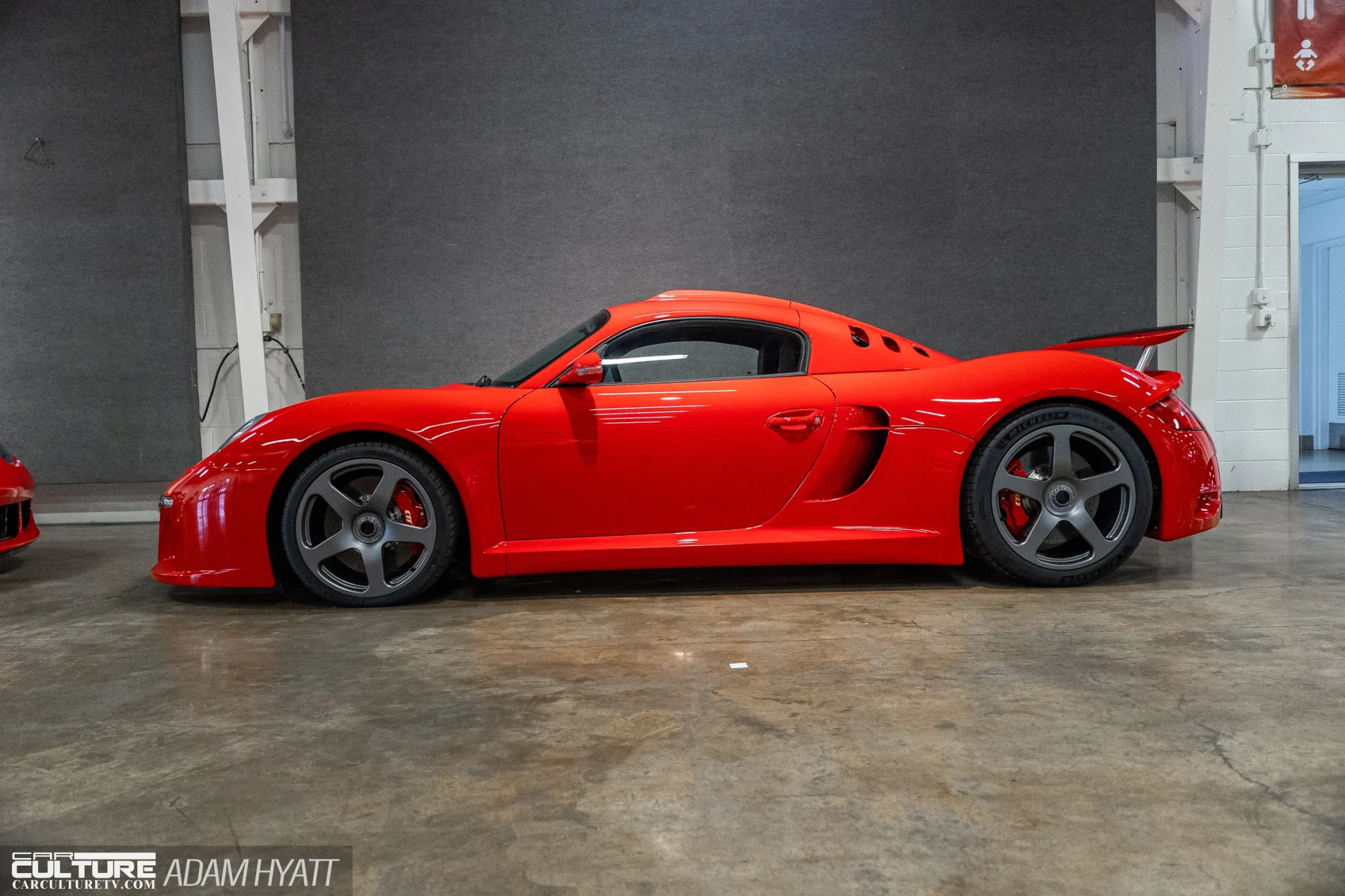
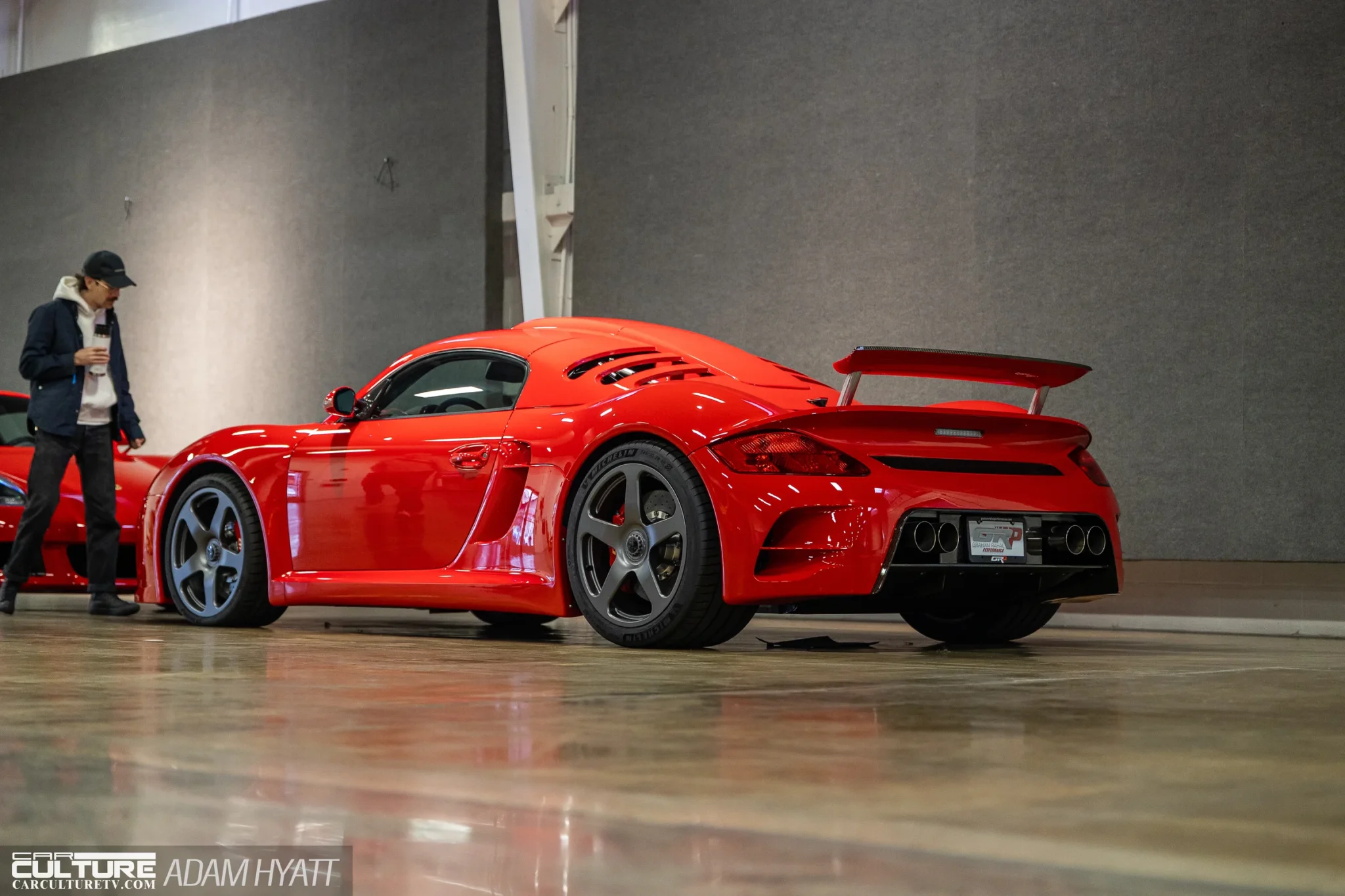
The RUF CTR3 in Guards Red was displayed indoors alongside other RUF machinery. The mid-engine layout, front fascia, and side intakes confirmed it immediately. RUF at a Porsche event always draws the purists, and this one held its own in a room full of competition.
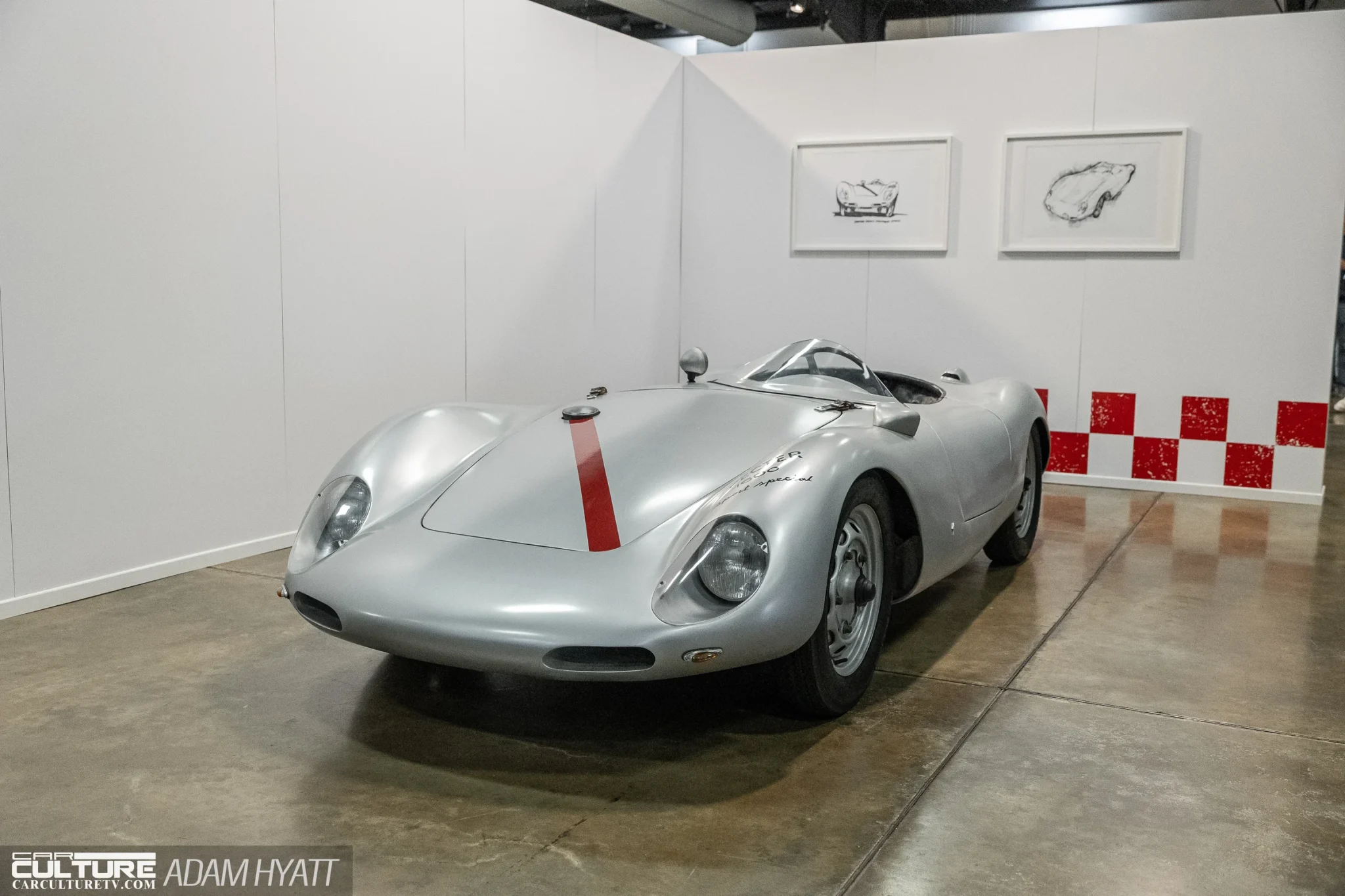
The Tanner Boyes Specter Alloy-Sports Special from 2025 deserves its own mention. Built on a full-sized 1960 Porsche 356 platform and coachbuilt by Specter Design using strictly traditional methods, the placard described it as the coach-built competition Porsche special that never existed but should have. Handmade panel work throughout. A car imagined as a 1950s factory-built competition special that Porsche never actually produced. The concept is ambitious and the execution matched it.
The BMX Freestyle Team Brought a Different Kind of Horsepower
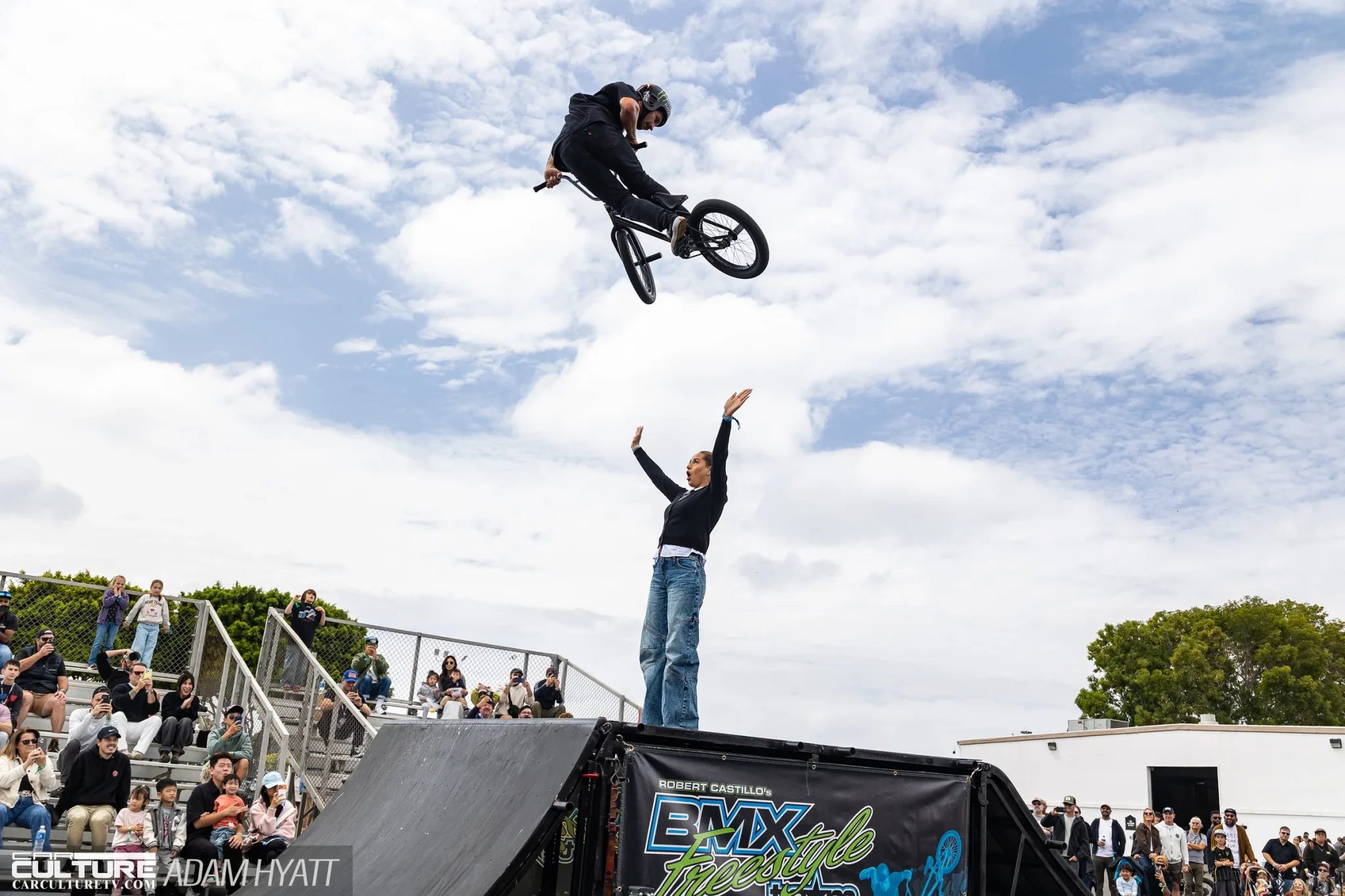
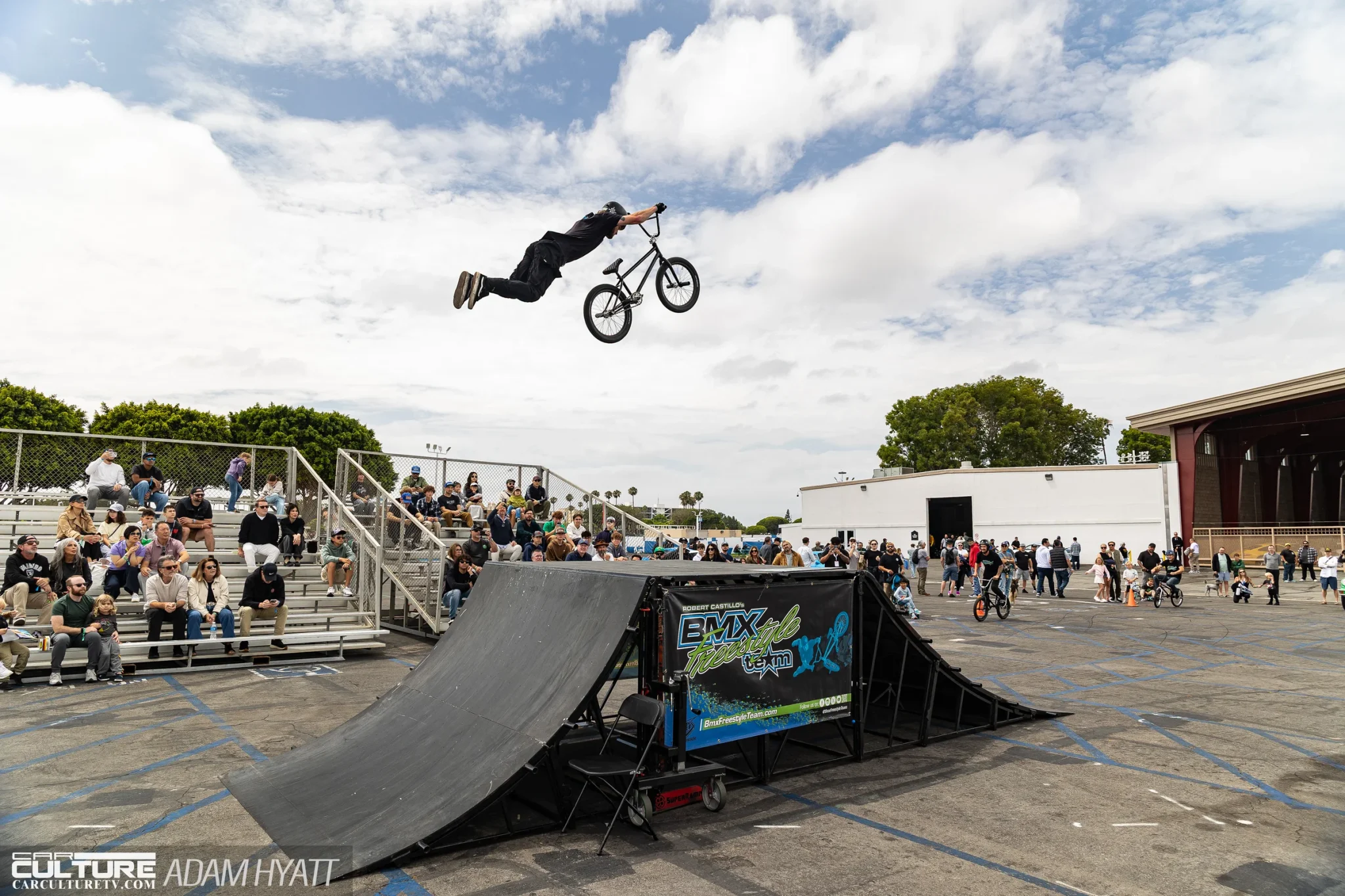
Not everything at Air | Water runs on a flat-six. The BMX Freestyle Team, led by Robert Castillo and featuring riders Jared Wiedower and Larry Edgar, set up a ramp on the grounds and put on a show that had nothing to do with Porsche and everything to do with why people love events like this. High-energy ramp riding in the middle of a collector car gathering is exactly the kind of left-field programming that keeps a show from feeling like a museum visit. Wiedower used the appearance to showcase the new IKONIX FS1 frame, throwing tricks over a volunteer standing on a platform and pulling aerial moves that stopped foot traffic cold. The crowd that gathered had probably not expected to watch pro BMX at a Porsche show. That was the point.
Gunther Werks Closes the Speedster Chapter With Project Endgame
The most dramatic reveal of the weekend did not come from Stuttgart. It came from a California-based restomod house that has been pushing the limits of what a 993-generation 911 can become.
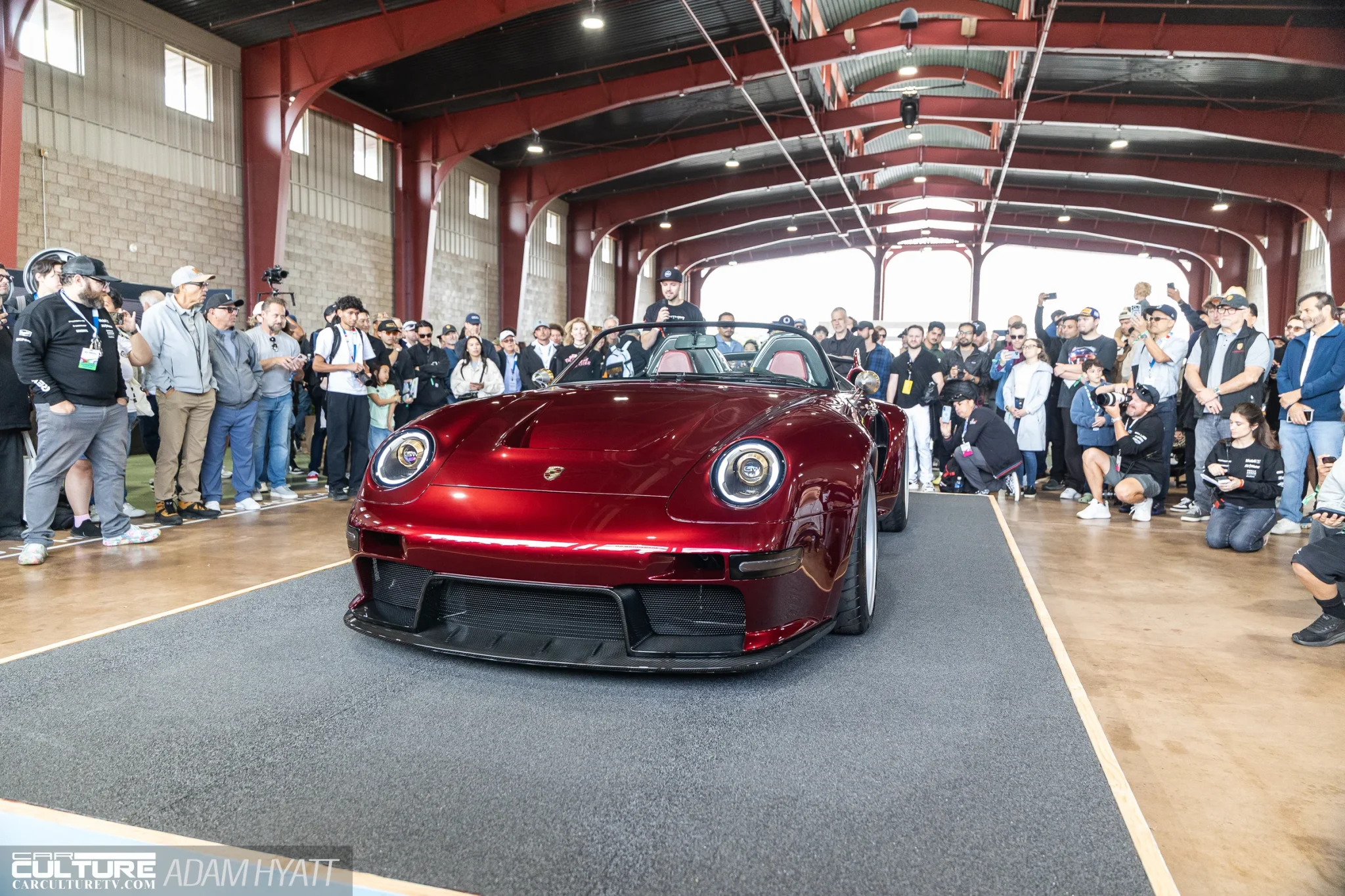
Gunther Werks unveiled Project Endgame at Air | Water, and the car earned every bit of attention it pulled. Called Project Endgame because it is the final build in Gunther Werks’ Speedster program, this True Candy Red machine hides a Rothsport Racing twin-turbocharged air-cooled 4.0-liter flat-six producing 840 horsepower and 660 pound-feet of torque, all going through a six-speed manual gearbox.
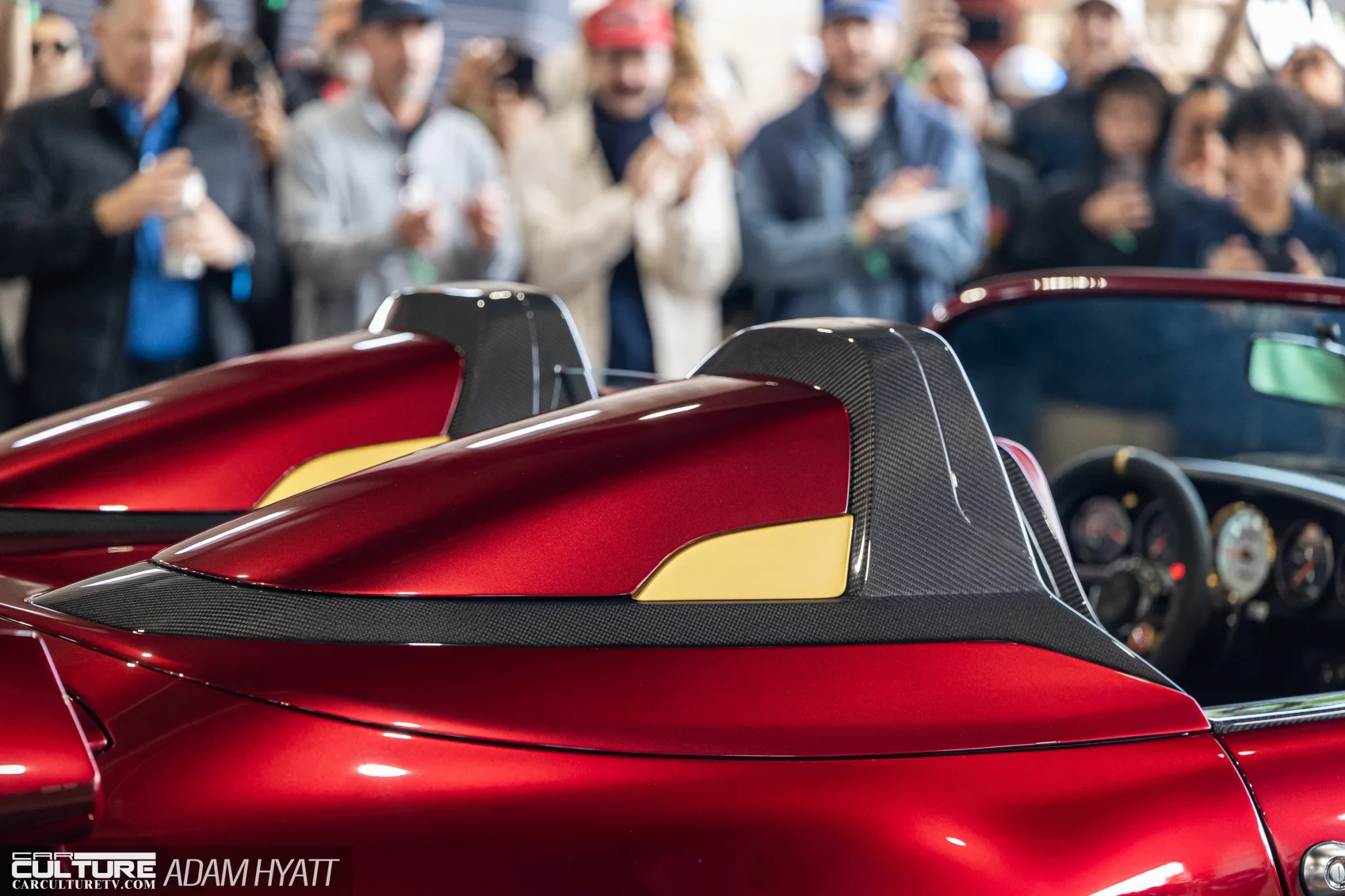
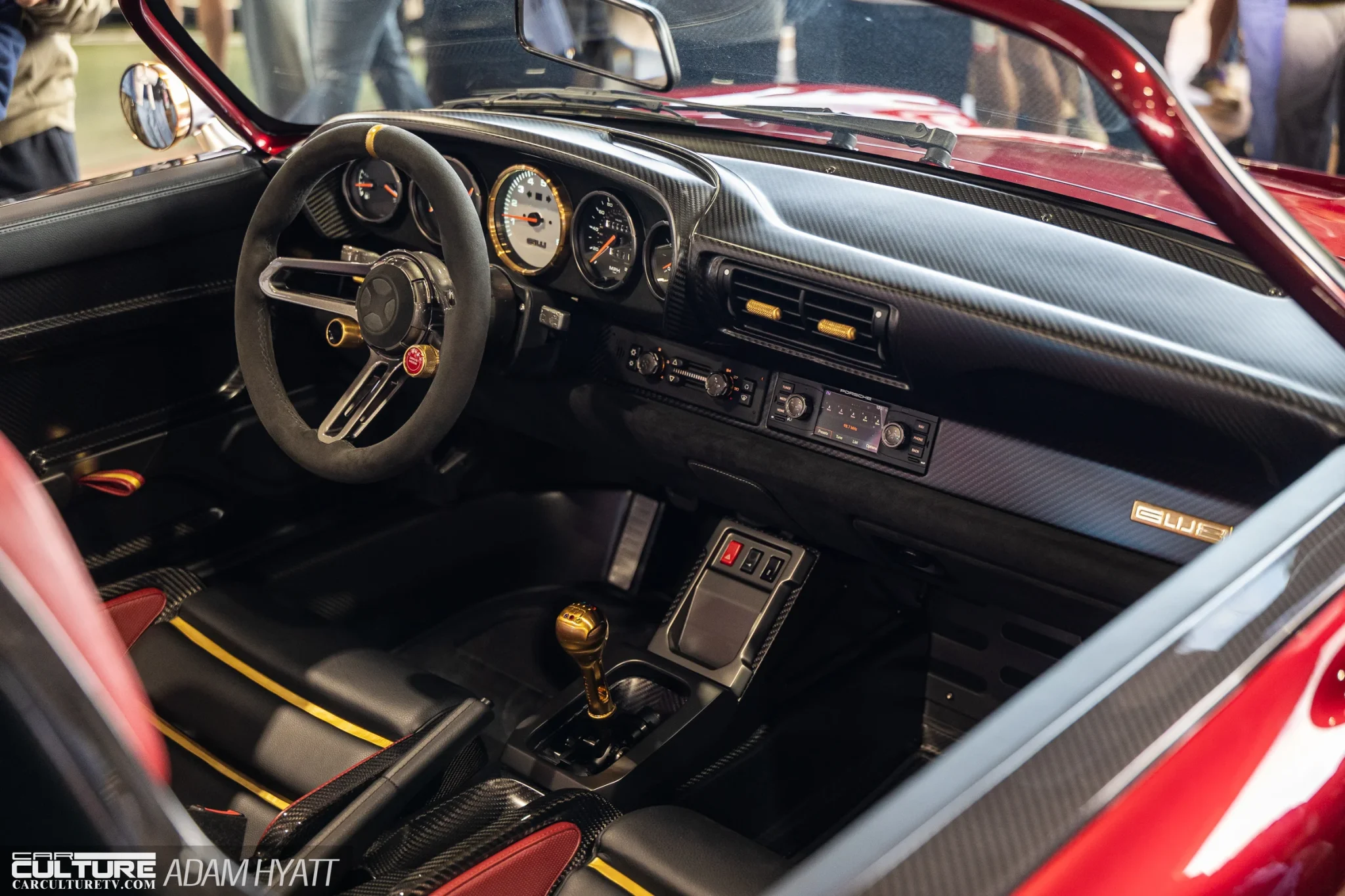
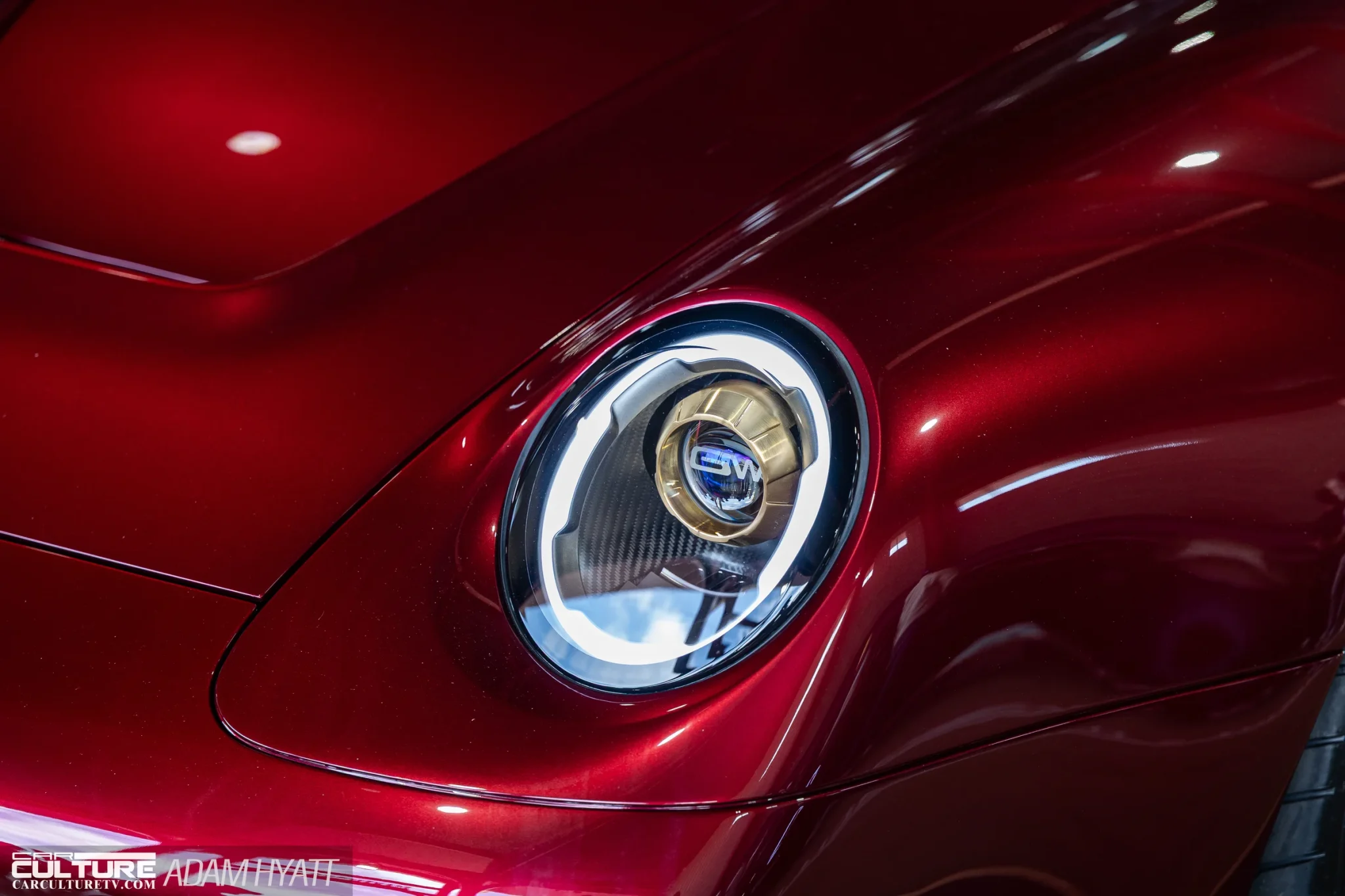
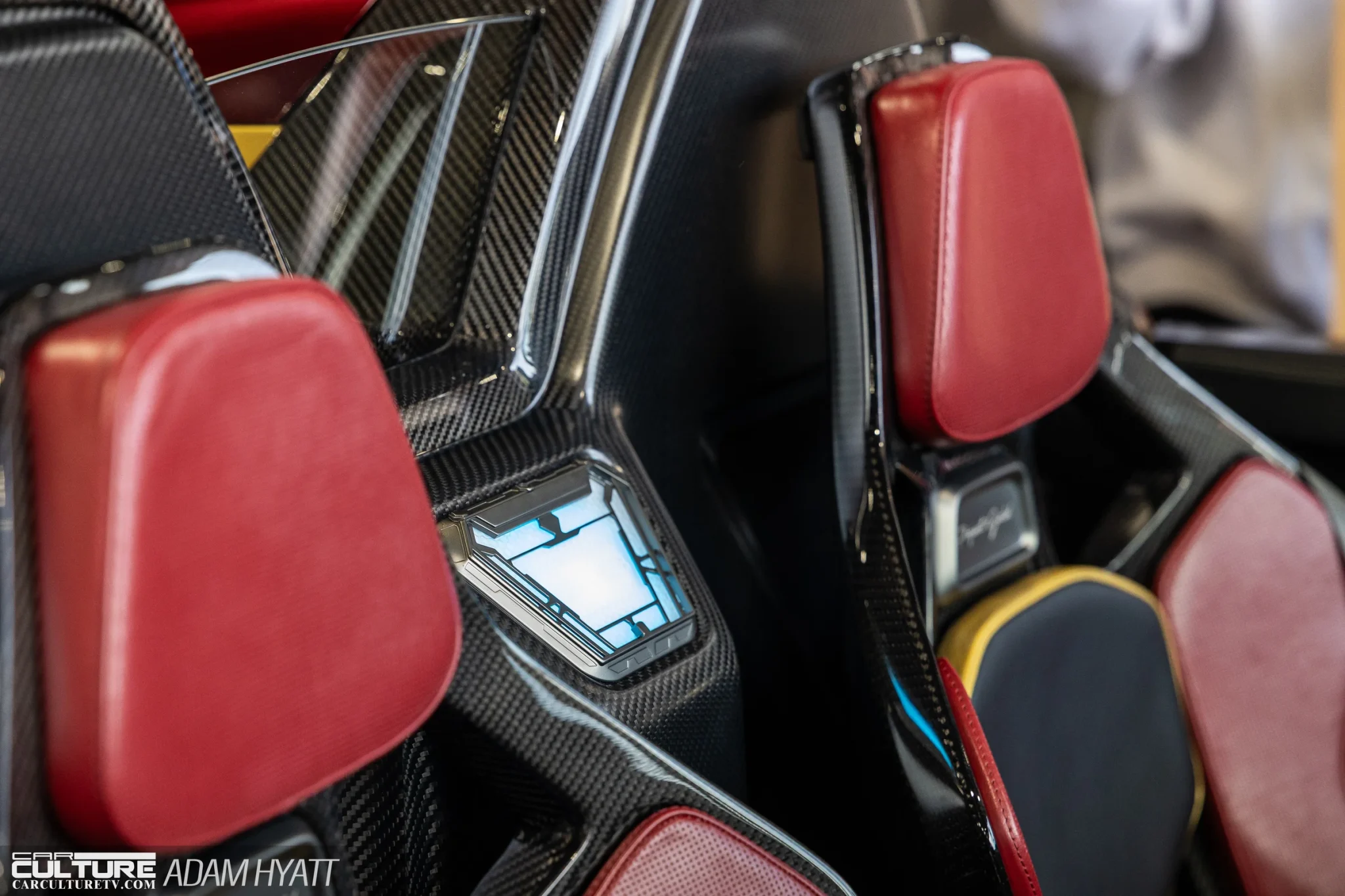
The Iron Man comparison is not subtle and Gunther Werks is not trying to make it subtle. The True Candy Red carbon bodywork, gold accents, a nod to Tony Stark’s suit delivery device placed between the seats, and an Avengers-referencing shift lever all reinforce a design language that openly channels the Marvel character. The air-to-water intercoolers are wrapped in 24-karat gold, which tells you everything you need to know about the build brief.
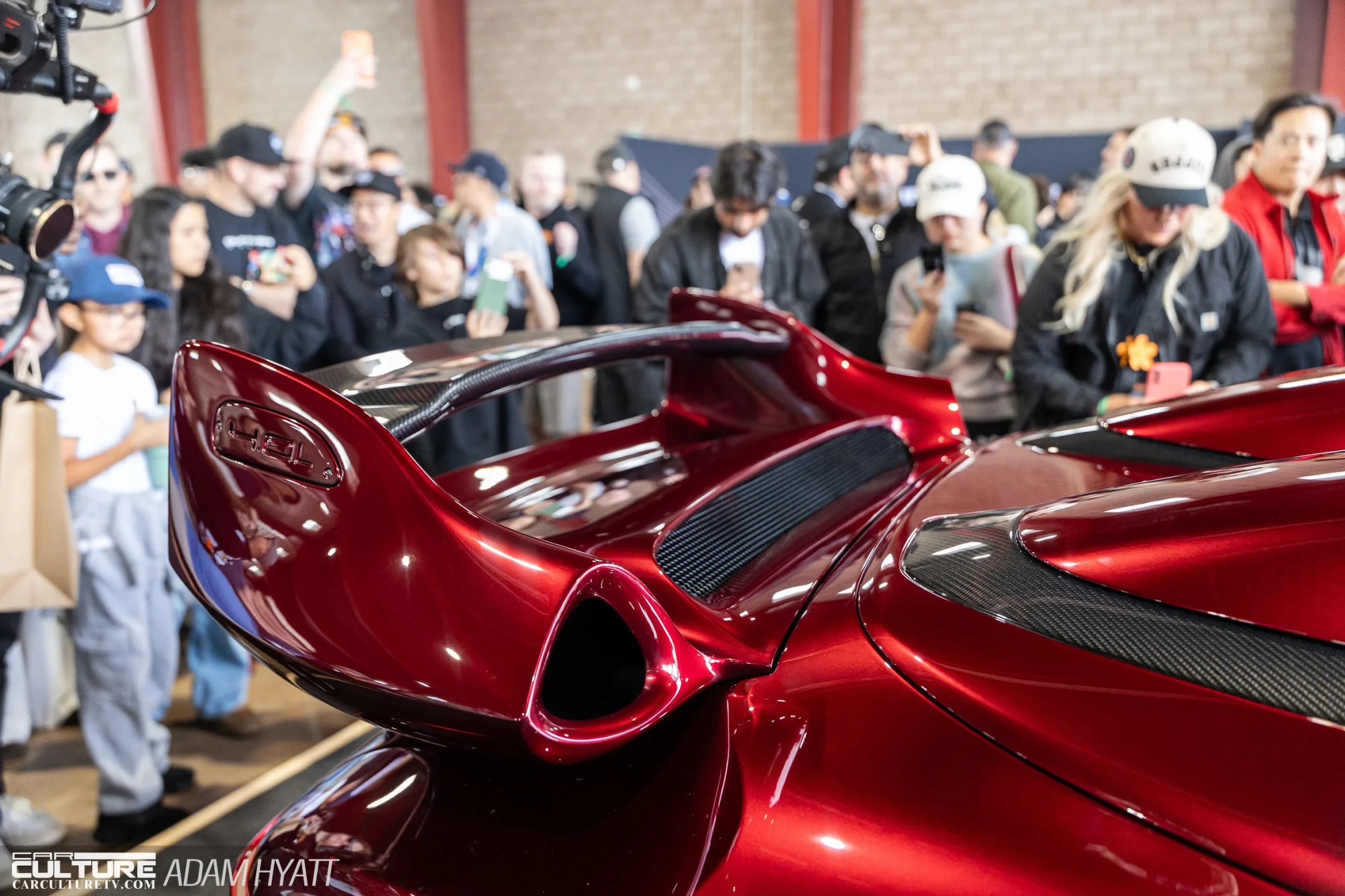
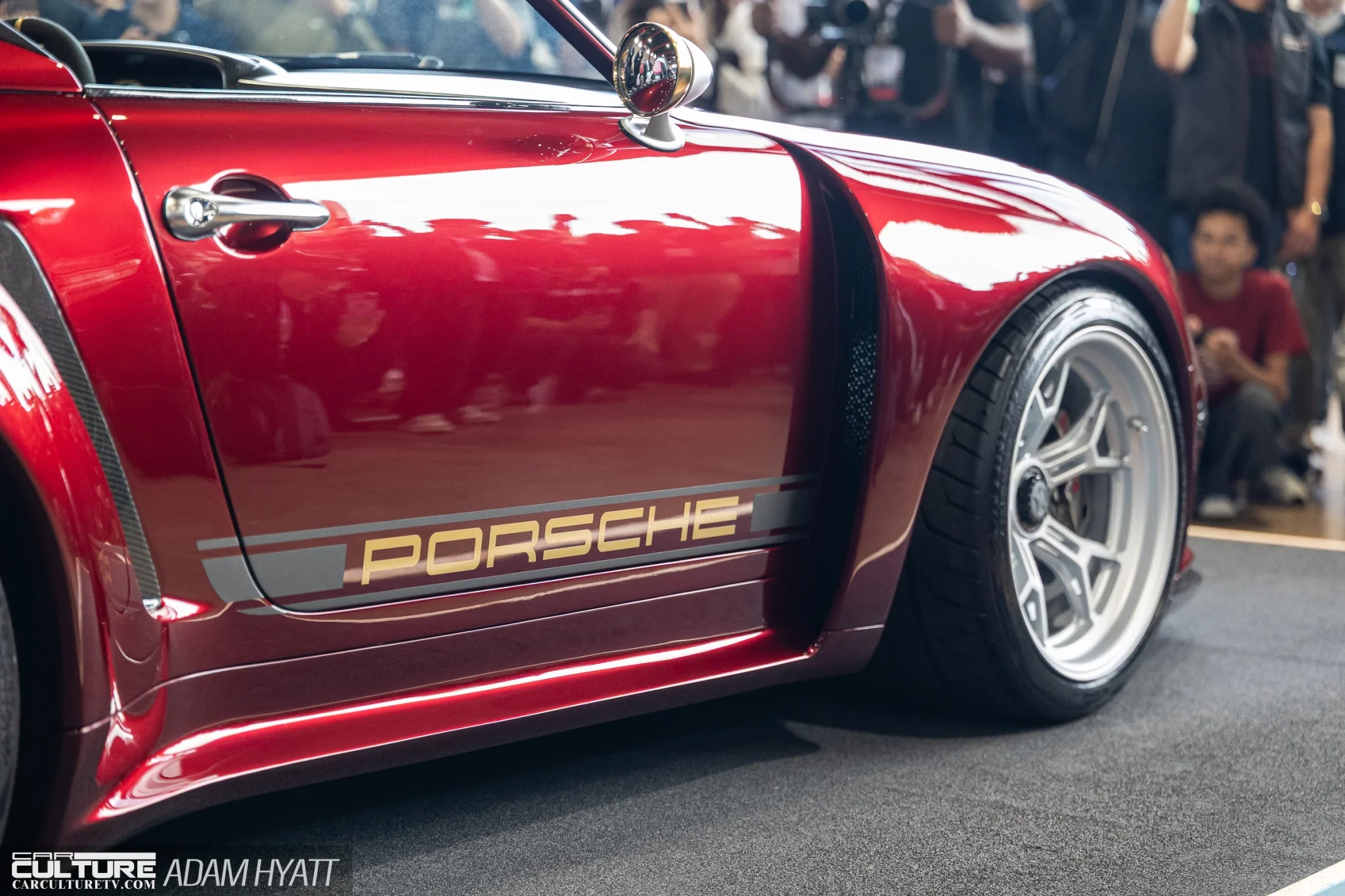
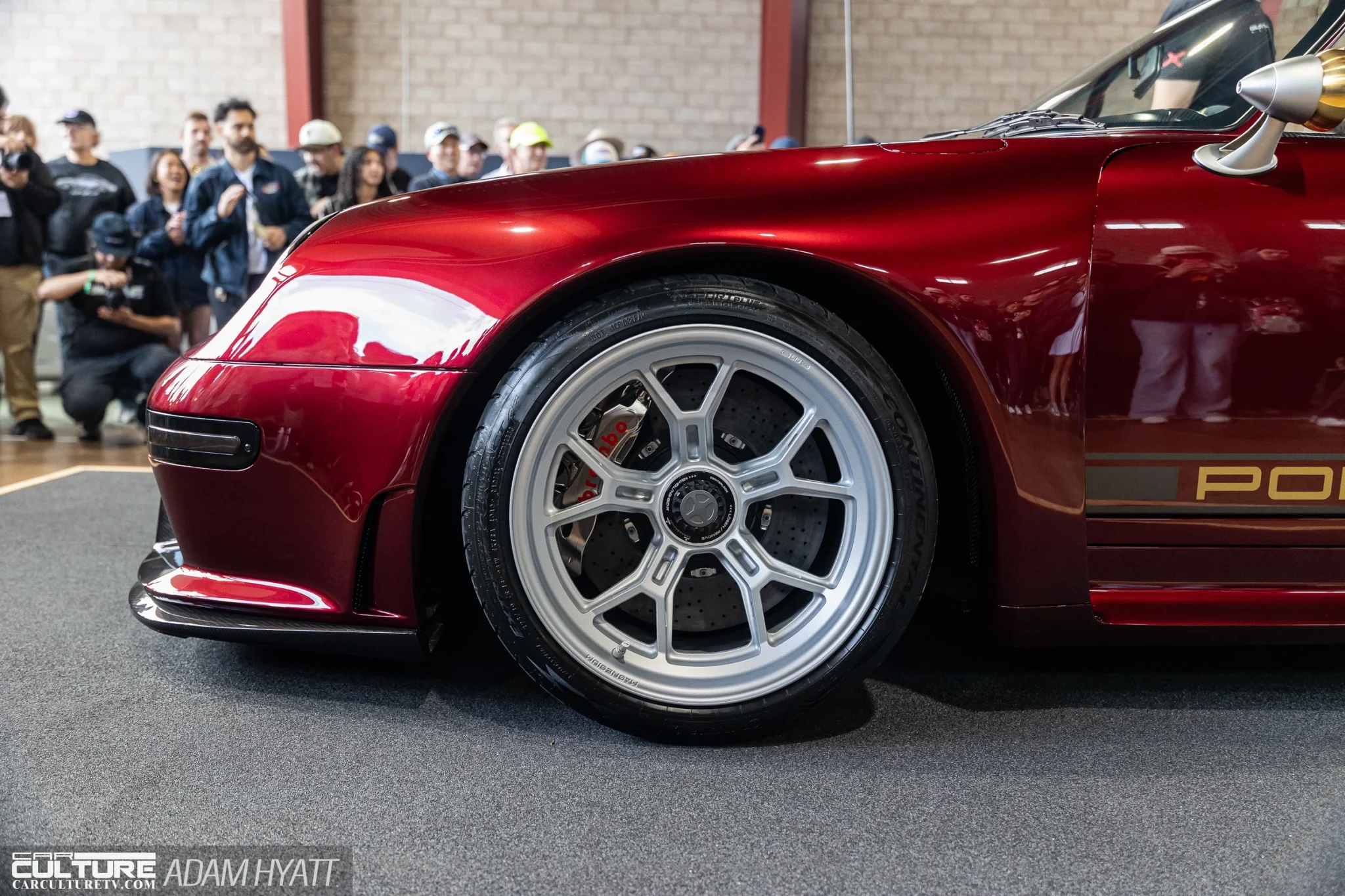
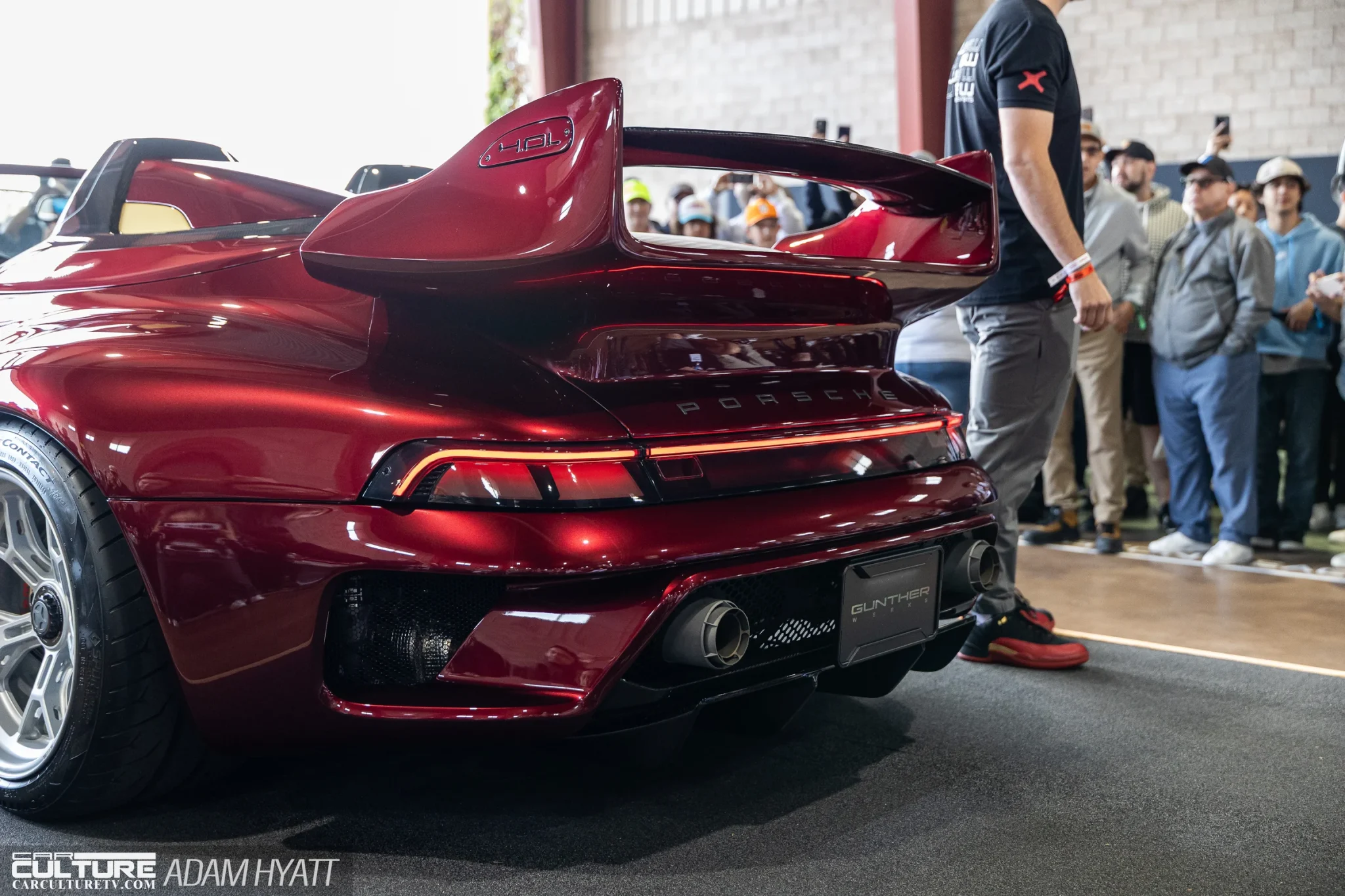
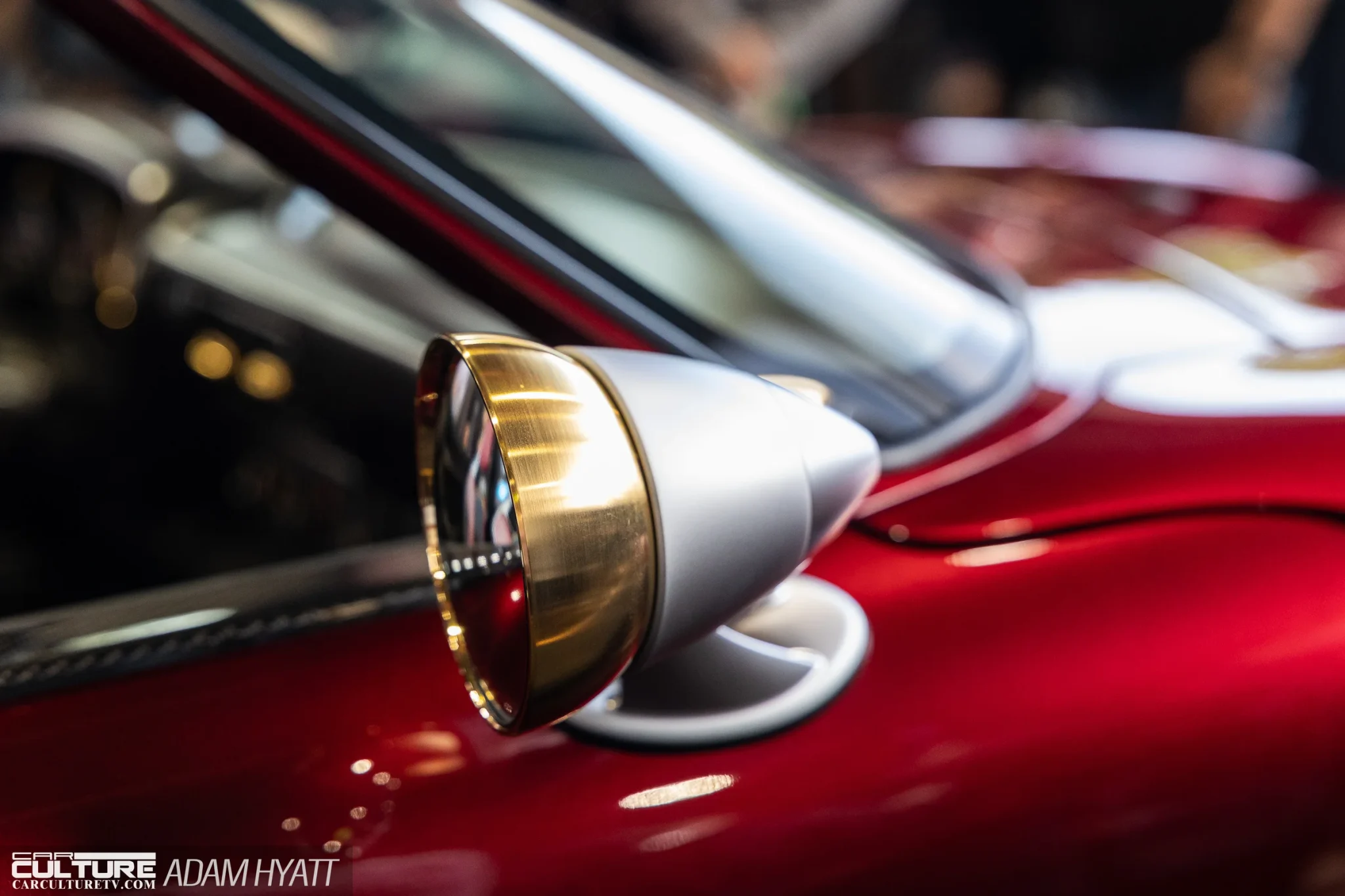
Project Endgame also premieres Gunther Werks’ new coachbuilding program called GWX, which opens the door to full personalization for prospective clients. Every element of the build is meant to demonstrate what is possible through that program. This car is a catalog in motion.
It is over the top. It is theatrical. And standing next to it, none of that feels like a criticism.
The GT3 S/C Makes Its US Debut
The headline from Porsche Cars North America was the first public showing of the new 911 GT3 S/C. S/C stands for Sport Cabriolet, and Porsche positioned it as a driver-focused open-top take on one of its most performance-oriented platforms. A preview had been hosted the day before for select media and guests. The full public debut happened on show day, surrounded by some of the most significant 911s in the model’s history.
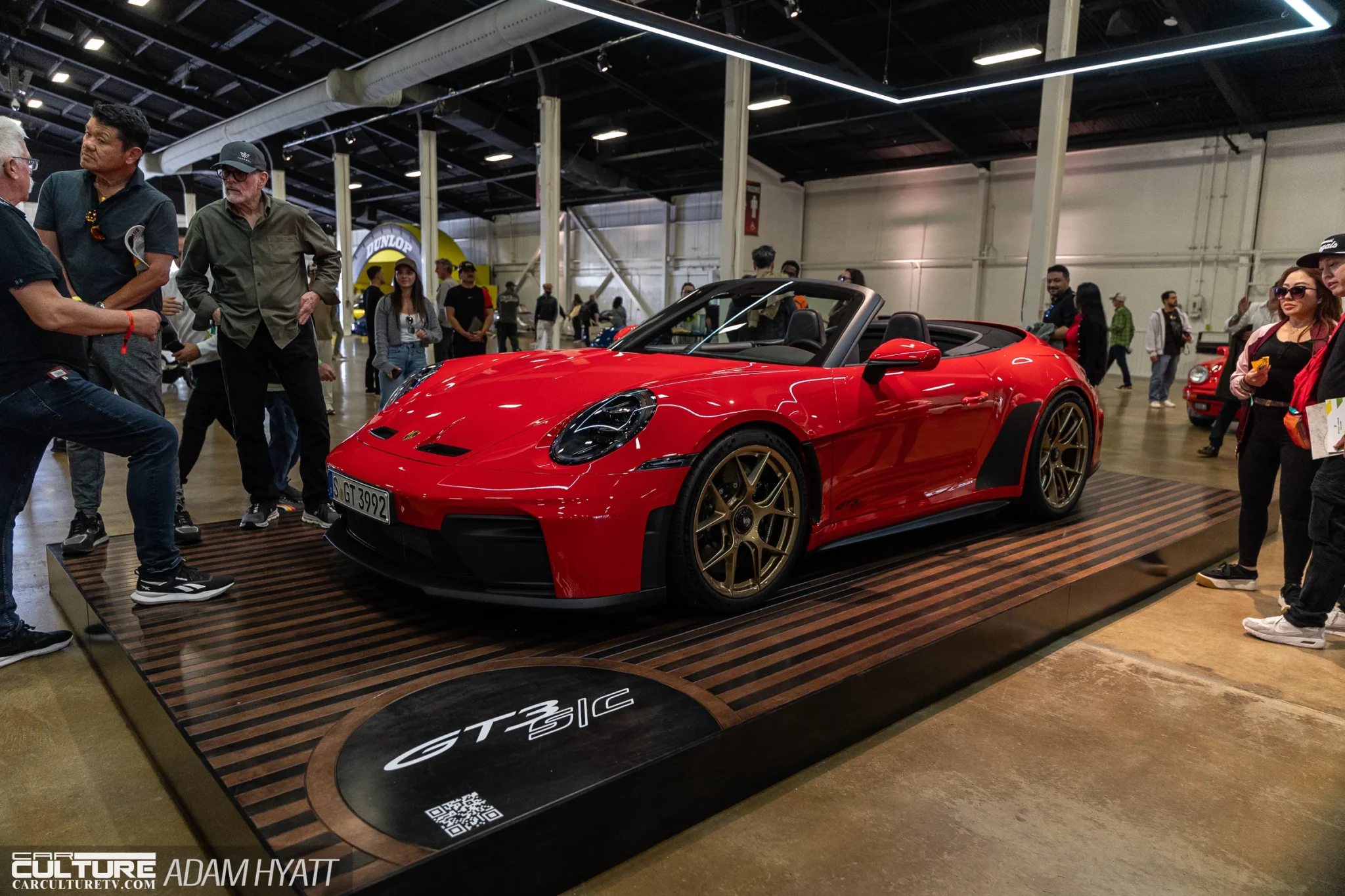
Reactions from spectators were mixed, though the car drew consistent crowds throughout the day. That is the nature of Porsche buyers now. Everyone has an opinion about what the 911 should be, and an open-top GT3 variant is going to generate real debate in a crowd this knowledgeable.
Broad Arrow Runs $20 Million Through the Room
Air | Water has become a legitimate auction destination, not just a backdrop. The Broad Arrow Porsche Air | Water Auction, held inside The Hangar, cleared $20 million in total sales with an 84 percent sell-through rate, moving 70 of 83 lots and setting a new record for the event in its third year running.
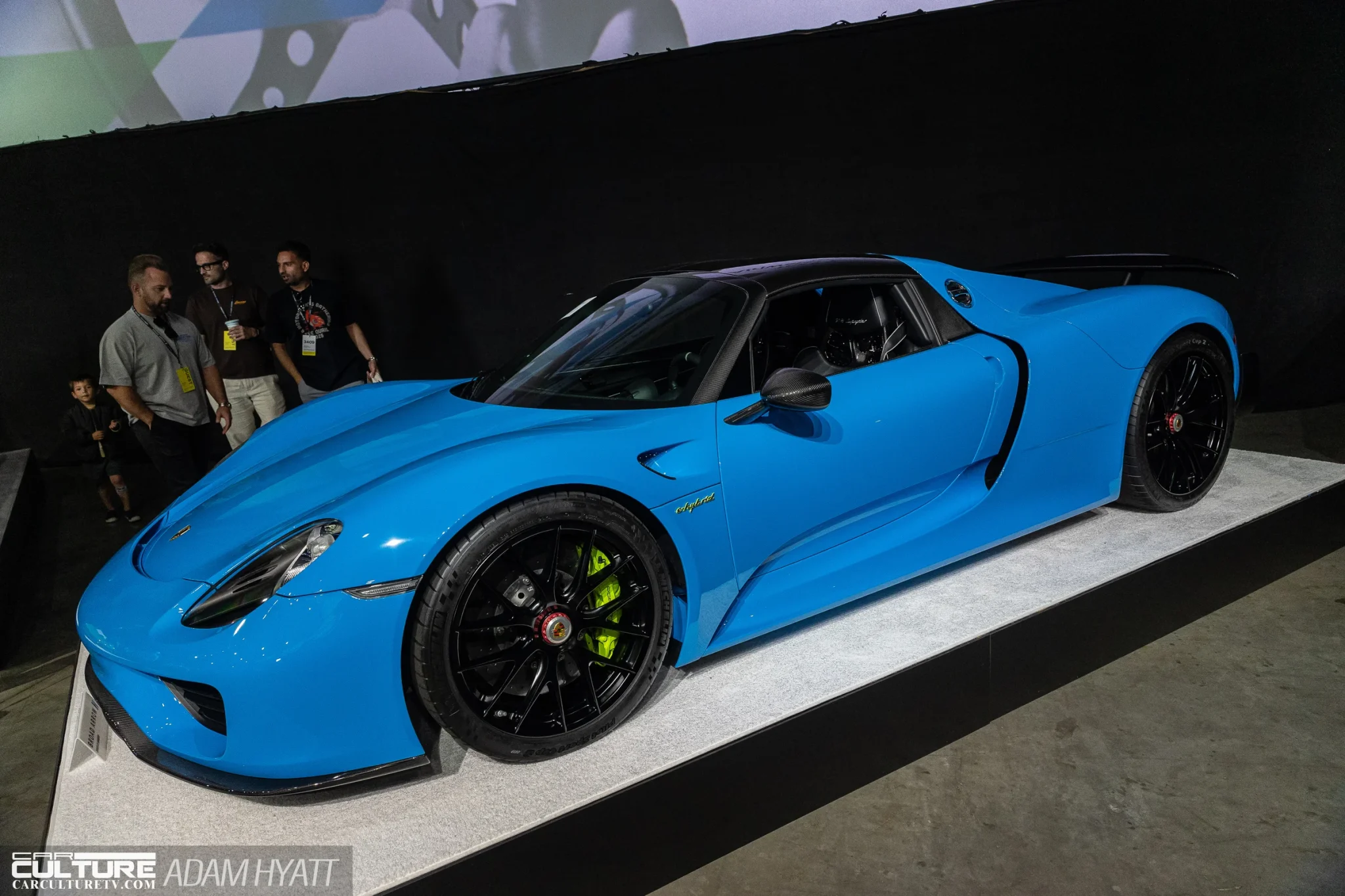
The top lot was a paint-to-sample Riviera Blue 2015 Porsche 918 Spyder Weissach Package, the only example delivered to North America in that specification, which sold for $4,680,000 to a phone bidder. Walking the preview the day before, the lot card told the full story: fresh from a major service at Porsche Woodland Hills, showing 1,267 miles at cataloging, optioned with the $84,000 Weissach Package, front axle lift, and CXX Exclusive options throughout. It sold just above the $4.5 million low estimate.
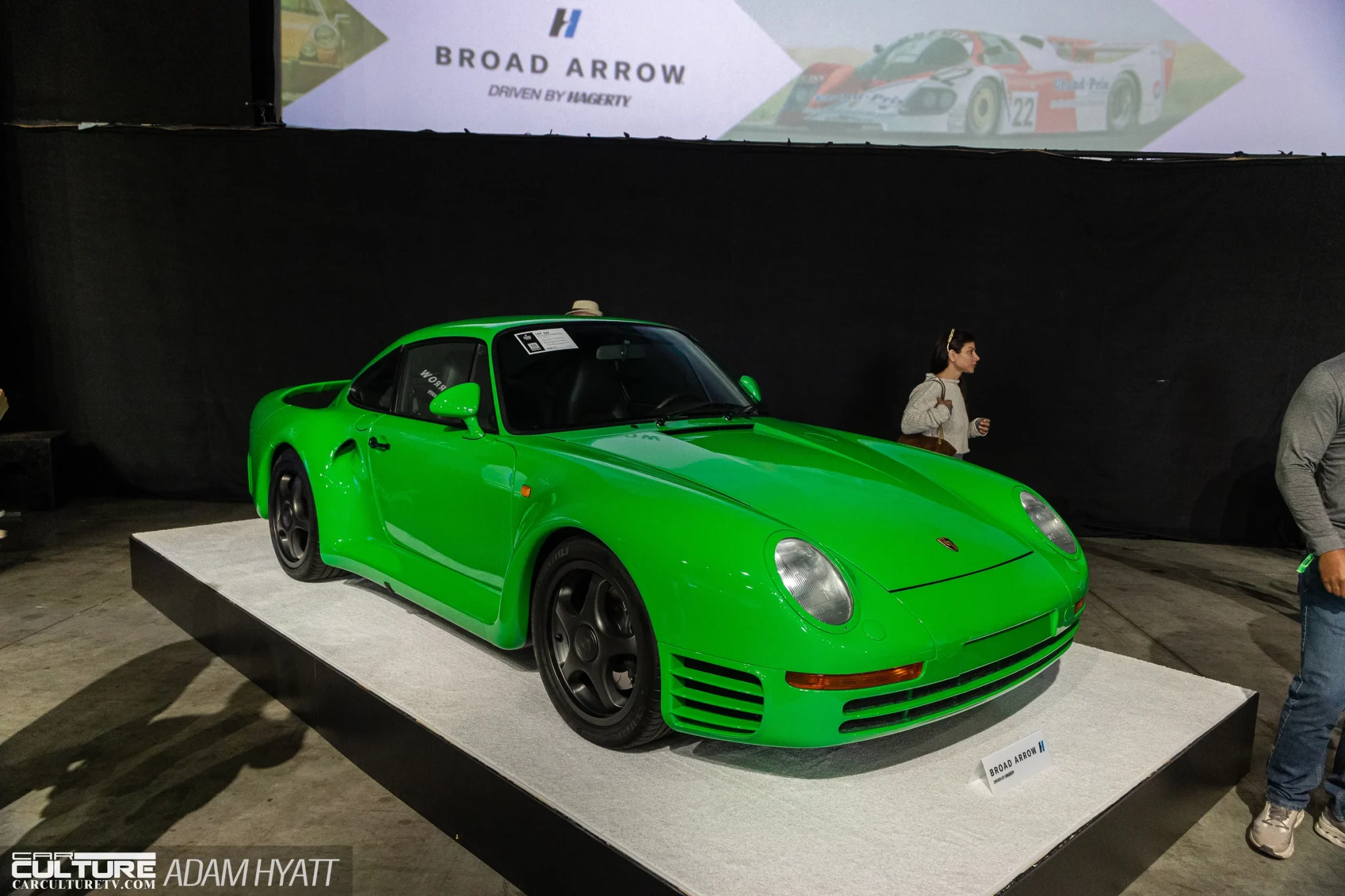
The second biggest lot in the room was the 1988 Porsche 959 SC Reimagined by Canepa, Lot 227. One of 266 Porsche 959 Komforts ever produced, this car wears Viper Green over brown leather and carries Canepa’s full Stage III upgrade package, pushing output to up to 850 horsepower on E85 fuel. Zero to 60 comes in 2.5 seconds with a claimed top speed of 230 mph. Fewer than 1,300 miles since its Canepa transformation. Estimated between $3,200,000 and $3,600,000, with online bidding restricted to pre-arranged accounts only. Porsche’s first supercar, reimagined as something even the factory never attempted, displayed under The Hangar lights in a color that made sure nobody walked past it without stopping.
A 2025 RUF SCR in paint-to-sample Türkisblau came in second at $2,095,000. A pair of Porsche 911s reimagined by Singer drew strong competition from the room, as did a group of Power Kit-equipped 911s that rarely surface at auction.
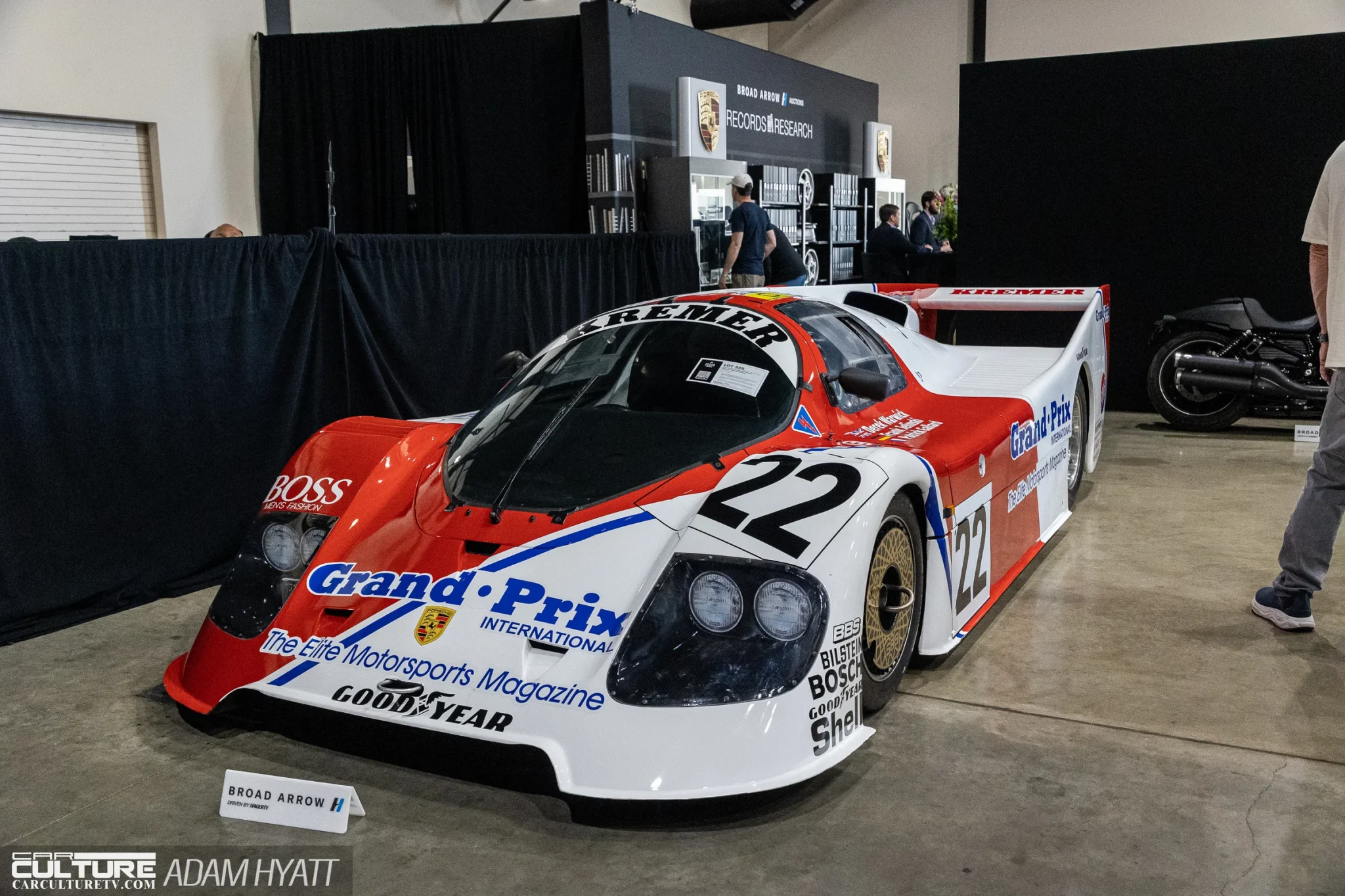
The 1983 Porsche-Kremer CK5 Group C Endurance Racing Prototype, Lot 225, was one of the most compelling cars in the building. One of just two CK5s produced for the 1982 and 1983 World Sportscar Championship, piloted by Derek Warwick, Jelinski, and Gaillard, and previously displayed at Rennsport Reunion 7 at Laguna Seca in 2023. Powered by a twin-turbo intercooled flat-fan 935-type engine. Estimated between $600,000 and $750,000.
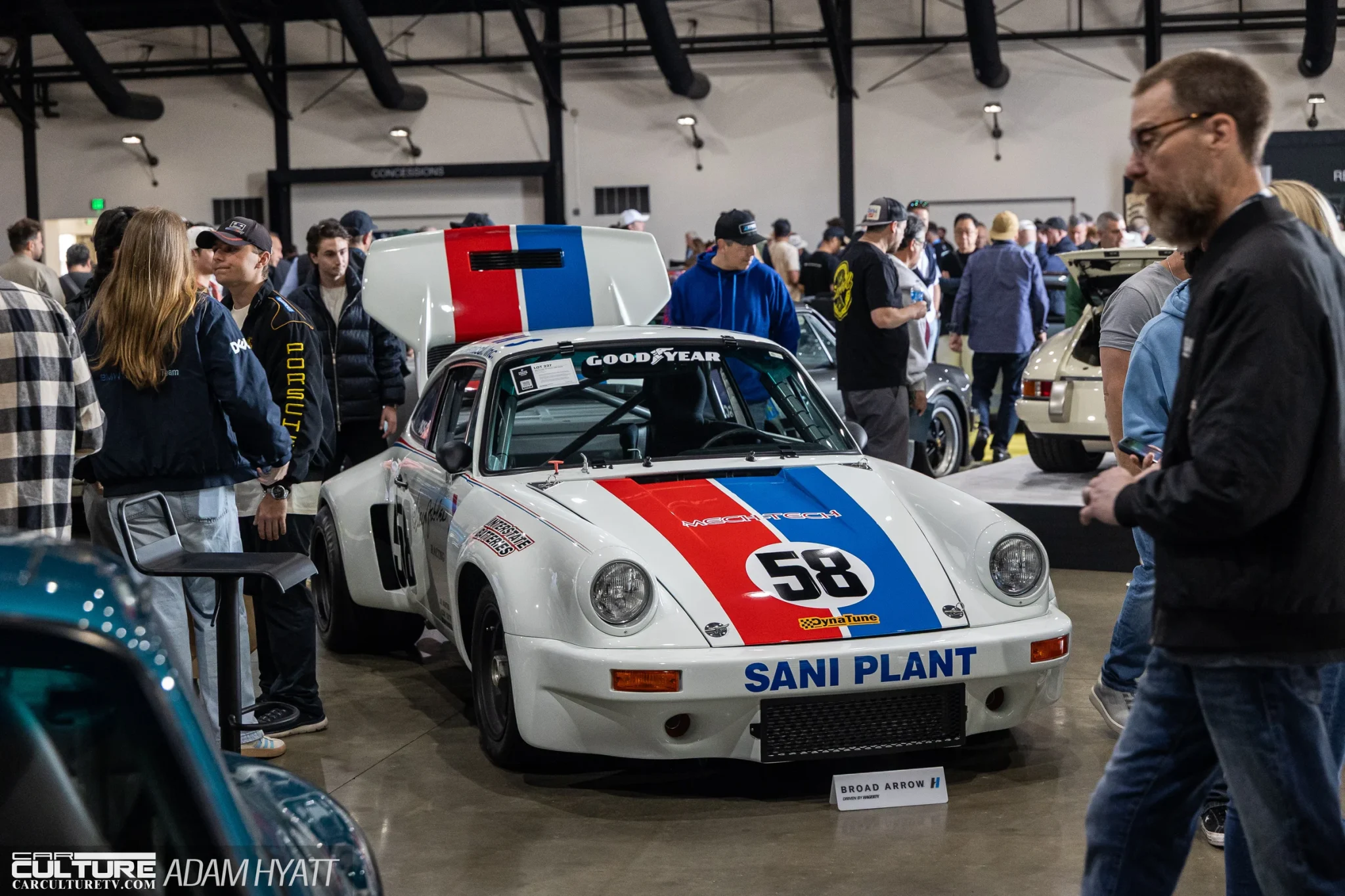
The 1975 Porsche 911 S Carrera RSR Tribute, Lot 237, was the Sani Plant number 58 car that turned heads on the show floor. Built by Diego Febles Racing using period techniques and RSR components, with a ground-up restoration by Gunnar Racing spanning 2008 to 2016. The short-stroke twin-plug 3.2-liter engine runs slide valve injection and a megaphone exhaust. RSR-style centerlock wheels and brakes, coilovers, and 935-style adjustable rear spring plates complete the build. The car has raced at Rennsport Reunion 7, the 2024 Daytona Rolex 24 Heritage Exhibition, Monterey Historic Races, and the 2017 Amelia Island Concours d’Elegance. Estimated $250,000 to $350,000.
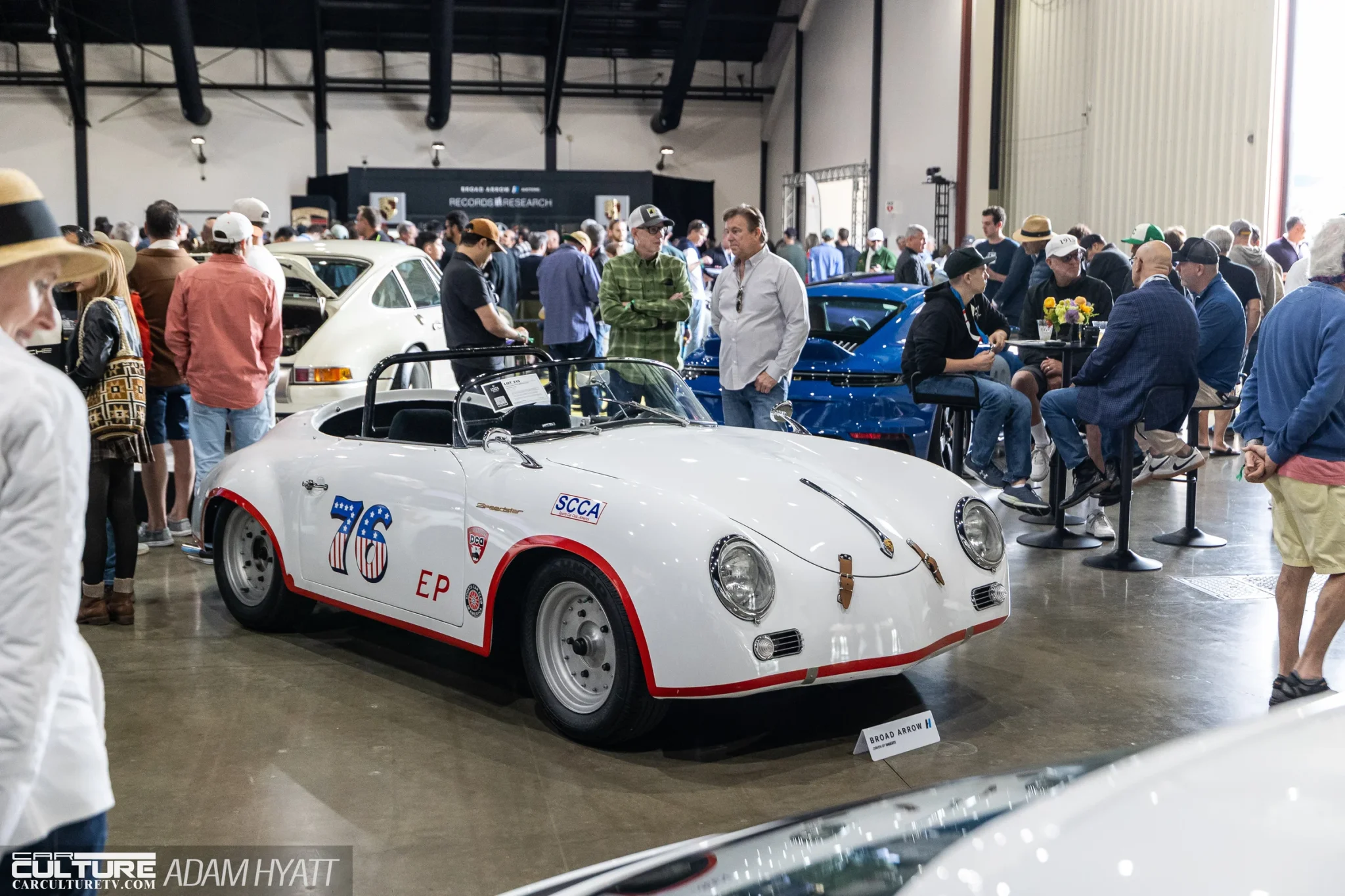
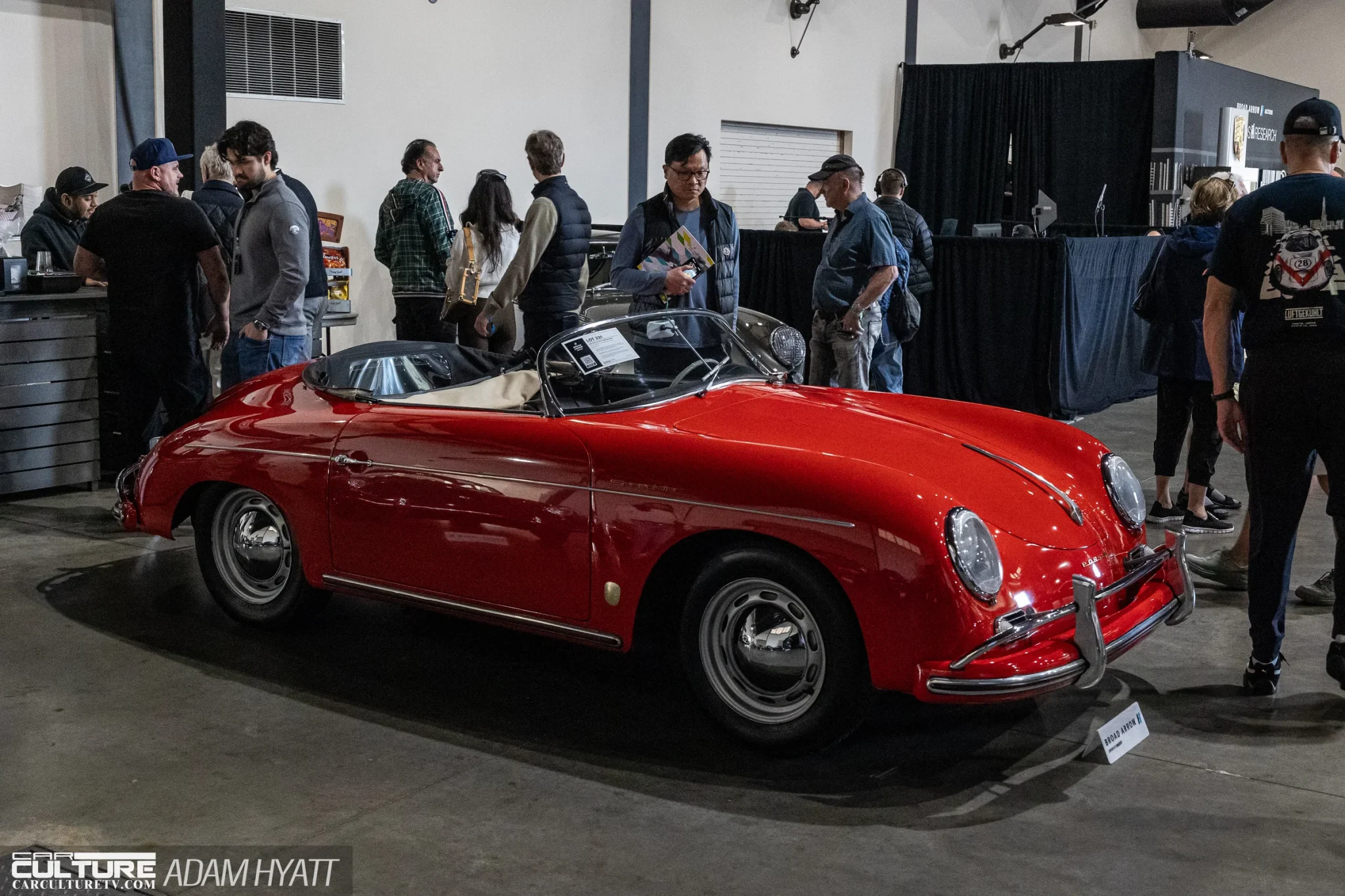
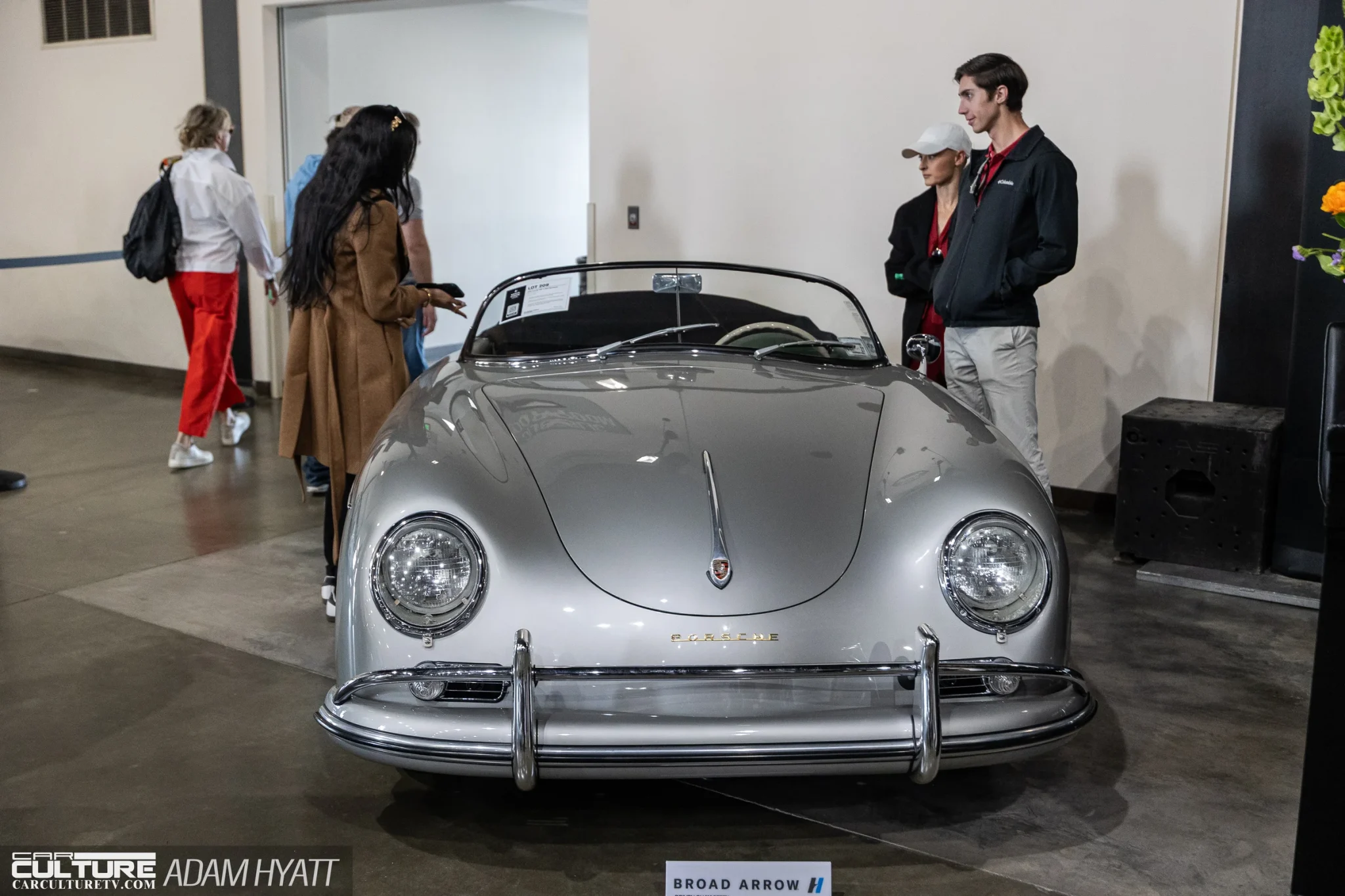
Three 356 Speedsters covered the breadth of what the model means to different collectors. The white 1958 356 A 1600 Speedster SCCA Race Car, Lot 215, carried real provenance: PHA Hillclimb first overall in 1973 and 1980 in the E-Production class, campaigned by Jess Holshouser through the 1970s and into the 1980s, faithfully restored in his late-1970s racing specification with a cache of original handwritten preparation notes included. Estimated $225,000 to $275,000. The red 1957 356 A 1600 Speedster, Lot 231, was a matching-numbers Southern California car finished in its original Red over Black, offered without reserve at $300,000 to $350,000 with its factory Kardex warranty card in hand. The silver 1958 356 A 1600 Speedster, Lot 209, was the most extensively restored of the three: a six-year rebuild by Grand Prix Classics of La Jolla, John Willhoit rebuilt matching-numbers engine uprated to 110 hp, fewer than 300 miles since completion, and two binders of service receipts going back to 1990. Estimated $425,000 to $475,000.
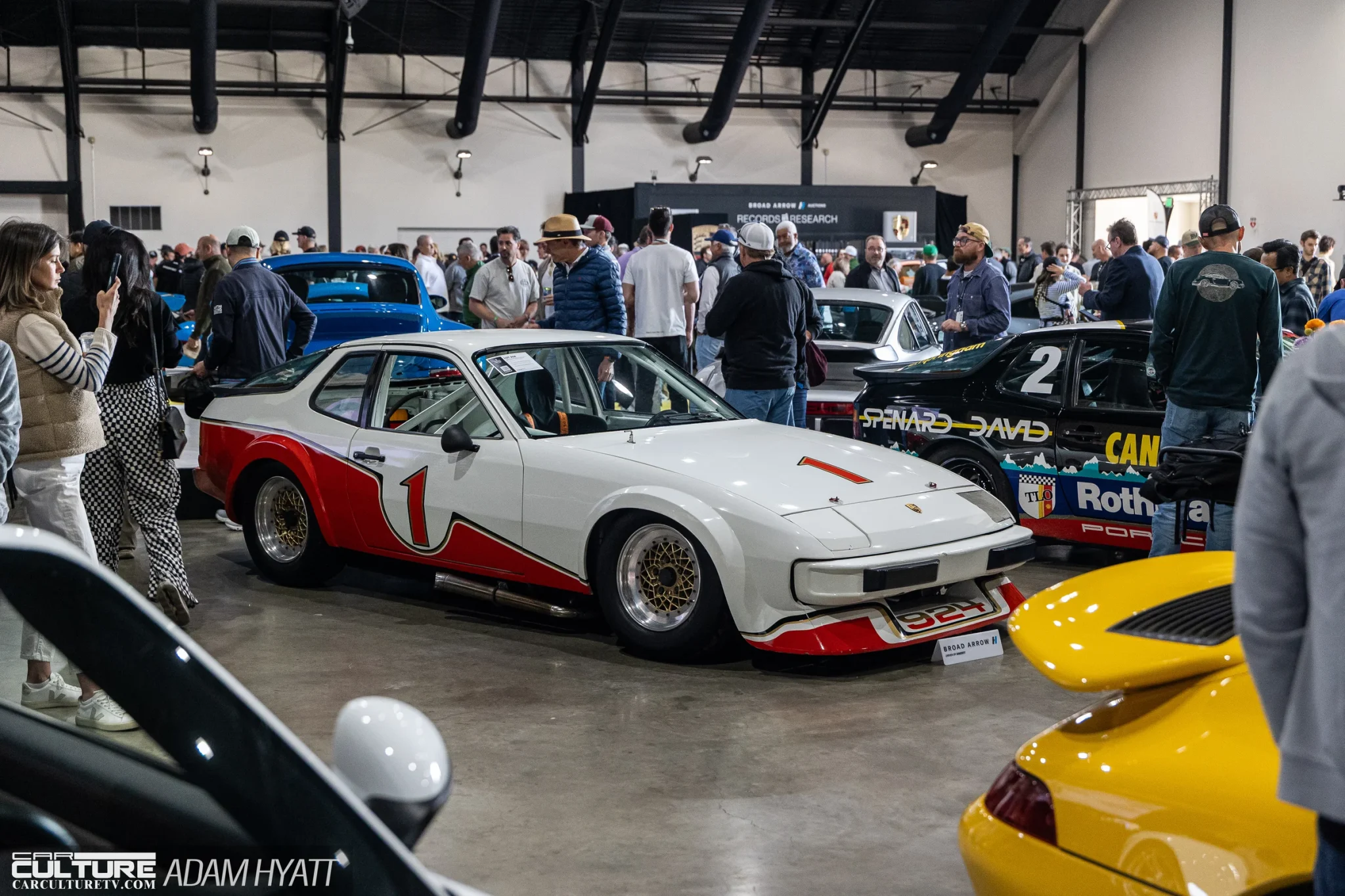
Lot 258, the 1980 Porsche 924 SCCA D-Production racer, was offered without reserve with an estimate of $150,000 to $200,000. One of just 16 factory-built Type 933 cars created for SCCA D-Production racing, Weissach-engineered specifically for U.S. dealership teams, running a 2.0-liter race-spec engine with Bosch/Kugelfischer fuel injection and 11.5:1 compression. The lot card described it as likely the most original Type 933 in existence.
Nearly half of all registered bidders were participating for the first time, which signals something important about who Air | Water is reaching. New money, new enthusiasm, and new buyers are finding the Porsche market here. This is not the established collector crowd recycling cars among themselves.
Air | Water Has Figured Out What It Is
Four years in, the format is locked. This is the premier all-inclusive Porsche gathering in Southern California and it is not close. Luftgekühlt has its lane, Rennsport has its lane, and Air | Water has carved out something that sits between both and reaches beyond either.
The 962 trio, the GT3 S/C debut, the Singer DLS Turbo on the floor next to a 935-body EV and an Apple Computer tribute build, Gunther Werks closing the Speedster chapter with 840 horsepower and 24-karat gold intercoolers, $20 million worth of Porsches changing hands fifty feet away in The Hangar. Costa Mesa held all of it without blinking. That is the show now.
See Full Gallery Below.


Wish you happiness