
Photography: Jose Ortiz
SEMA 2025: Inside the Show That Still Sets the Standard
November 4-7. Las Vegas Convention Center. 160,000 attendees from 140 countries. 2,400-plus exhibiting brands. Four days that reminded the automotive world why nothing else comes close.
There is no substitute for walking through those doors. You can watch the livestreams, scroll the Instagram galleries, read every recap, and none of it prepares you for the moment Central Hall opens up in front of you. The scale is almost offensive. Every aisle has something that stops you mid-stride. Every booth is competing for your attention. And somewhere in the middle of all of it is the thing SEMA has always been at its core: people who love cars more than anything else, showing you exactly what that love produces.
Covering the show as press for CarCultureTV, the goal is always the same. Get past the obvious, find the stories, talk to the people behind the builds. Four days is never enough. It never is.
The Show That Opened Its Doors
This was the second consecutive year SEMA opened to the general public on Friday. Industry veterans and first-timers shared the same aisles, staring at the same builds. That energy shift on the final day is real. The crowds get younger, louder, more reactive. It changes the atmosphere in a way you can feel immediately, and honestly, it feels right. These cars deserve a wider audience, and that audience showed up.
Walking the Floor
The first thing you notice walking the floor in 2025 is how intentional everything feels. Builders aren’t just going bigger. They’re going deeper. The builds that commanded the most attention weren’t necessarily the loudest or the most extreme. They were the ones where every decision clearly meant something.
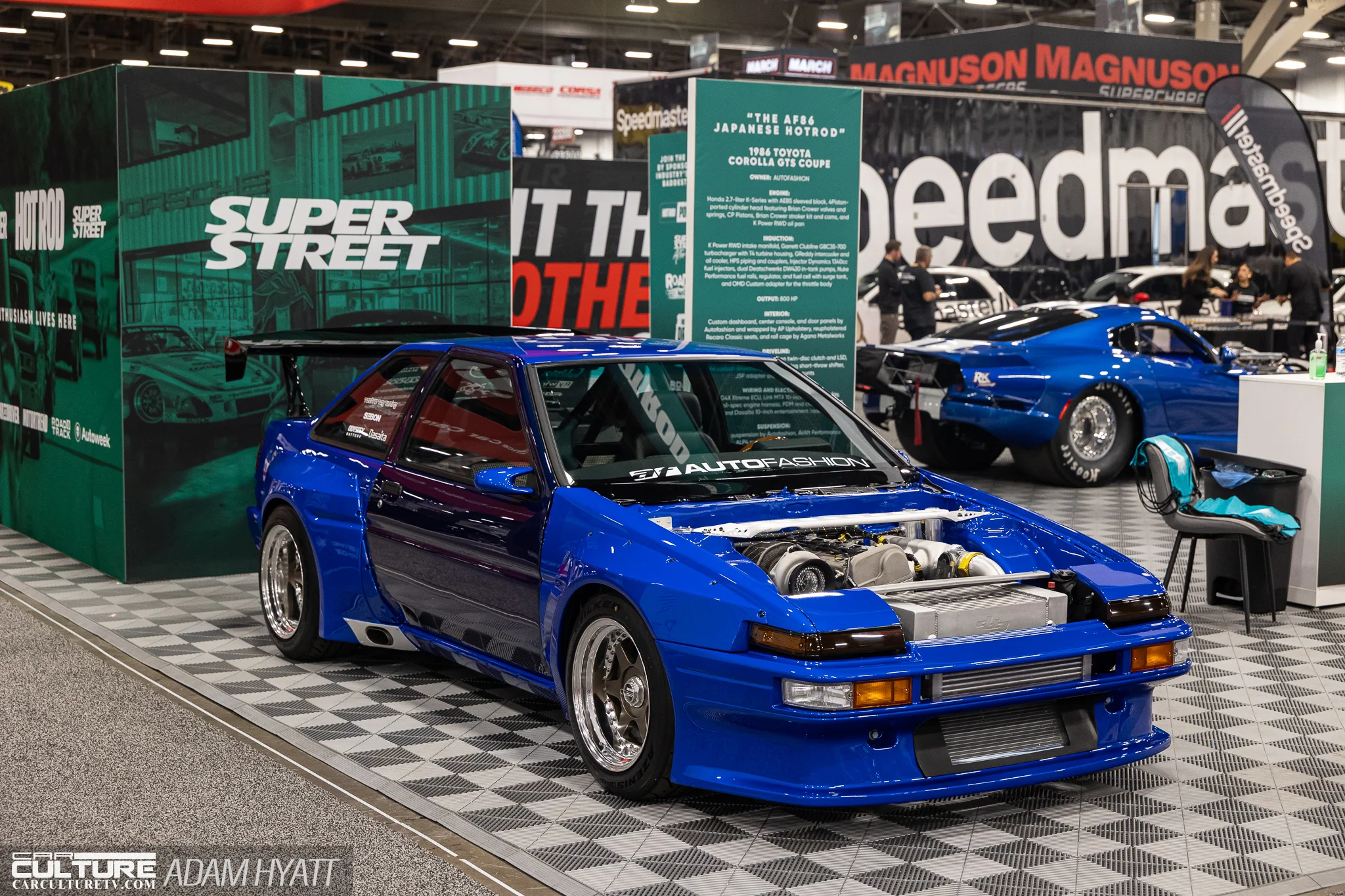
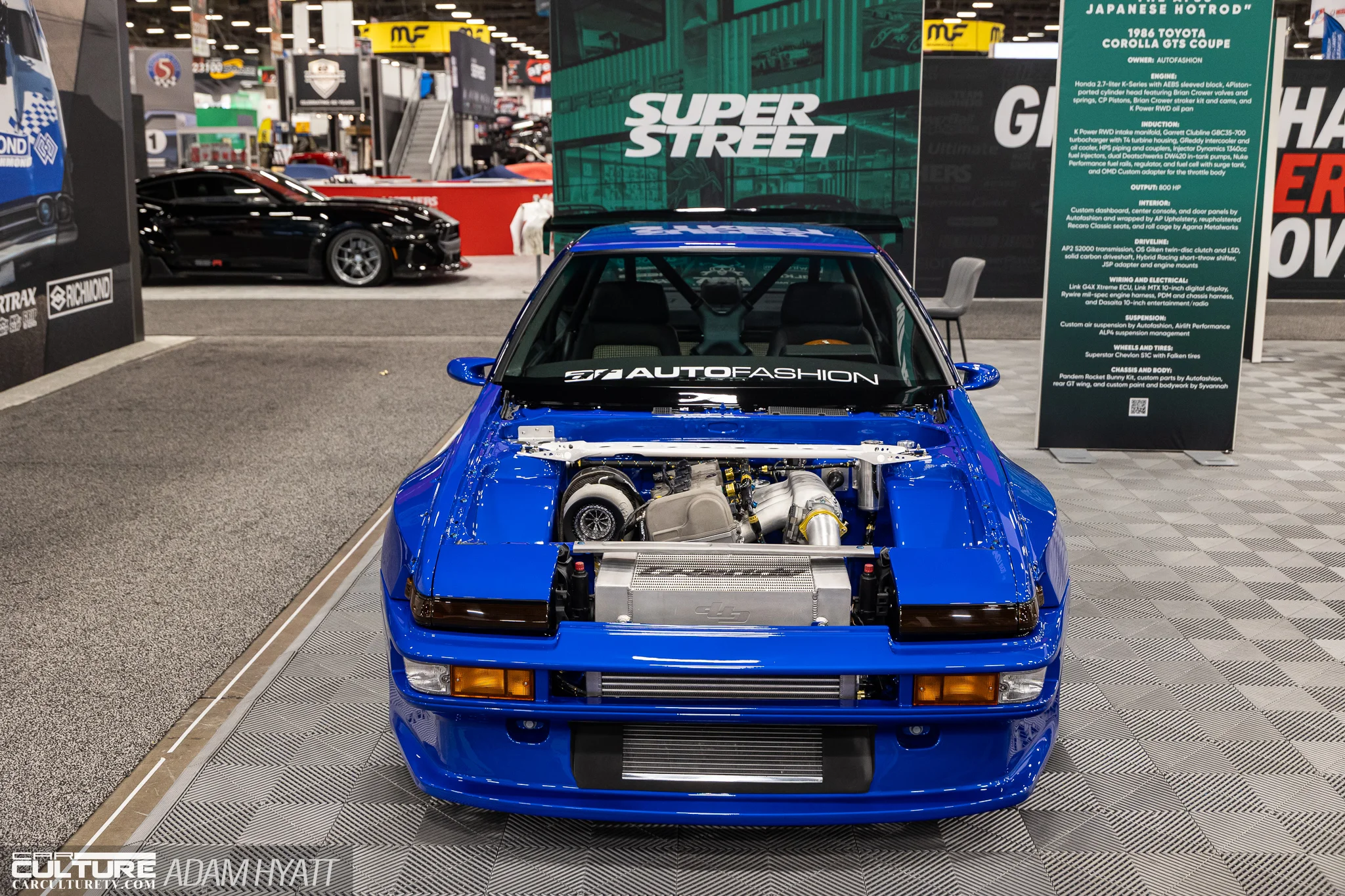
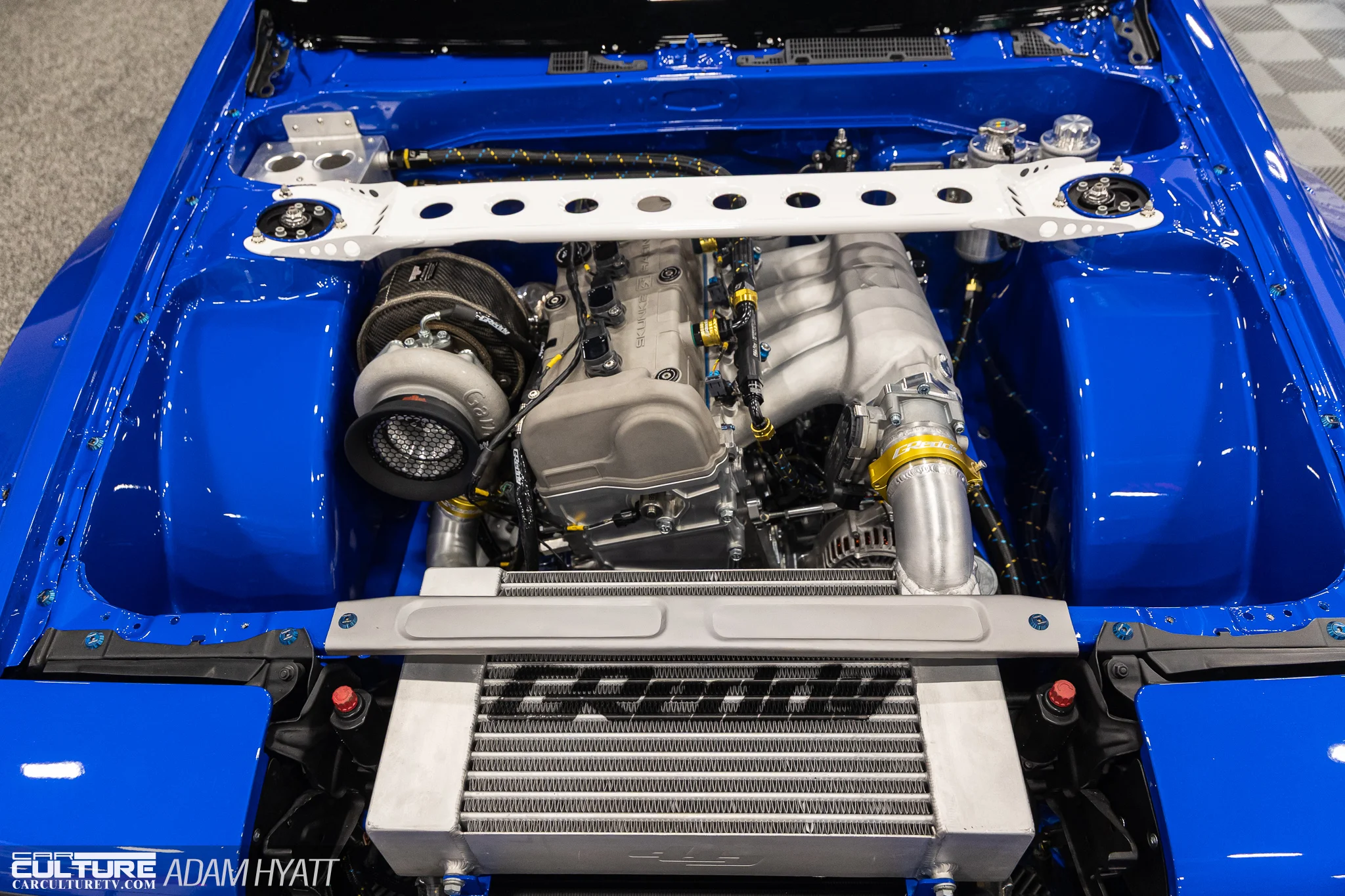
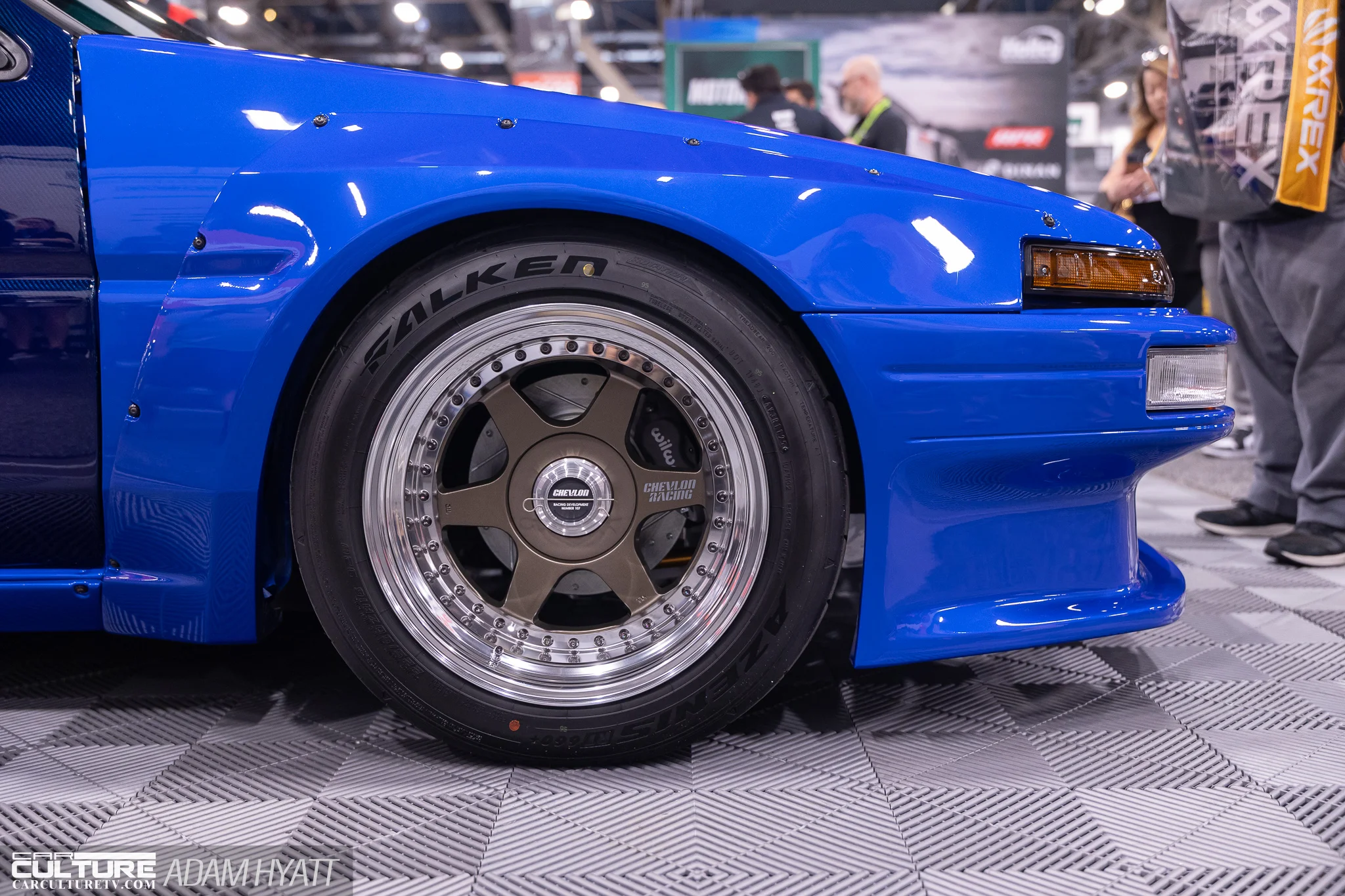
Autofashion’s 1986 Toyota Corolla GTS Coupe, nicknamed “The AF86 Japanese Hotrod,” was one of those stops. On the outside it reads as a clean AE86 wearing a Pandem Rocket Bunny kit and a proper GT wing, rolling on Superstar Chevlon S1C wheels wrapped in Falken rubber. Under the hood is a Honda 2.7-liter K-Series with an AEBS sleeved block, 4Piston-ported head, Brian Crower valves and cams, backed by a Garrett Clubline GBC35-700 on a K Power RWD intake, fed through a surge tank system with dual Deatschwerks DW420 in-tank pumps. Output: 800 horsepower. Driveline is an AP2 S2000 transmission with OS Giken twin-disc clutch and LSD. The whole car runs on Air Lift Performance suspension managed by the ALP4 system, with a Link G4X Xtreme ECU, mil-spec wiring by Rywire, and a custom interior built by Autofashion and wrapped by AP Upholstery. It’s the kind of build where you read the spec sheet twice just to confirm what you’re looking at.
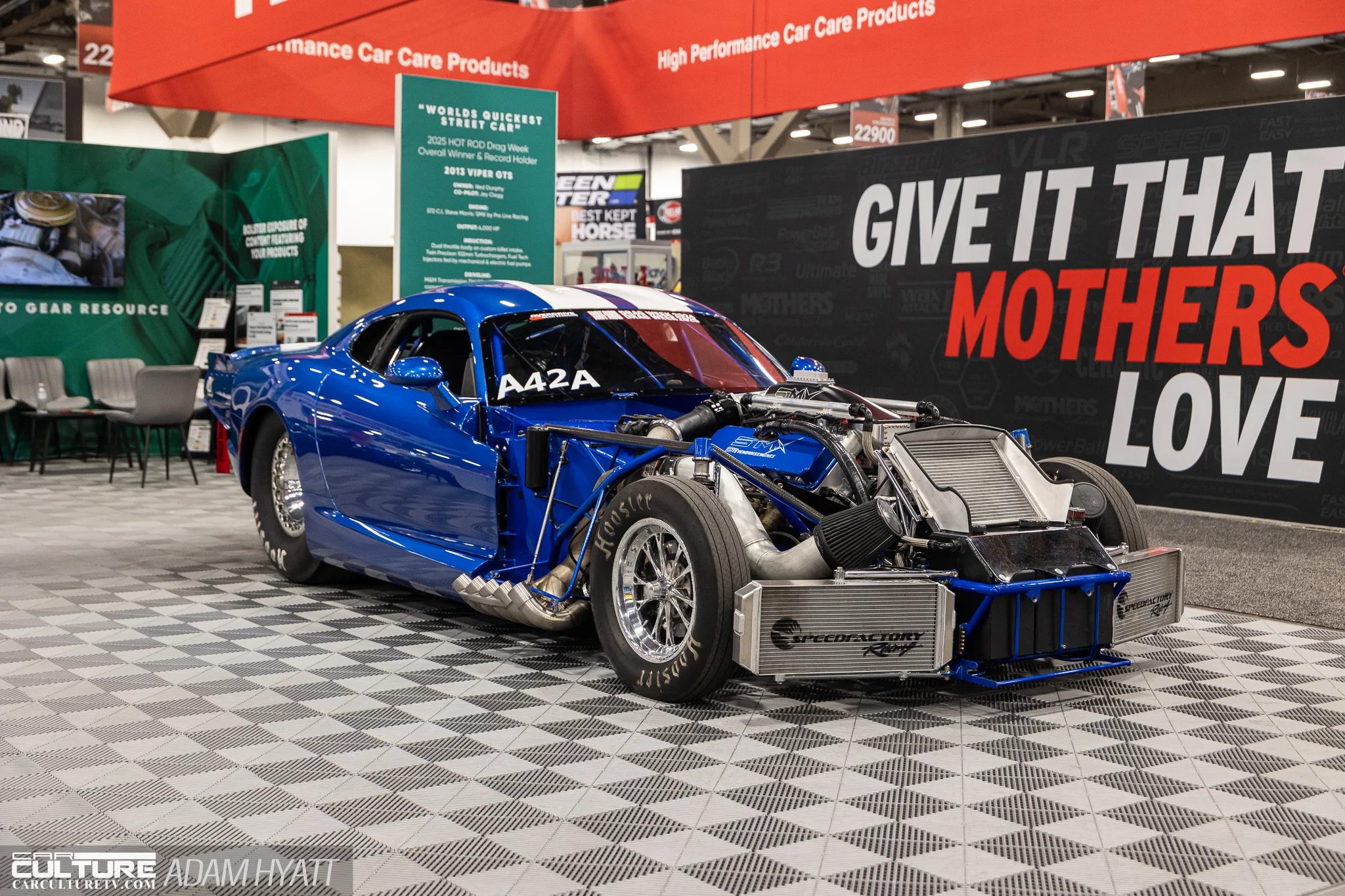
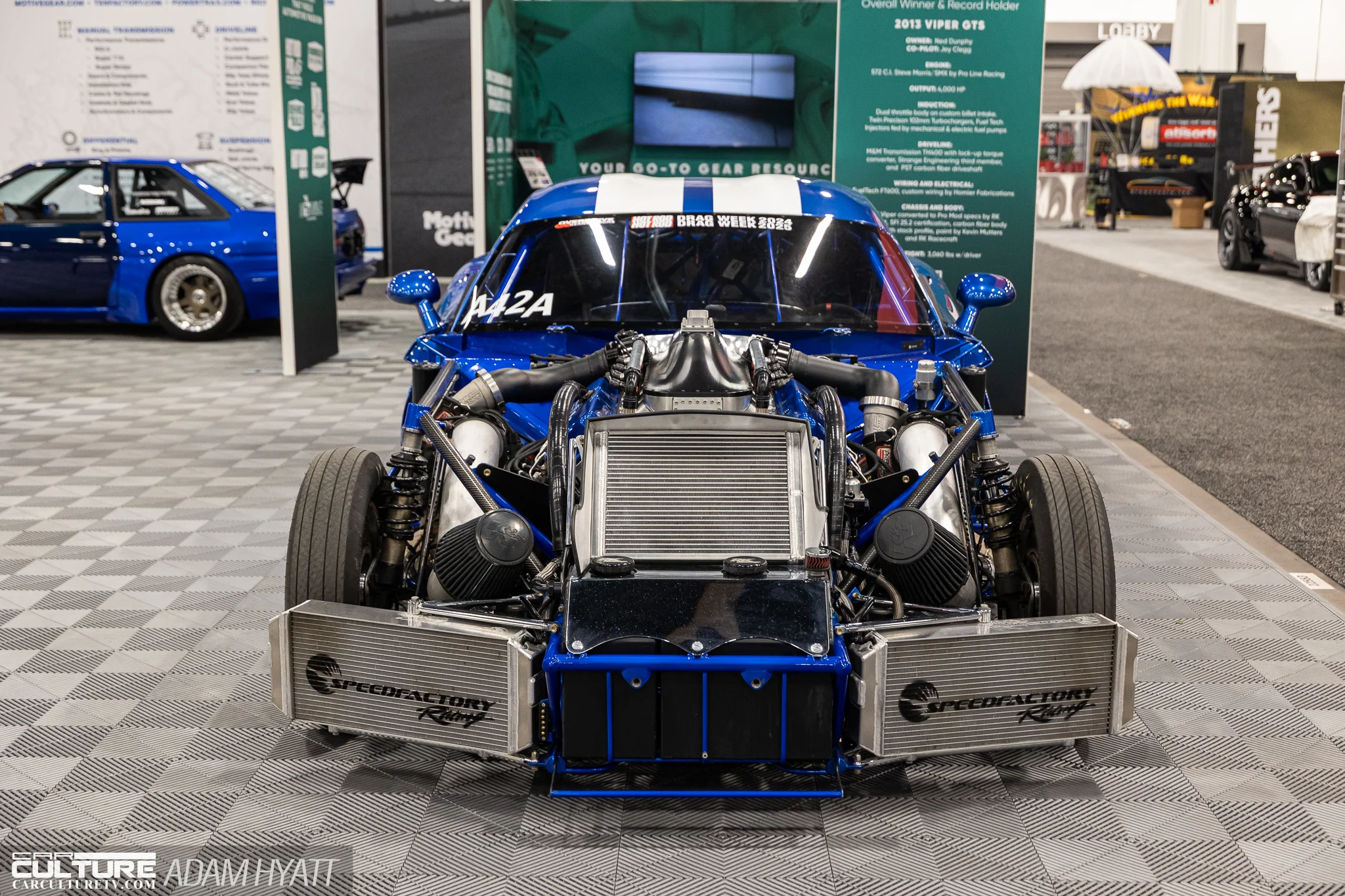
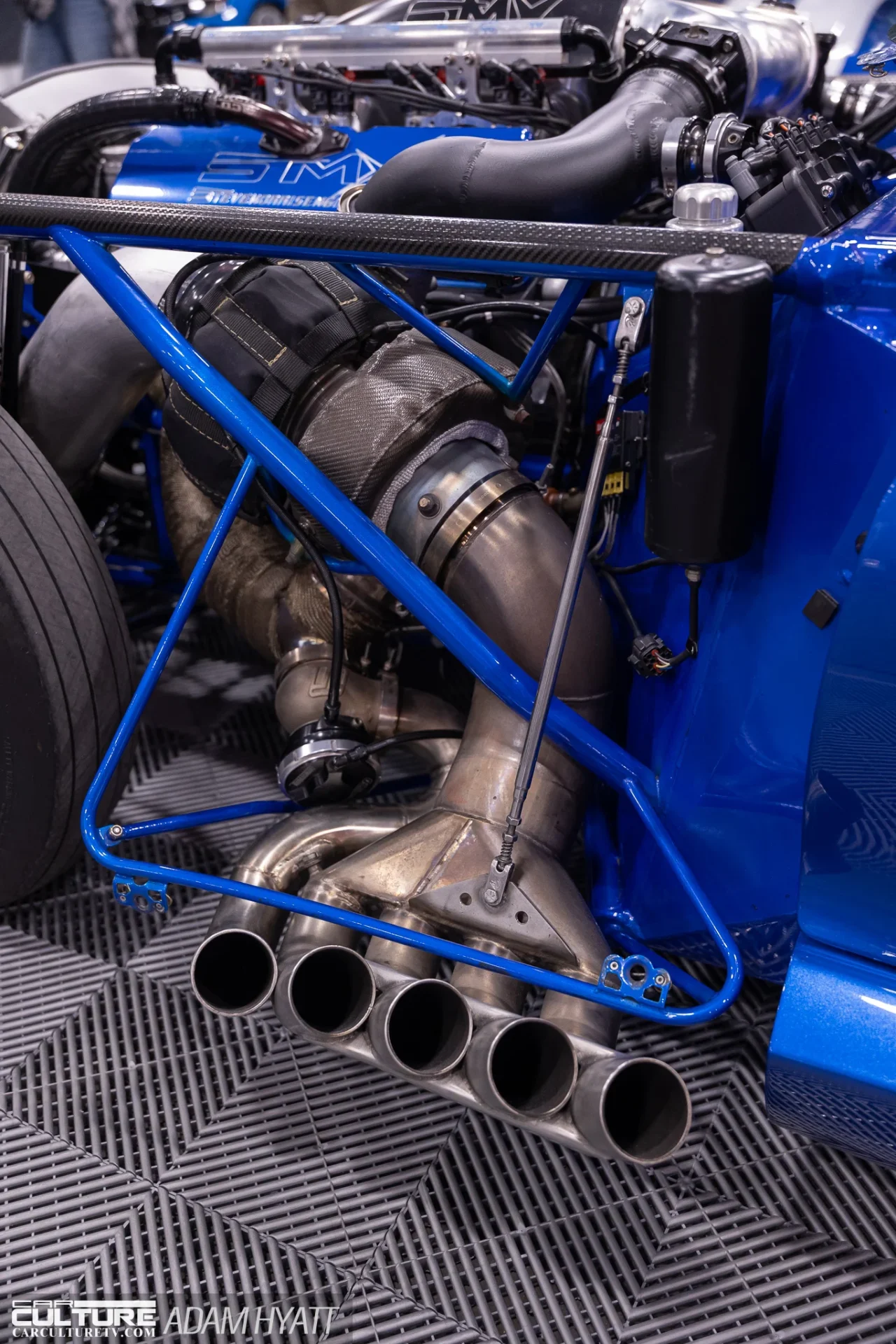
Then there was Ned Dunphy’s 2013 Viper GTS. The sign in front of it said everything: “World’s Quickest Street Car. 2025 HOT ROD Drag Week Overall Winner and Record Holder.” The car ran the week. It drove to the track, raced every day, won the whole thing, and then showed up at SEMA. A 572 cubic inch Steve Morris/SMX engine by Pro Line Racing, twin Precision 102mm turbos on a custom billet intake, FuelTech FT600 management, M&M Transmission TH400 with lock-up torque converter, Strange Engineering third member, PST carbon fiber driveshaft. All of it wrapped in an OEM Viper body converted to Pro Mod specs by RK Racecraft with SFI 25.2 certification and carbon fiber body panels painted by Kevin Mutters. Race weight with driver: 3,060 pounds. Power: 4,000 horsepower. The fact that it sits on a showroom floor after competing in Drag Week is the whole point.
The Headline Builds
Some builds you already know are going to be there. The ones talked about for months before the doors open. This year those conversations delivered.
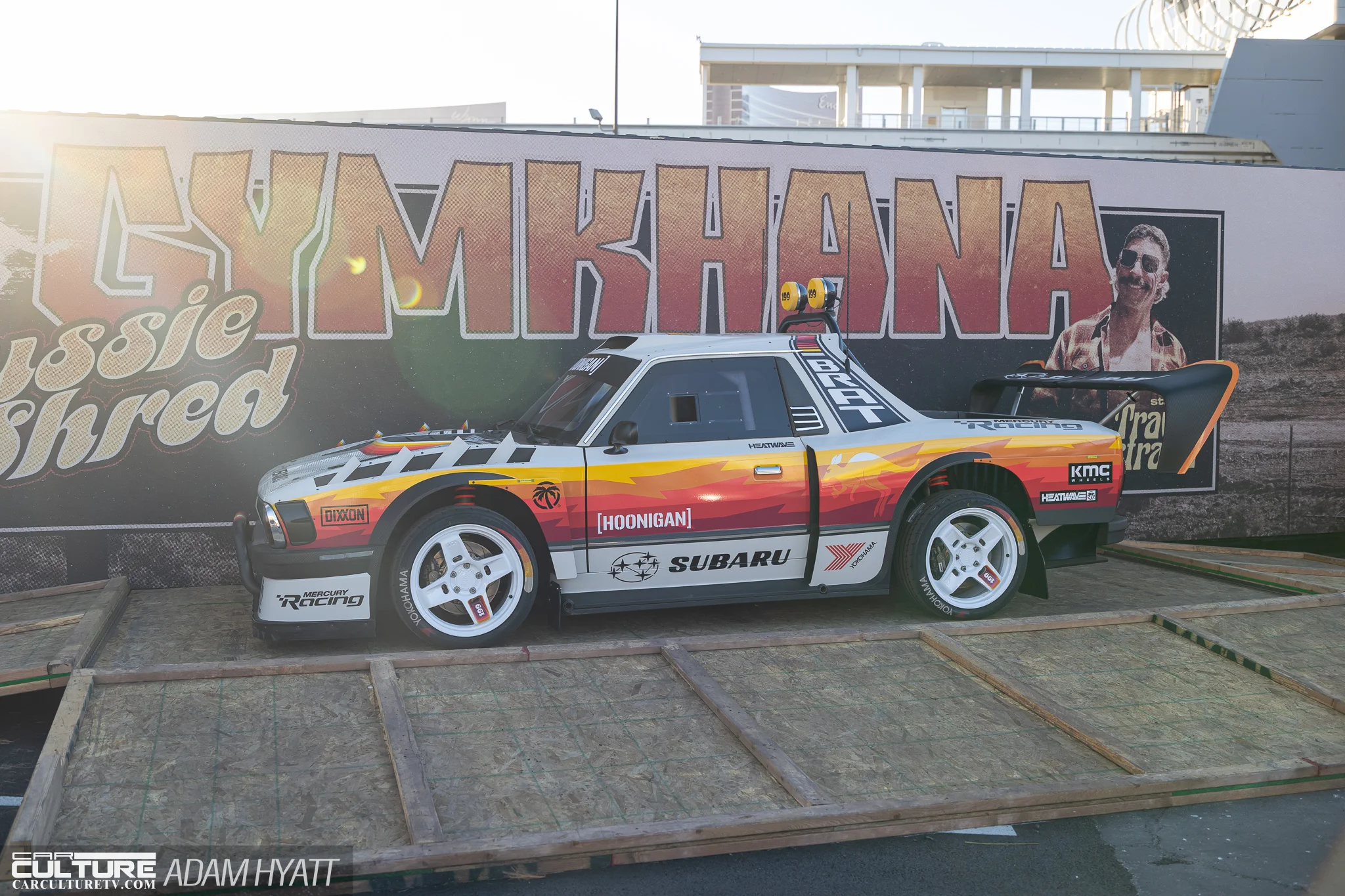
The Brataroo stopped everyone who walked through Hoonigan’s area. Vermont SportsCar built this Subaru Brat for Travis Pastrana’s next Gymkhana video, running a blown 2.0-liter good for 670 horsepower in a body that looks like it belongs on a farm. The combination of AWD pedigree, that power number, and that stance is exactly what Gymkhana films were built around.
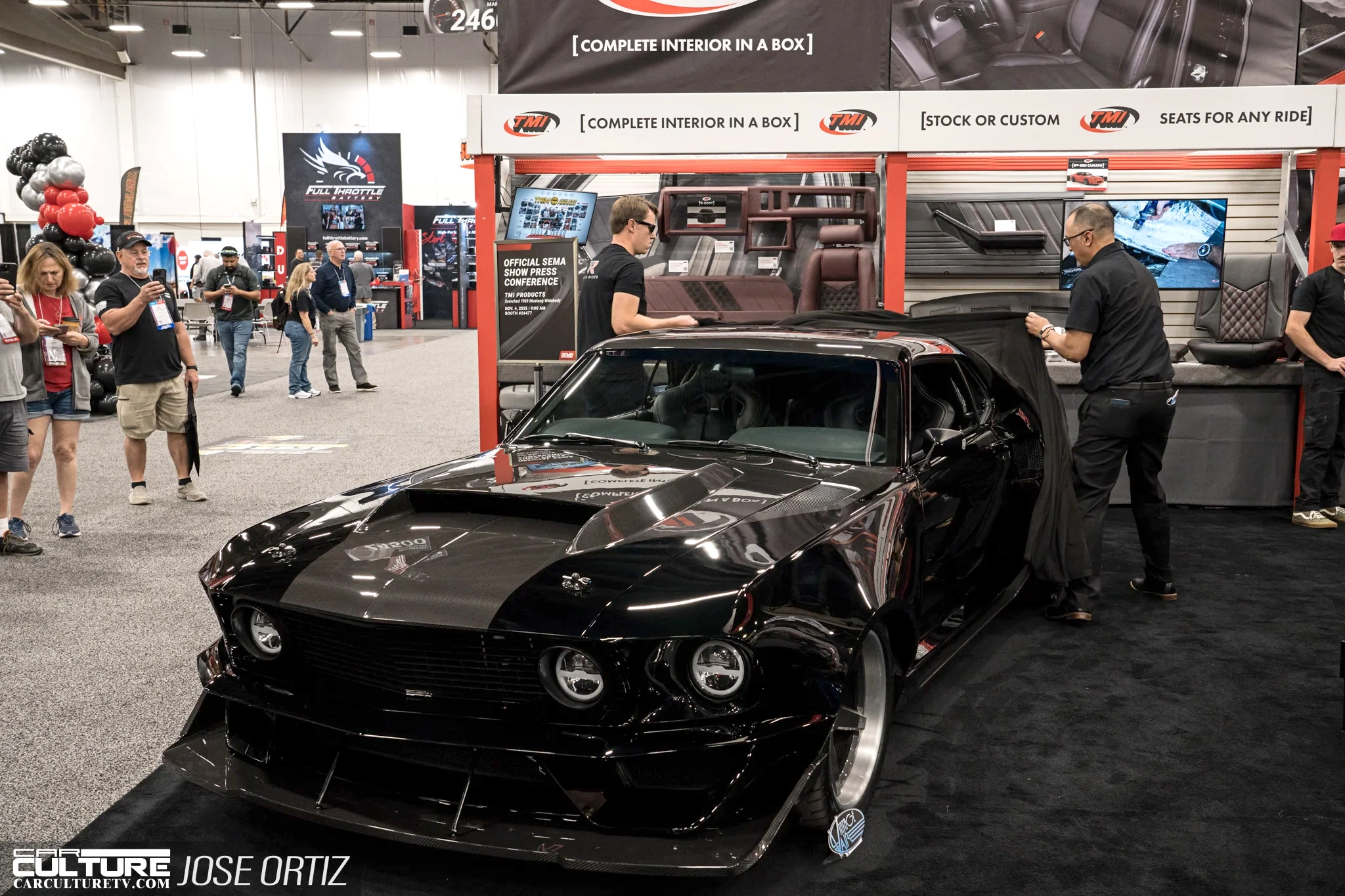
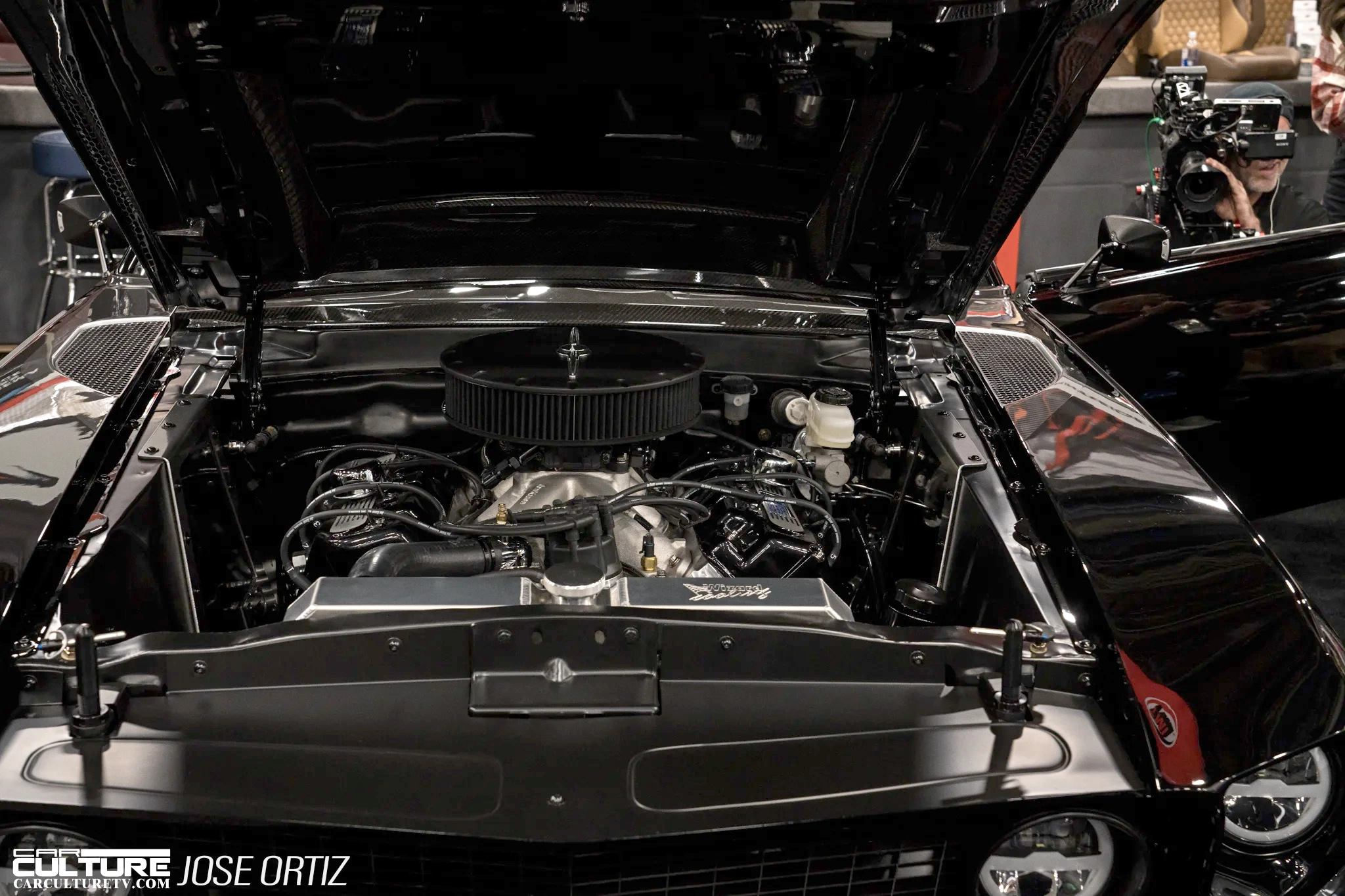
TrickRides debuted the world’s first full-carbon 1969 Ford Mustang. A 520-cubic-inch Boss V8 on a Roadster Shop chassis, wrapped in a widebody that makes the original silhouette almost unrecognizable until you study it long enough. They’re building these to customer spec, which means this car was a conversation starter with a price tag attached.
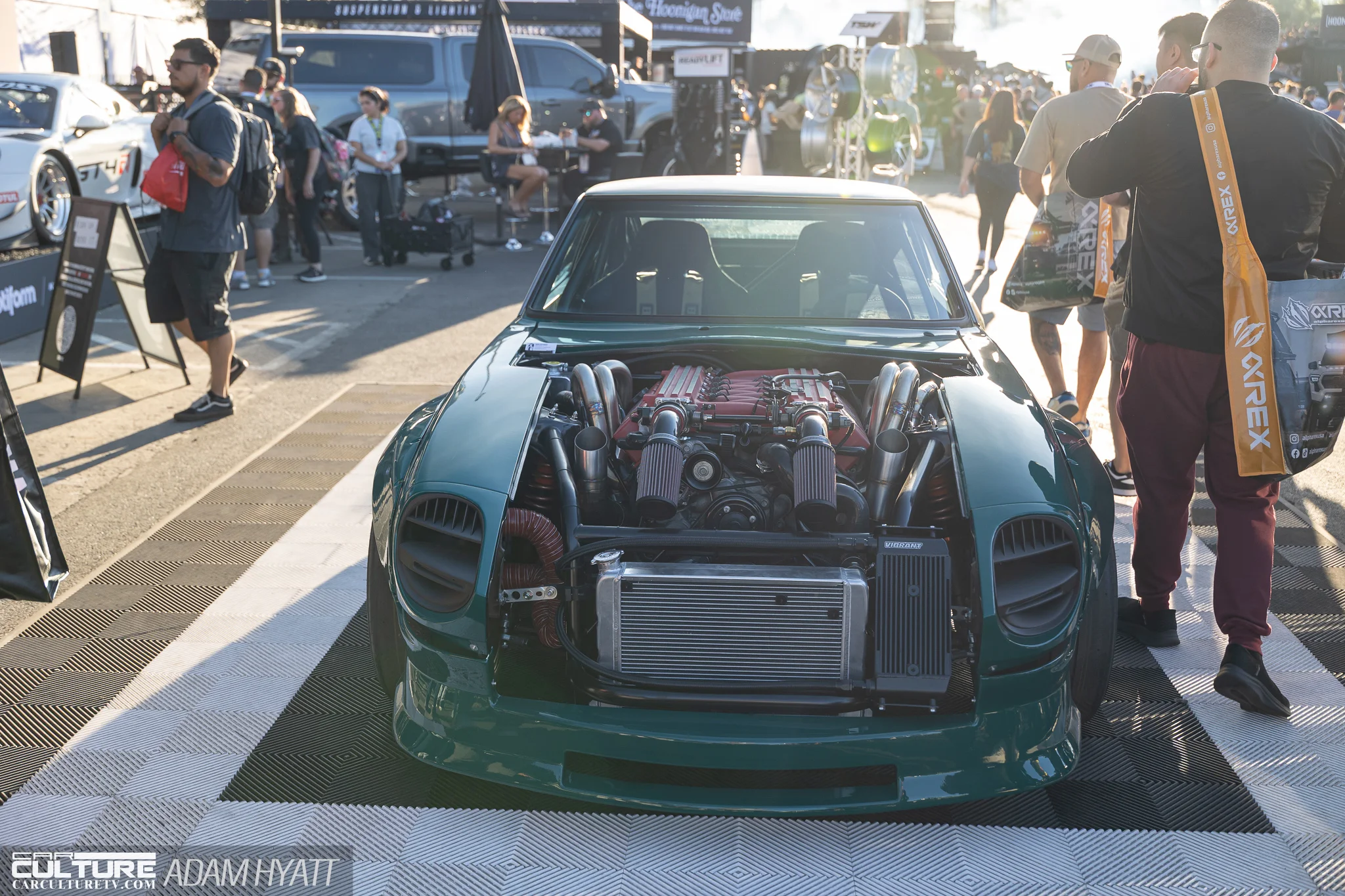
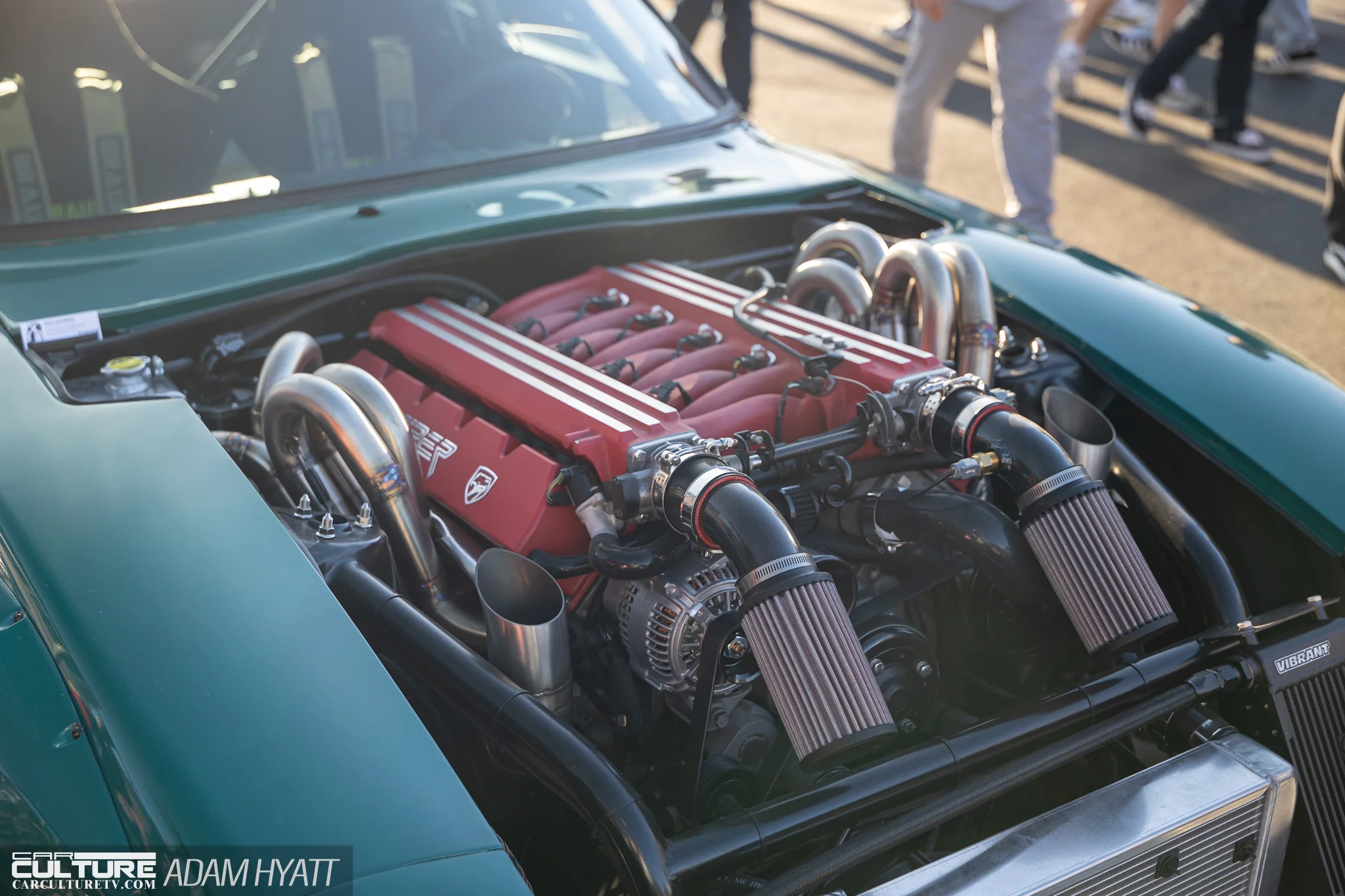
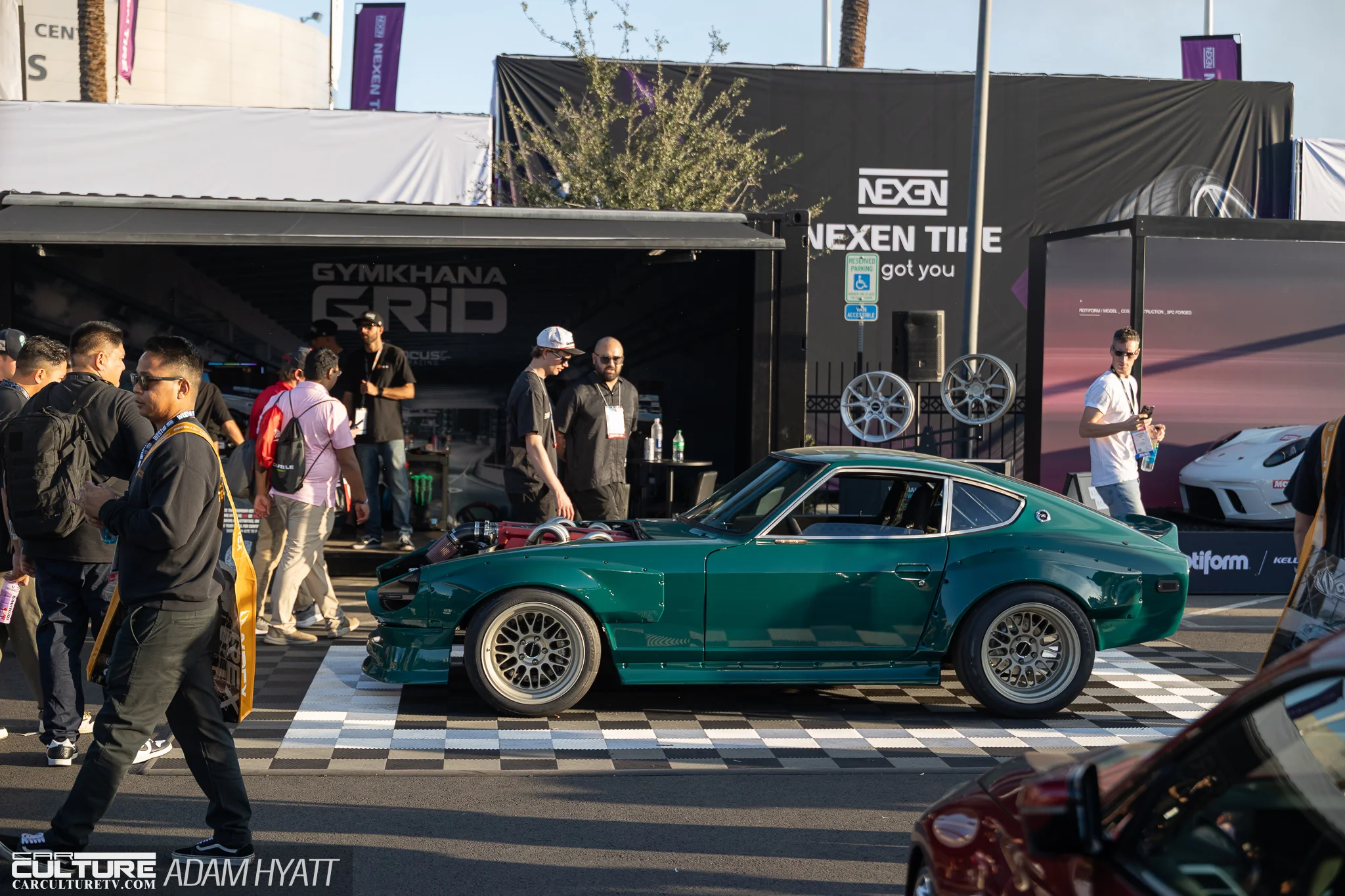
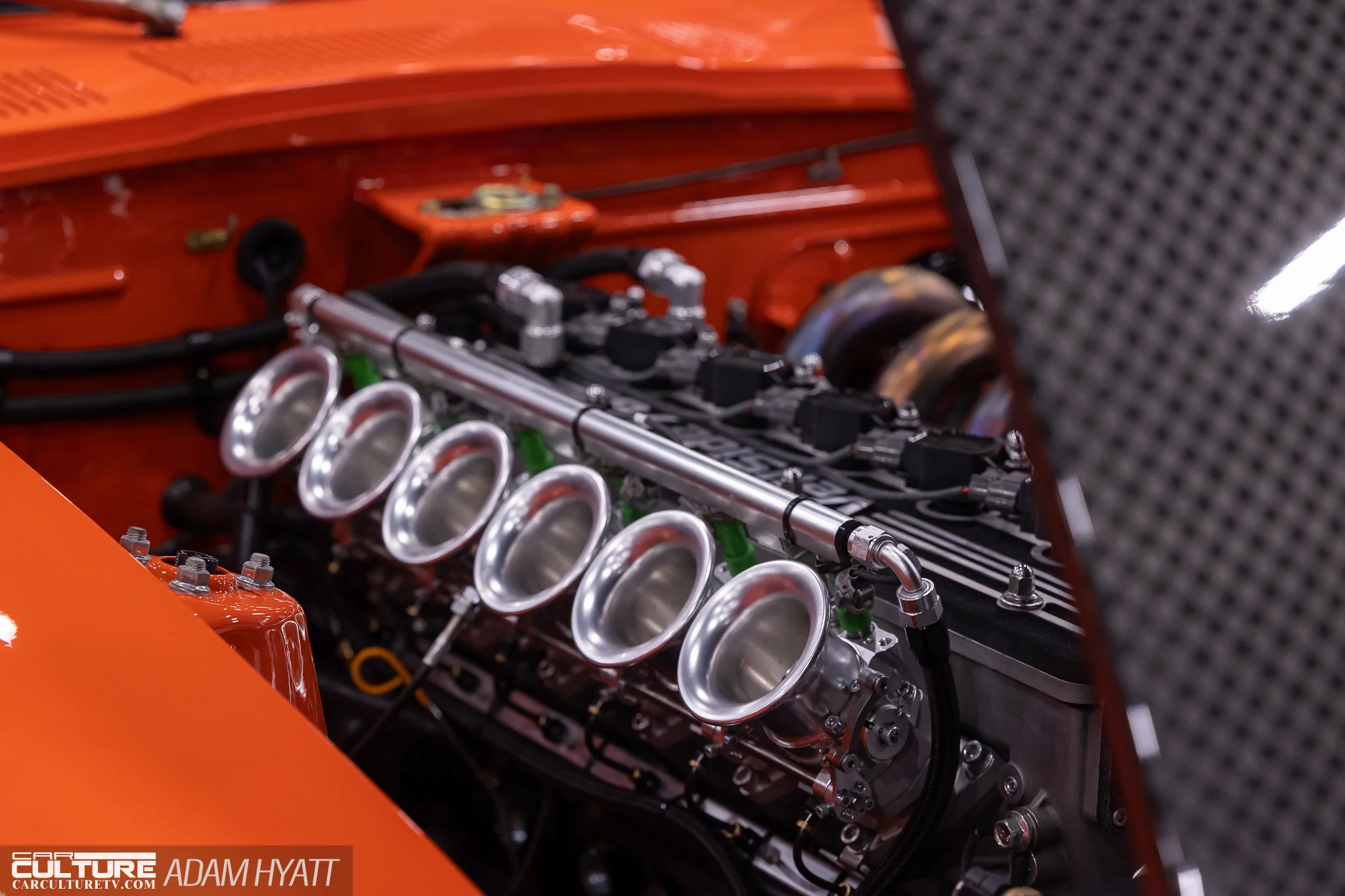
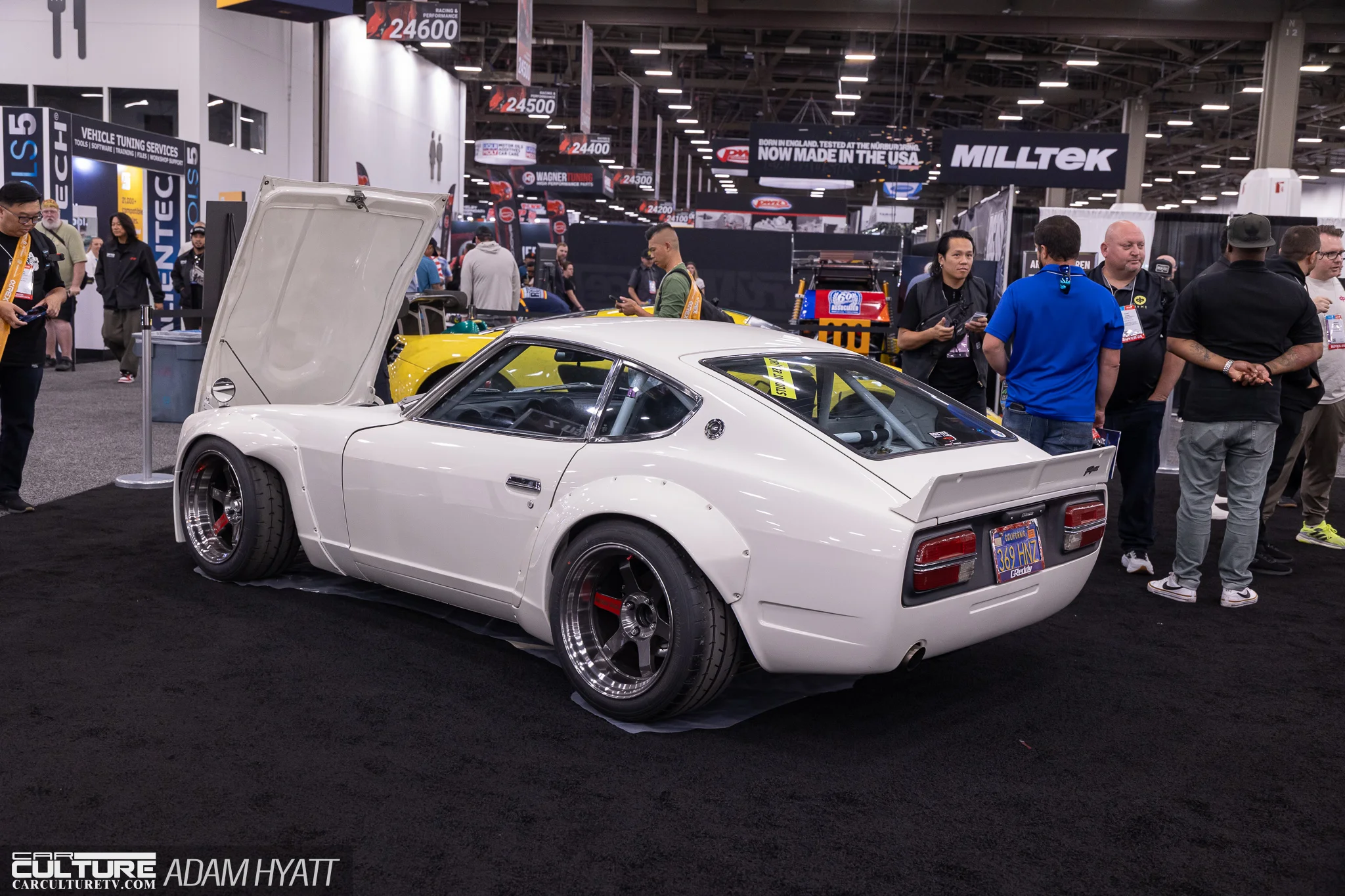
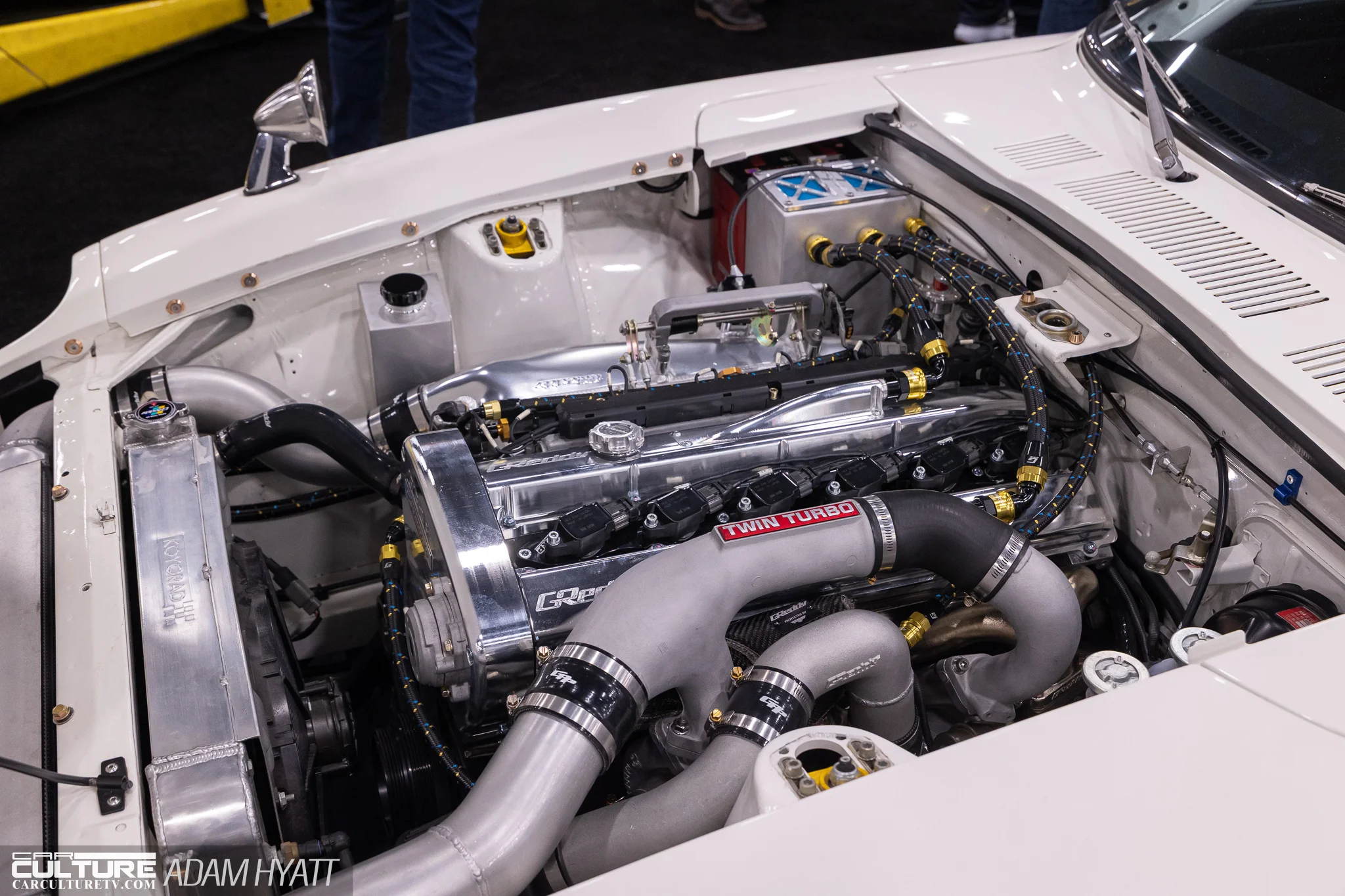
Brad Brammer’s Viper V10 Datsun 240Z earns a double take from everyone who walks past, regardless of what they know about cars. An 8.0-liter Viper V10 in a Z body takes serious custom fabrication to execute, and Brammer’s execution made it look inevitable.
The Booth Moments
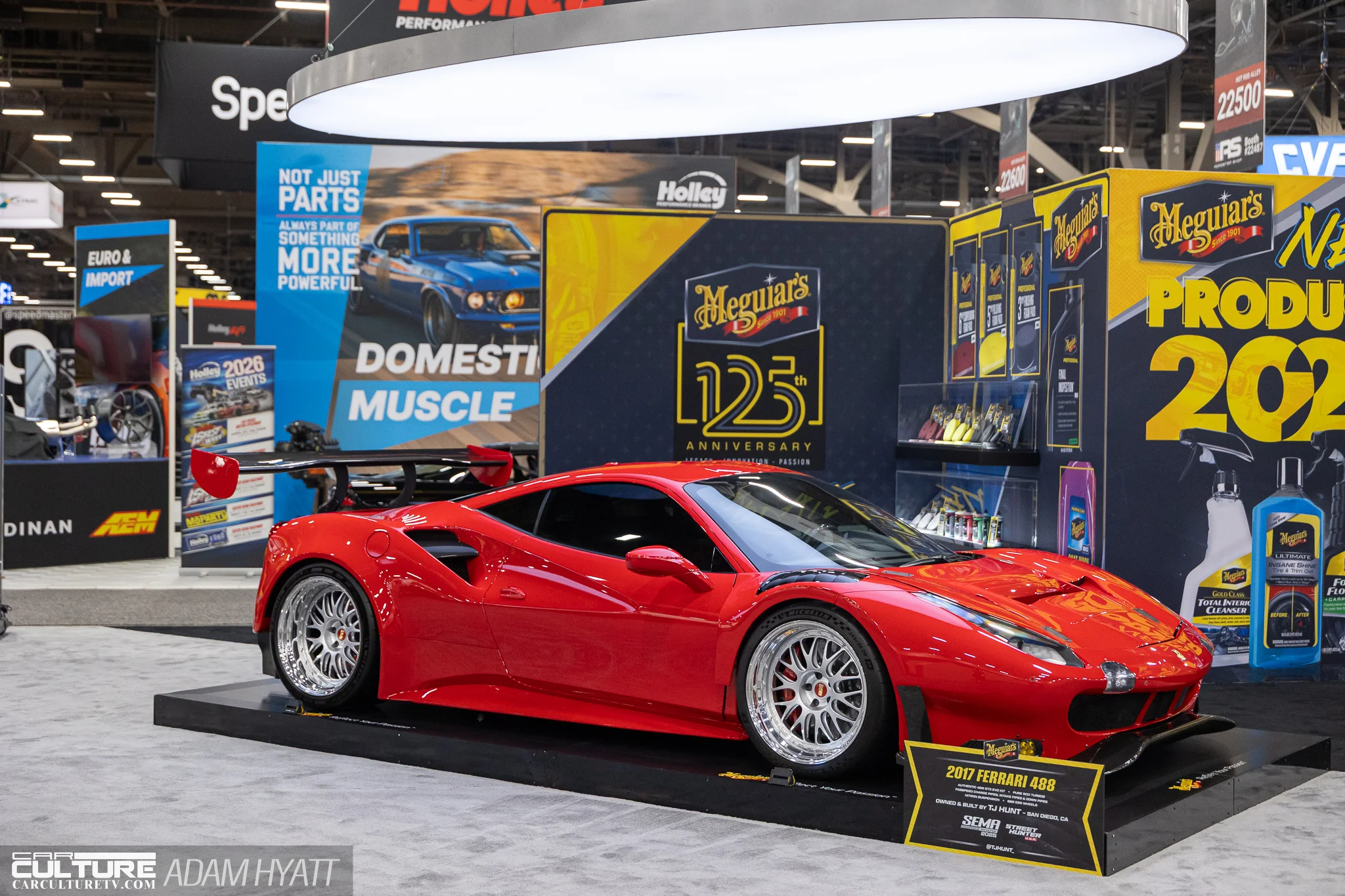
Meguiar’s brought serious heat to their space this year. TJ Hunt’s Ferrari 488 GT3 Evo received its full SEMA reveal here, and it was worth the buildup. Hunt spent five months converting a 2017 488 into a GT3 Evo, fitting full GT3 wide-body aero and pushing the power north of 800 horsepower. The car went from street 488 to race-inspired wide-body in a documented build series his audience followed every step of the way. The Meguiar’s reveal put the finished product in front of the industry for the first time. It landed.
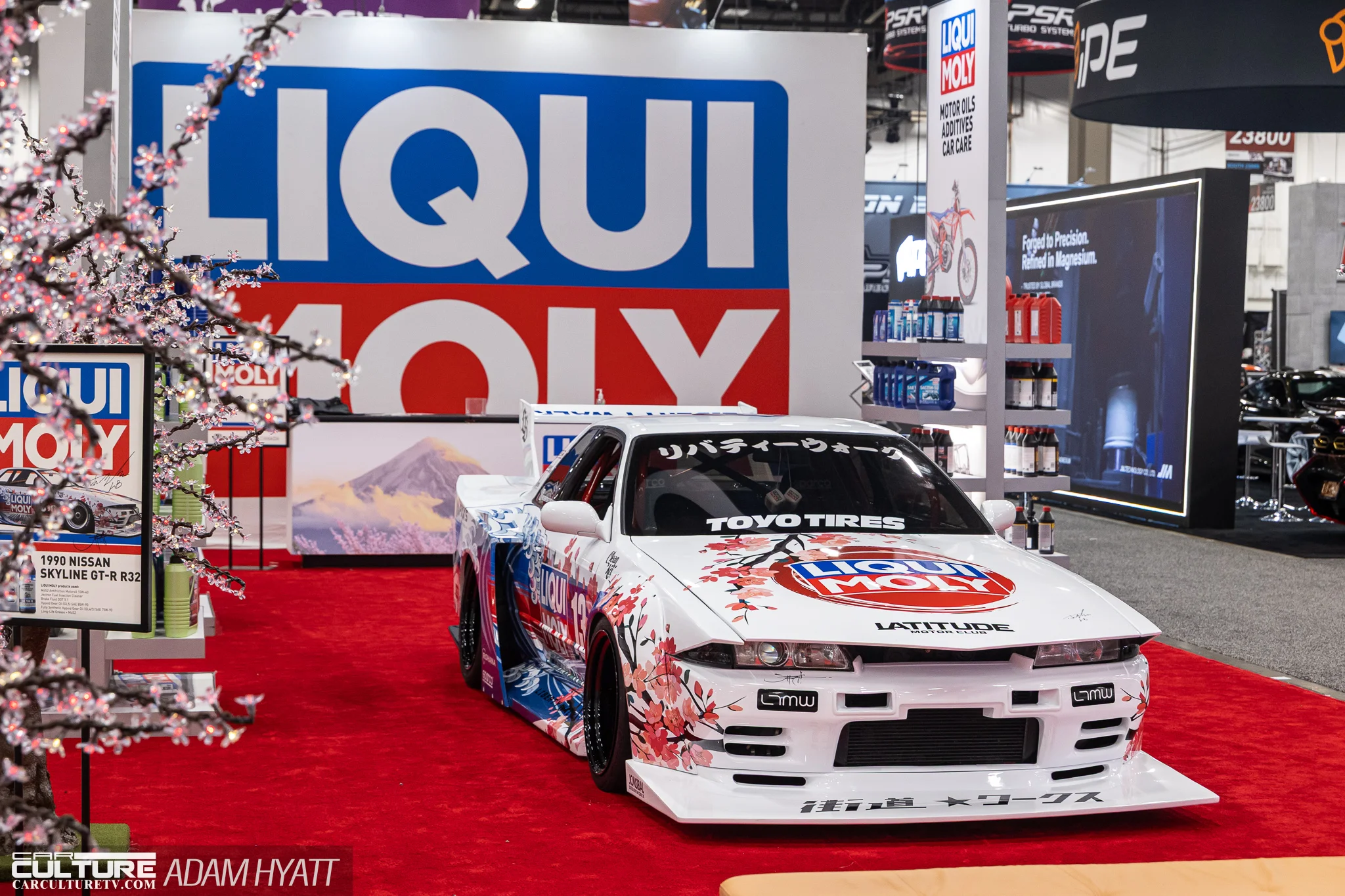
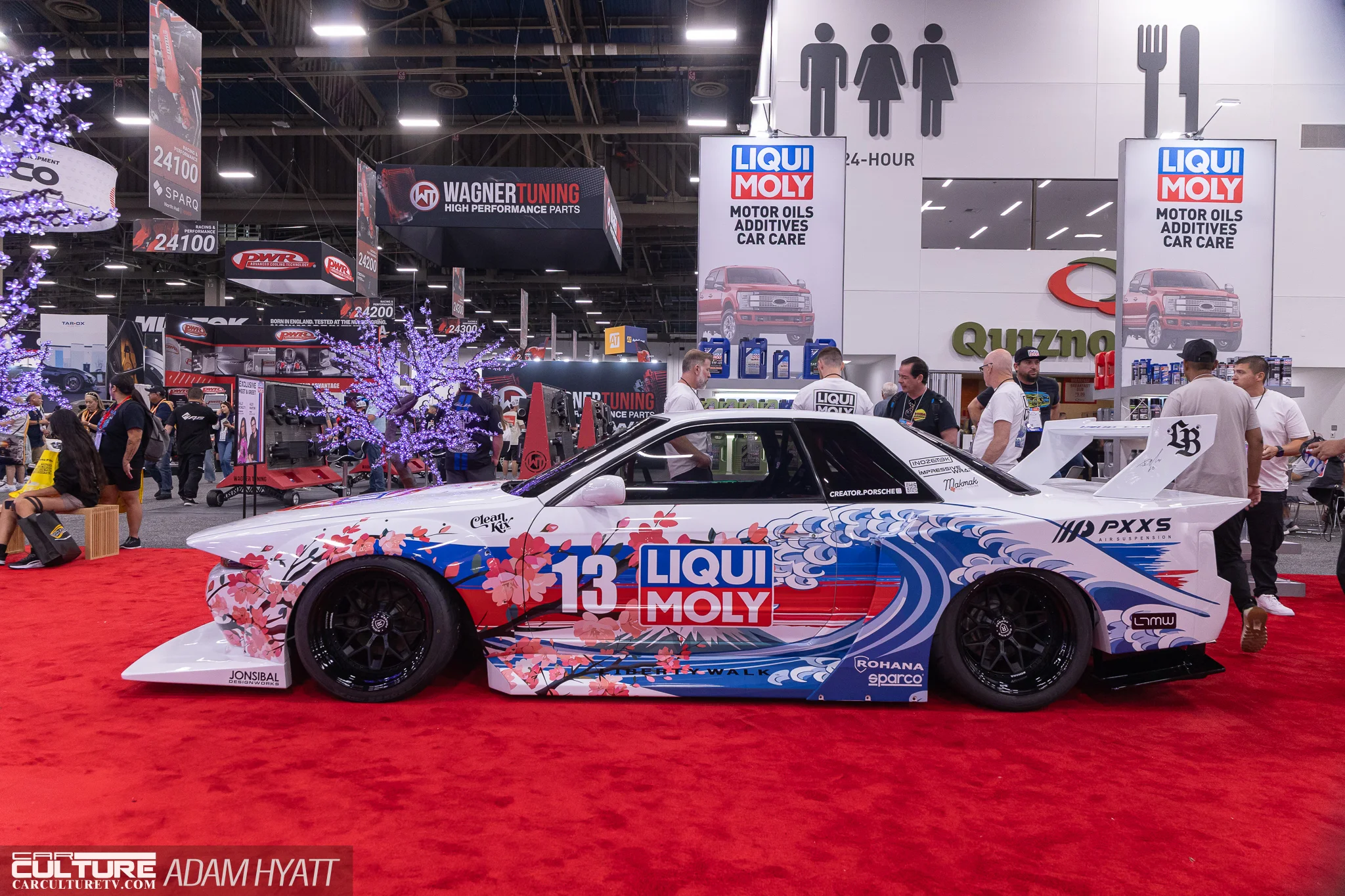
Liqui-Moly leaned fully into JDM culture this year, anchoring their Central Hall booth around Liberty Walk’s custom Nissan R32 Skyline wearing an LB-Kaido Works body kit. It was one of the most photographed cars in that section of the show. The matching Taxi Garage Crazy Cart parked alongside it was a detail that most people clocked and appreciated.
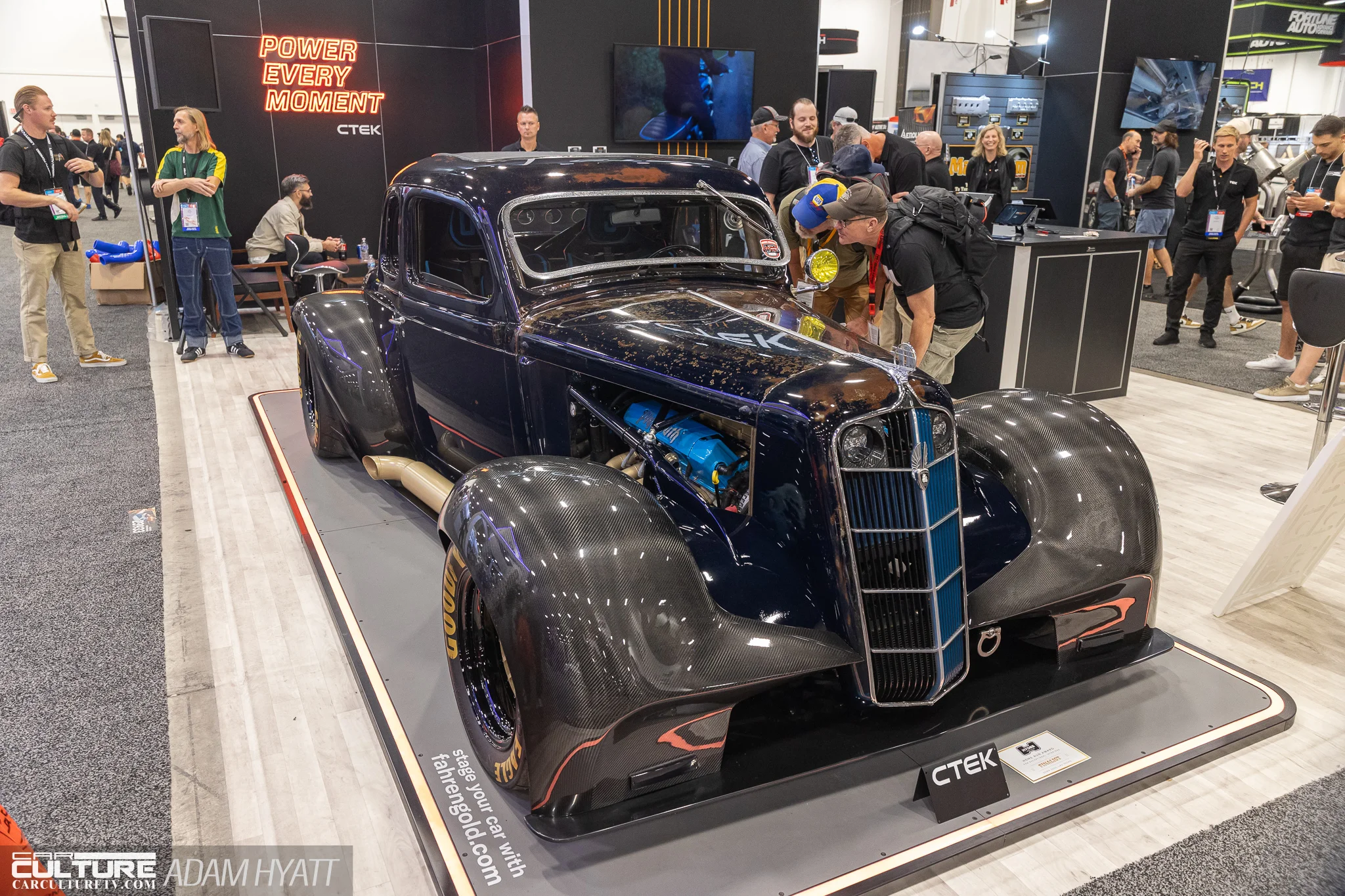
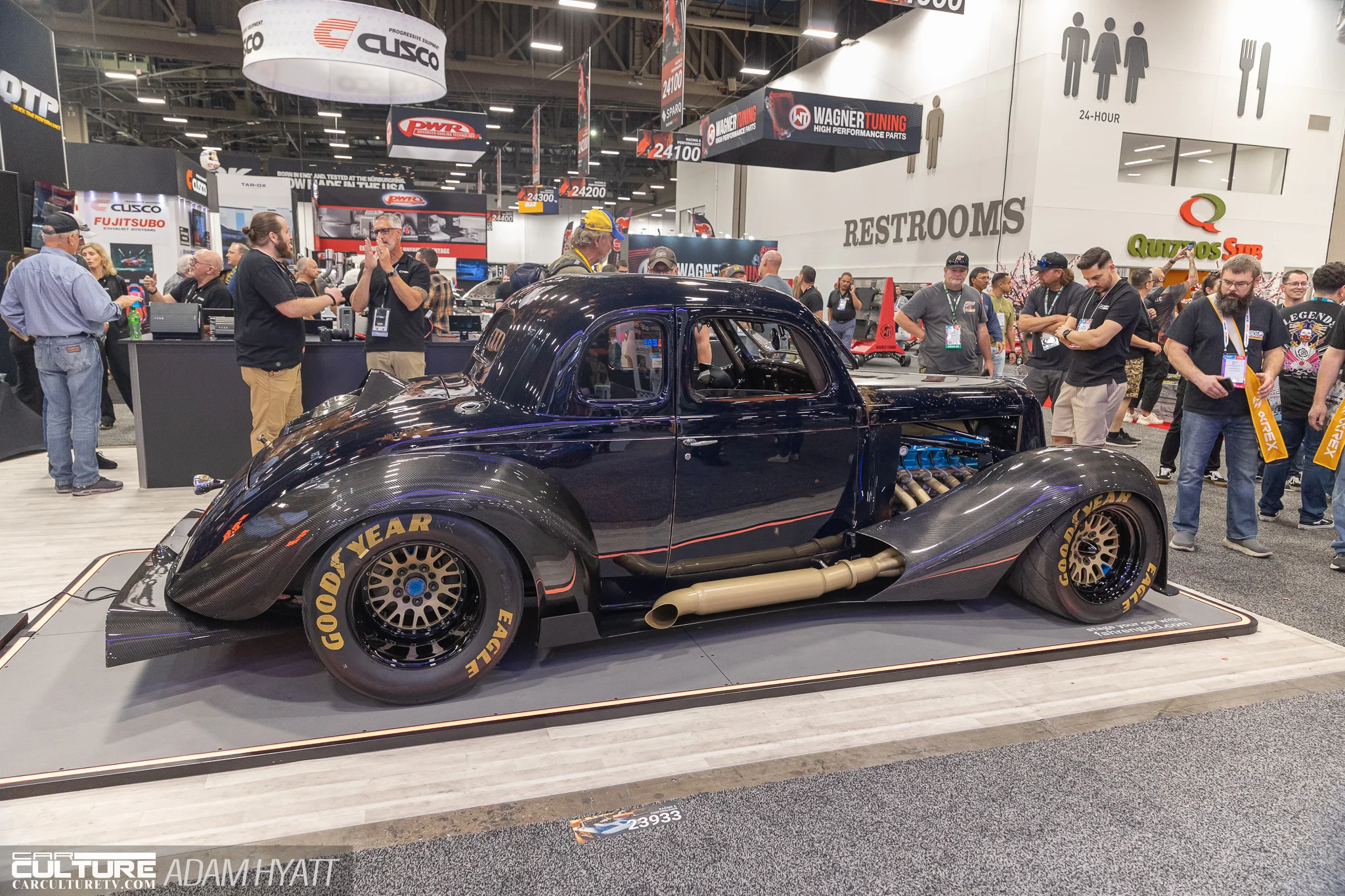
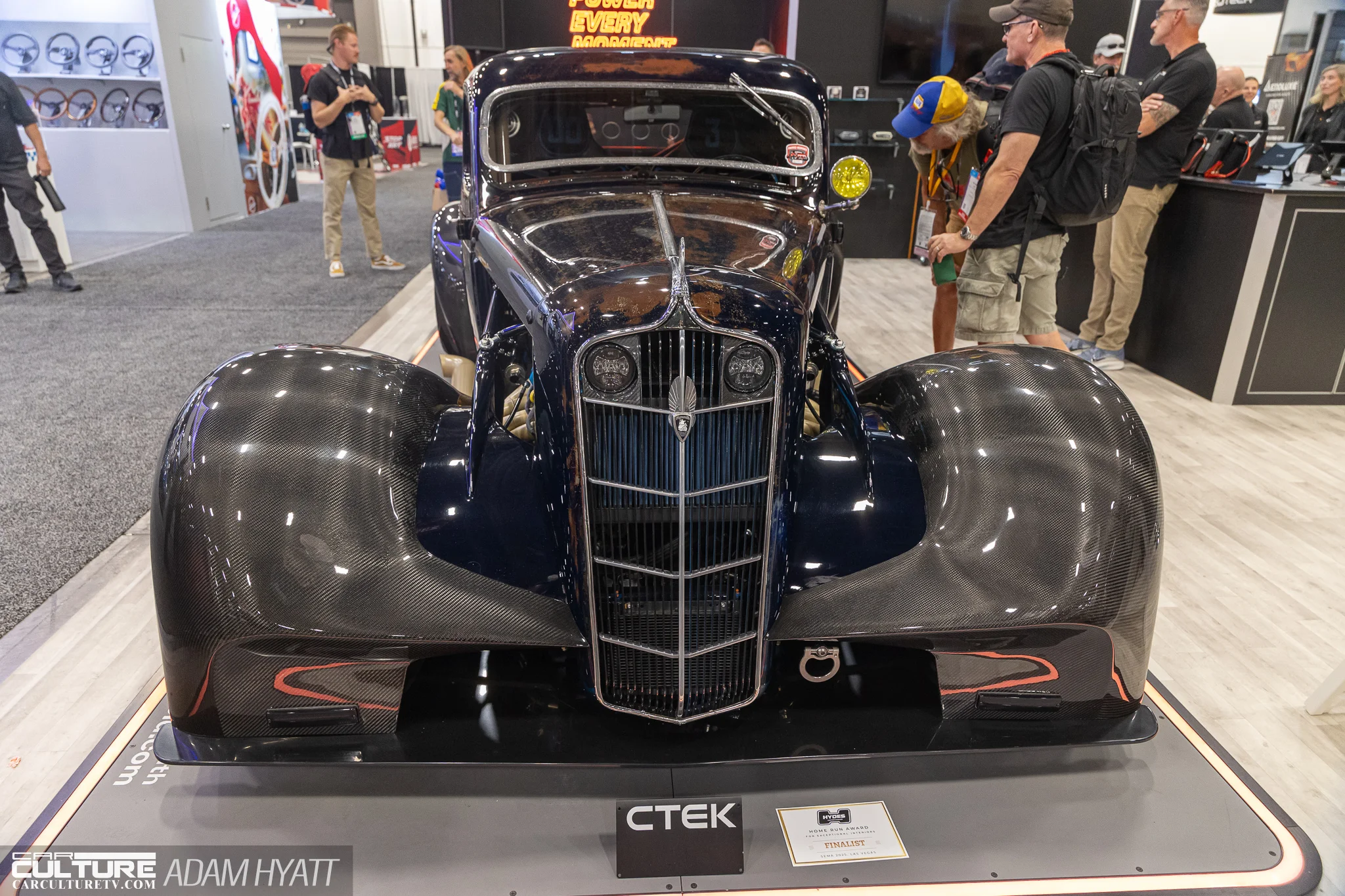
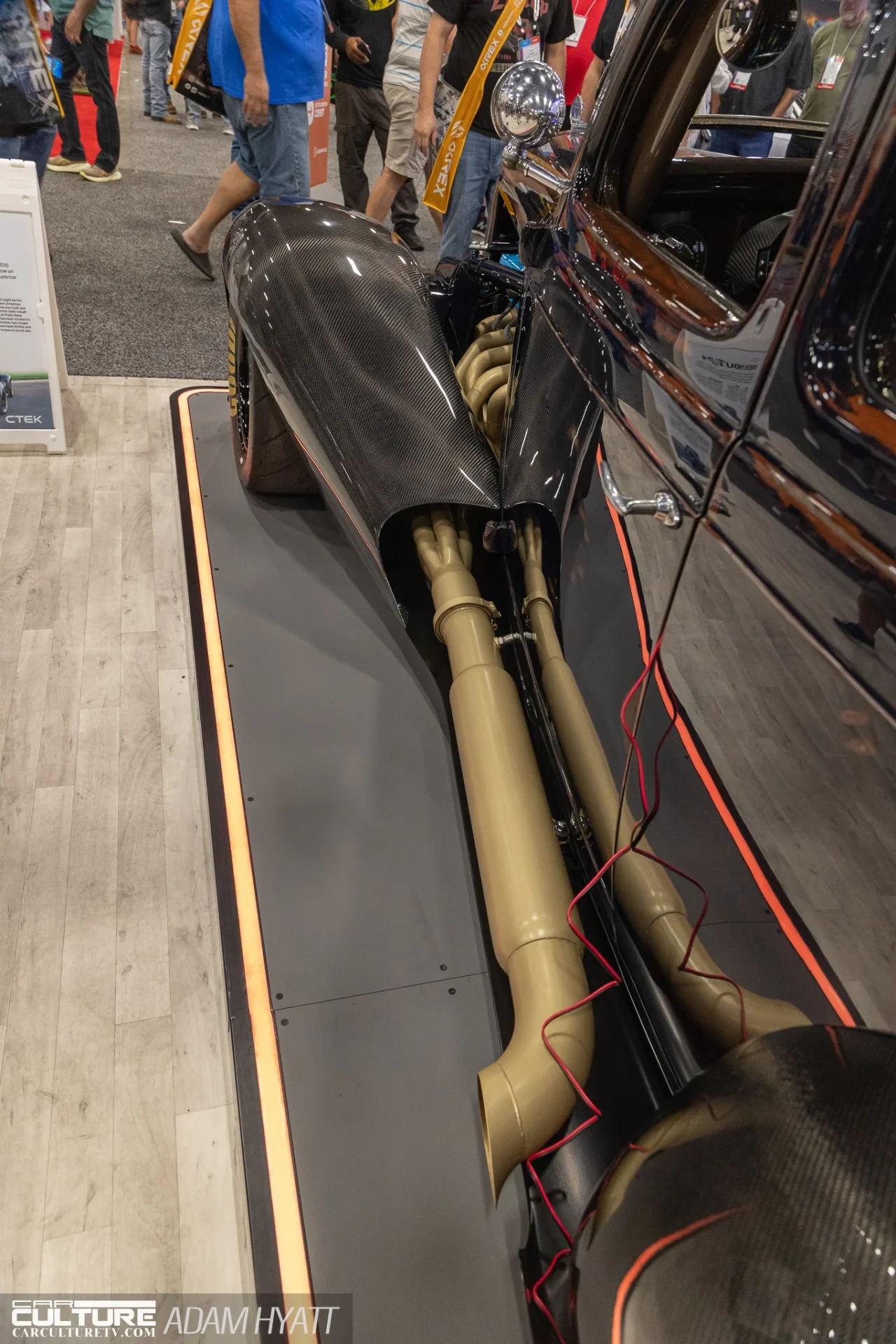
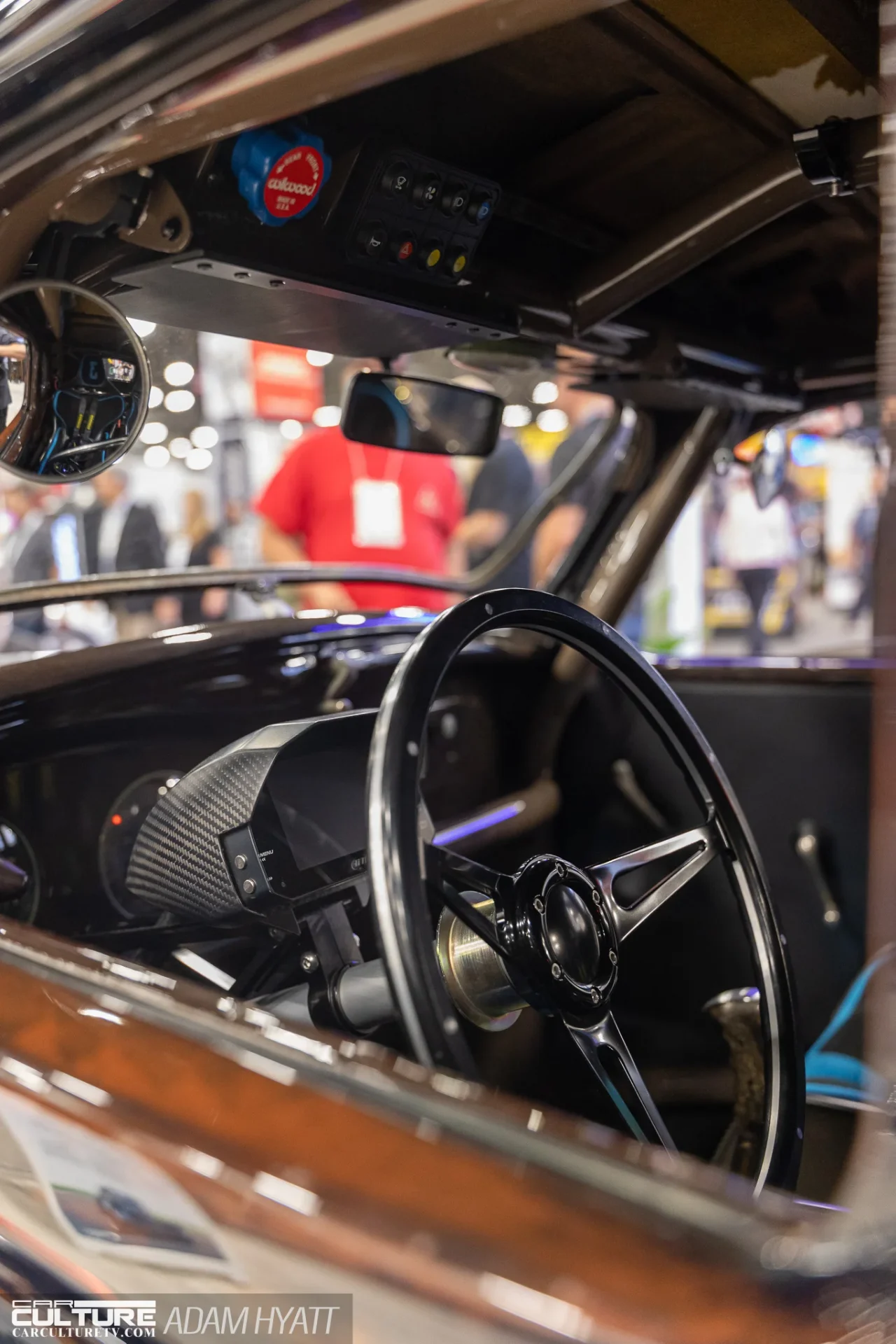
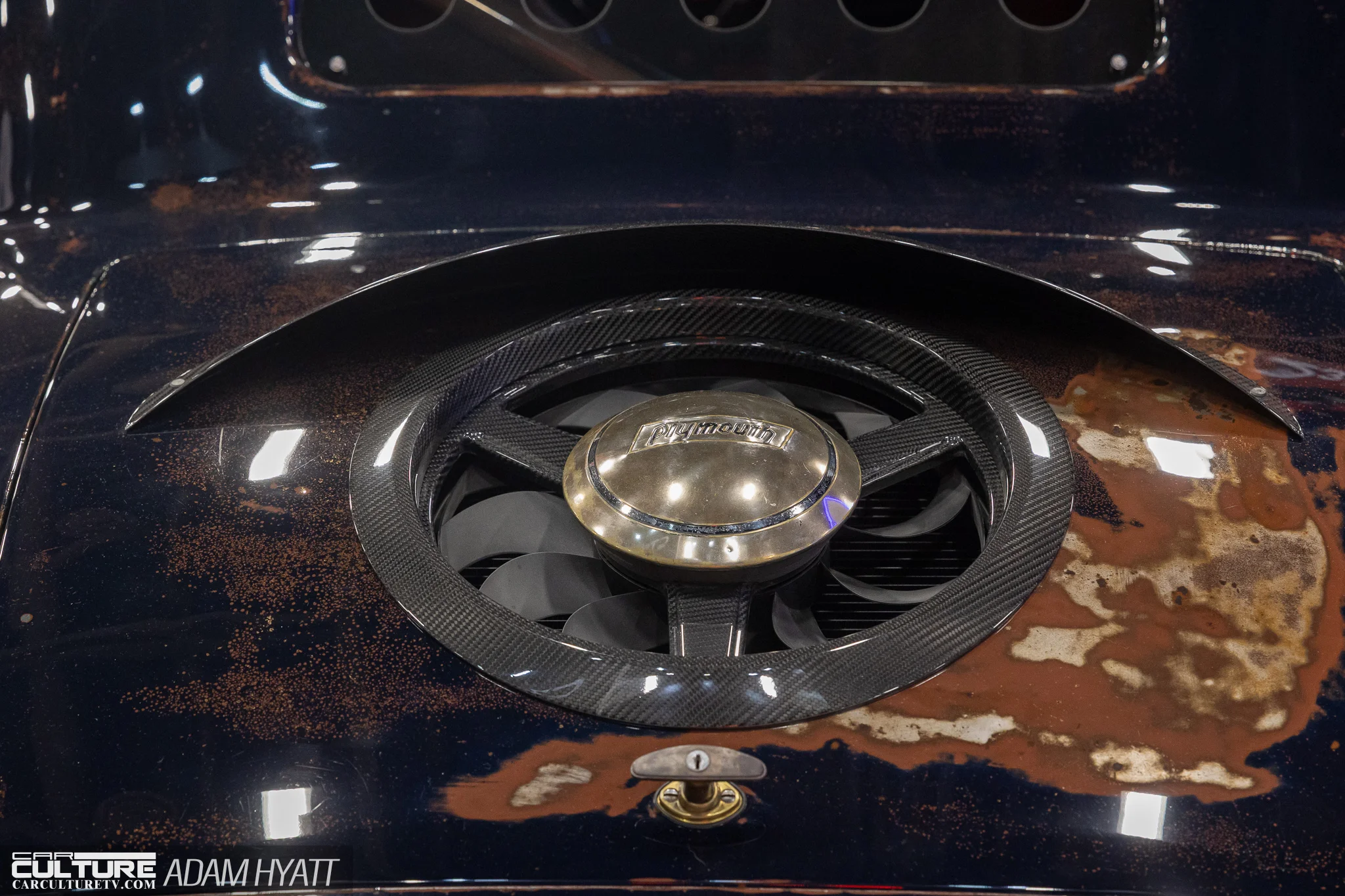
The CTEK booth housed one of the more unexpected builds on the floor. Ruffian Cars brought their 1935 Plymouth, and the combination of what it is and what it hides underneath stops people cold. The body is entirely original, a clean California 1935 Plymouth PJ Coupe with untouched patina preserved under clearcoat. Beneath it sits the all-time winningest car in the Crane Cams V8 Stock Car Series, a GT-1 Corvette race chassis built by Tommy Riggins and campaigned by David Machavern to 30 wins and three championships. The engine is a Viper V10 stroked to 550 cubic inches by Prefix Race Engines, making 803 horsepower and 741 lb-ft of torque on pump gas. Original body, championship race chassis, V10 power. CTEK picked the right car to put in front of their booth.
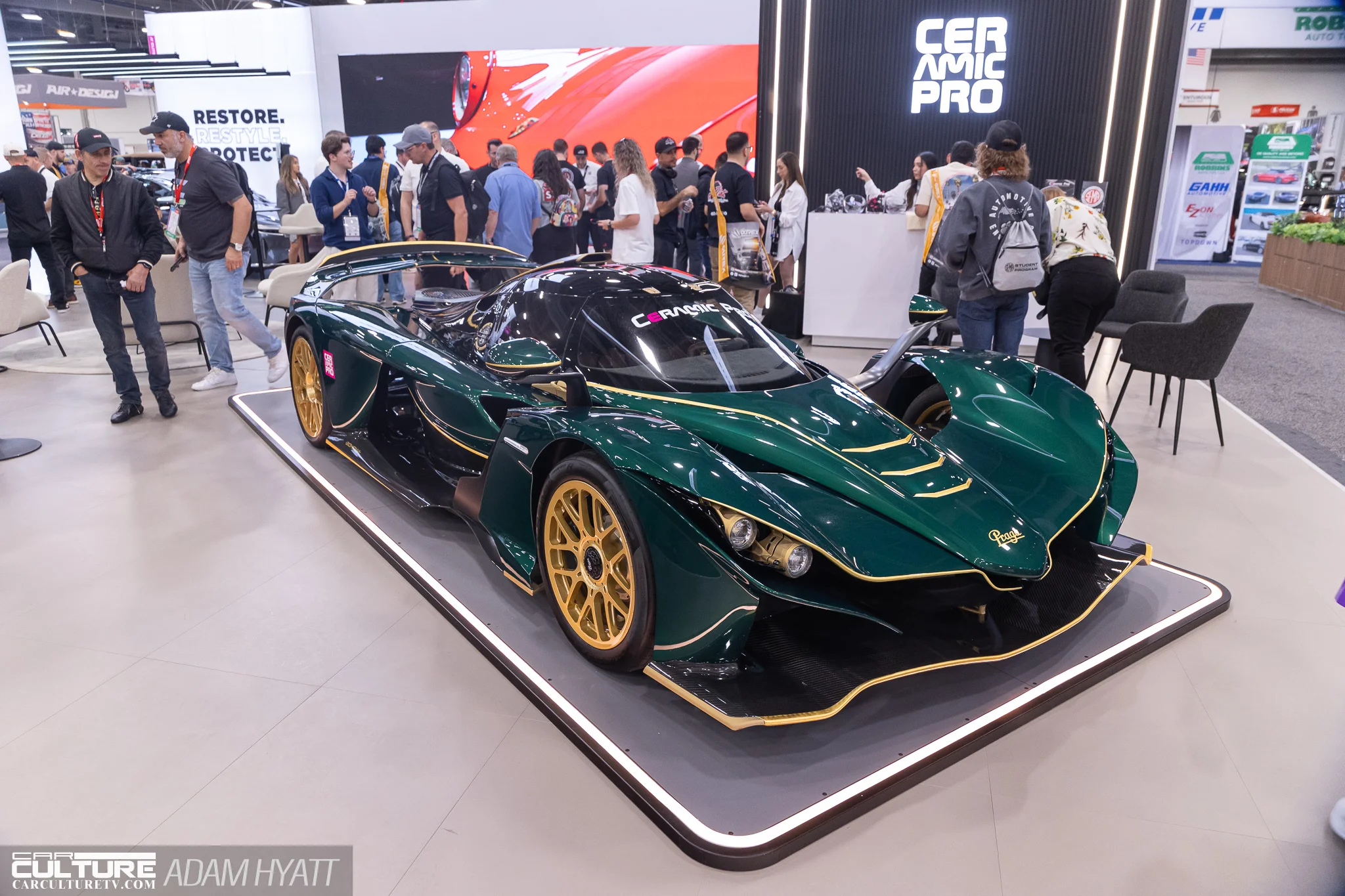
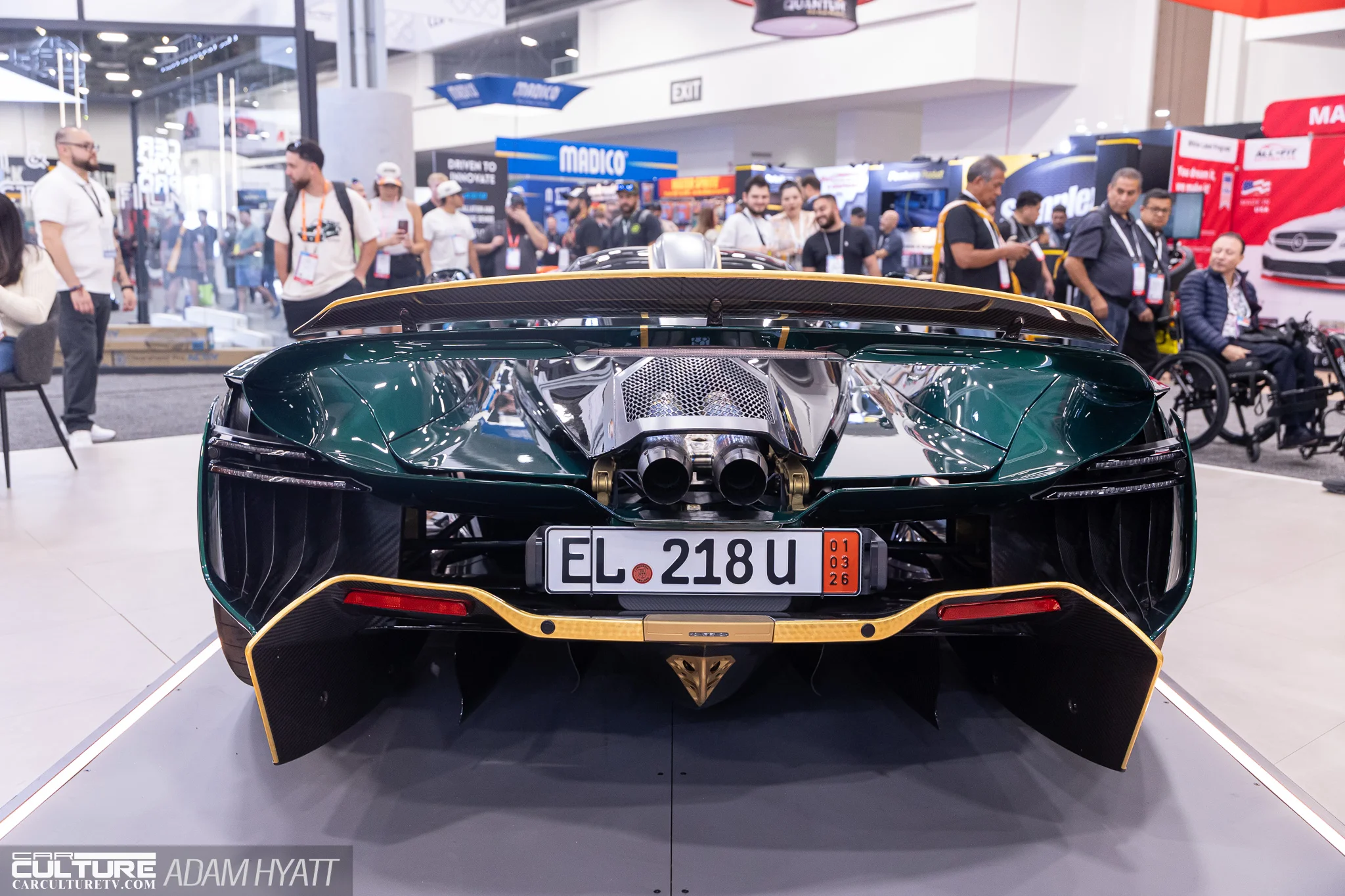
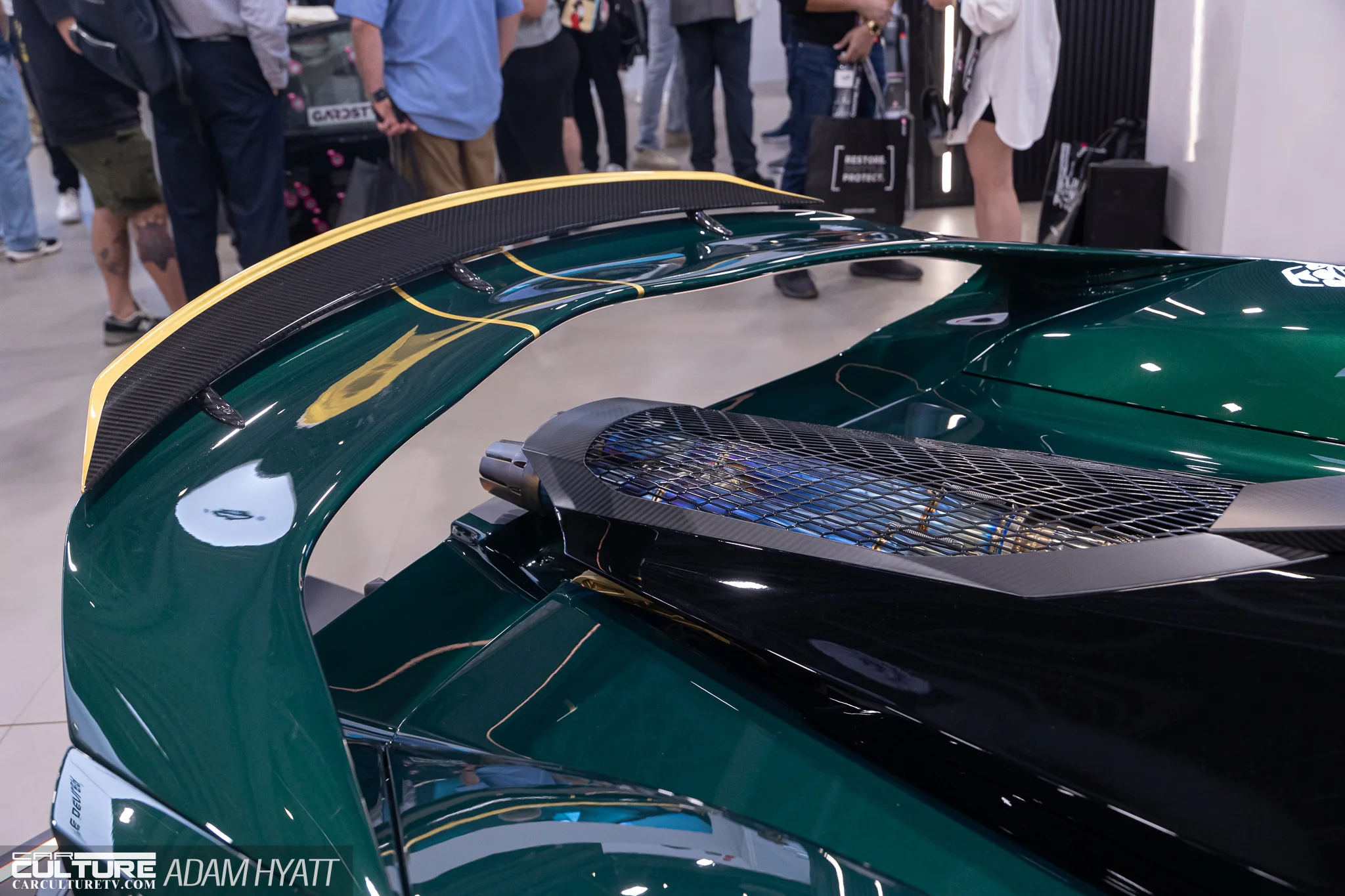
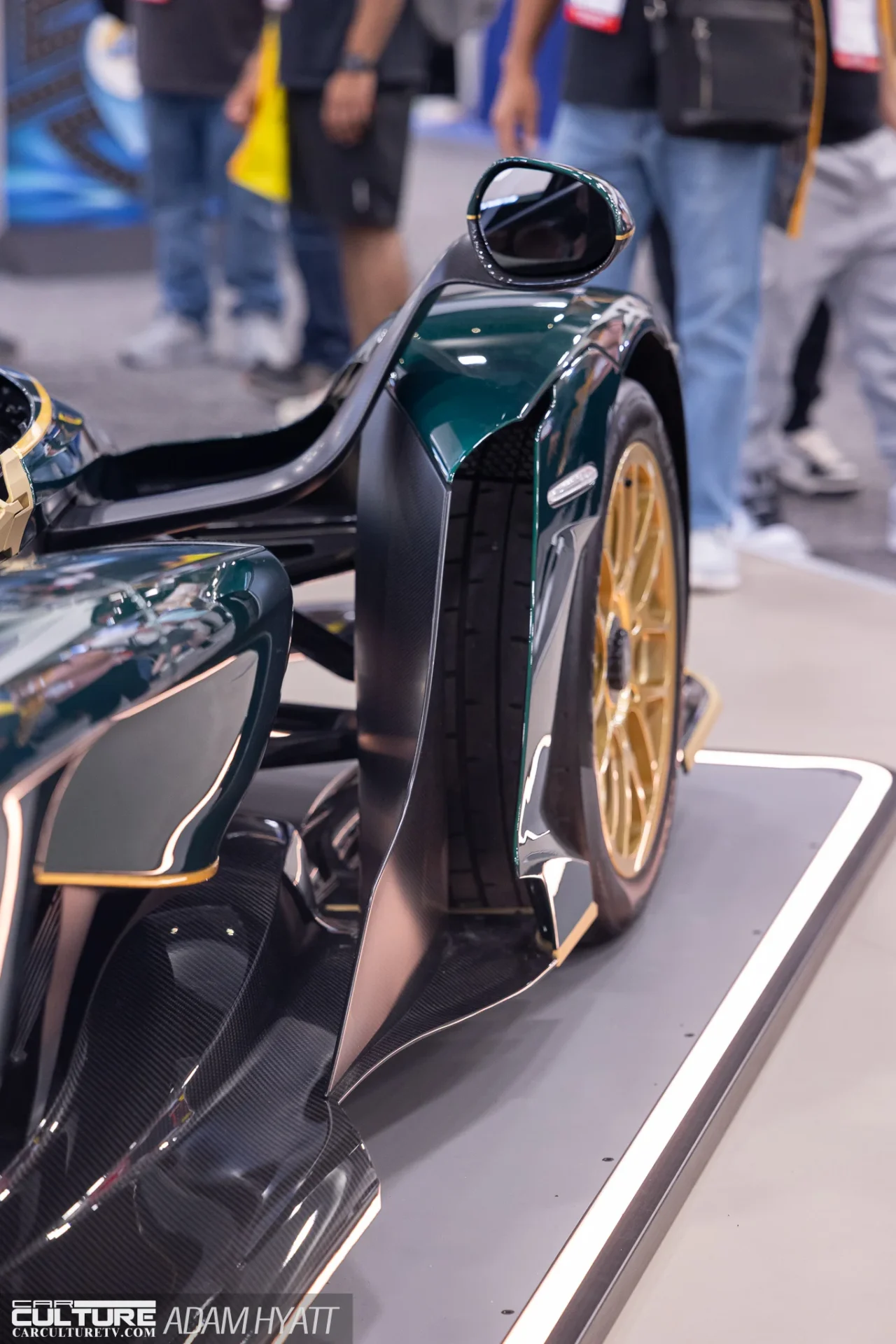
At the Ceramic Pro booth, the car that stopped traffic was the Praga Bohemia, one of only 89 in existence worldwide. A street-legal hypercar weighing just 2,100 pounds, powered by a 700-horsepower twin-turbo V6 sourced from a Nissan GT-R engine, finished with 24-karat gold accents throughout. The booth staff acknowledged that even they needed a moment when it arrived. That’s a fair response.
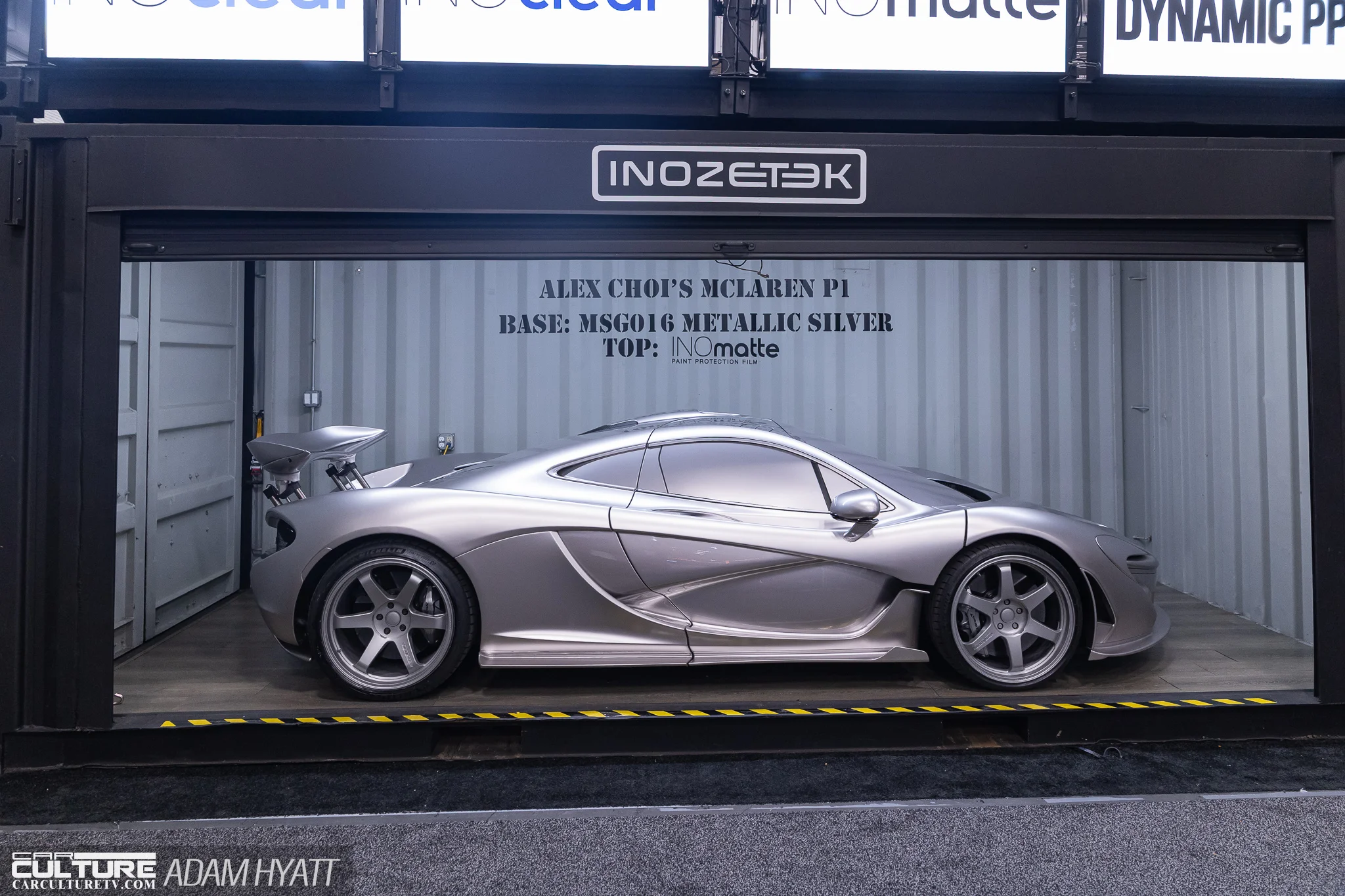
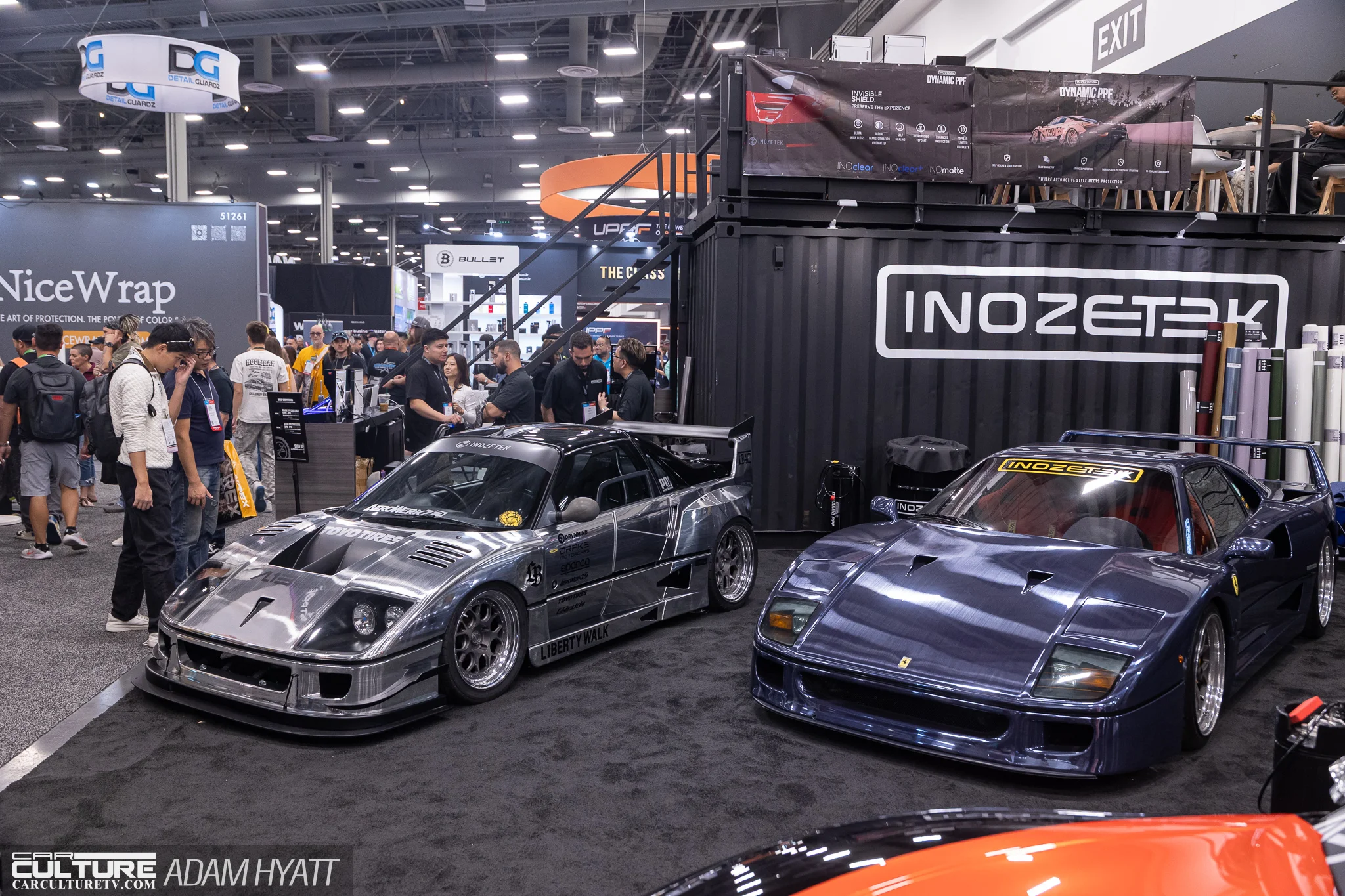
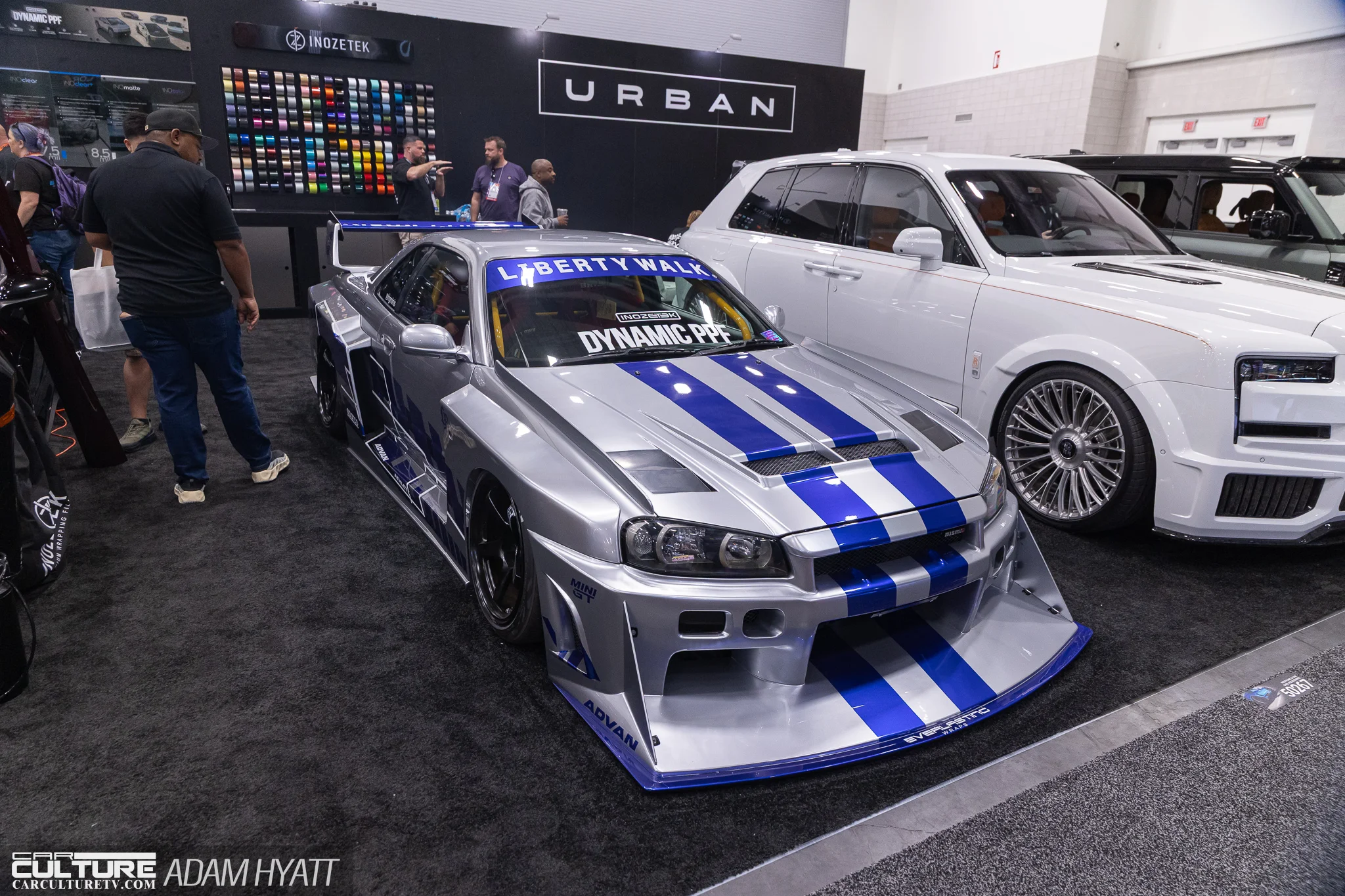
Inozetek brought the kind of booth lineup that reminds you why wrap culture has become a legitimate art form. The FK101 and FK102 showcased their latest material tech, but the cars flanking them did the real talking. A Liberty Walk R34 GT-R and Alex Choi’s McLaren P1. Having Choi’s P1 in that space is a statement about where creator culture and product culture intersect now.
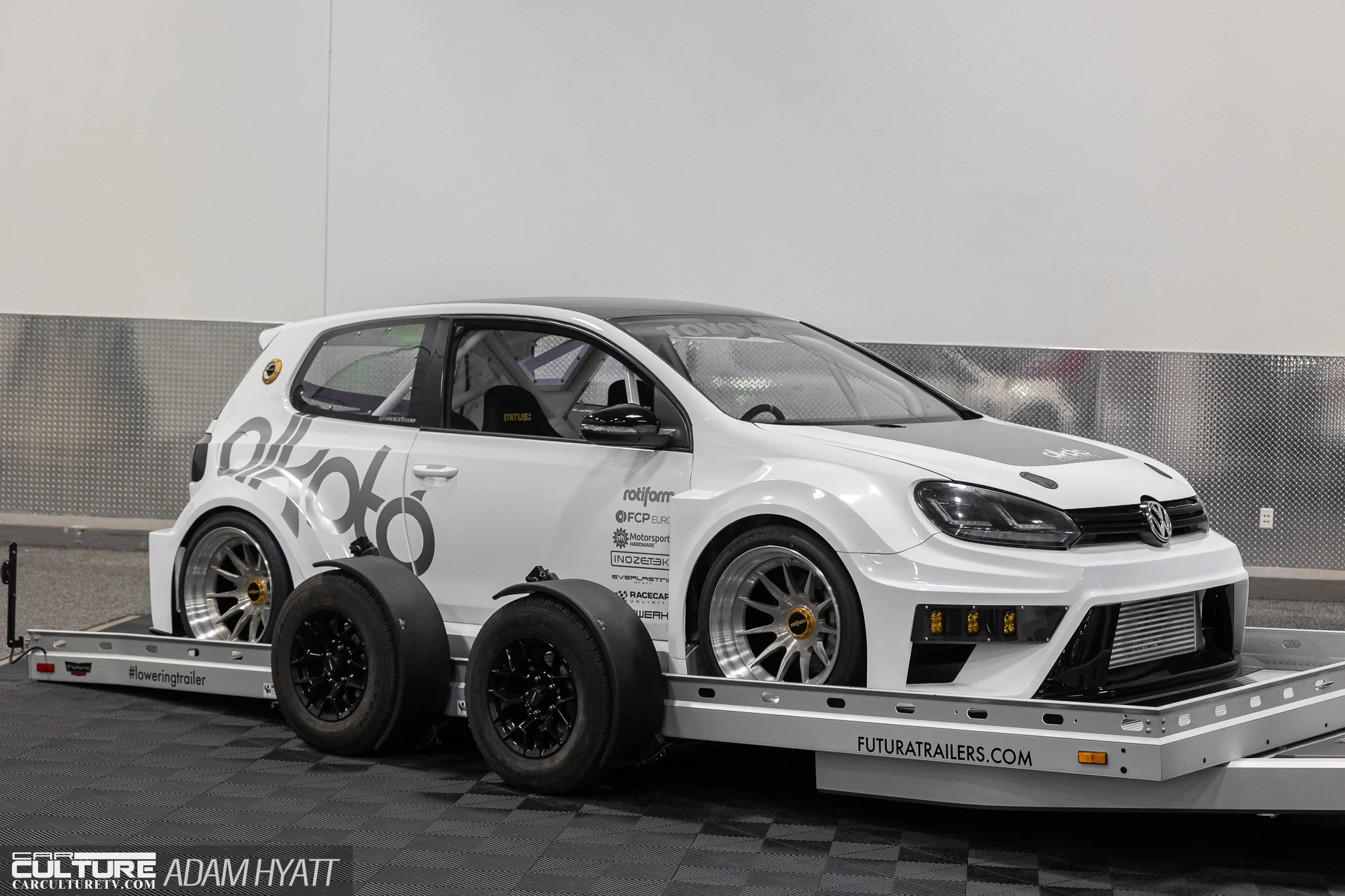
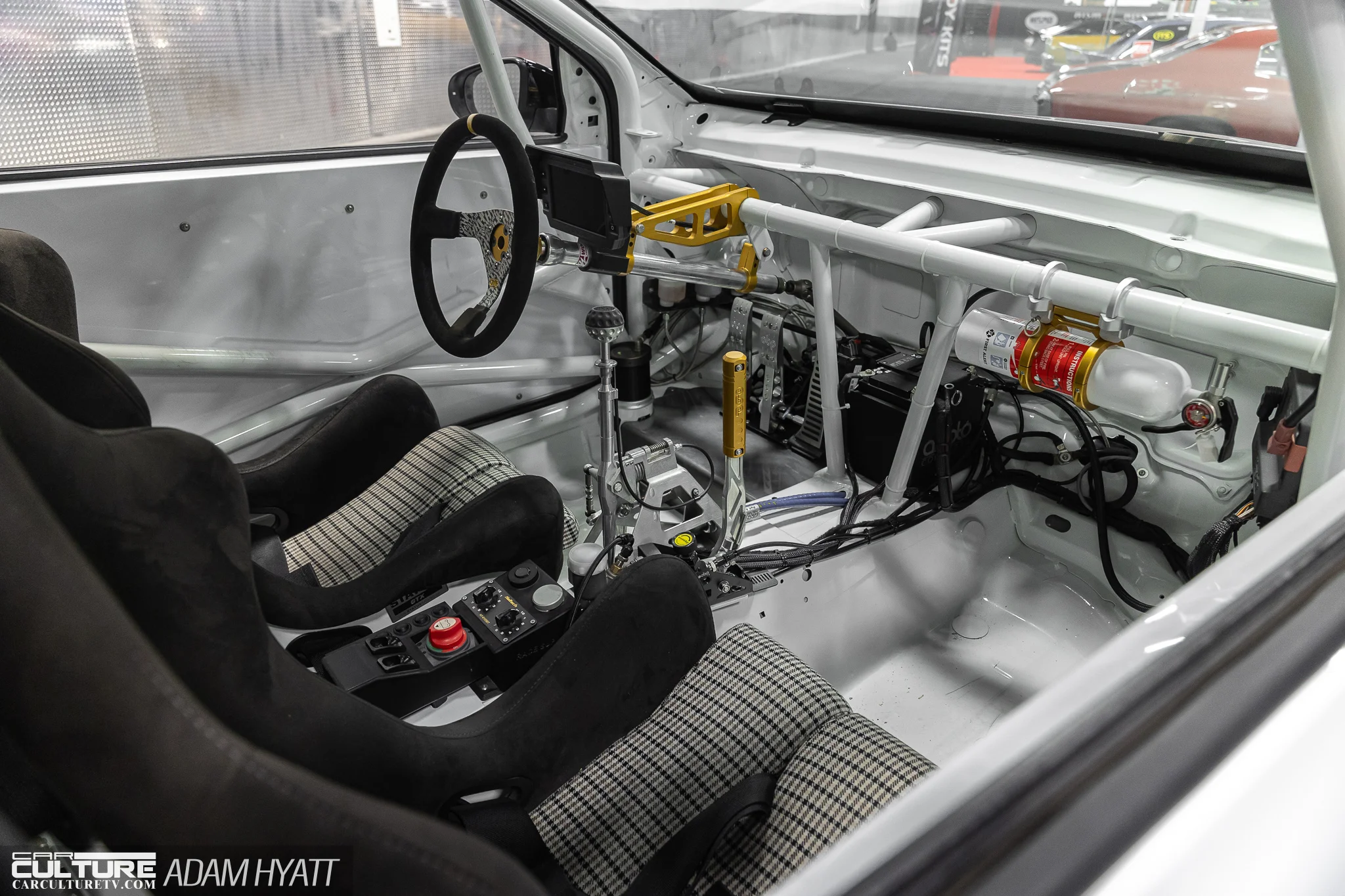
Alkoto Concepts brought their widebody Volkswagen MK6 Golf GTI as part of Steven Nadaskai’s Road-to-SEMA build, displayed in the Content Creator Corral. The widebody treatment on the GTI is the kind of build that speaks directly to the European scene without losing its street credibility.
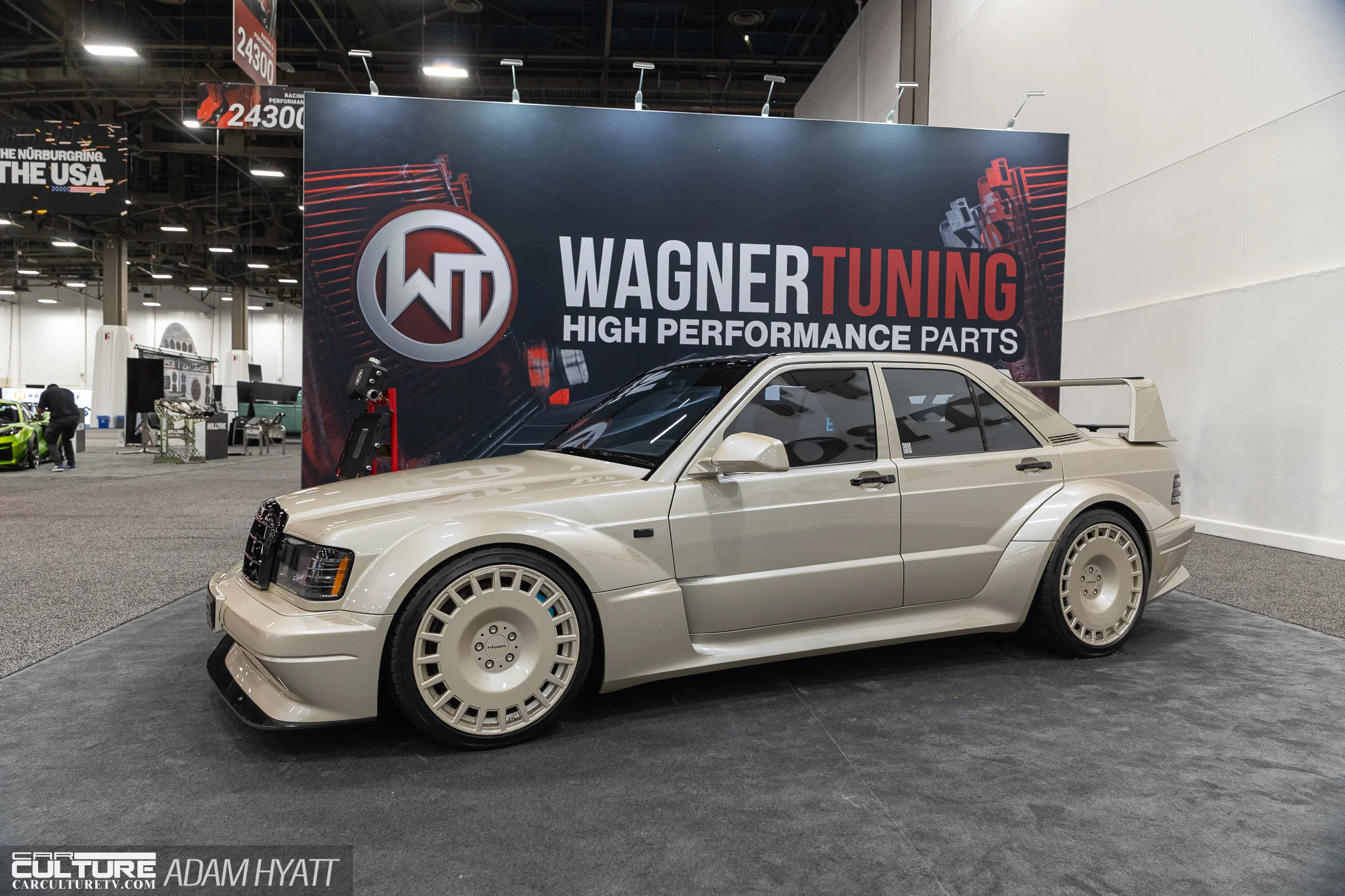
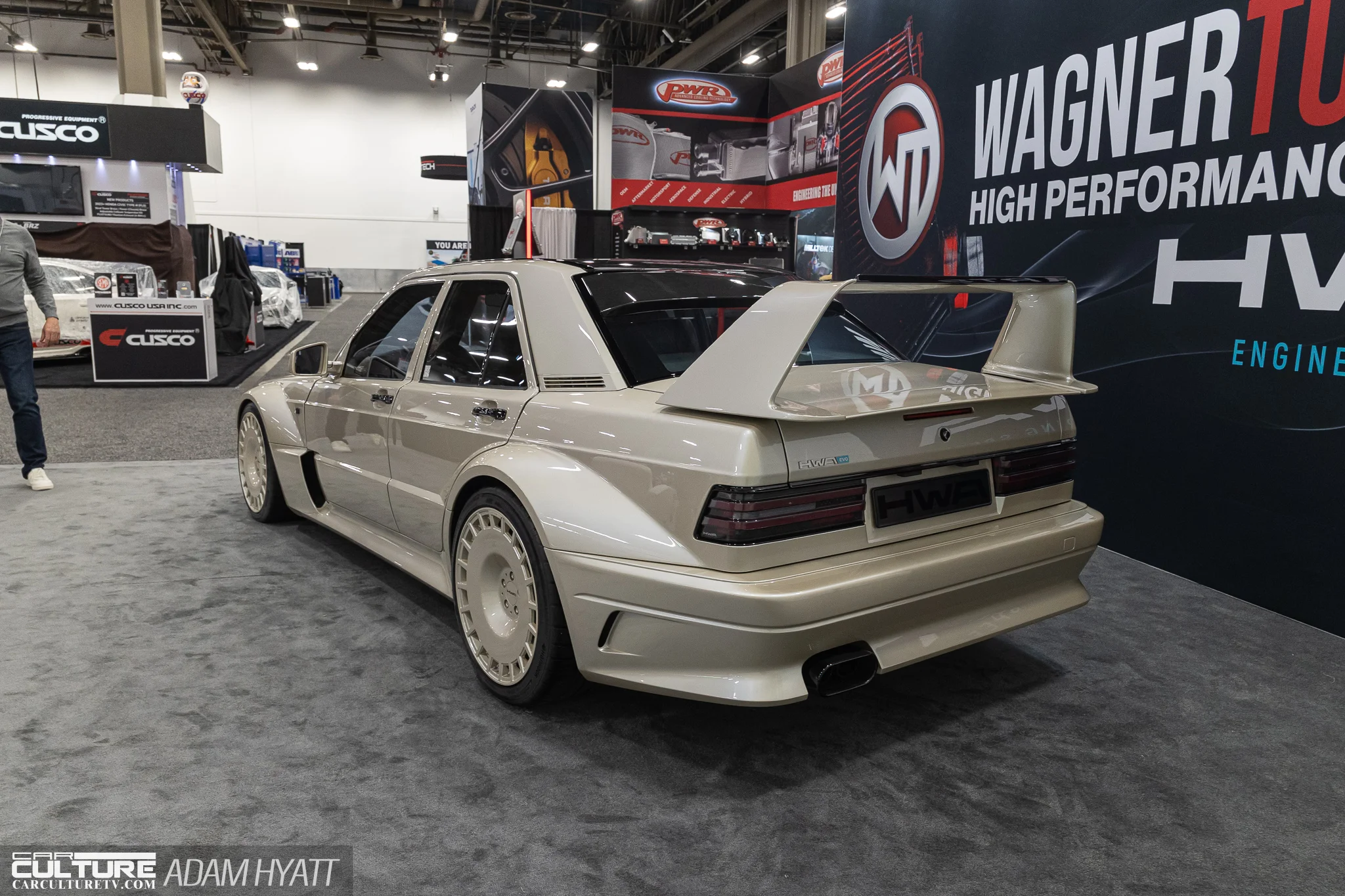
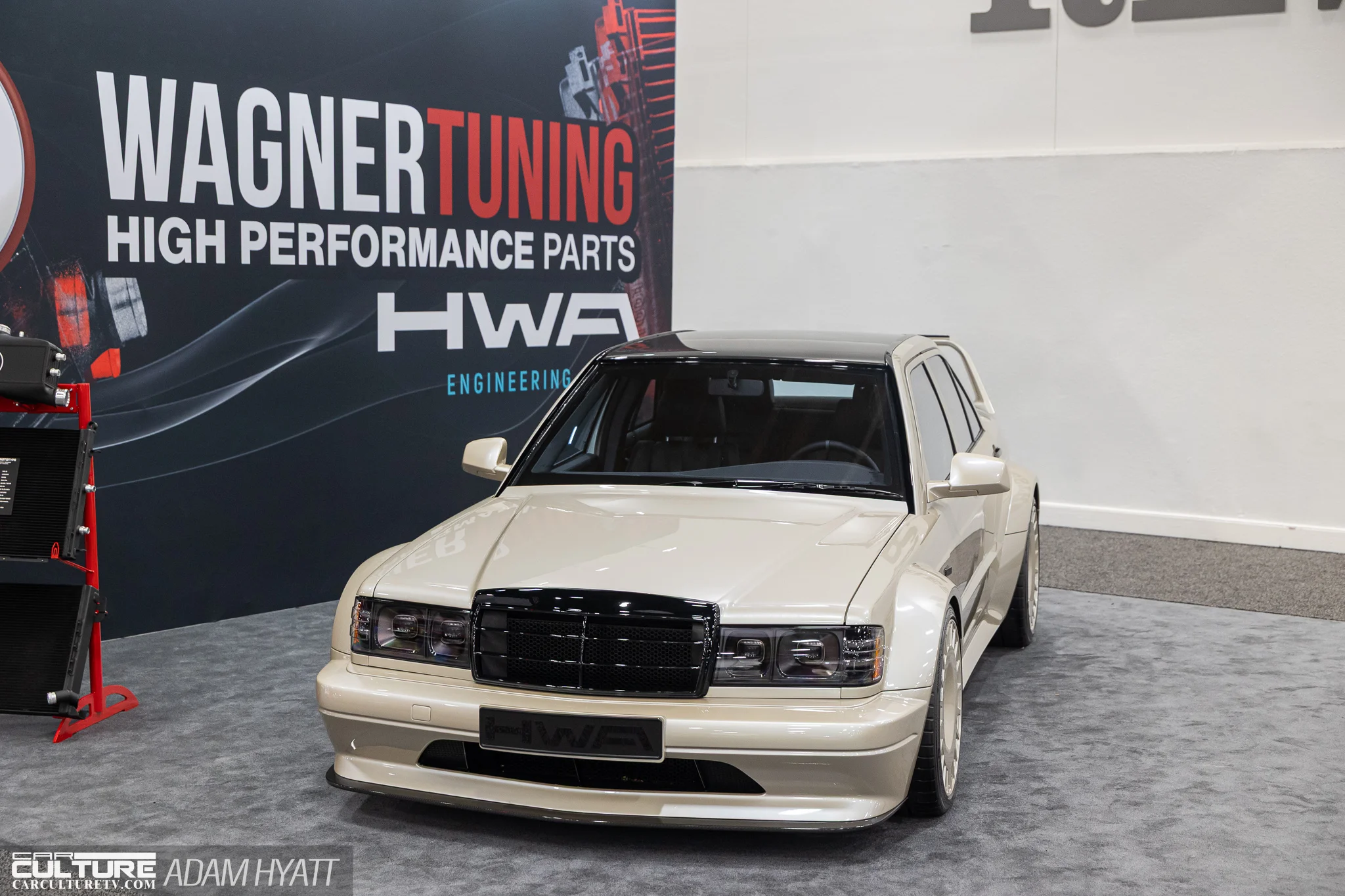
Wagner Tuning’s presence centered on the HWA EVO, the German firm’s full reimagination of the legendary Mercedes-Benz 190E 2.5-16 Evo II that dominated the DTM in the early ’90s. Built by Gordian von Schöning’s team in Affalterbach, the HWA EVO carries a full carbon body over a heavily reworked chassis, powered by a Mercedes 3.0-liter V6 twin-turbo producing 540 horsepower, matched to a six-speed manual. Limited to 100 units and priced from €714,000. The personal footnote: von Schöning happens to share a connection with one of the longest-standing members of the Southern California Supra community, a small-world moment that SEMA produces more often than people expect.
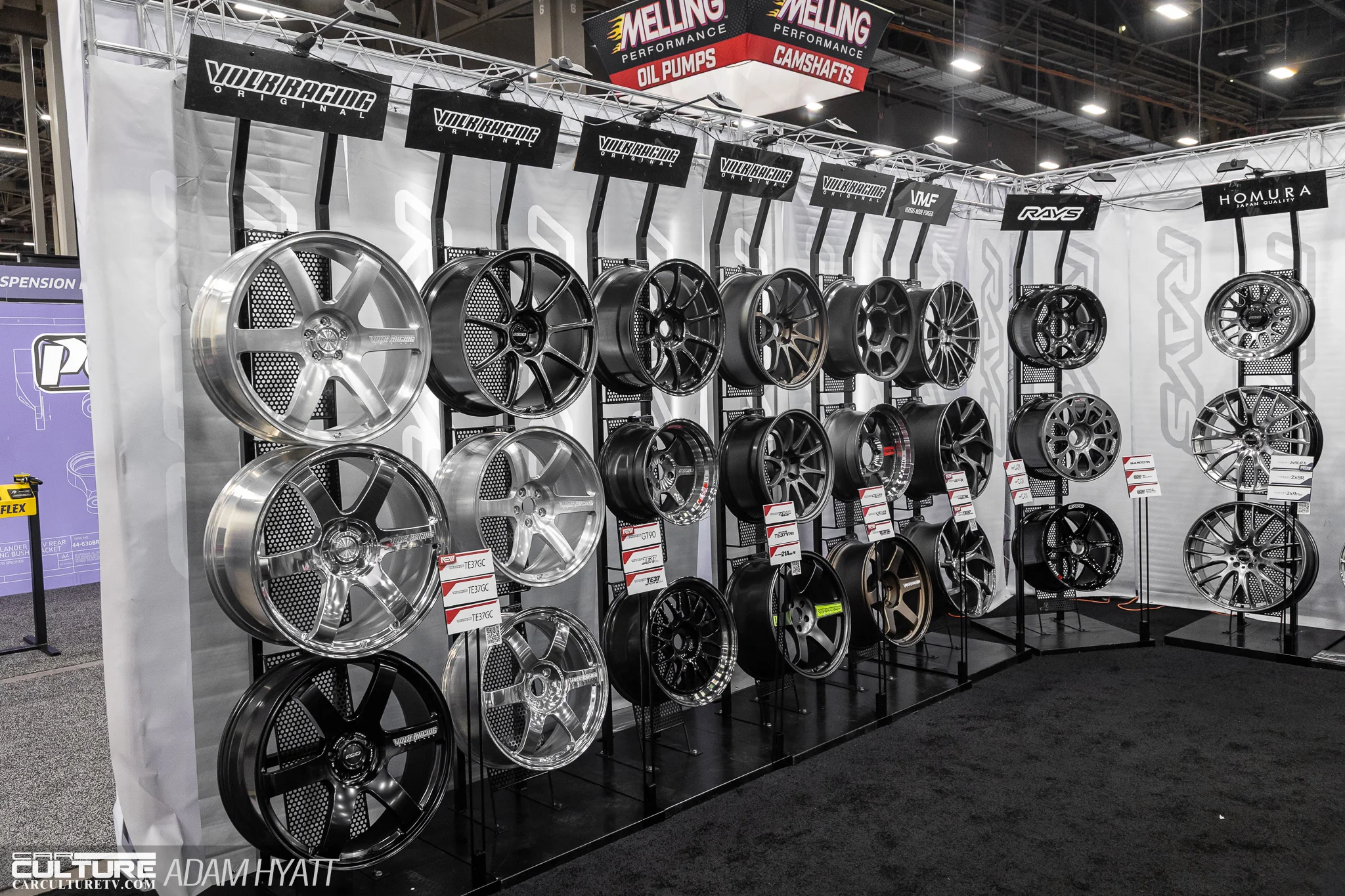
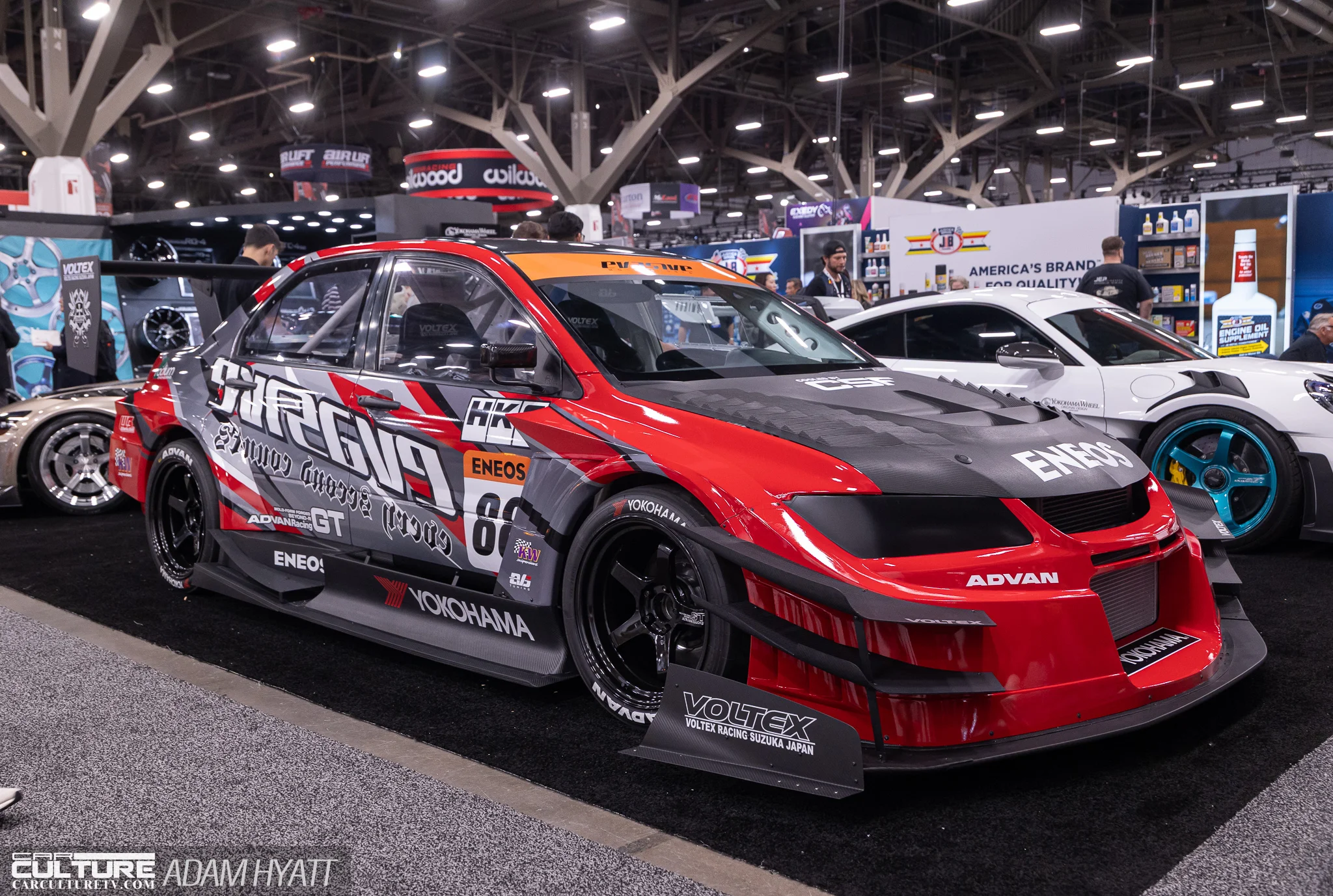
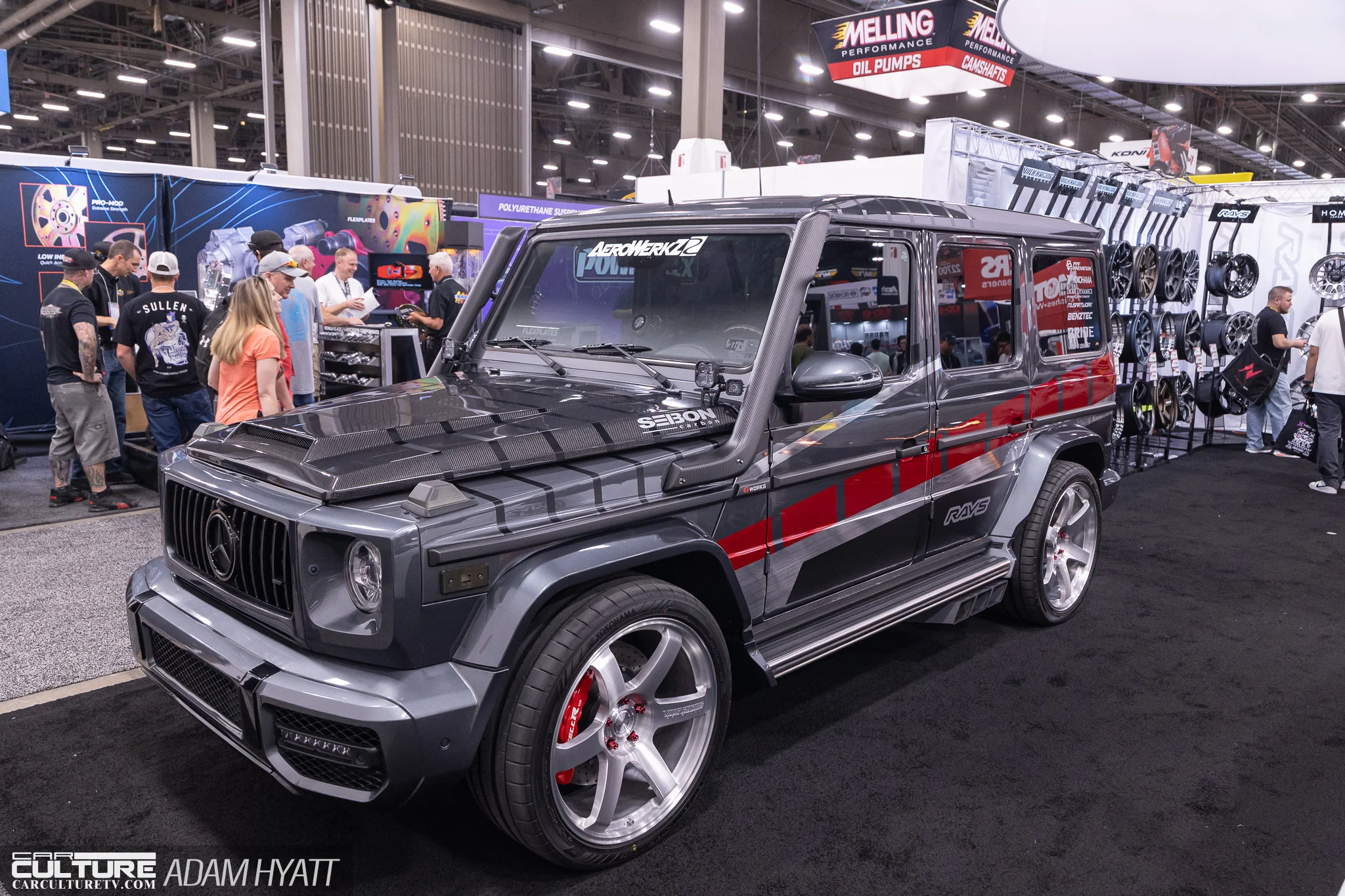
Mackin Industries, the exclusive North American importer for Rays Wheels, Yokohama Advan, Project Mu, and KYO-EI, brought the kind of booth presence that serious wheel enthusiasts plan their show route around. The wall of Rays is always a draw on its own, showcasing the full catalog of forged and flow-formed options in a display that makes it easy to understand why the brand carries the weight it does in the JDM and performance communities. The Evasive Motorsports Evo and a clean grey G-Wagon anchored the vehicle side of the booth, representing opposite ends of the performance conversation under one roof.
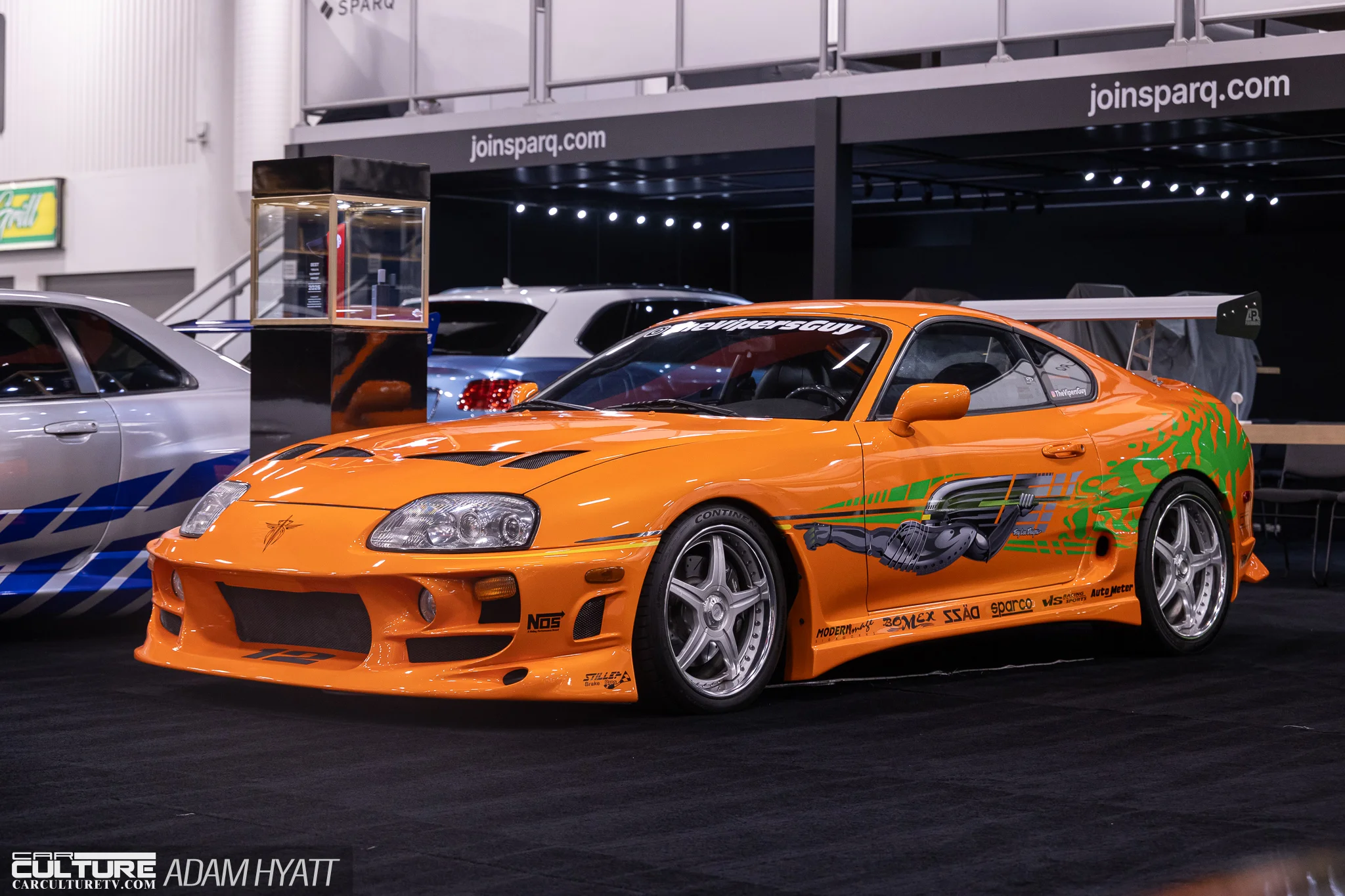
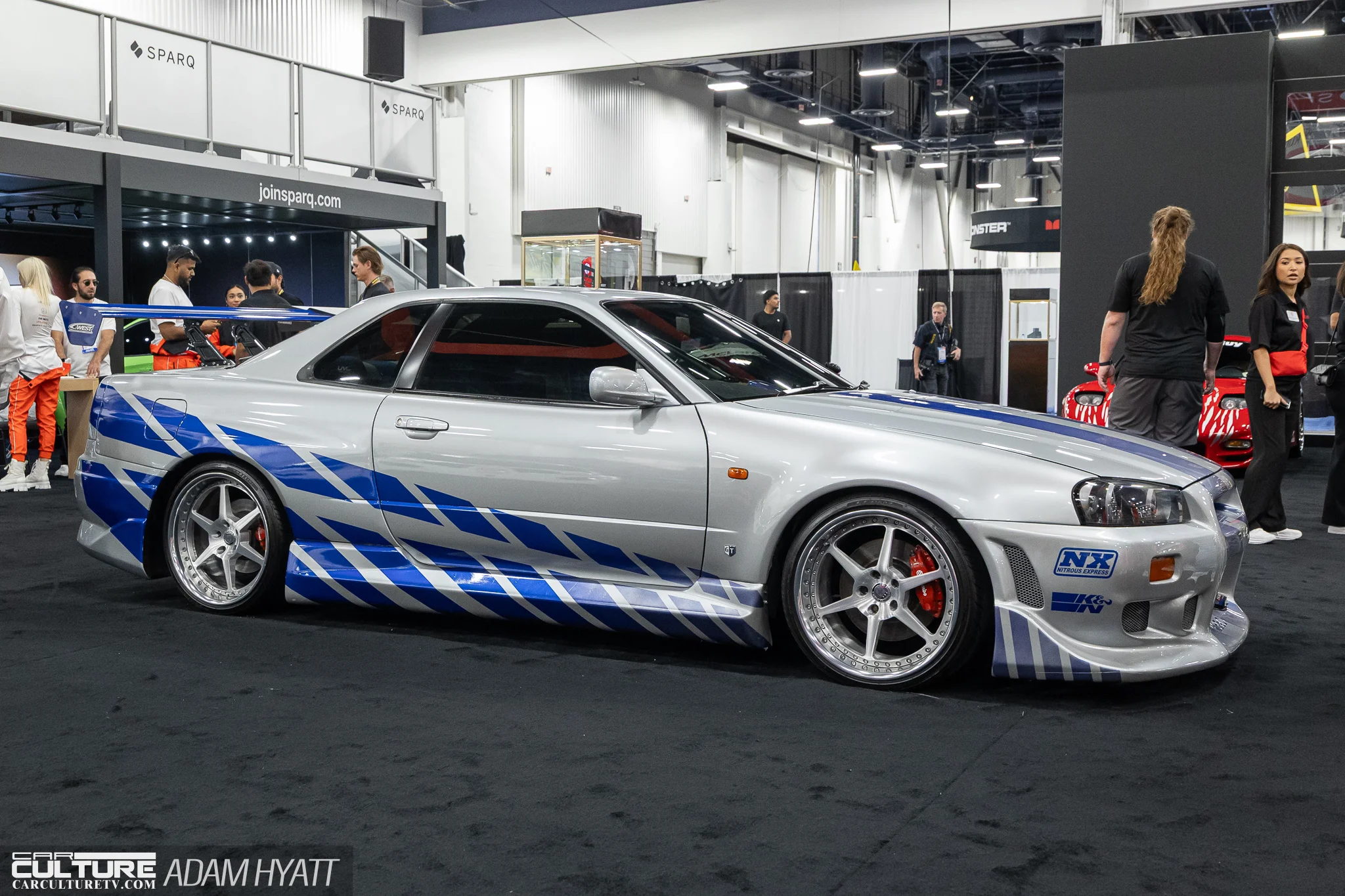
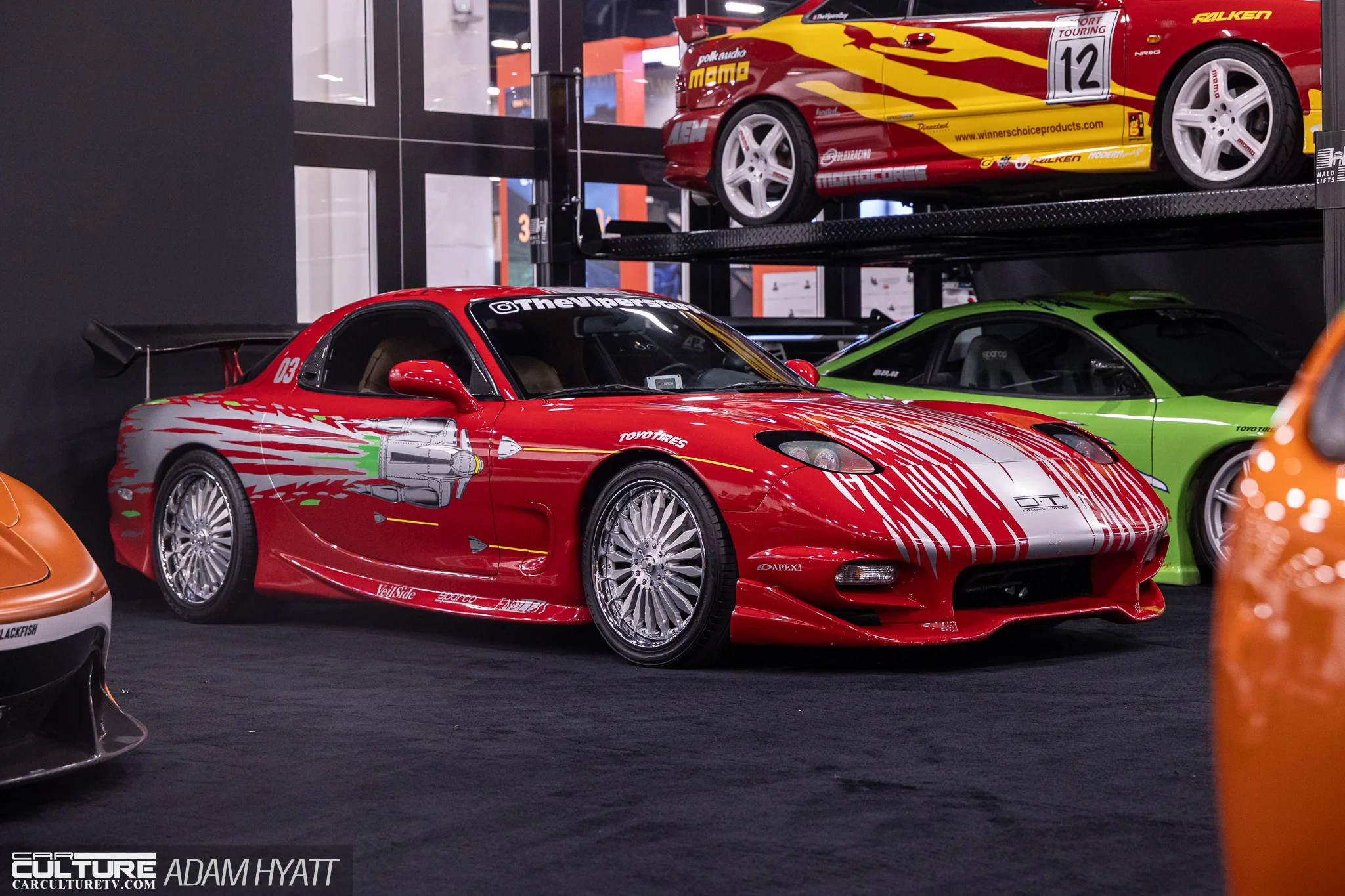
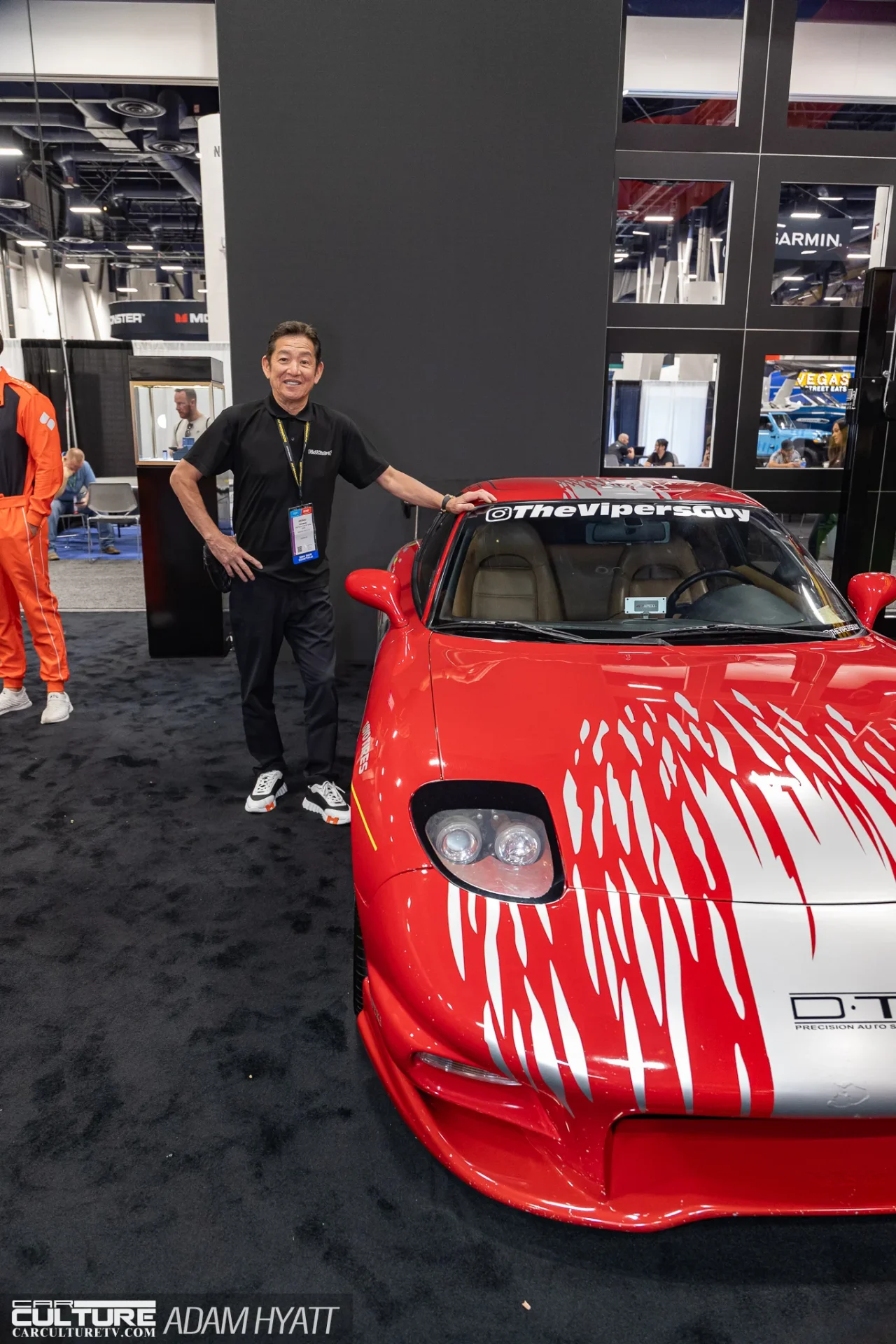
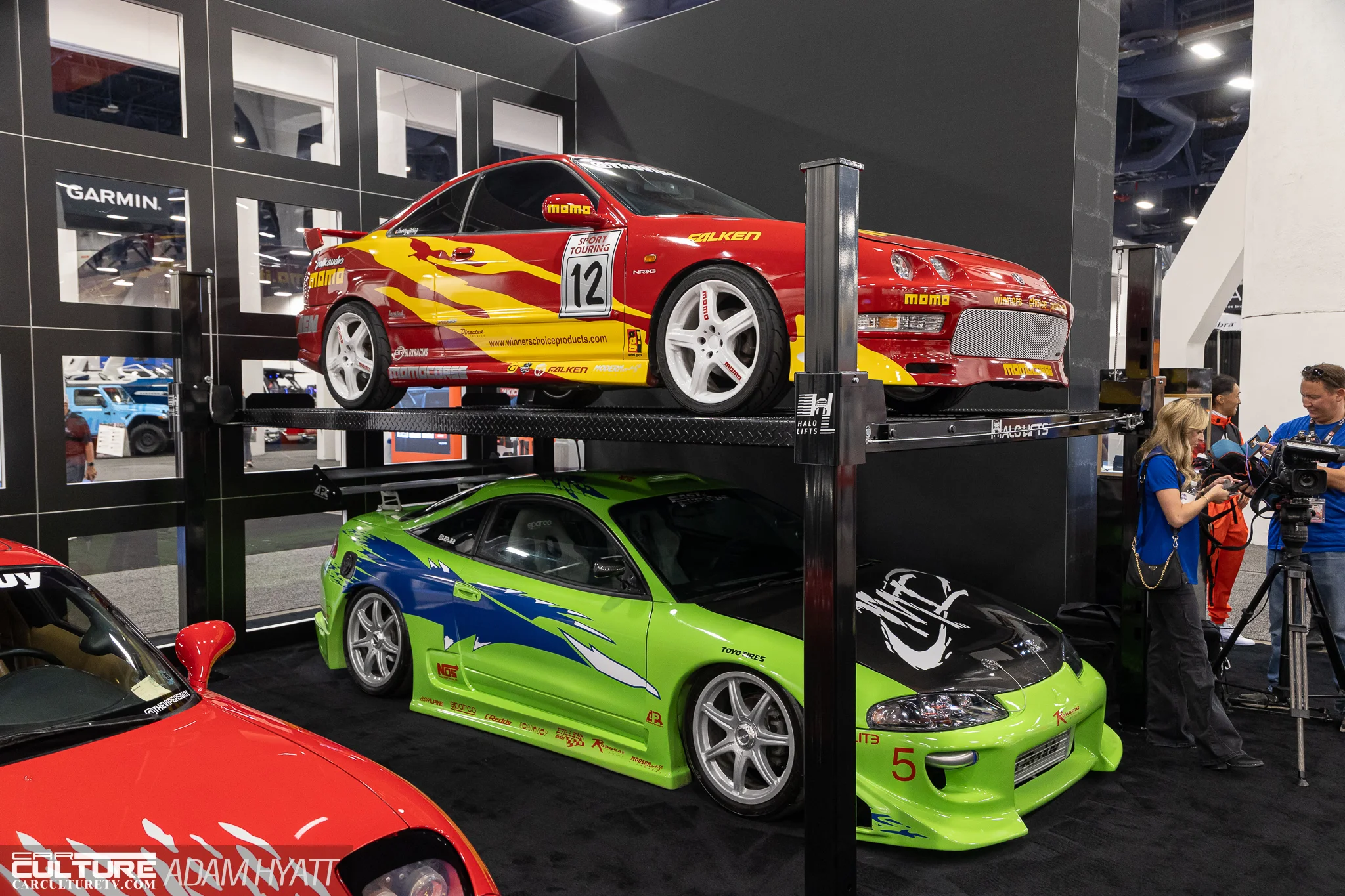
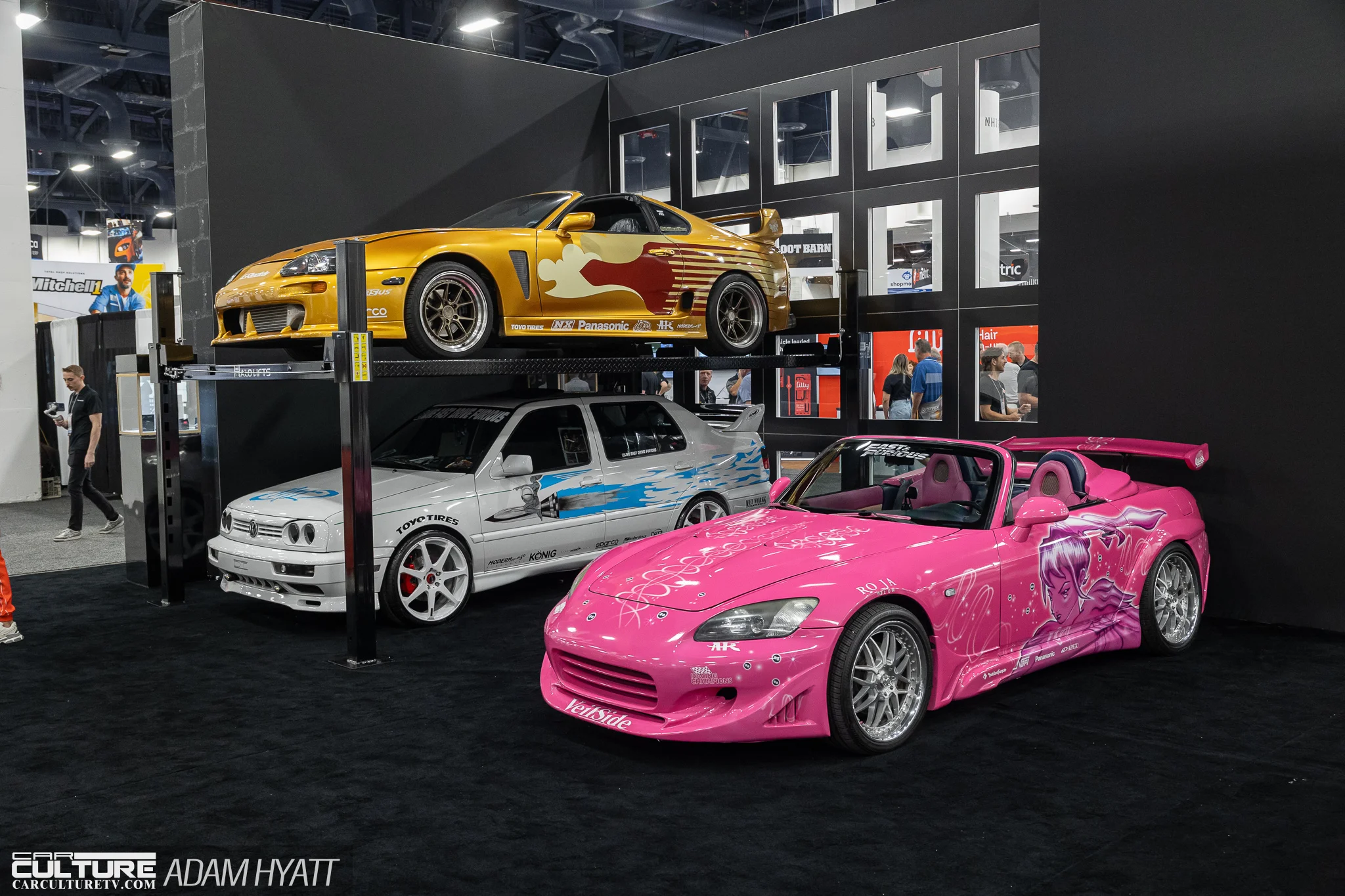
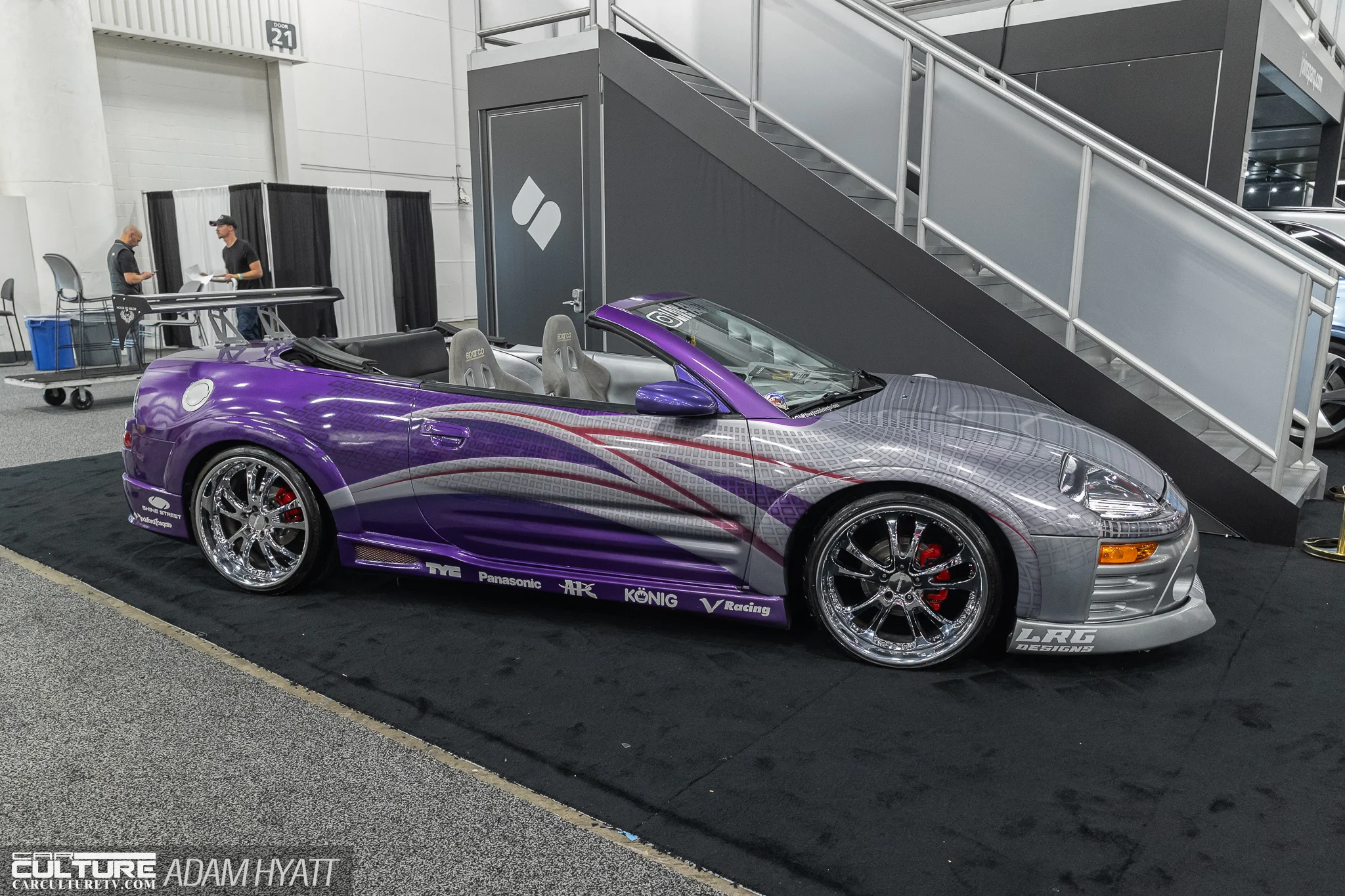
The Sparq booth kept the Fast and Furious legacy alive with a full franchise lineup surrounded by models, a genuine crowd draw that reminded anyone who might have forgotten just how much that film series permanently shaped this culture. Veilside CEO Hironao Yokomaku was present at the booth, which for anyone rooted in the import scene carries real weight. Veilside’s body kits defined an era, and having the man himself on the show floor was one of those moments that meant more to the people who recognized him than anything on a spec sheet could. For a closer look at the faces of the show floor, check out our full Girls of SEMA 2025 coverage.
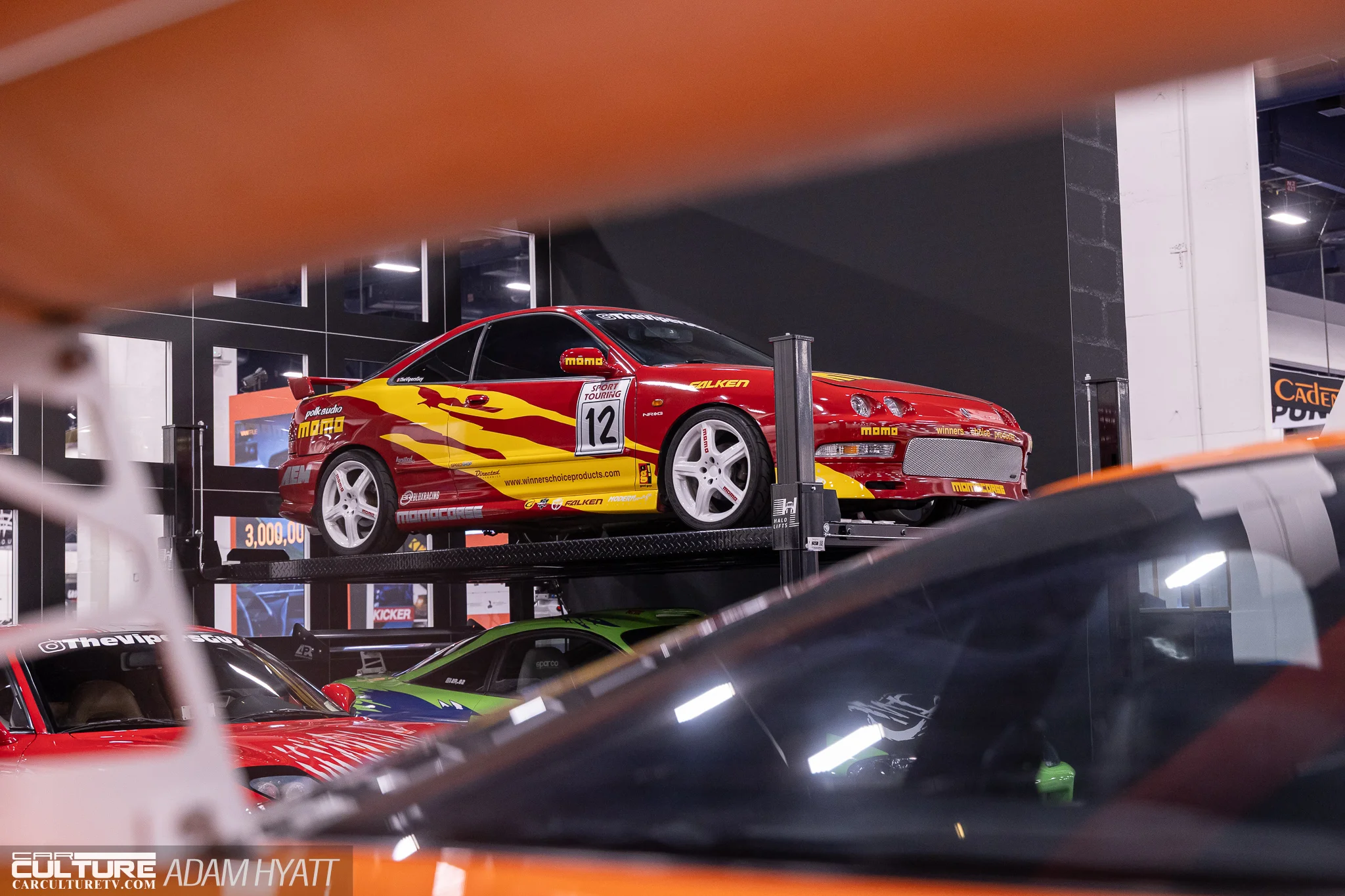
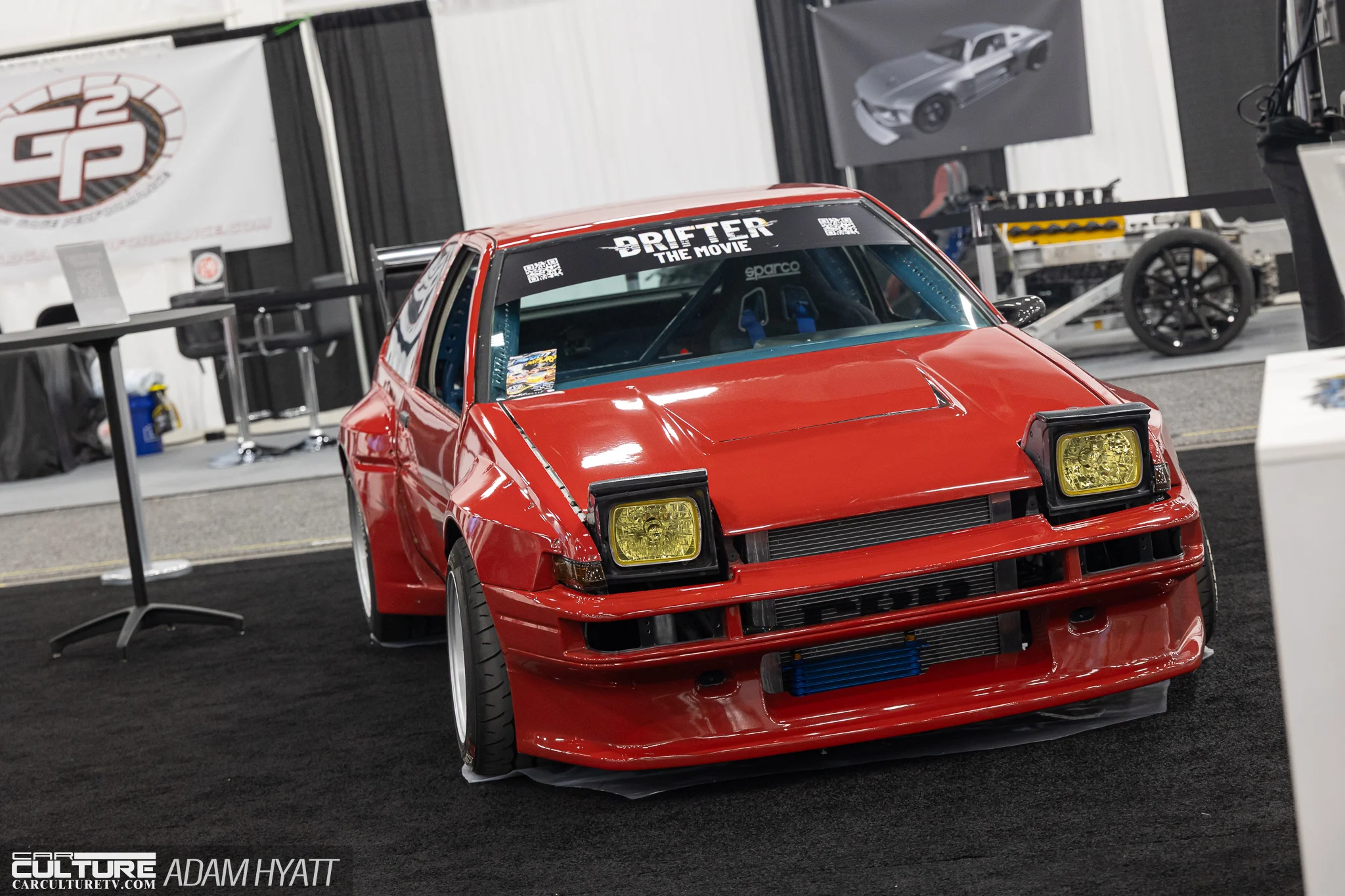
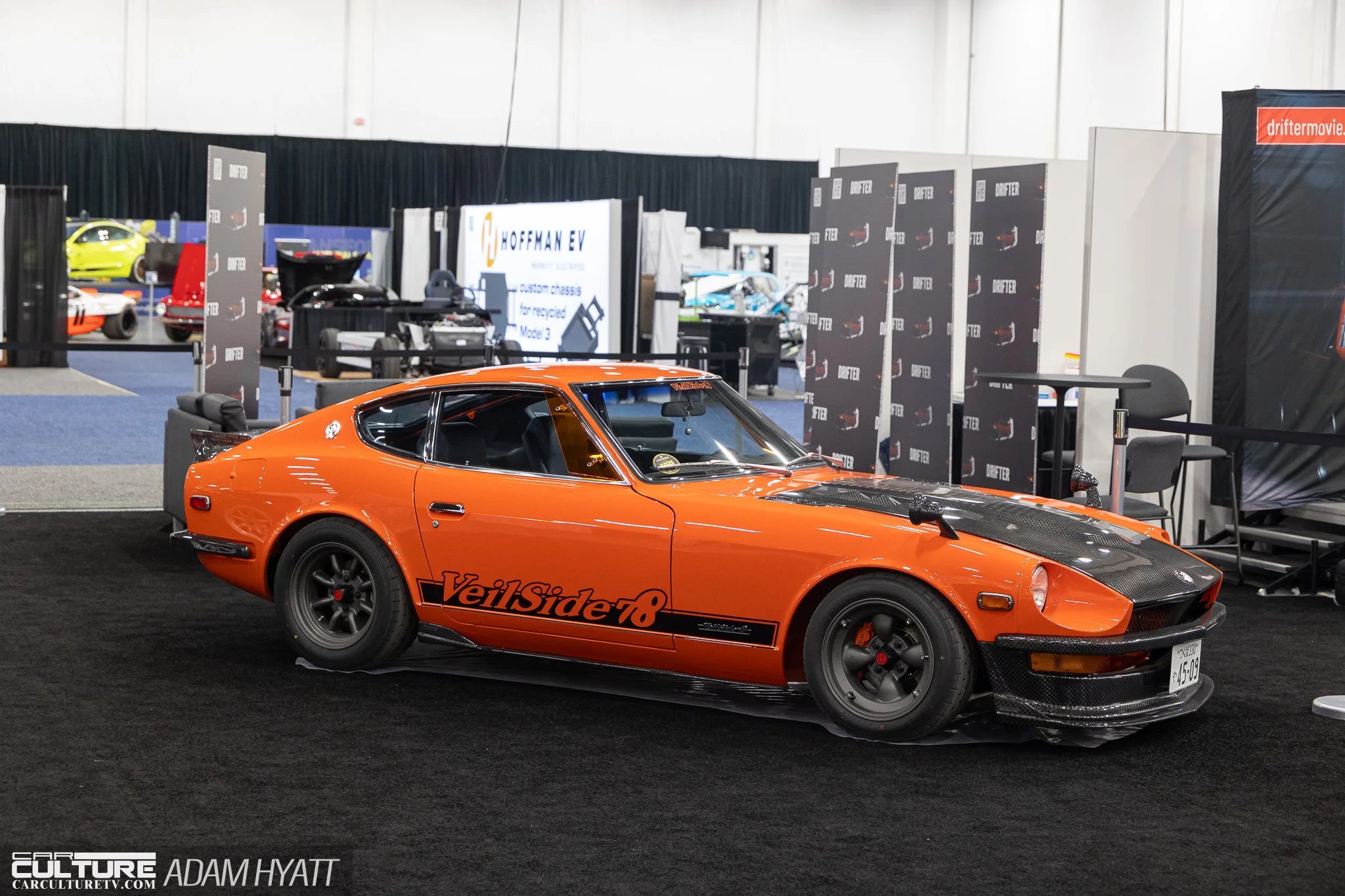
Sung Kang brought more than a display to SEMA 2025. His booth centered on an exclusive first look at DRIFTER, the film he wrote, directed, and starred in, set for release in 2026. The story follows a solitary racetrack janitor who finds redemption through competitive drifting, and the hero car, an AE86 Toyota Corolla named Lola, was on the floor for attendees to see up close. Kang also returned the iconic Fugu Z, his award-winning Datsun 240Z, for its 10-year anniversary, alongside the debut of his latest build, a Veilside 240Z nicknamed 78. Kang held daily Q&A sessions throughout the week, and for anyone who has followed his presence at SEMA over the years, this was the most personal and fully realized version of what he brings to the show. He also hosted the inaugural SEMA Industry Honors ceremony that Thursday evening at the Fontainebleau. The man showed up to work.
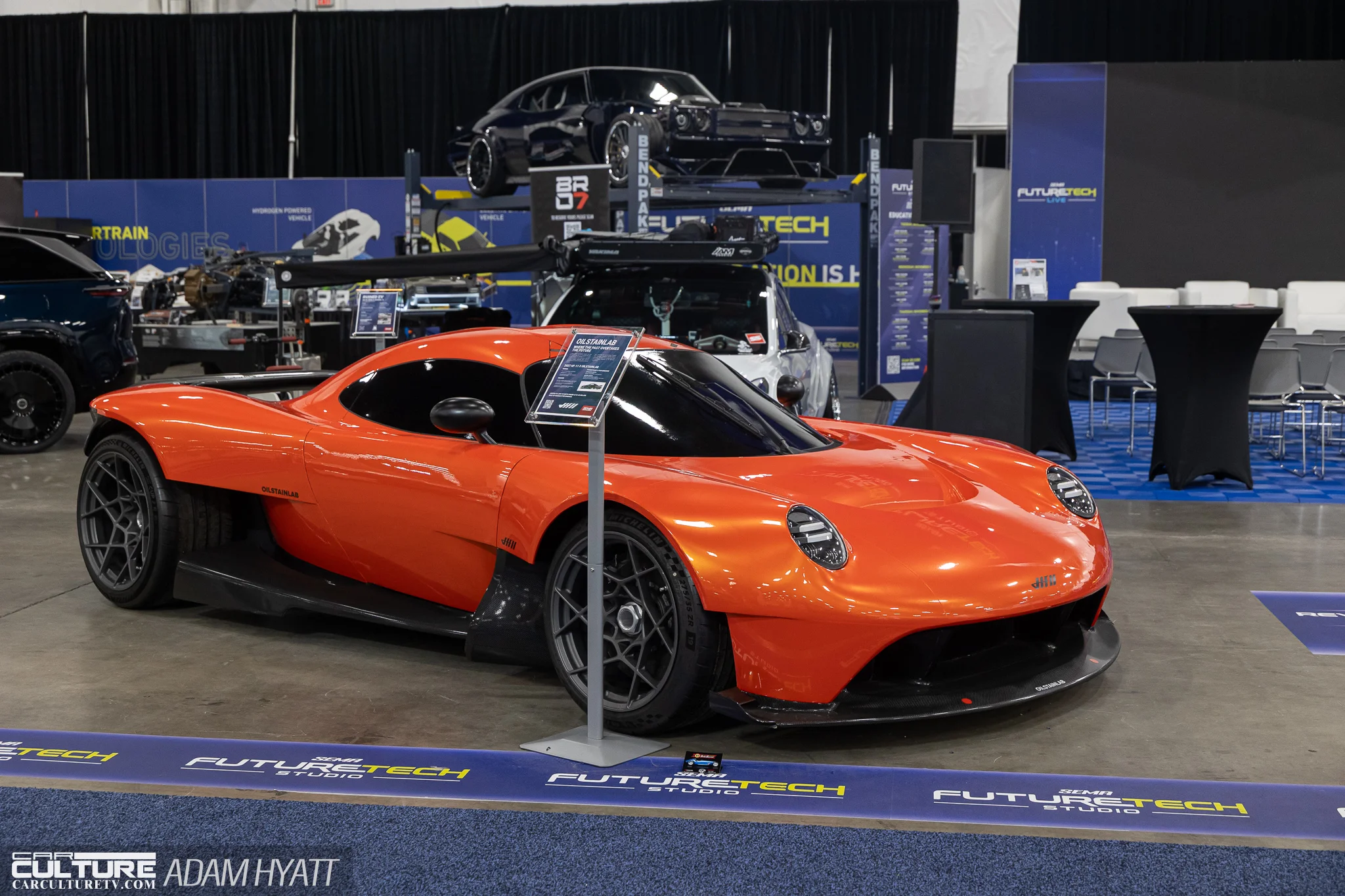
Oilstainlab debuted two machines at the FutureTech booth that were impossible to categorize and easy to stare at. The HF-11 is described as the world’s first powertrain-agnostic supercar: a bespoke carbon monocoque built on 15,000-plus hours of development, configurable for either a full electric powertrain or a mid-mounted flat-six paired with a six-speed manual, designed to fit drivers up to 6’4″ with a helmet on. Only 25 will be built worldwide. The Half-11 is its raw counterpart, a tube-frame, aluminum-bodied V8 machine producing 650 horsepower and 745 Nm, weighing 1,850 pounds, built as a direct salute to the freewheeling experimental spirit of 1960s and ’70s motorsport. It debuted at Goodwood 2024 and showed up at SEMA to remind everyone that some of the most interesting cars being built right now are coming from people most of the industry hasn’t heard of yet. Oilstainlab, founded by twin brothers Iliya and Nikita Bridan out of Long Beach, California, is one of those names to file away.
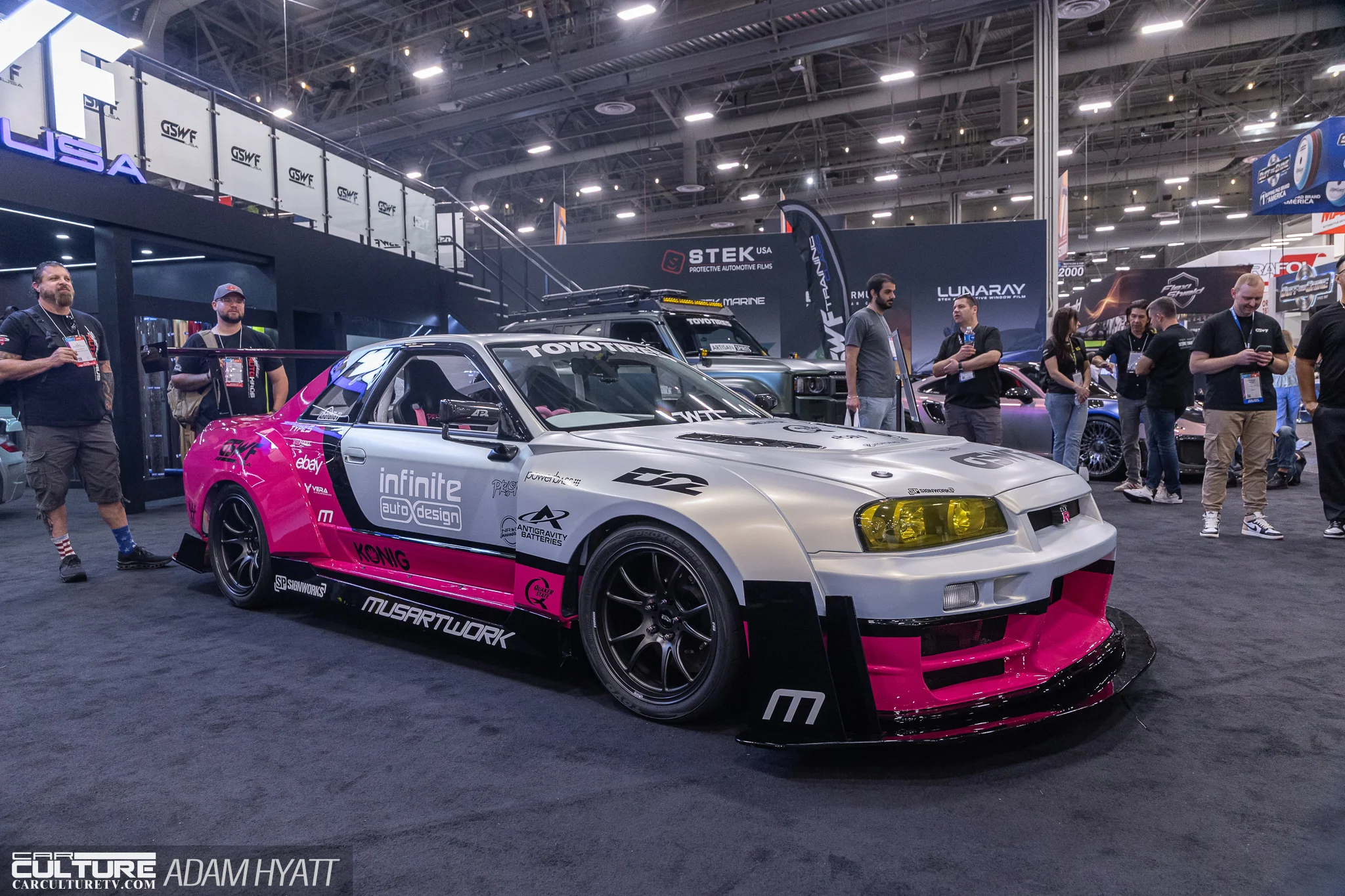
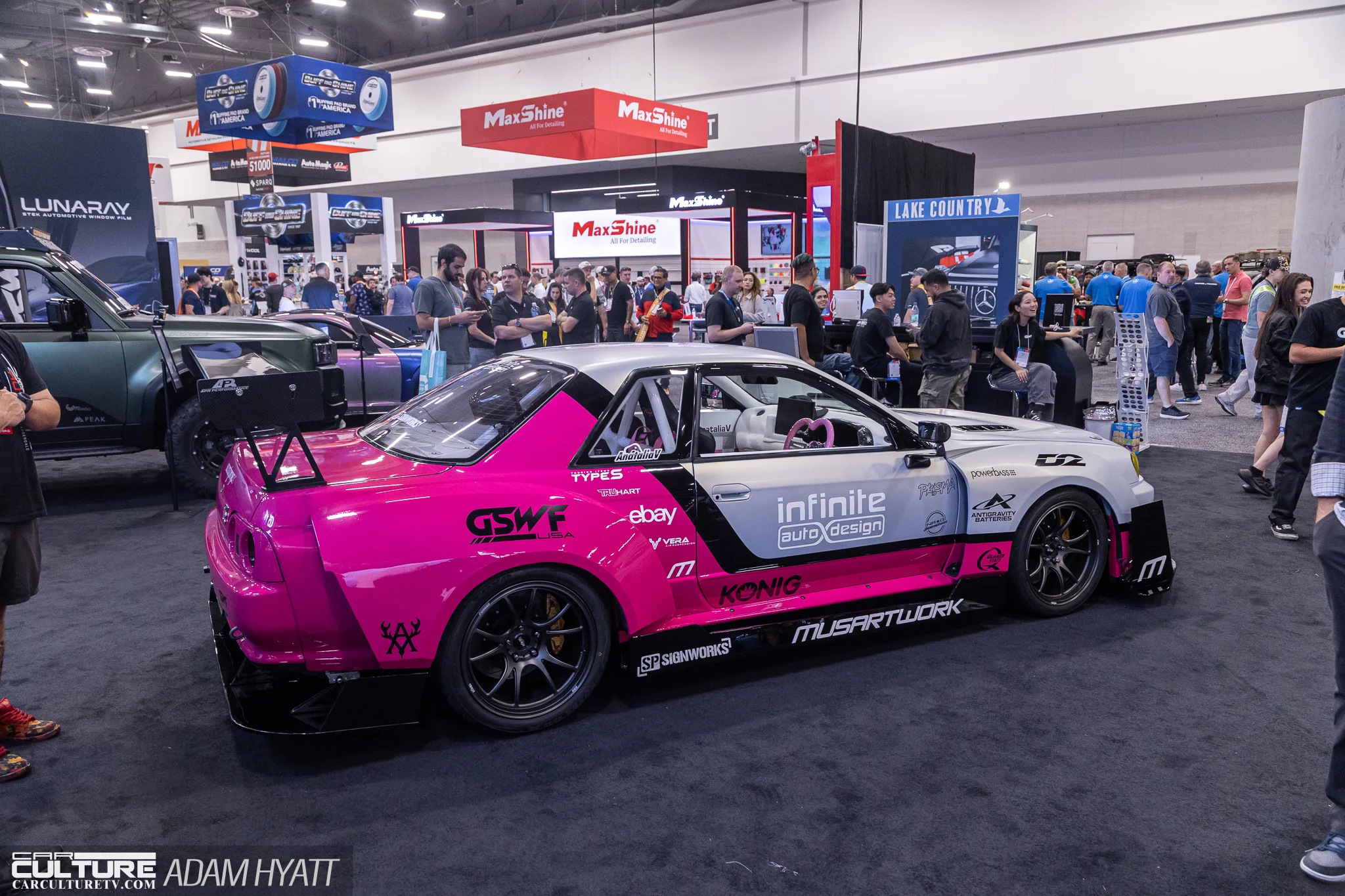
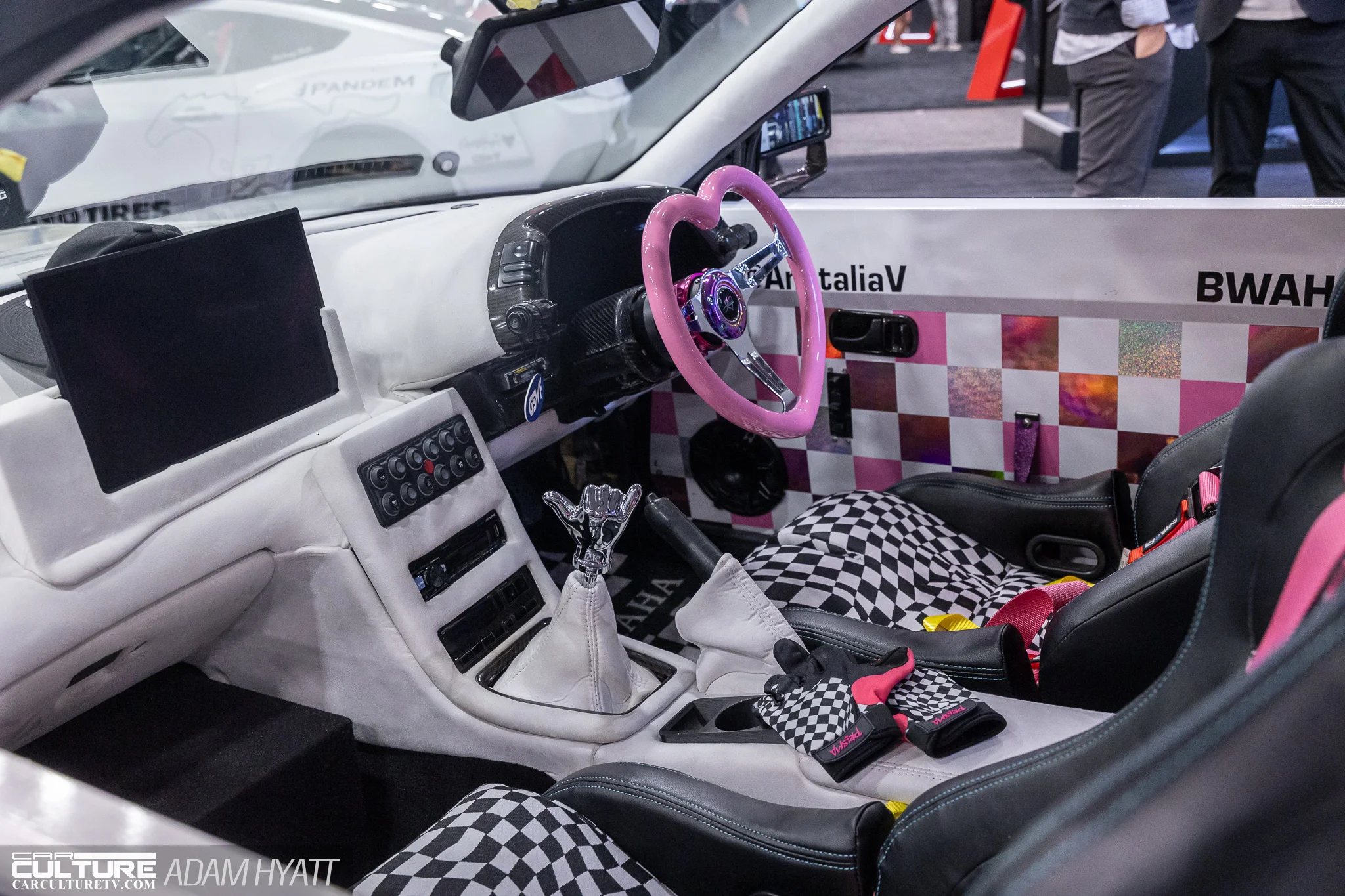
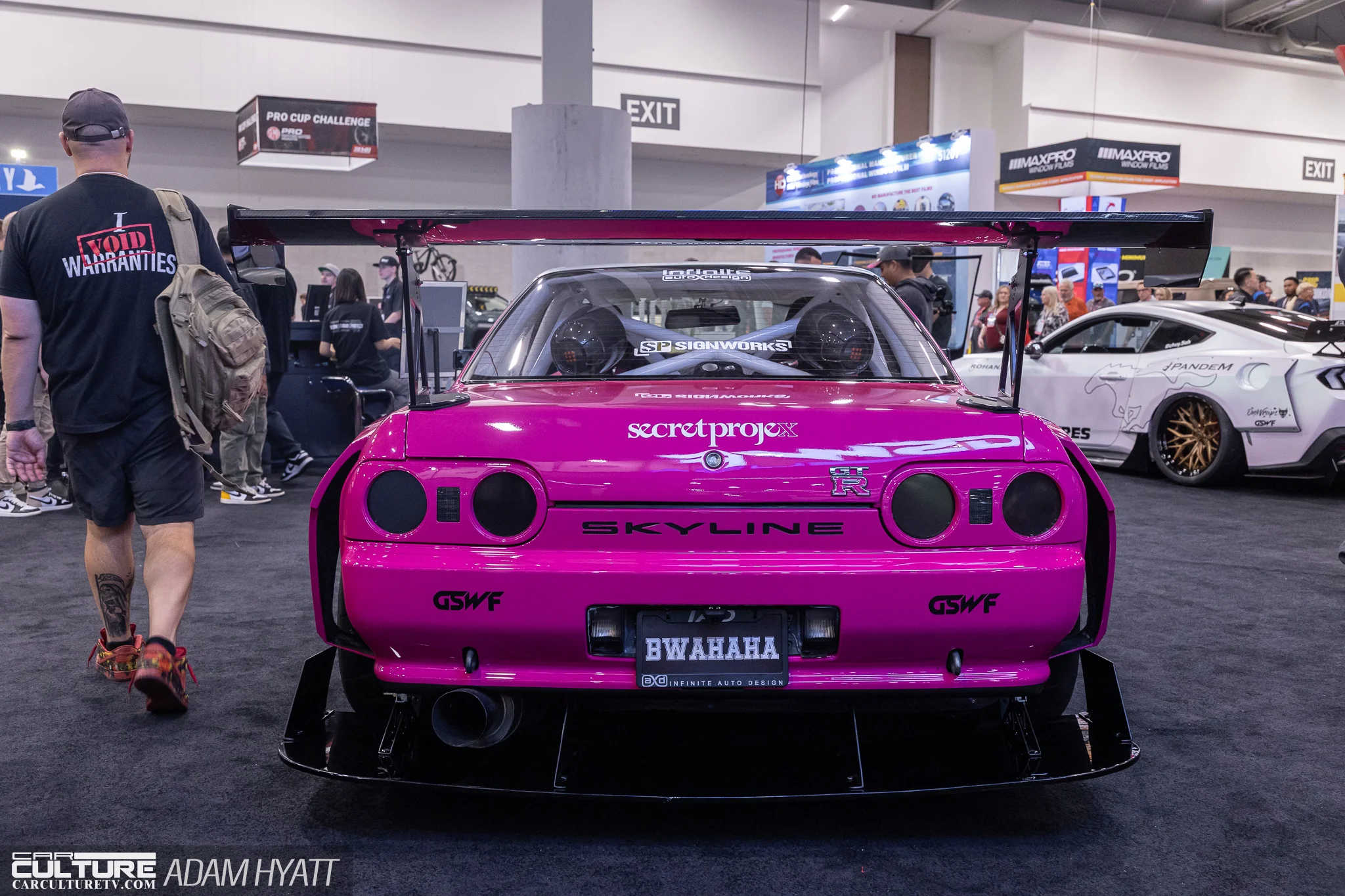
Anatalia Villaranda’s 1989 Nissan Skyline GT-R is one of those builds that stops people mid-stride before they even process what they’re looking at. Handcrafted by Infinite Auto Design, the R32.4 is a full custom widebody hybrid blending an R34 front end onto the R32 rear, wrapped in a dual-tone pink and sky veil gray self-healing PPF that shifts depending on the light. Yellow-tinted headlights, carbon fiber mirrors, a time-attack front splitter, massive rear diffuser, custom infinity taillights, and a large rear spoiler round out the exterior. Inside is a white interior with checkered Prisma NRG seats and a trunk-mounted karaoke system, because of course there is. For someone who built her platform around her personal connection to Skyline culture, arriving at SEMA with a car this considered was the right move. The import community responded accordingly.
The Parts That Make the Builds
The complete builds get the photos, but the parts tell the industry’s real story. Walk any aisle long enough and you start to understand that the innovation happening at the component level is what separates next year’s builds from this year’s. The brands showing up with serious product deserve the same attention as the cars parked in front of their booths.
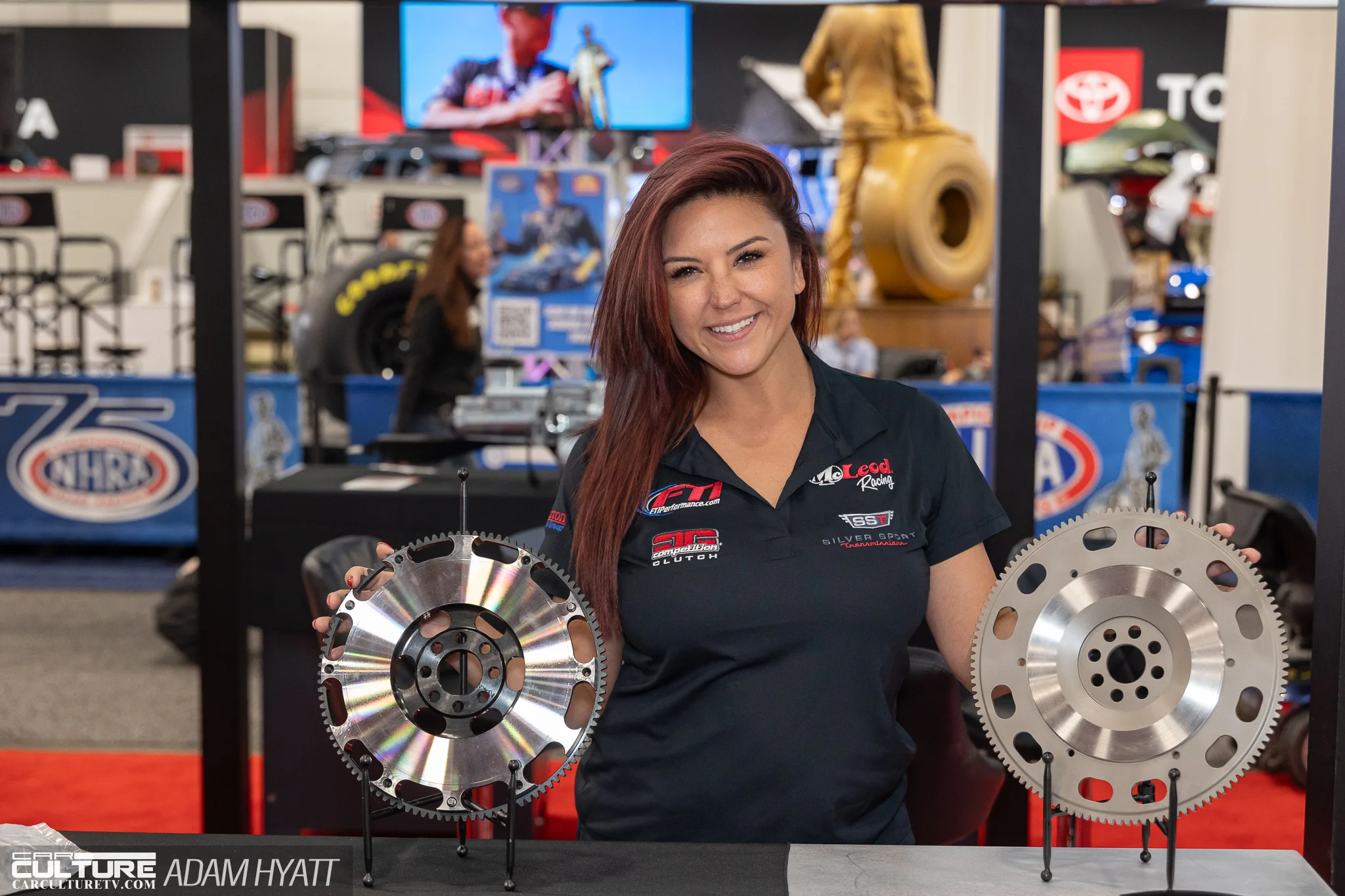
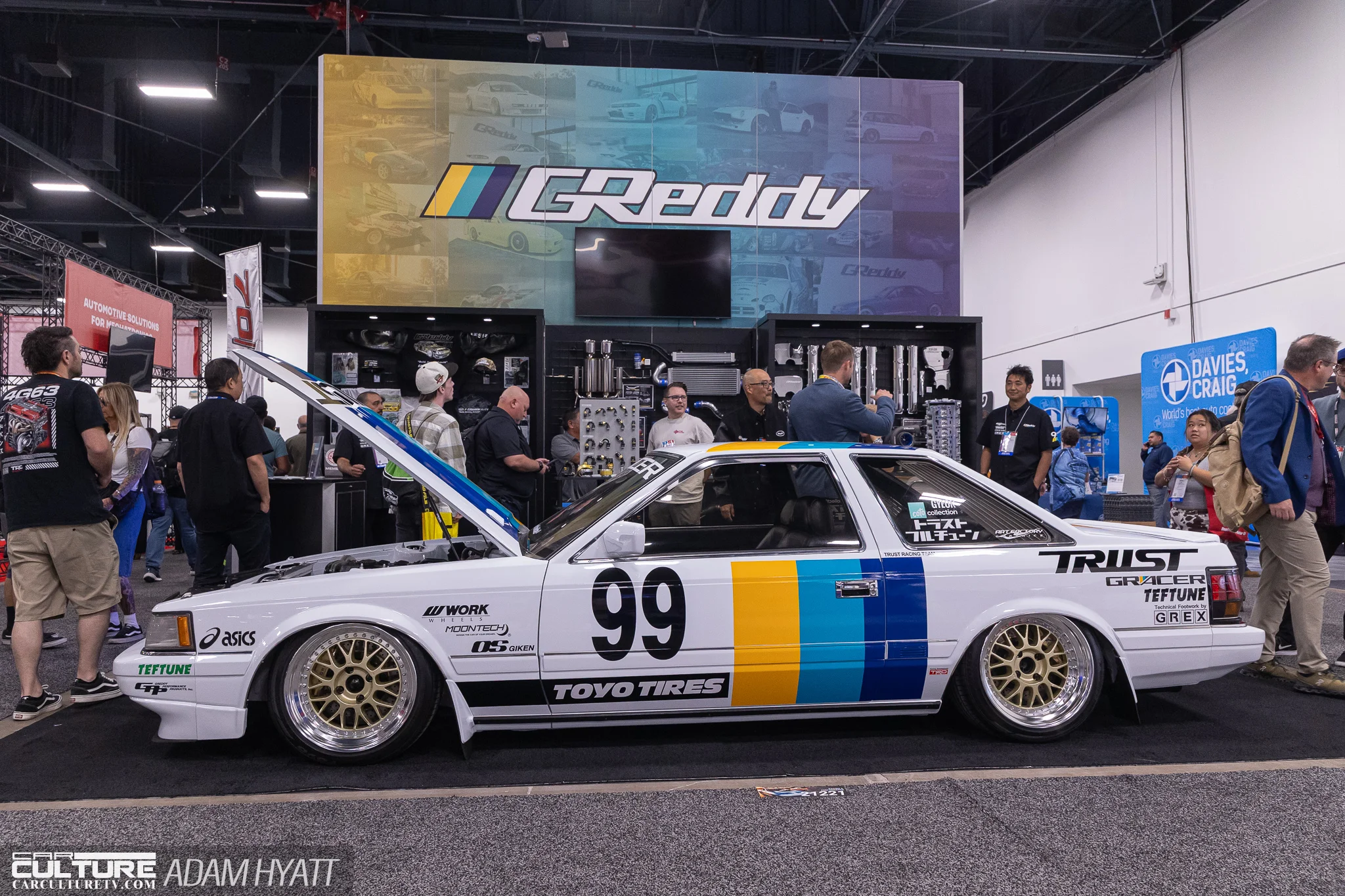
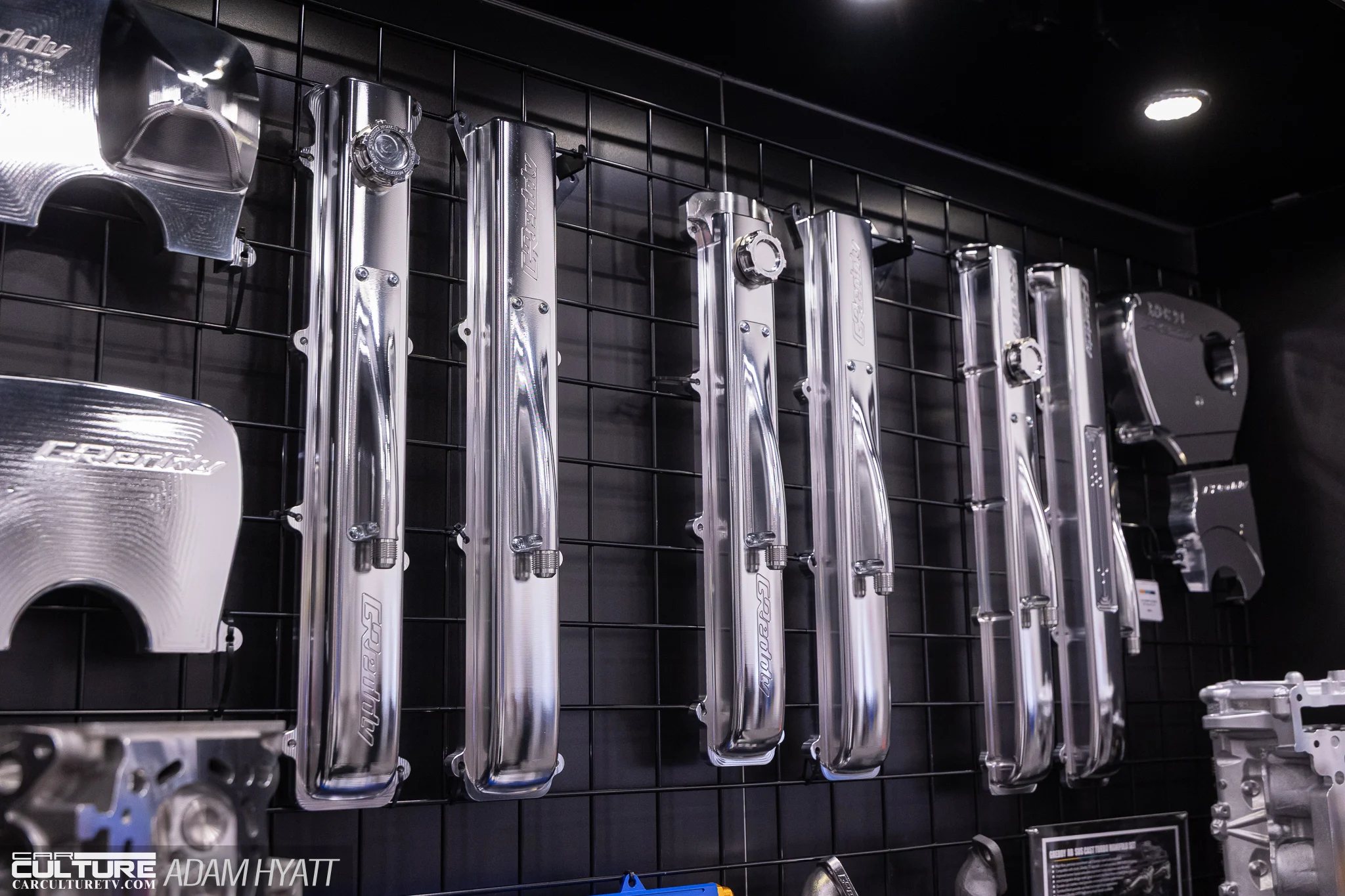
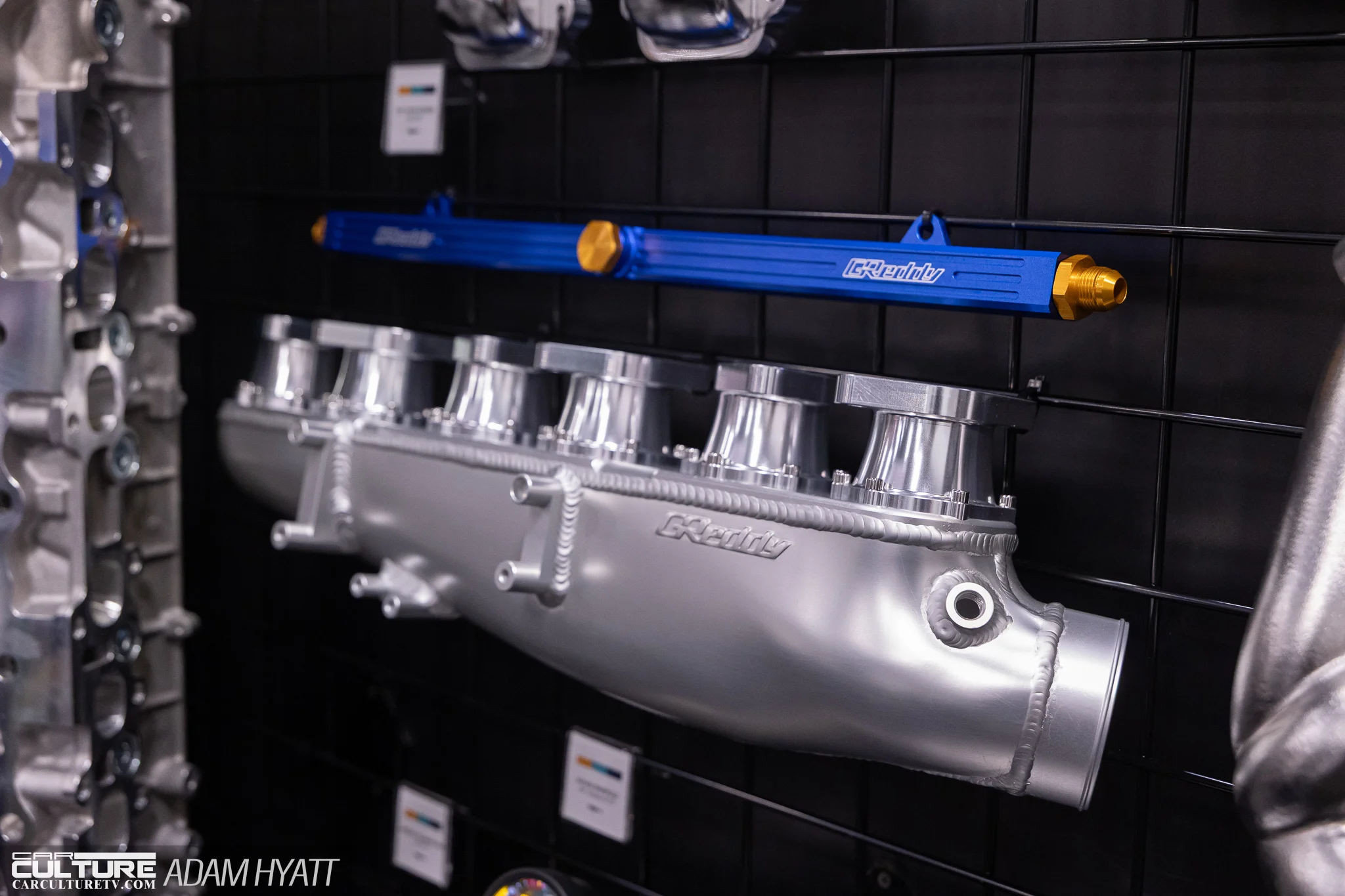
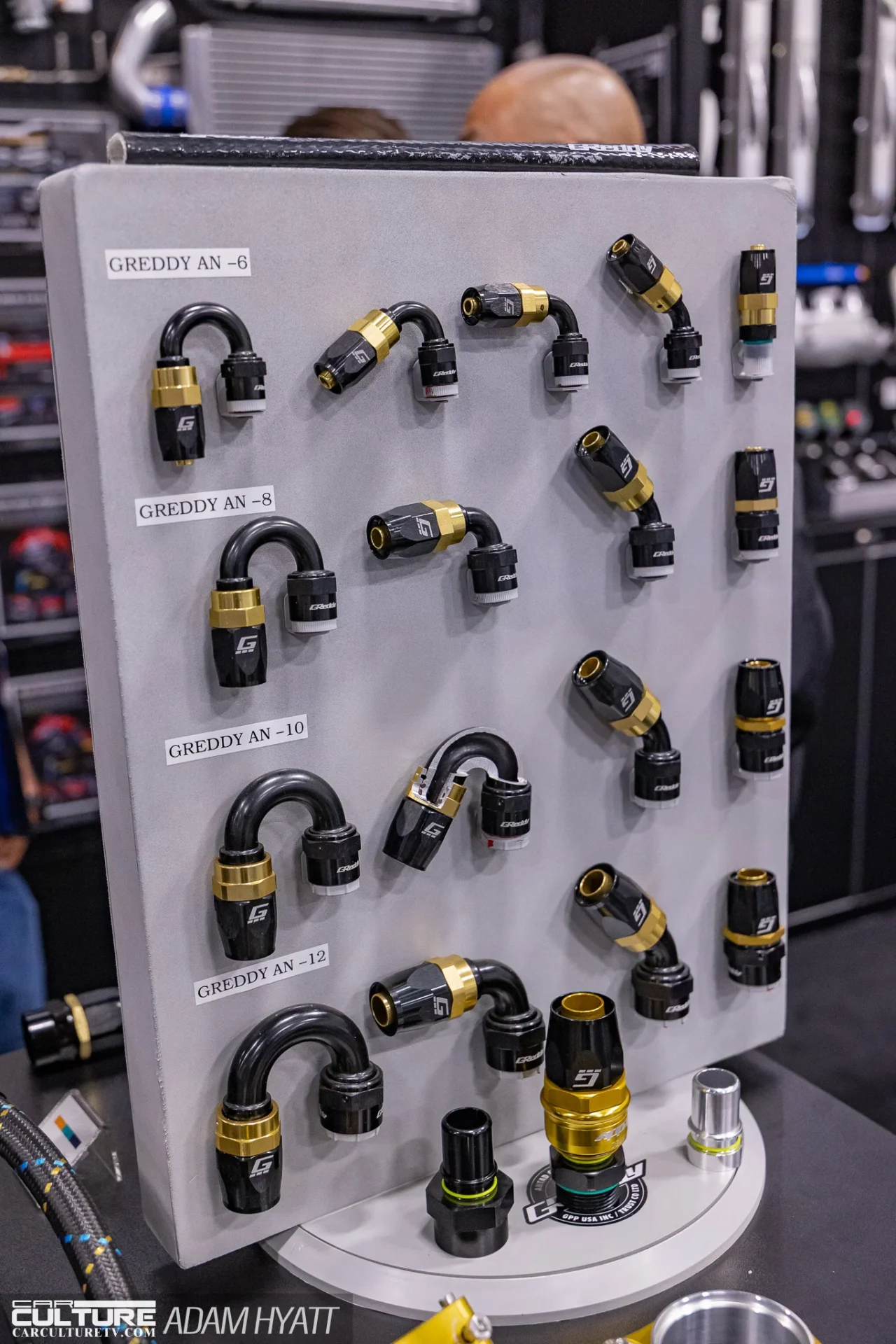
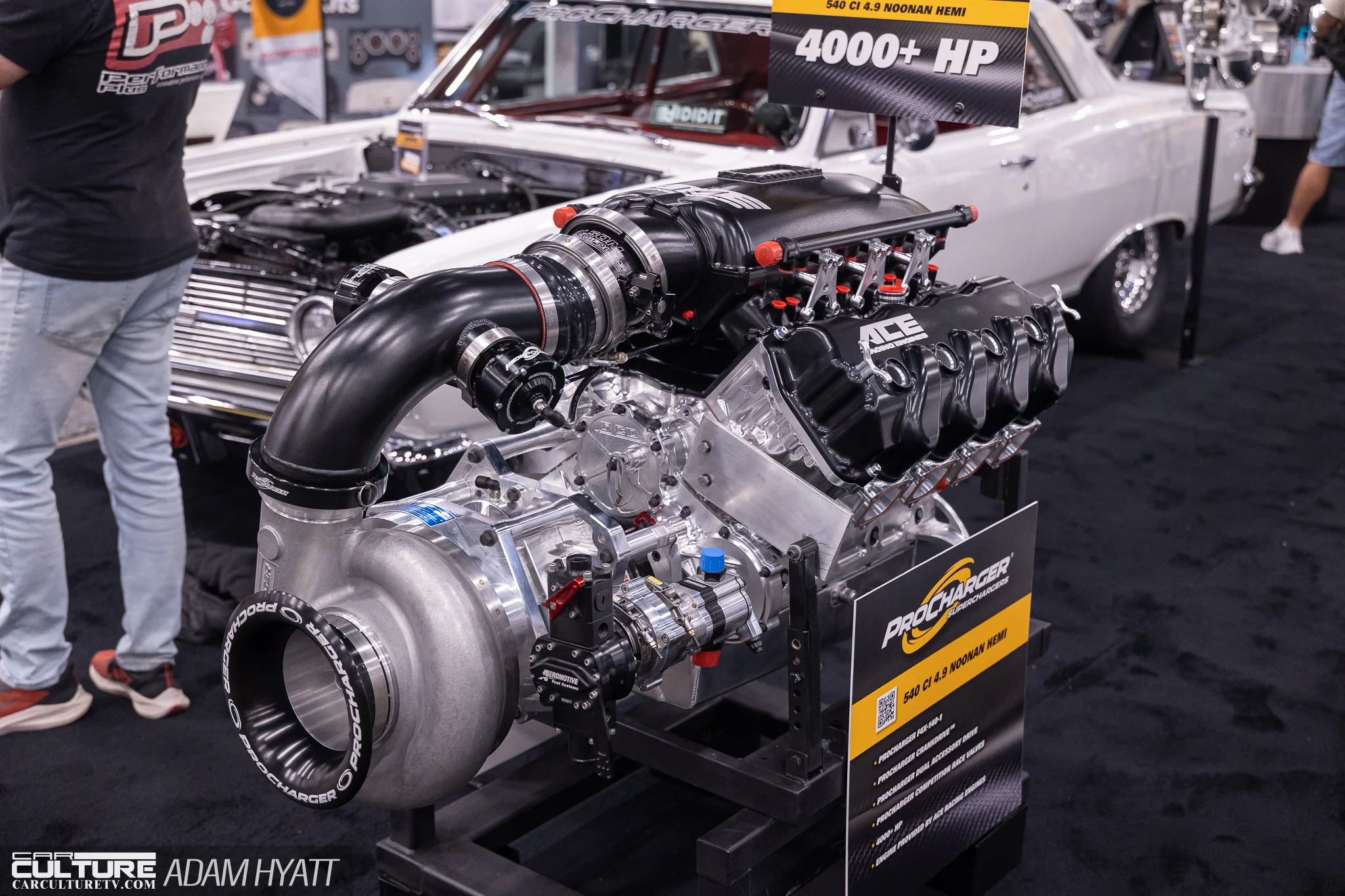
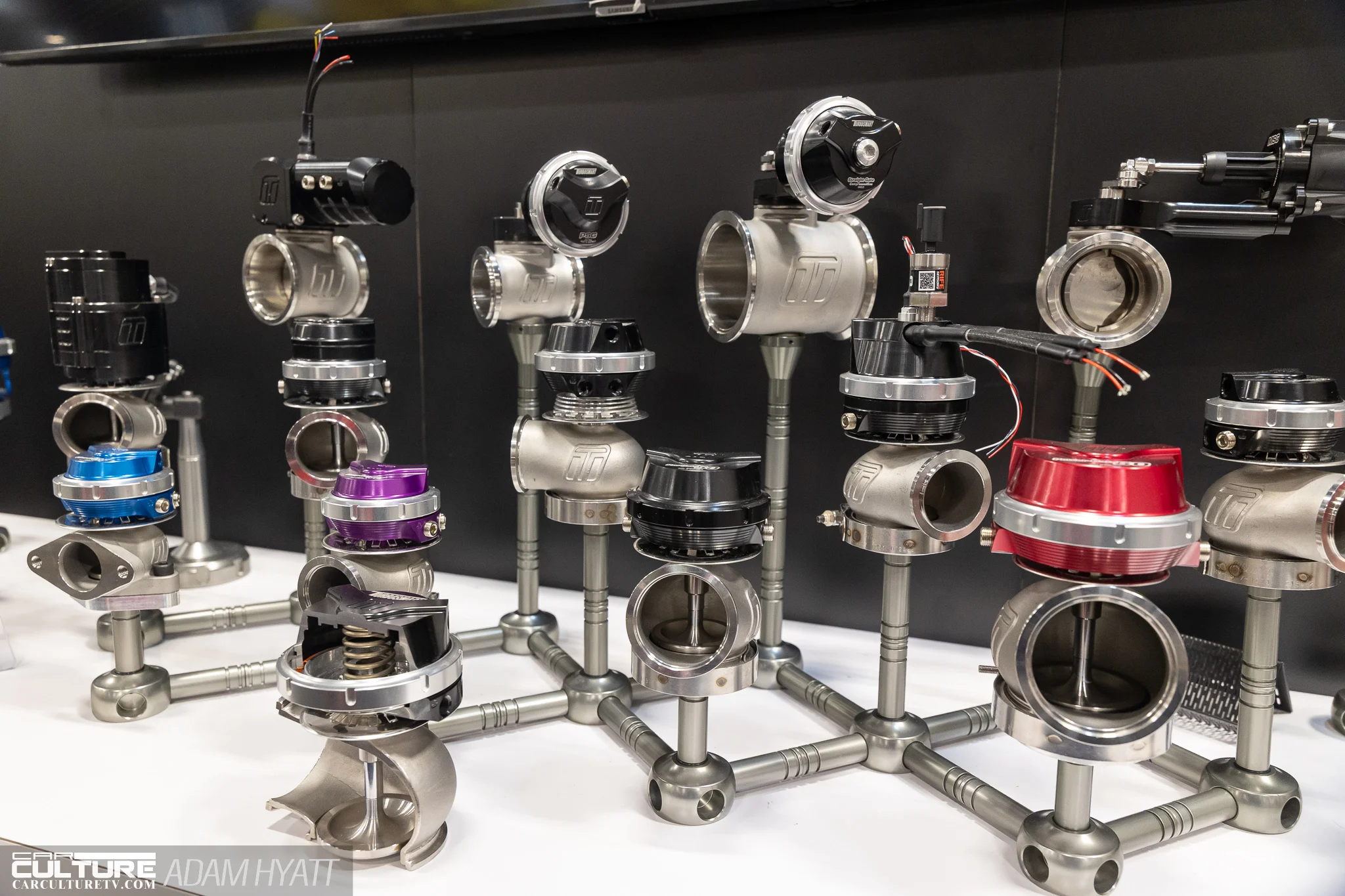
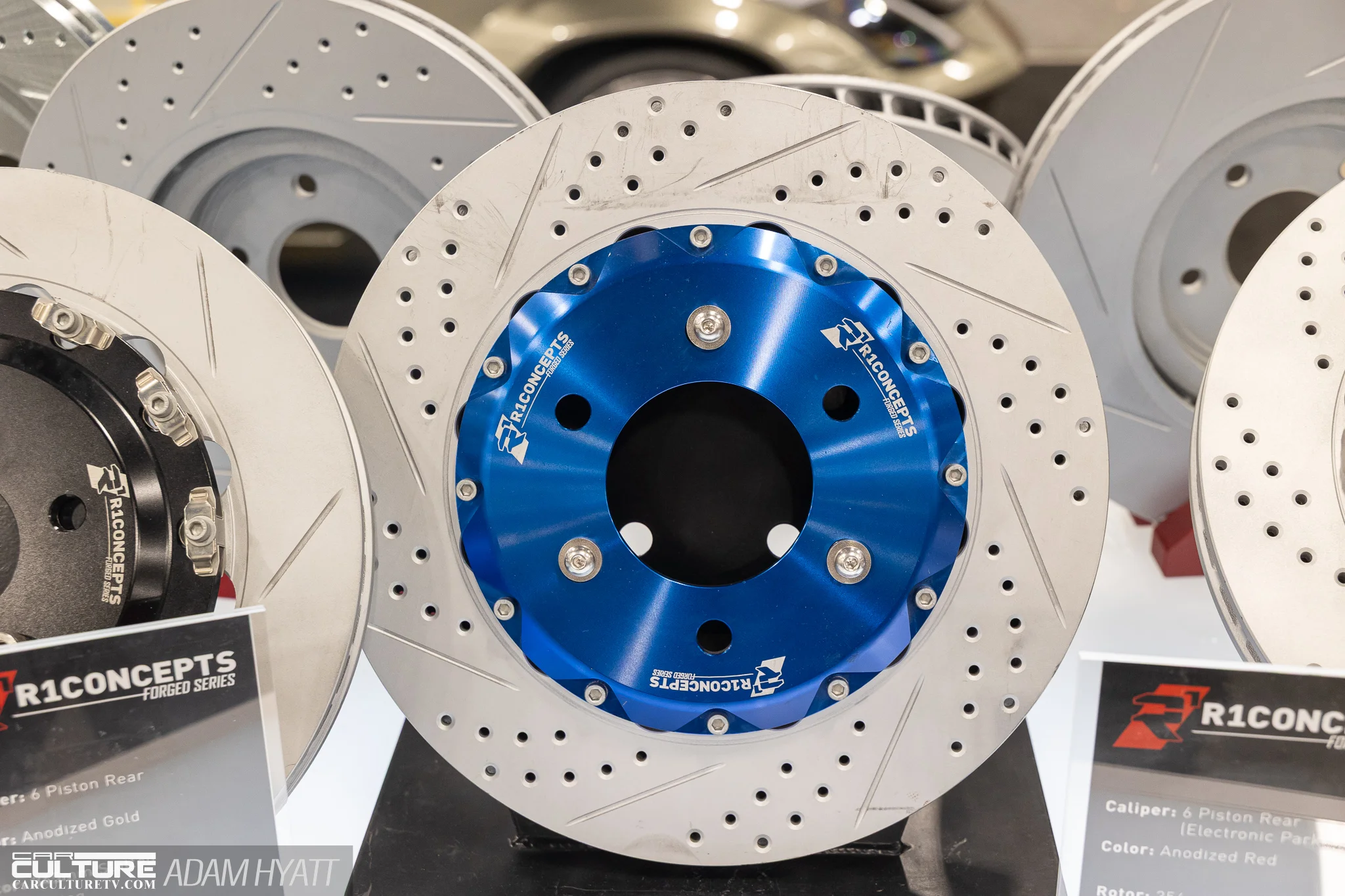
McLeod brought their flywheel and clutch lineup, the kind of hardware that never makes a build photo but determines whether 800 horsepower actually gets to the wheels consistently. GReddy had valve covers, intakes, and fuel rails on display alongside an array of fittings that represent the detail-level thinking serious builders bring to every connection point in a build. ProCharger’s centrifugal supercharger lineup continued to make the case for forced induction that doesn’t require a full engine rebuild to implement. Turbosmart’s wastegate selection spoke to anyone running boost who understands that boost control is the difference between a fast car and a consistent one. R1 Concepts represented on the brake side, because adding power without addressing stopping ability is a decision that eventually catches up with every build.
Toyota’s Footprint
Toyota did not come to SEMA 2025 to blend in. Their Central Hall footprint was the largest in the building, built around a theme they called “Powered by Possibility,” and it showed up in every direction you looked inside that booth.
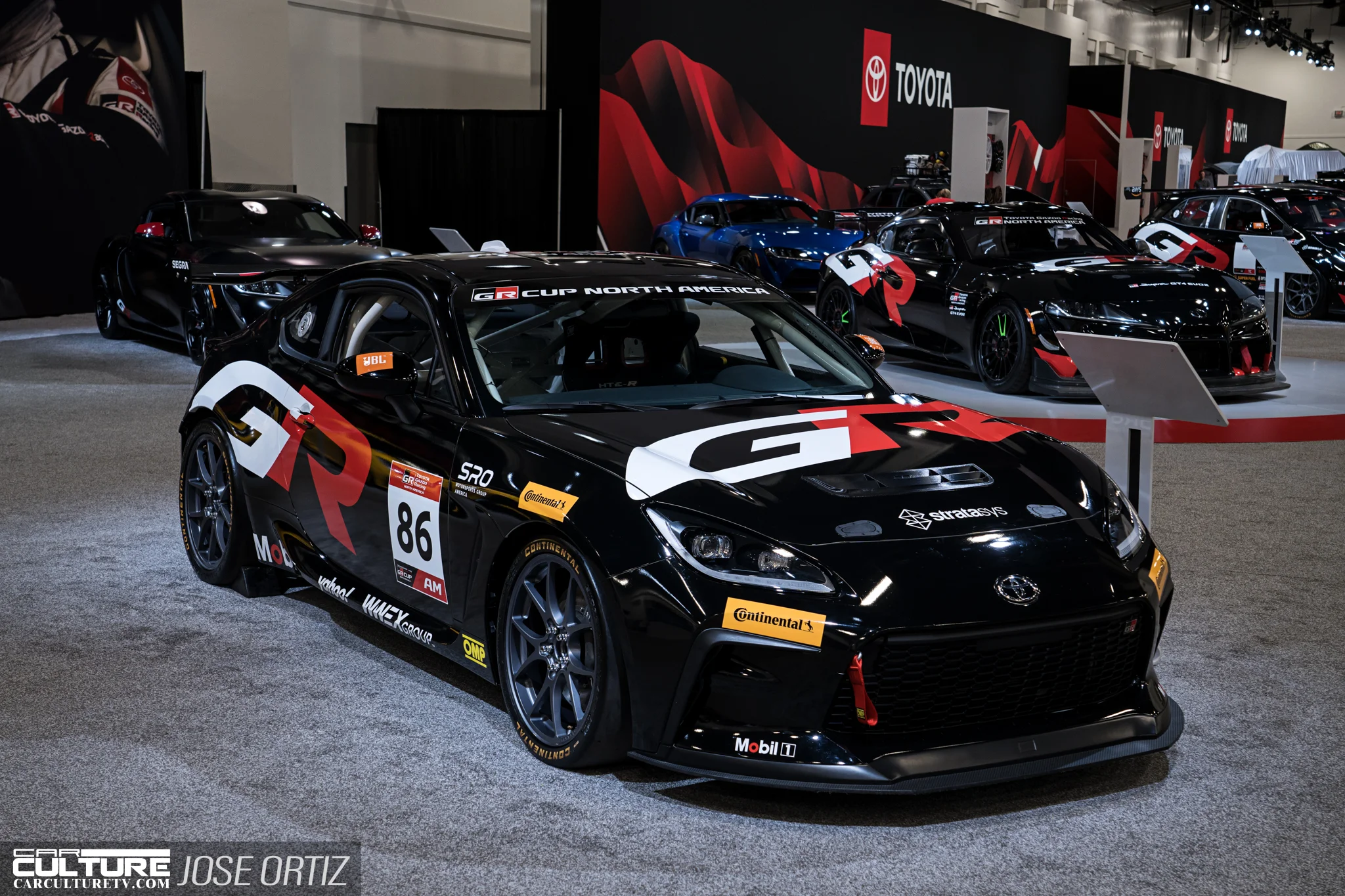
The GR86 Cup Car was one of the clearest statements Toyota made about where their performance ambitions sit. Built by Toyota Gazoo Racing North America for the GR Cup single-make race series, it starts life as a production GR86 before going through a full race conversion: SADEV six-speed sequential transmission, Alcon brakes, JRI adjustable coilovers, roll cage, OMP safety equipment, carbon fiber rear wing, and a TGRNA-designed front splitter. It’s not a concept. It runs at real circuits in real competition, and having it on the show floor connects Toyota’s street car lineup directly to its motorsport program in a way that a rendering never could.
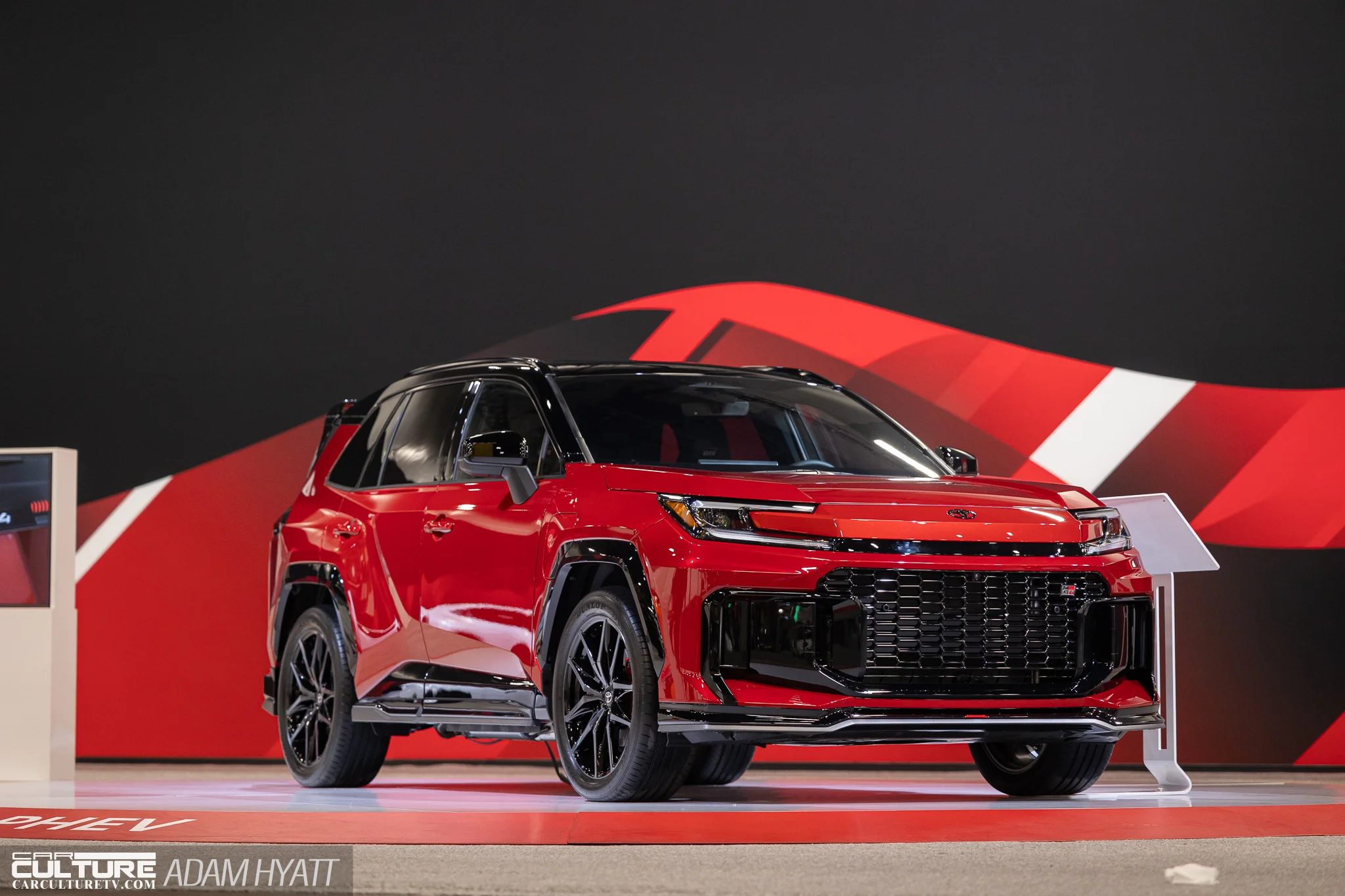
The RAV4 GR Sport PHEV with prototype body kit made its debut at the show wearing a body kit developed exclusively for SEMA by Toyota Customizing and Development. Redesigned front and rear bumper sections, streamlined side skirts, the GR Sport aesthetic pushed further toward something that actually looks performance-minded. Toyota described it as a preview of potential future styling enhancements inspired by Toyota Gazoo Racing’s design direction.
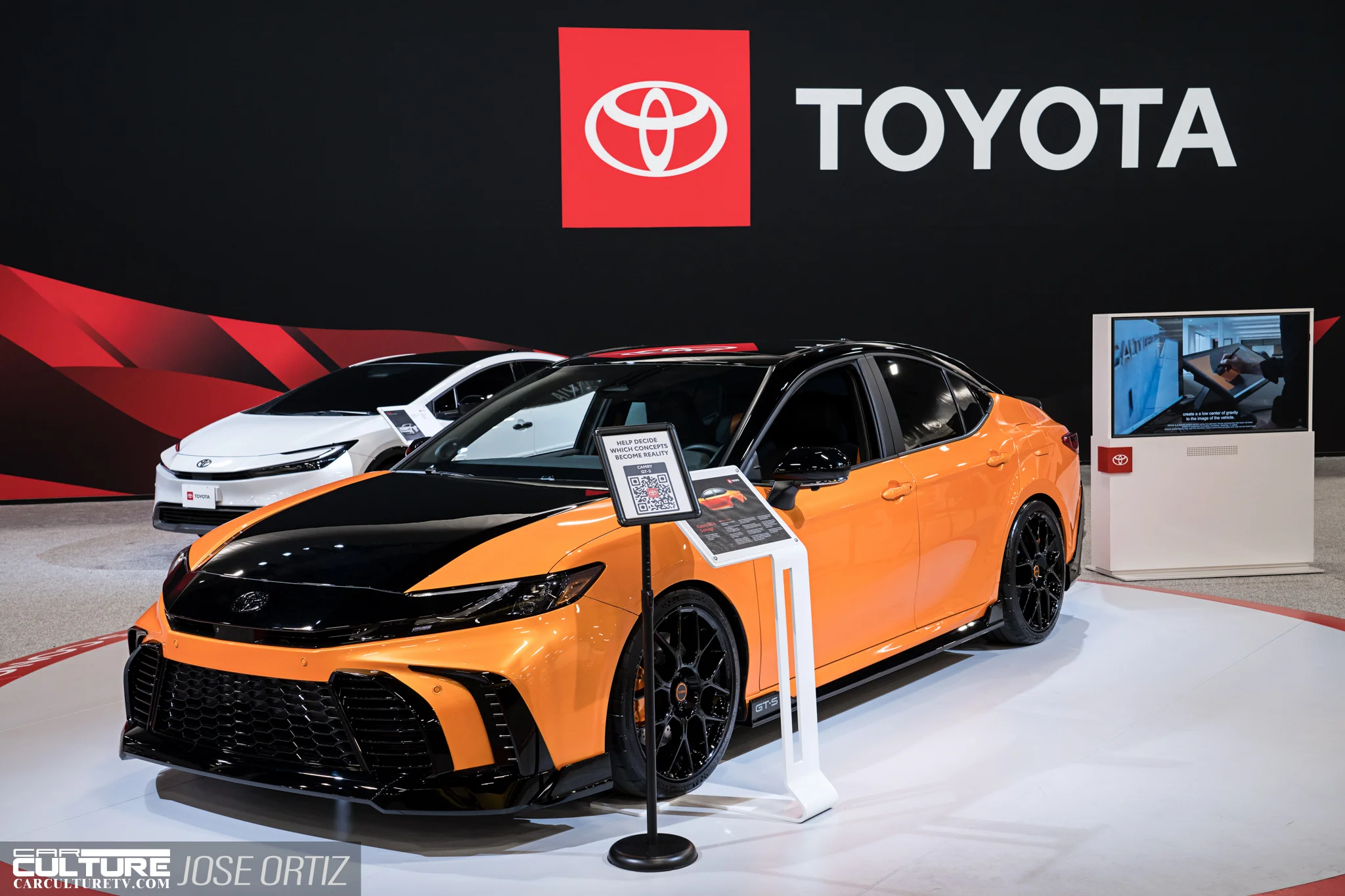
The Camry GT-S Concept was arguably the most talked-about Toyota reveal of the week. Built on the 2025 Camry XSE AWD Hybrid, it wears a full body kit in Inferno Flare orange with a black hood and roof, sits 1.5 inches lower on adjustable coilovers, and runs 20-inch wheels with 8-piston front calipers on 365mm rotors. The stock 232-horsepower hybrid drivetrain is unchanged, which was entirely intentional. Toyota designed this as a study in what a real production performance package could look like, something a customer could picture in a dealership. The GT-S badge carries weight for anyone who remembers it on the Celica, the MR2, and the AE86 Corolla. Reviving it on a Camry is either a bold statement or a genuine preview of something coming. The show floor reaction suggested people are ready for it either way.
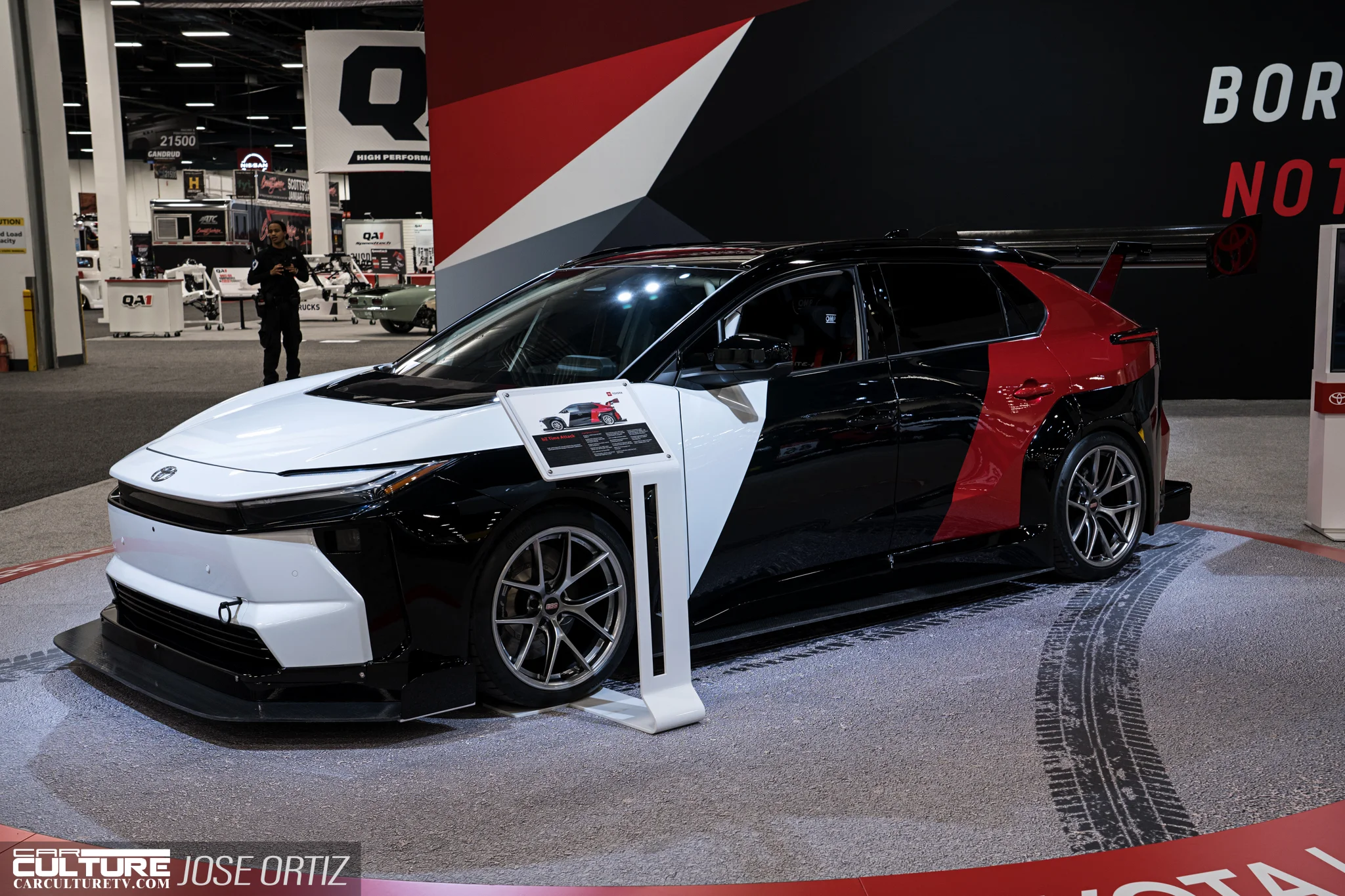
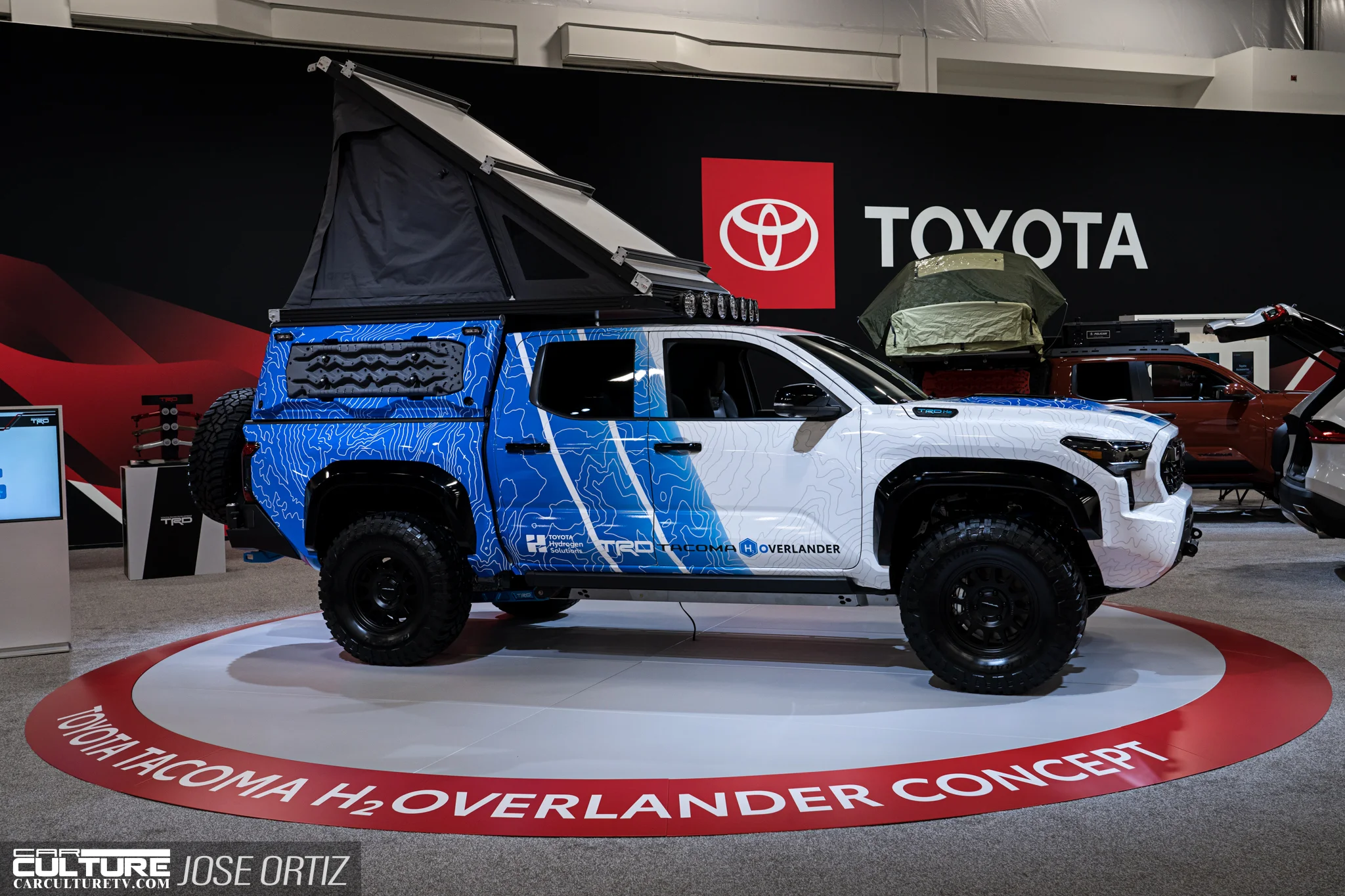
The bZ Time Attack hill-climb racer showed what their electric platform looks like when performance engineering drives the process rather than compliance. The H2-Overlander Tacoma, running a hydrogen fuel cell powertrain, was the most forward-looking thing on that side of the hall. A genuine question about what overlanding looks like when the fuel source changes entirely.
Toyo Treadpass
Now in its 12th year, Toyo Treadpass remains one of the most consistently well-curated exhibits at the show. Twenty-eight builds making their world debut, spanning disciplines from time attack to off-road to full custom, occupying the stretch between Central and South Halls. It draws a crowd that actually slows down rather than passing through, which at SEMA is saying something.
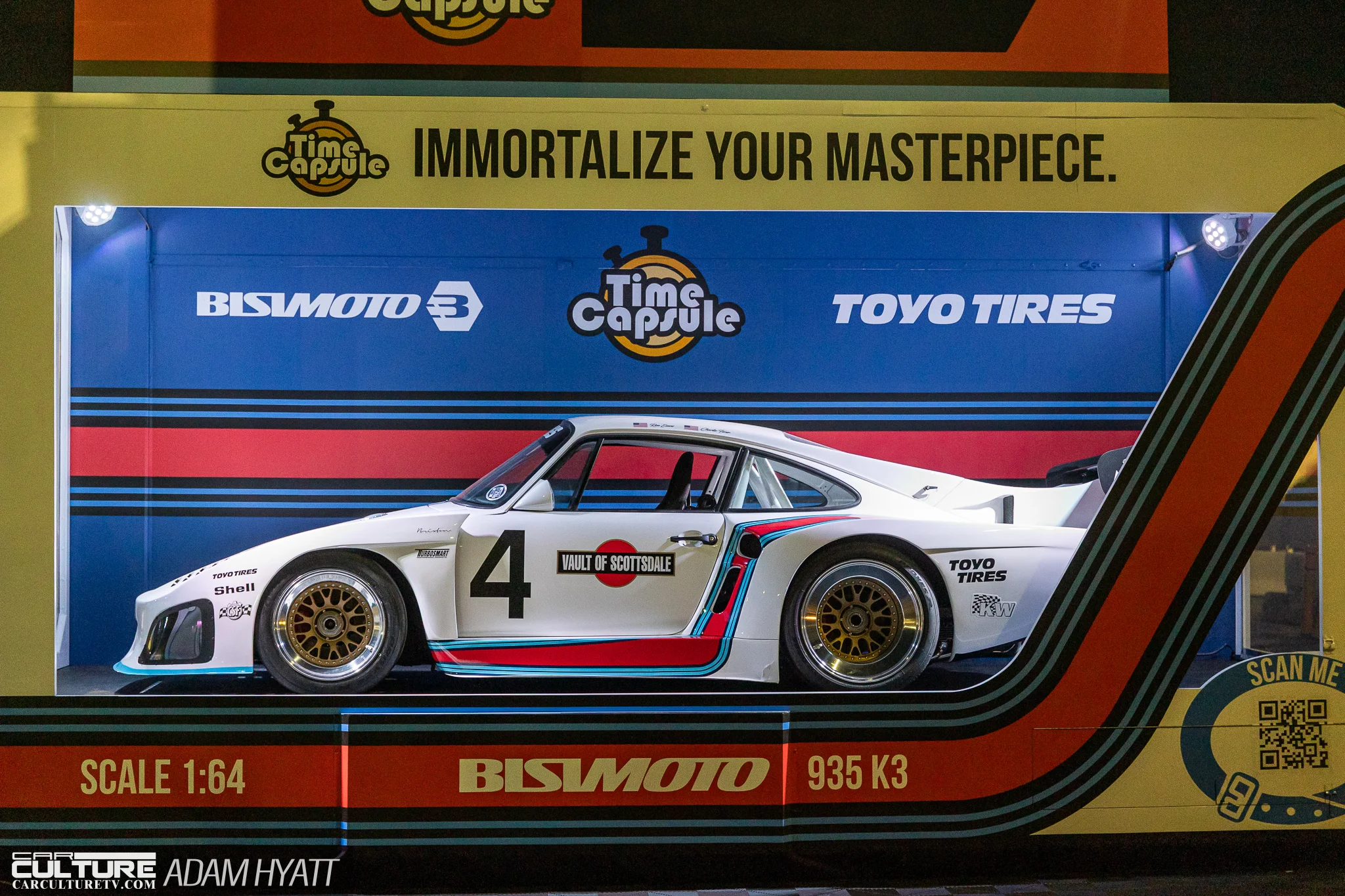
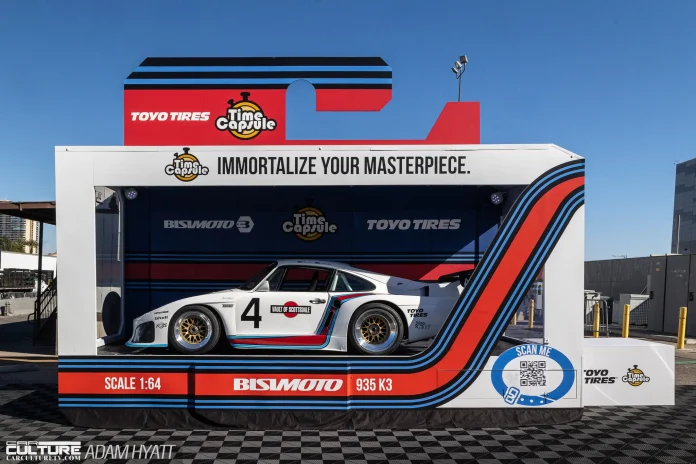
The standout presentation concept of the week was right here. Bisimoto Engineering‘s 1982 Porsche Kremer K3 935 was displayed inside a life-size die-cast toy box, created in collaboration with Time Capsule, a company specializing in highly detailed miniature merchandise. Twin-turbo Porsche, full Martini livery, Brixton forged centerlock TR17 wheels, Toyo Proxes RT rubber, packaged like the greatest Hot Wheels car ever pulled off a peg. Bisimoto has always understood that how you present a build is part of the build.
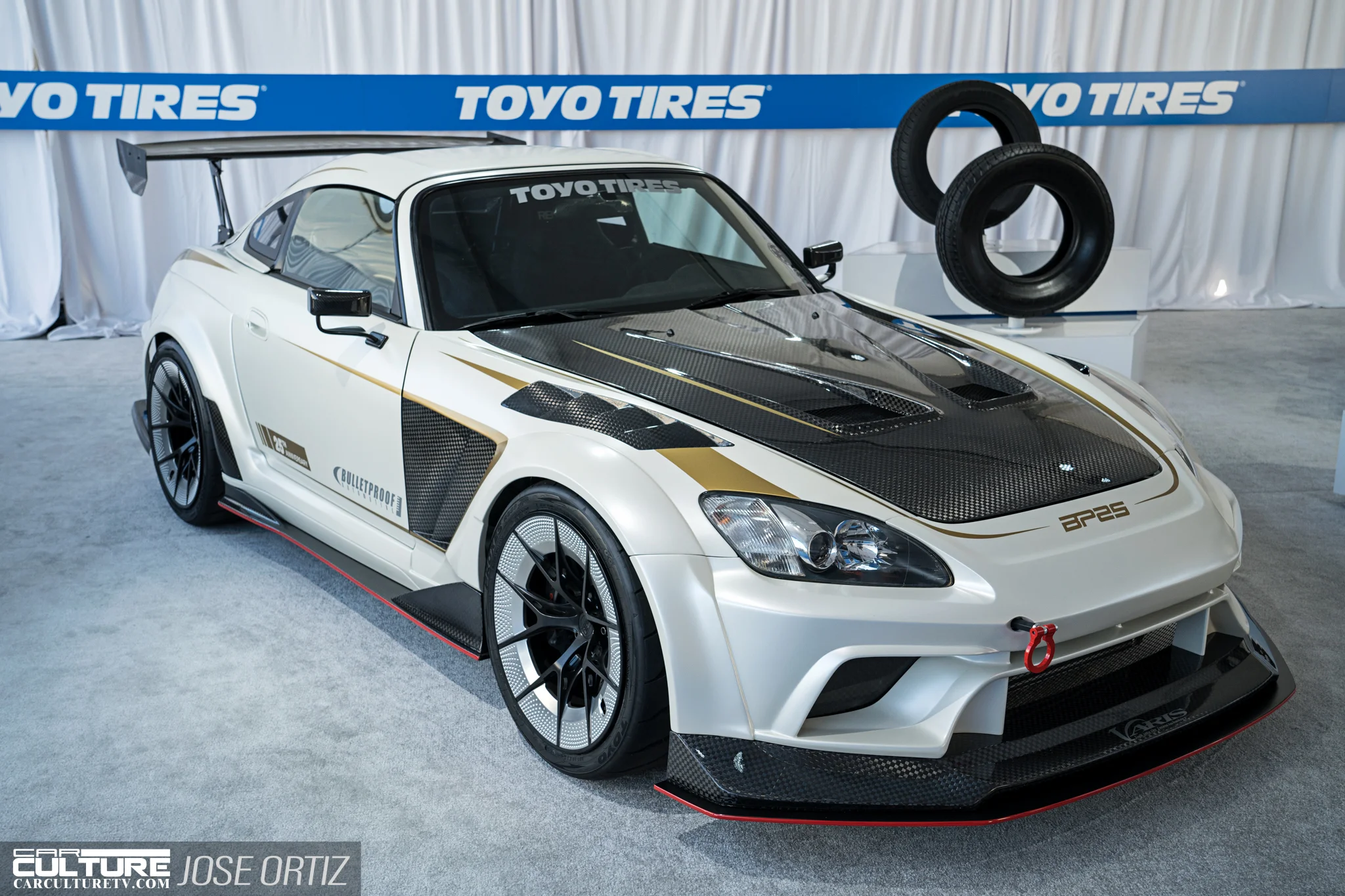
Bulletproof Automotive brought the BP25 Honda S2000 to celebrate the shop’s 25th anniversary, and it earned every second of attention it received. Founder Ben Schaffer started with a stock S2000 and applied the North American debut of the Varis Dark Panther widebody kit, finishing the car in Lamborghini Balloon White with gold accents that directly reference Bulletproof’s original Concept One, a car that ran Tsukuba Circuit and now lives in the Petersen Museum. Under the hood is a Bulletproof-spec 2.0-liter making 580 supercharged horsepower at 9,300 rpm, breathing through an Amuse titanium header and dual titanium exhaust. The wheels are BP-RW Evolution forged units inspired by the Japanese Tsuchime hammered-metal technique. It’s a build with a lineage, and it showed.
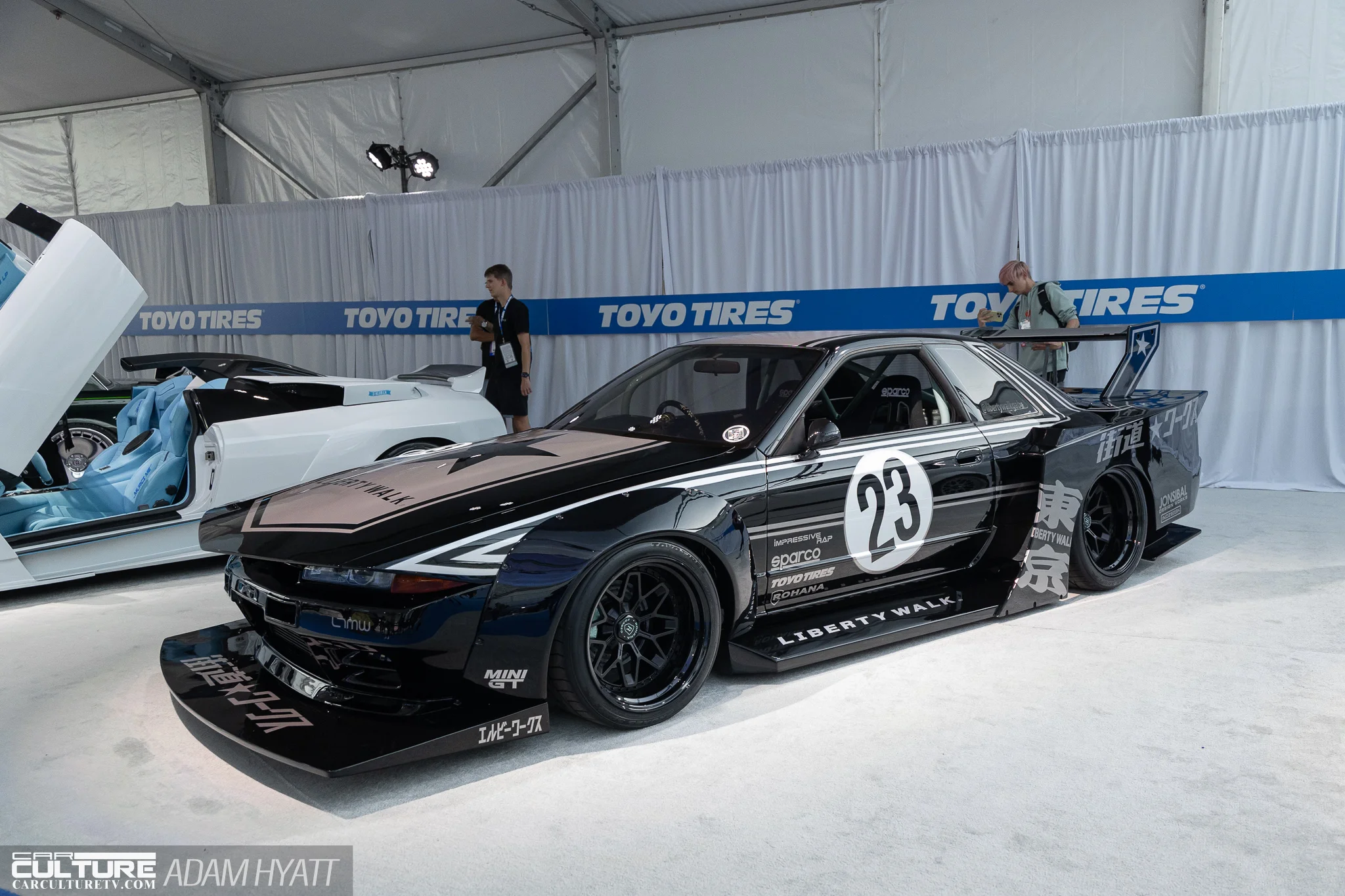
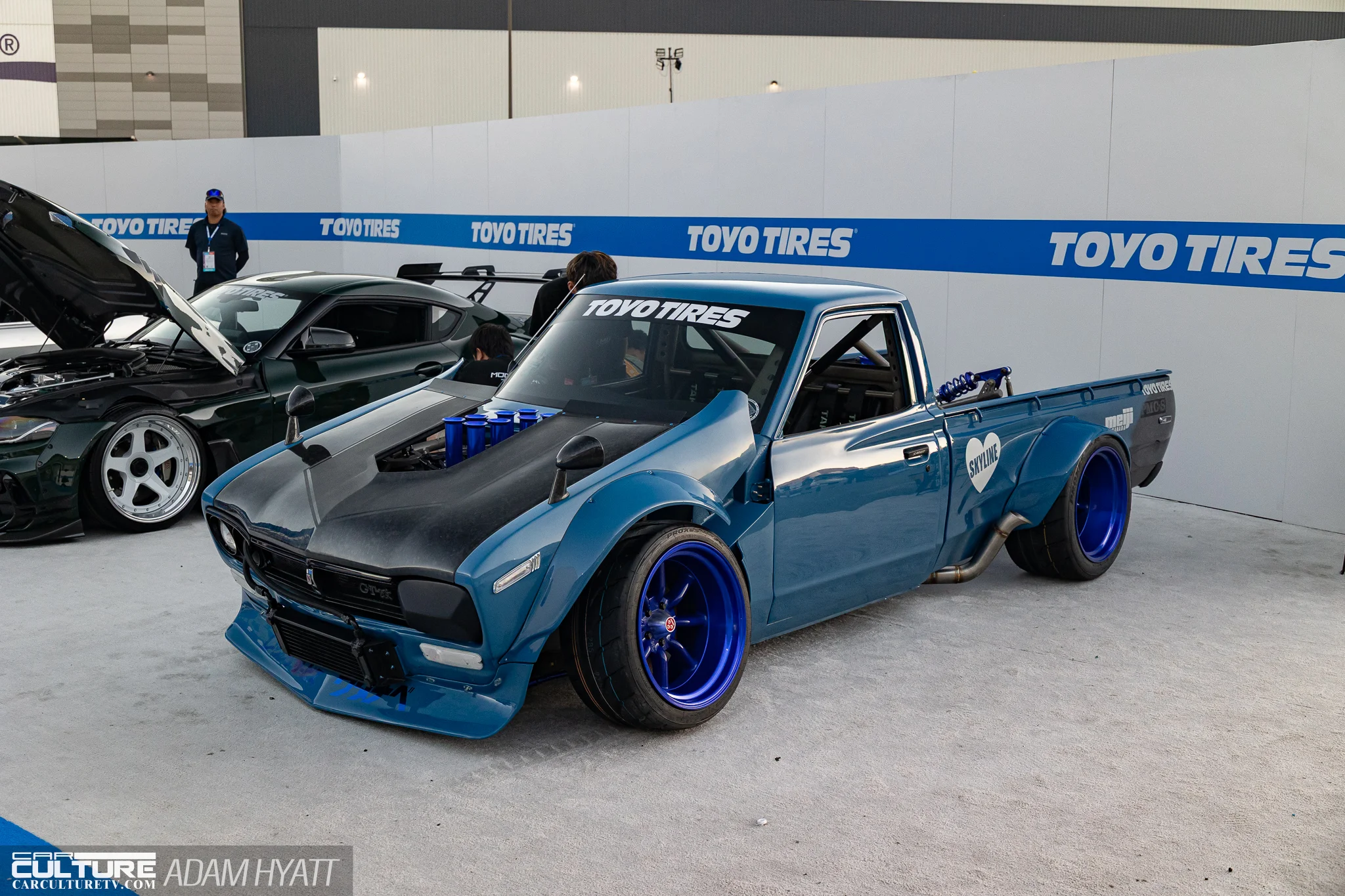
The Liberty Walk R32 Skyline in full black and bronze race livery, number 23, carrying Sparco and Romana backing, sat low enough to make you wonder how it cleared the entrance. Alongside it was Dylan and Bill Brinkworth’s 1977 Datsun 620 Hakotora, an 18-year-old builder and his father combining a C10/Hakosuka front end with a 620 pickup body, custom L33 engine, TKX transmission, and blue Volk-style wheels. A father-son build following their award-winning 240Z, showing the same patience and intention.
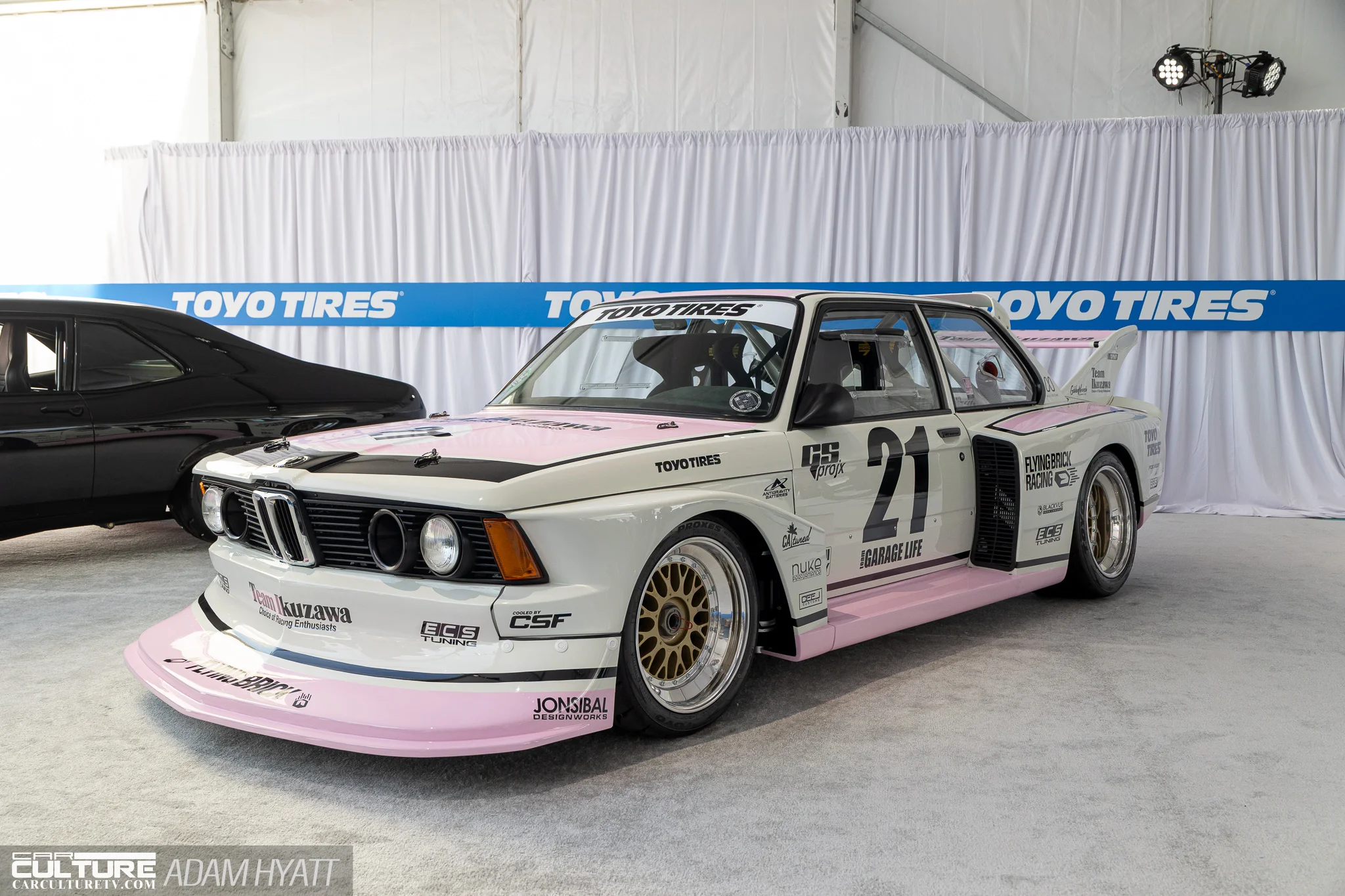
The BMW E21 from builder Marvin, in collaboration with Team Ikuzawa and Flying Brick Studio, arrived wearing white and pink race livery, number 21, on BBS three-piece wheels. Flying Brick supplied the aggressive widebody panels from Europe. Under the hood is a BMW M3 S52, sitting in an FIA-compliant cage with E92 M3 suspension geometry adapted to a newly engineered subframe. Total weight: 1,000 kg. The paint scheme, according to the builder, captures the colors of spring in a Japanese garden.
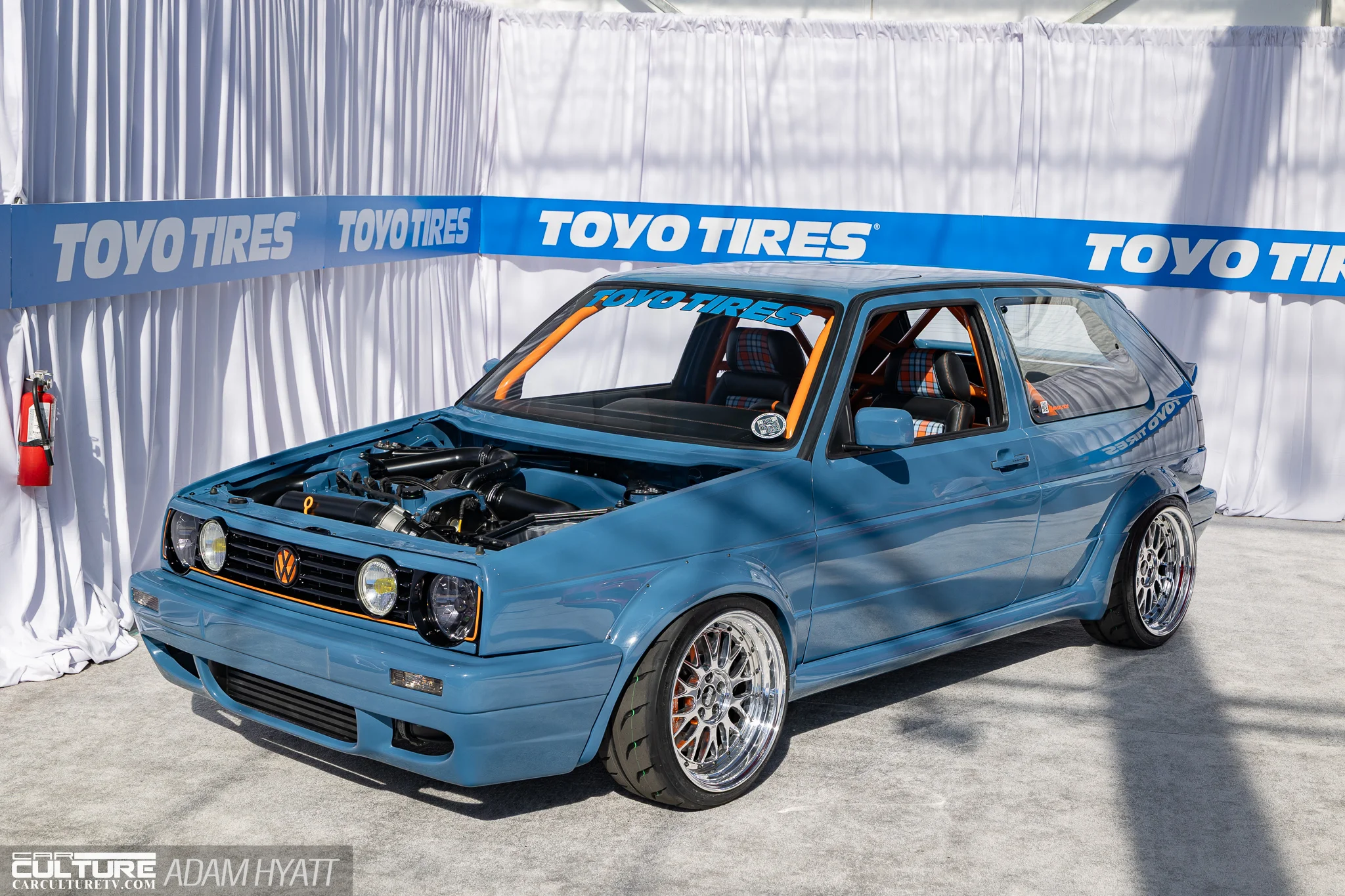
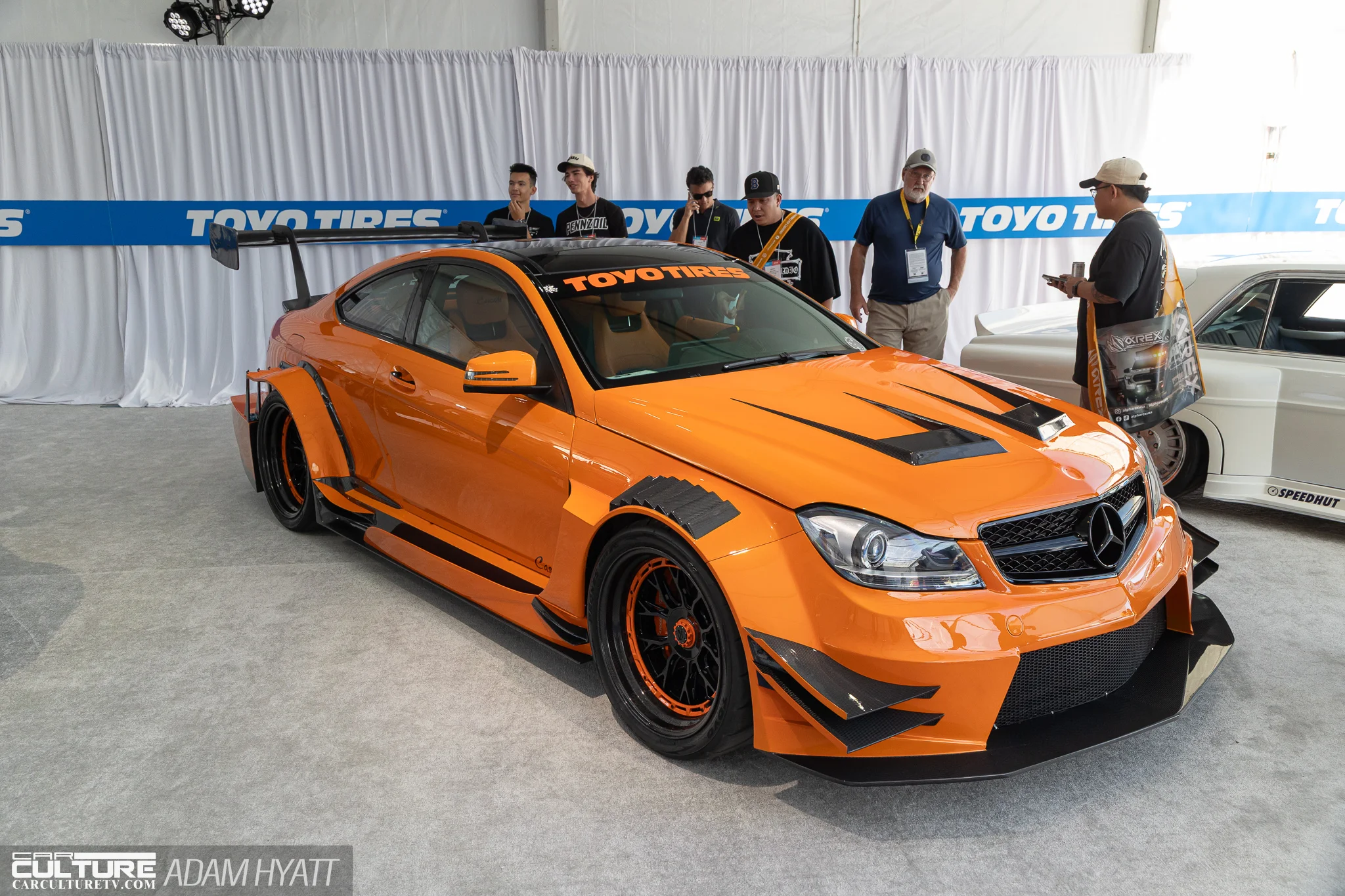
The 1992 VW Golf GTI from Patience Metal Fabrication was one of the most technically ambitious builds in the exhibit. A turbocharged R32 VR6 with a full AWD swap inside the original Mk2 body, finished in deep blue with an orange roll cage and tartan interior. Toyo Proxes R888R at all four corners. The orange DTM Mercedes C63 AMG widebody beside it took a different approach, aggressive carbon aero and matching orange-ringed wheels turning the Mercedes into something that looks purpose-built for circuit use.
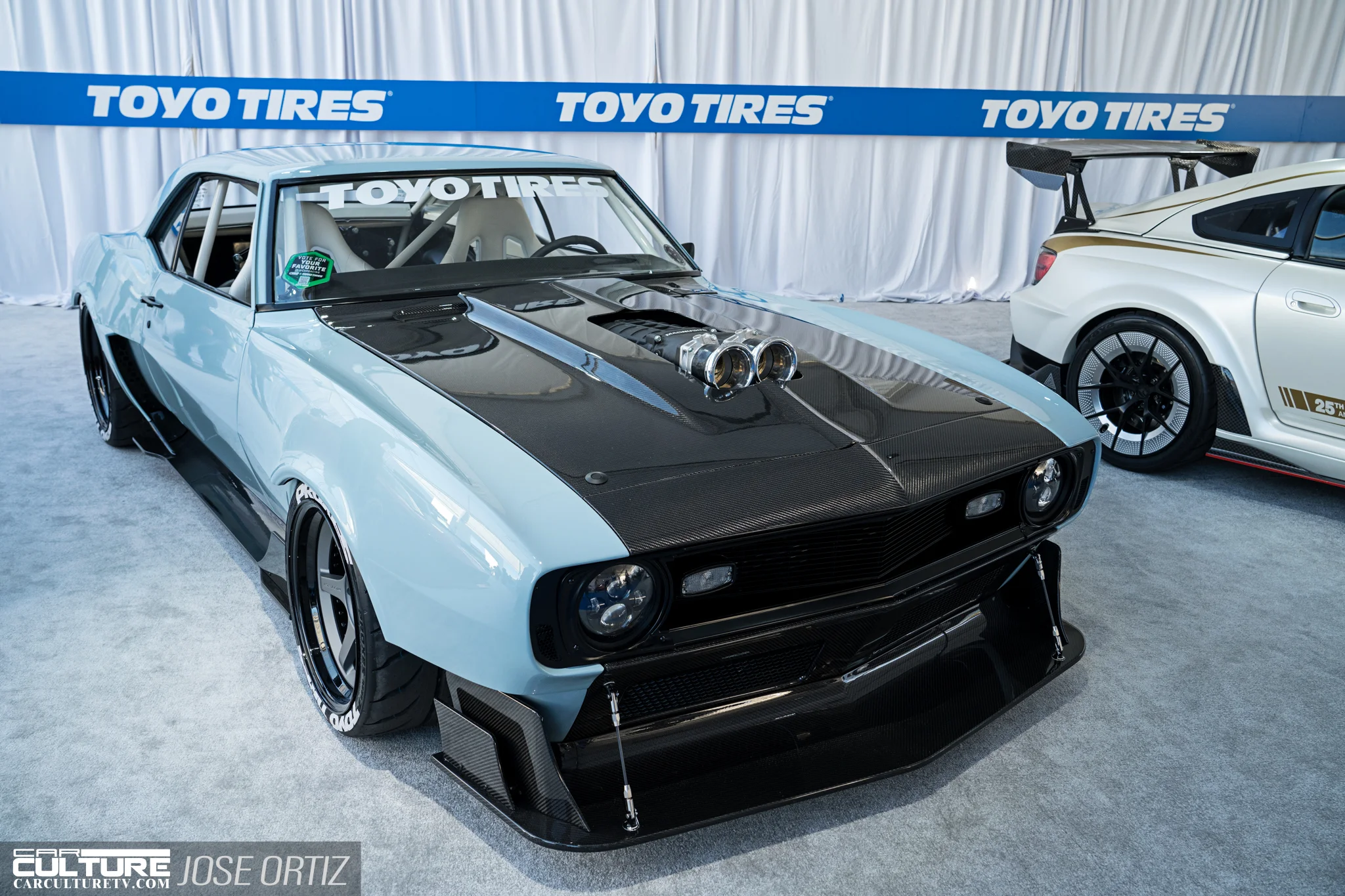
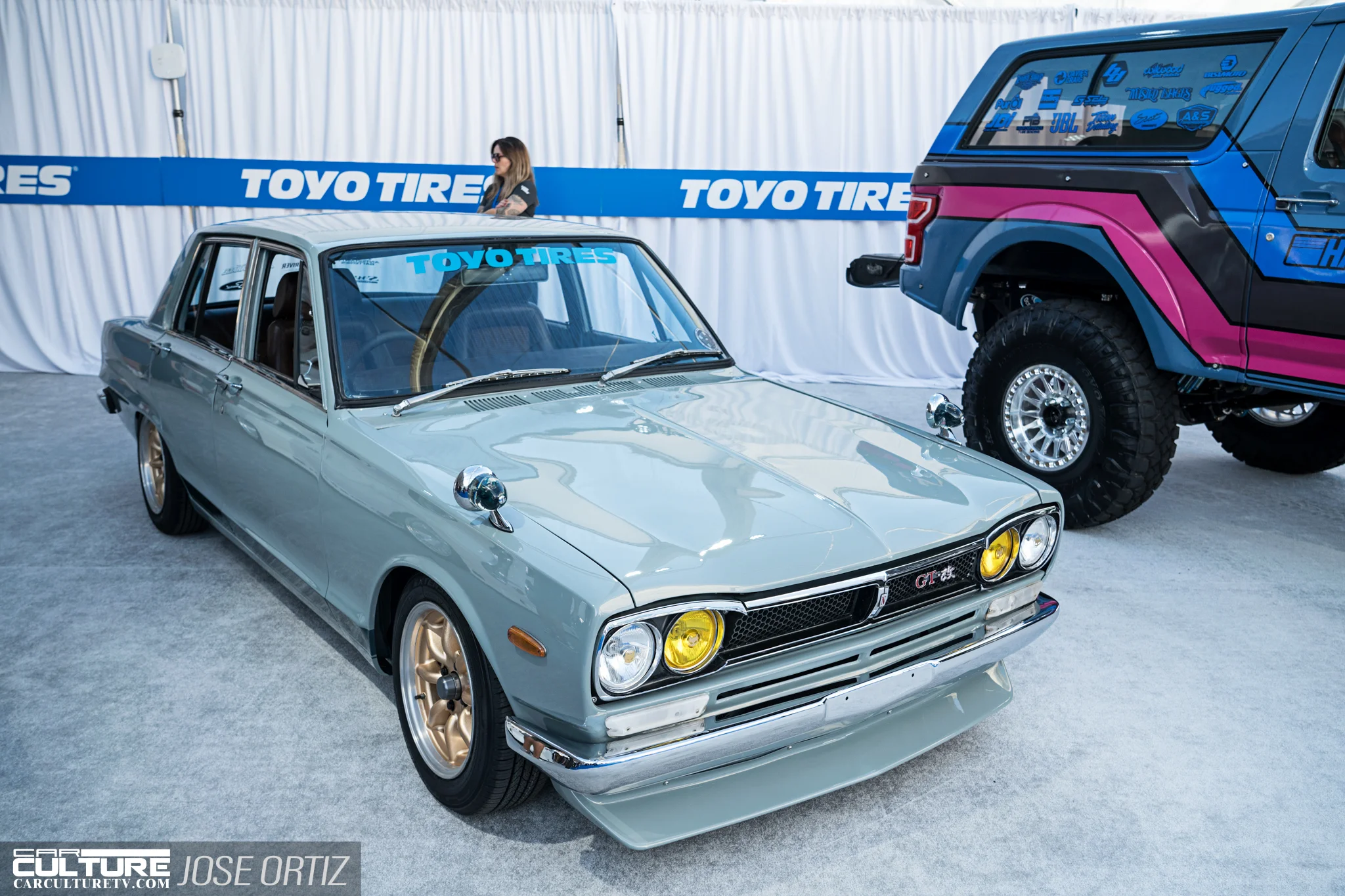
A first-gen Camaro in ice blue and carbon sat at the opposite end of the spectrum from everything around it. Whatever is under that hood makes itself obvious from across the room, and the carbon front aero gives it a purpose-built look that reads more race program than show car. A classic Nissan GC10 Hakosuka four-door sedan completed the contrast. Silver-green, gold wheels, yellow headlights. If it had a spec sheet in front of it we didn’t catch it, but it didn’t need one.
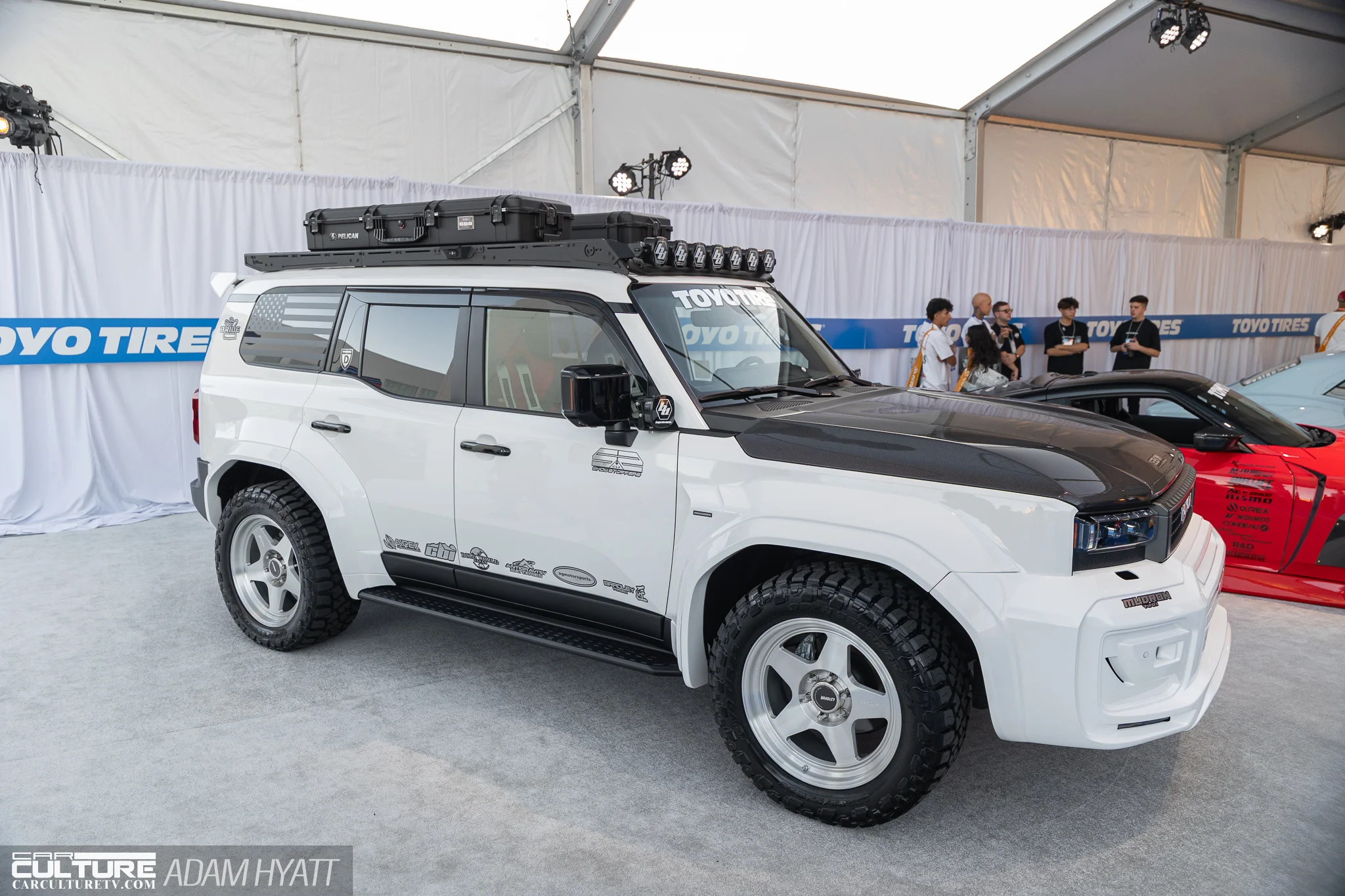
Chuck Hernandez of Showstoppers USA brought a 2024 Toyota Land Cruiser wearing an Aimgain widebody, Boldworld air suspension, Bradley Takumi wheels in a 3D mirror finish, and Toyo Open Country R/T Pro rubber. A Bride interior and Pelican roof rack round out a build that bridges trail capability and show-floor presence without compromising either.
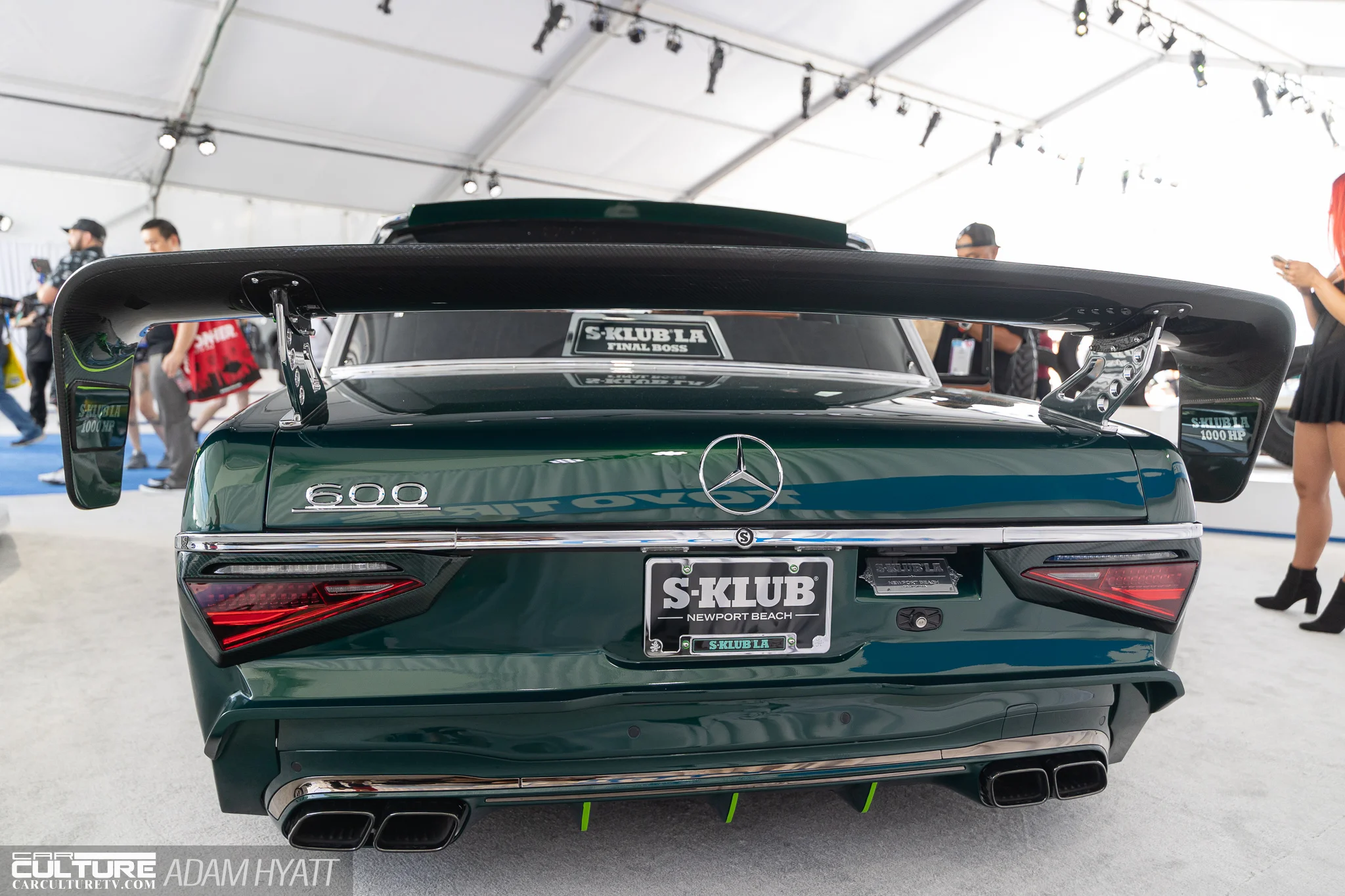
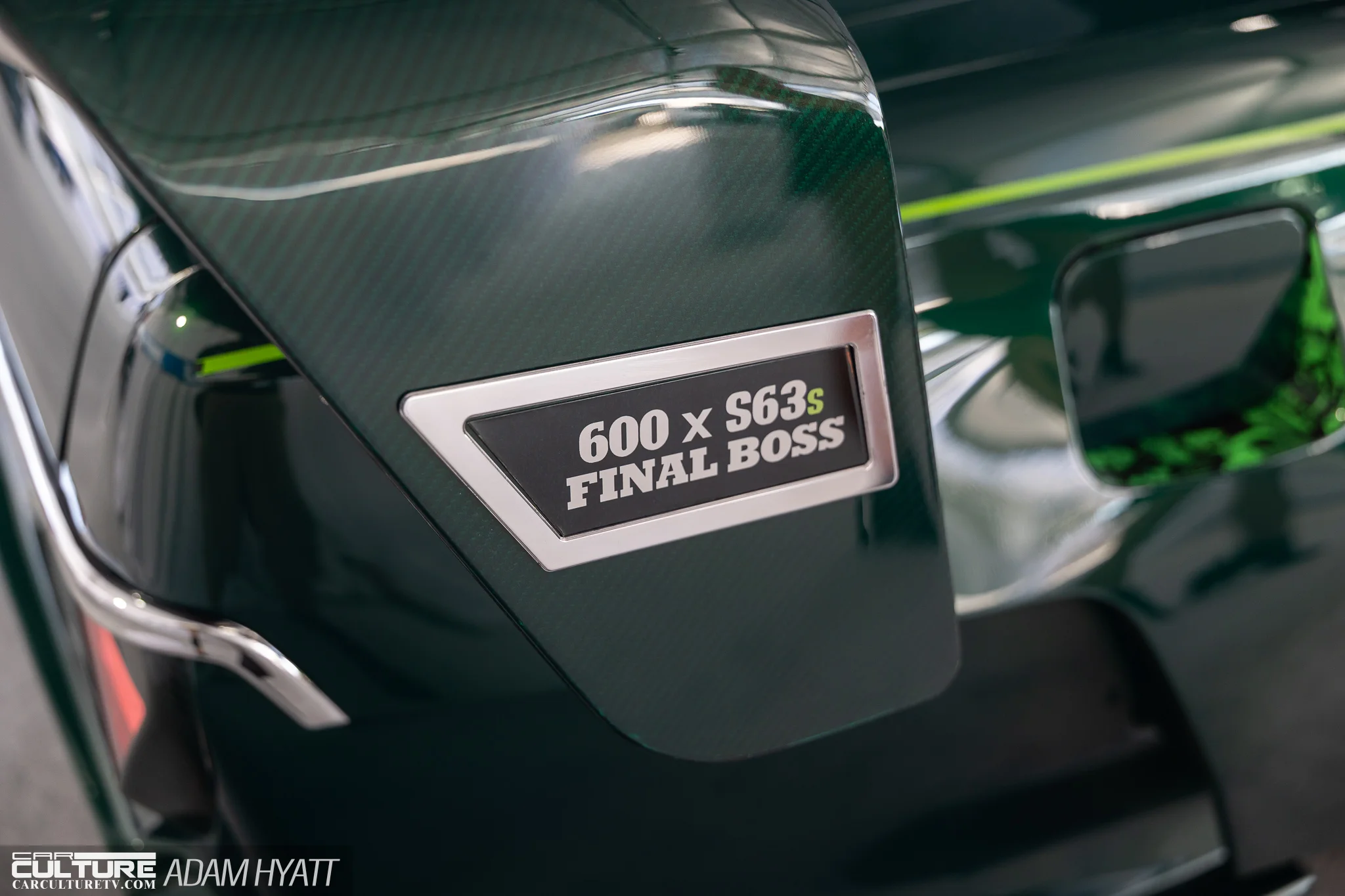
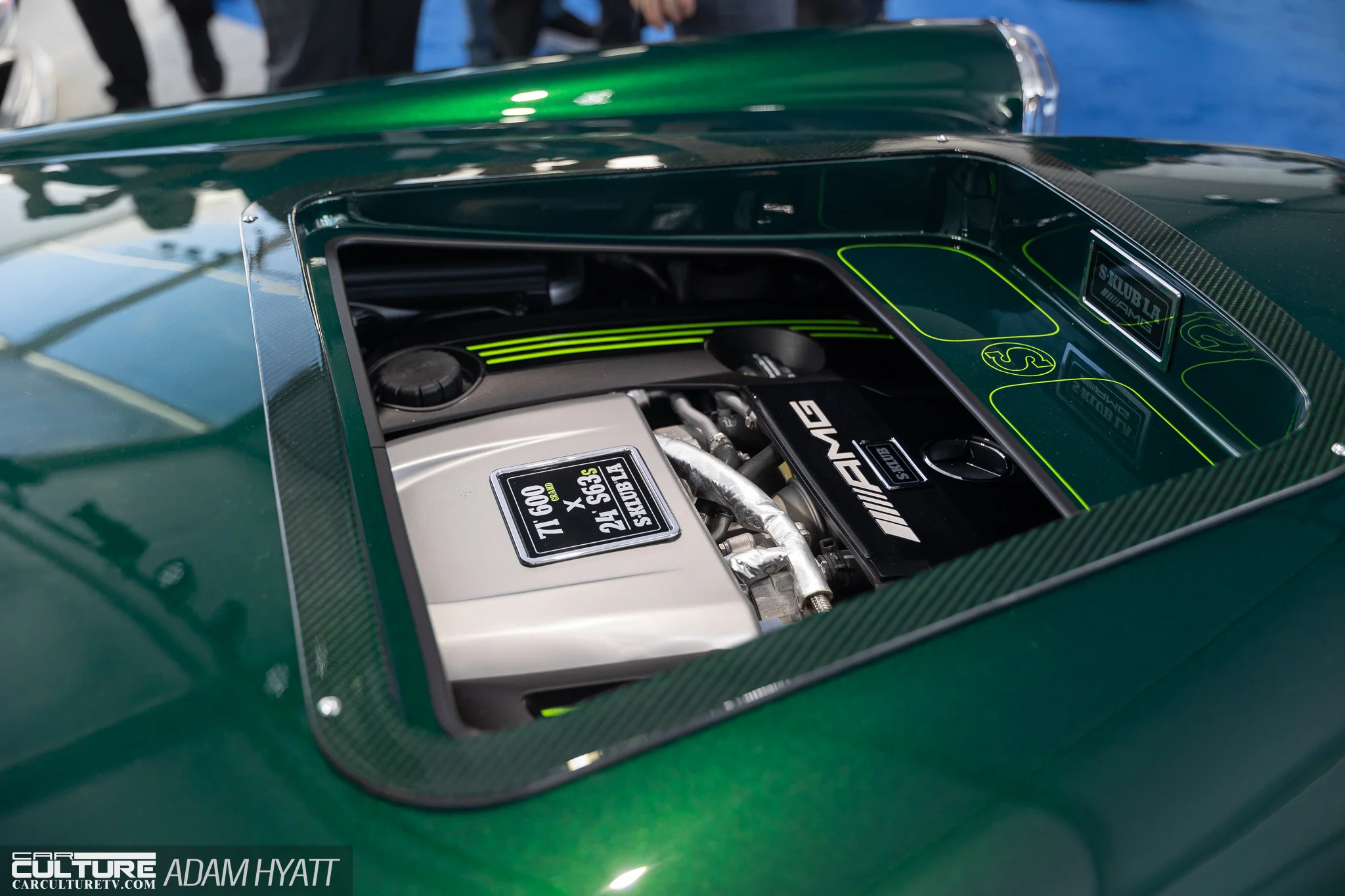
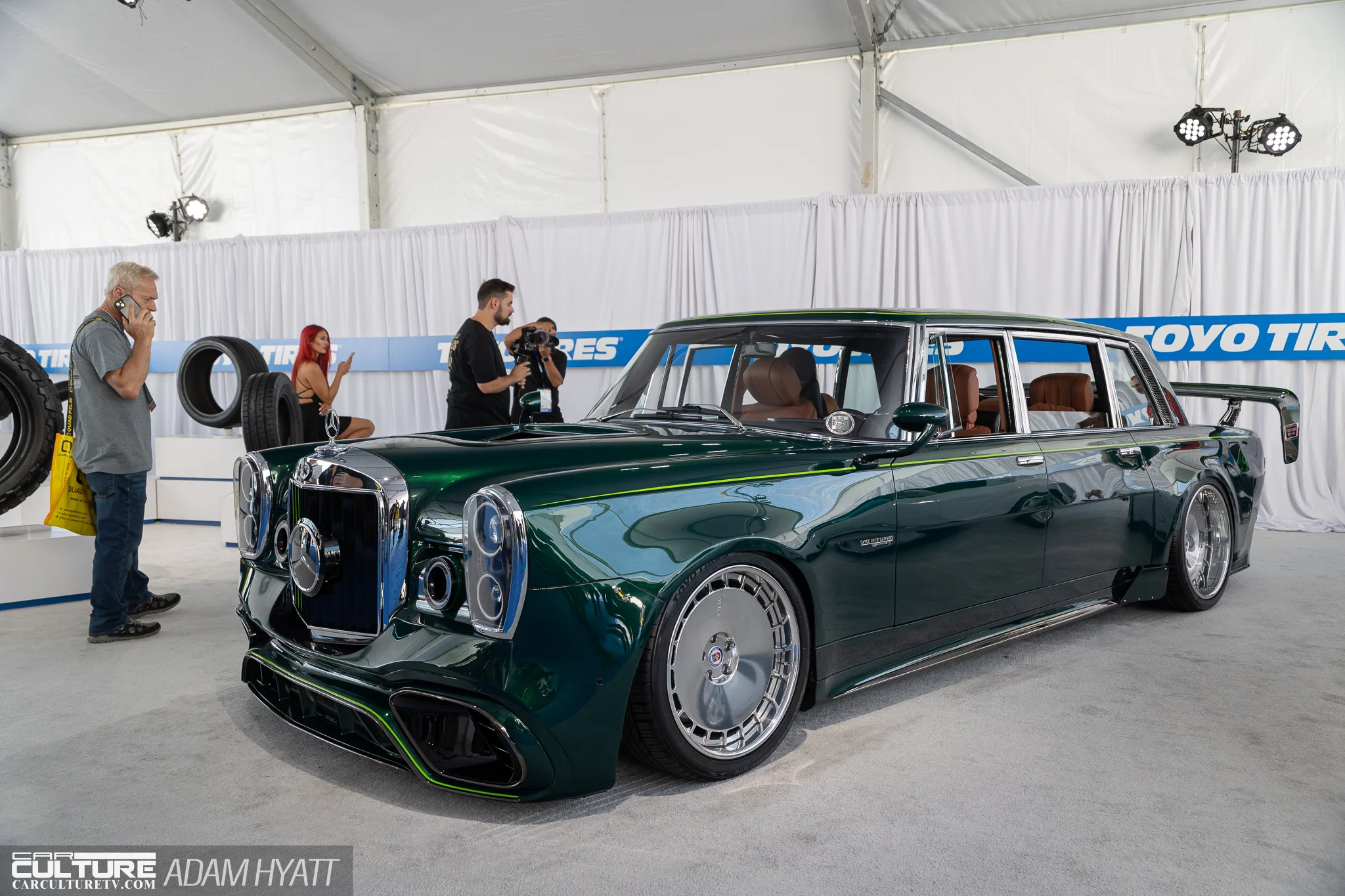
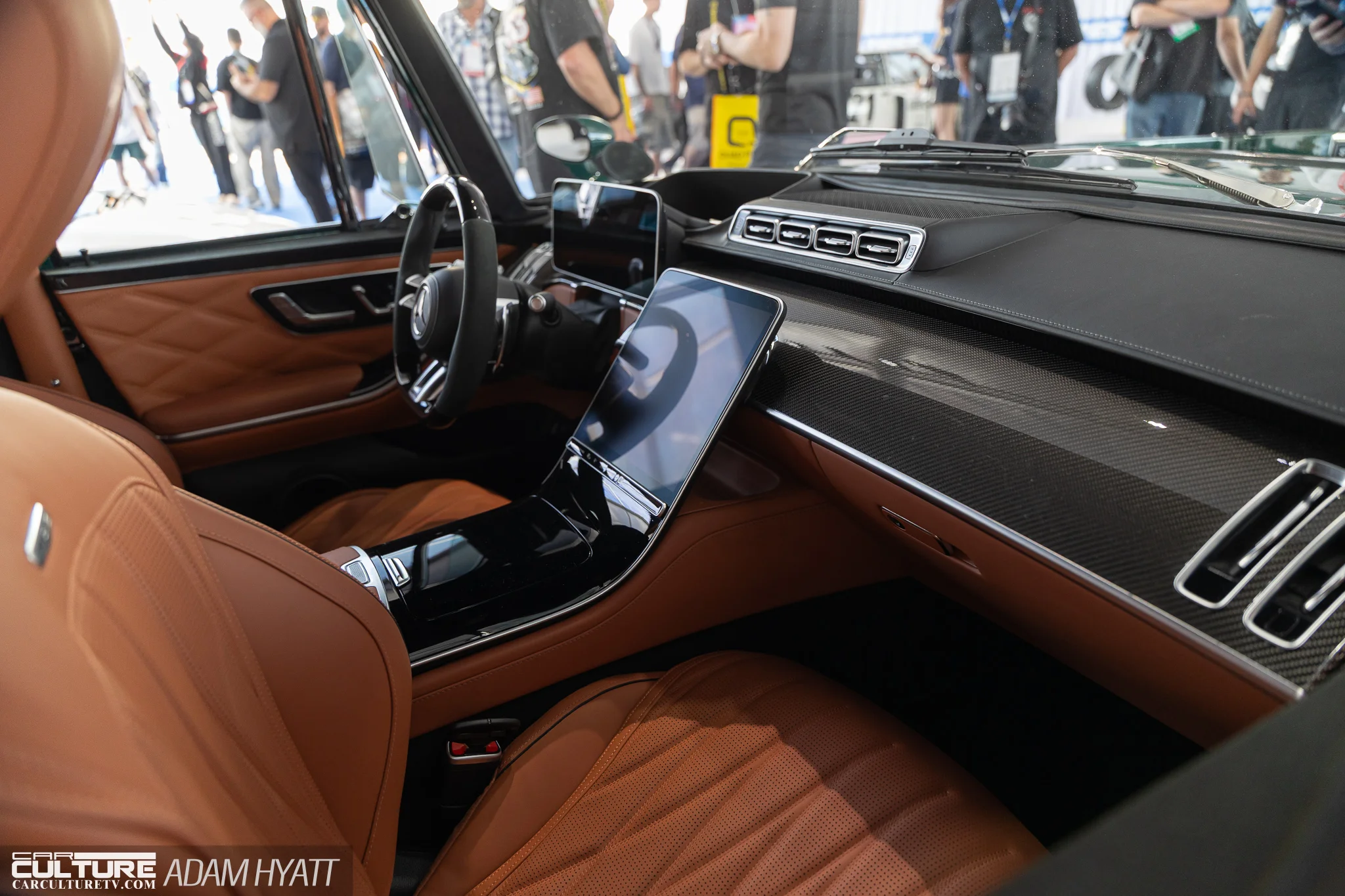
John Sarkisyan’s ’71 Mercedes-Benz 600 Pullman appeared here in its Treadpass context before its Battle of the Builders stage. Dark forest green, massively widened, riding on deep-dish polished multi-spoke wheels, modern LED treatment behind the classic chrome headlight surrounds, with an S63 AMG underpinning the whole thing. The presence of that car in any room changes the room.
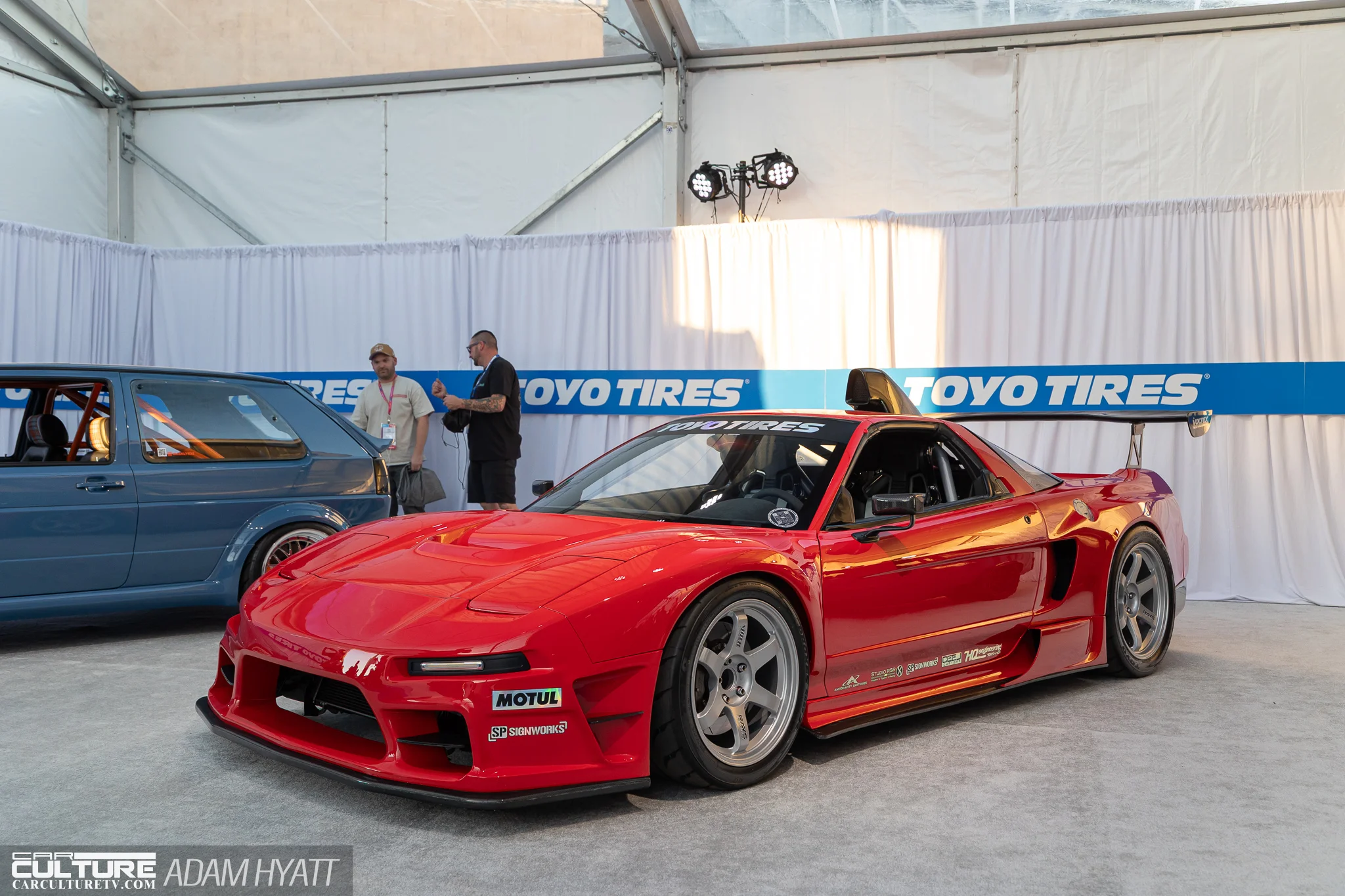
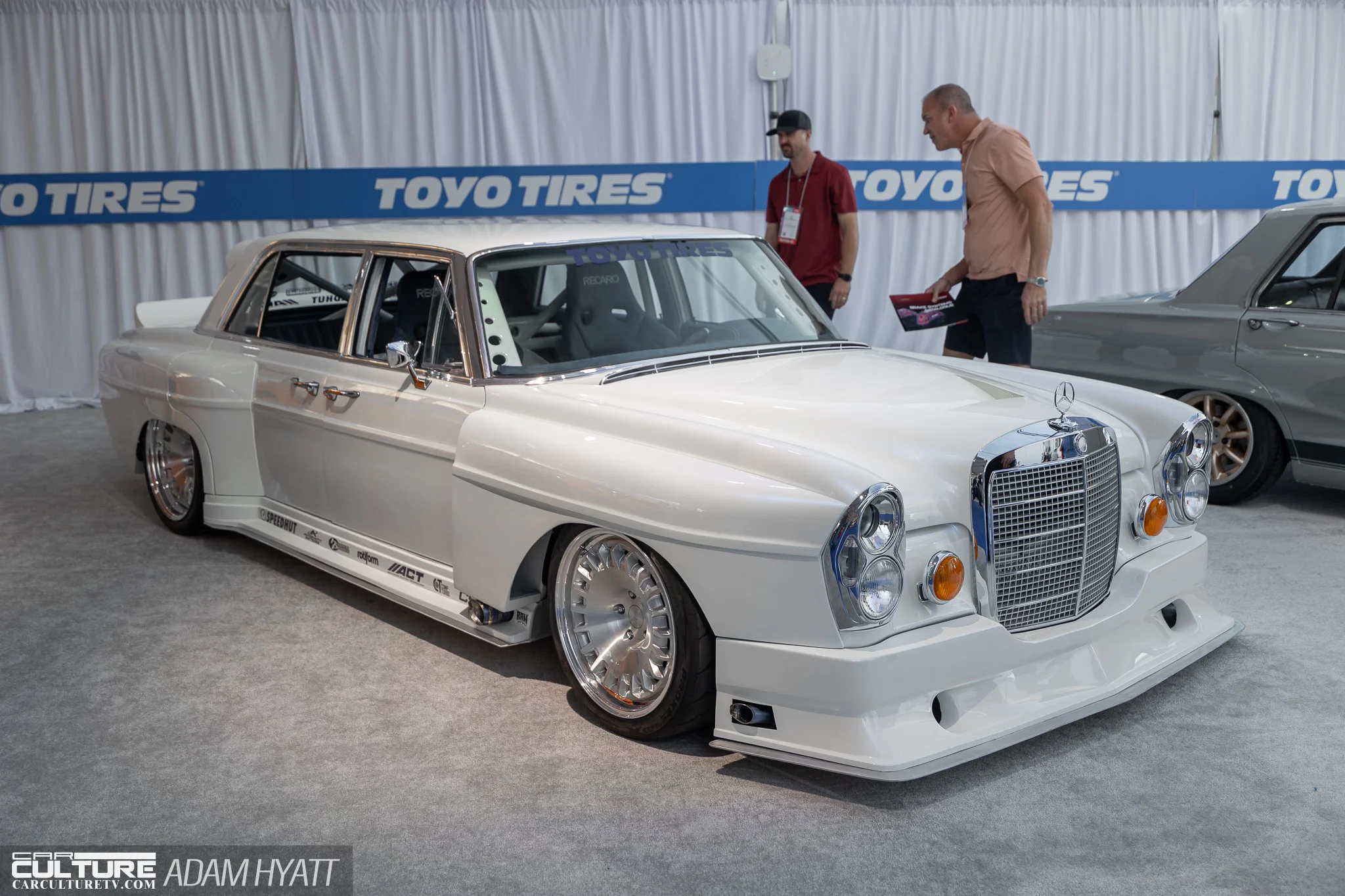
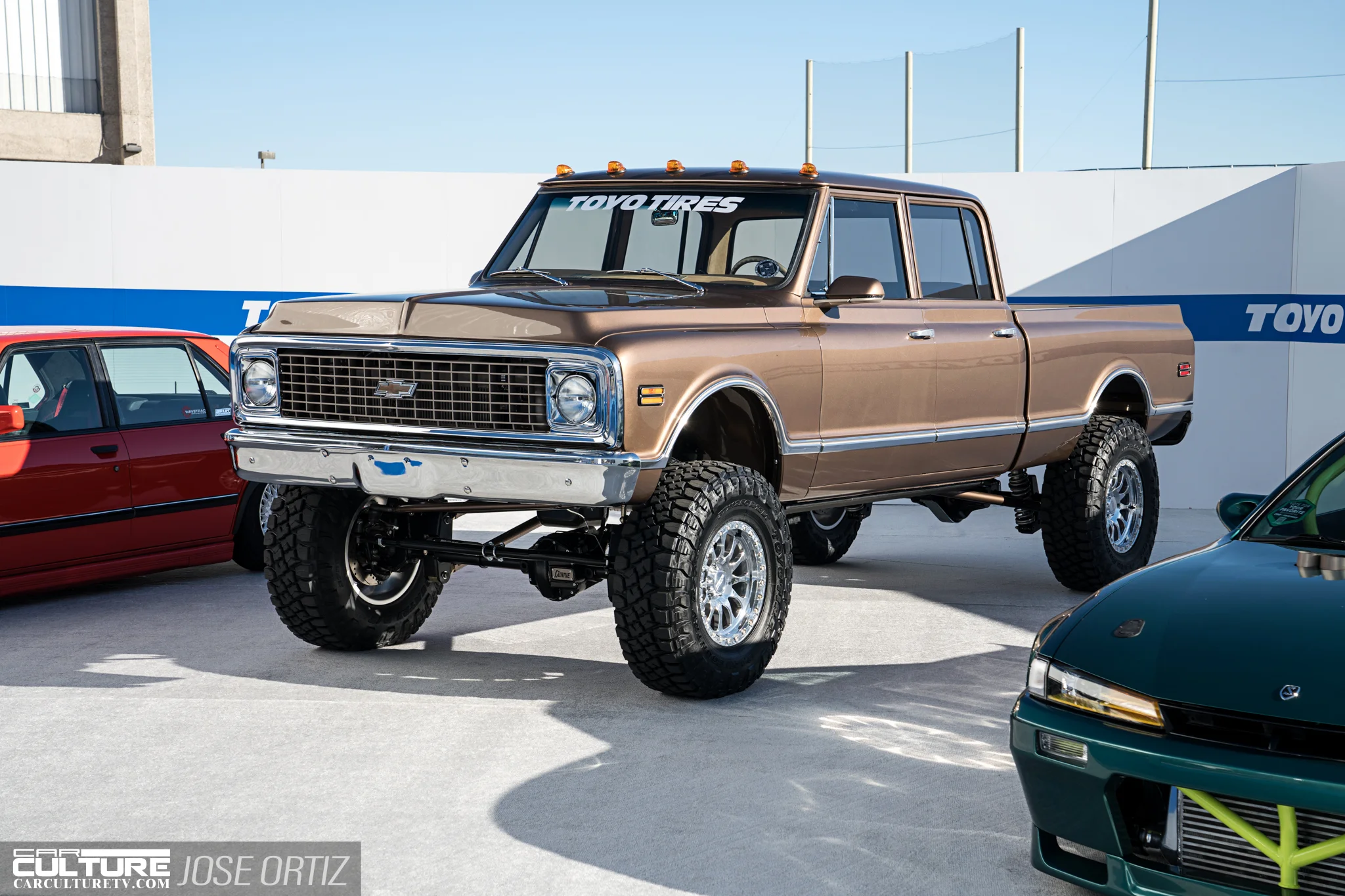
The red NSX widebody with its full aero package and large GT style rear wing represented the Honda faithful, and the slammed 300SEL wit a chopped top, suicide doors, turbine wheels poking thru the headlights, and fully dressed in a Group 5 style widebody racer with a caged interior showed that the Treadpass range spans genuine eras of car culture without forcing them to apologize for coexisting. The early ’70s Chevy crew cab in champagne paint, lifted and sitting on polished wheels, was the kind of build that earns a longer look the closer you get. The truck world belongs in this conversation as much as anything else on the floor.
Battle of the Builders
The competition lived in North Hall all week, narrowing from hundreds of entries to 40, then 12, then four. The format puts the final decision in the hands of the top 12 finalists themselves, a peer-judged outcome that carries real weight because of it.
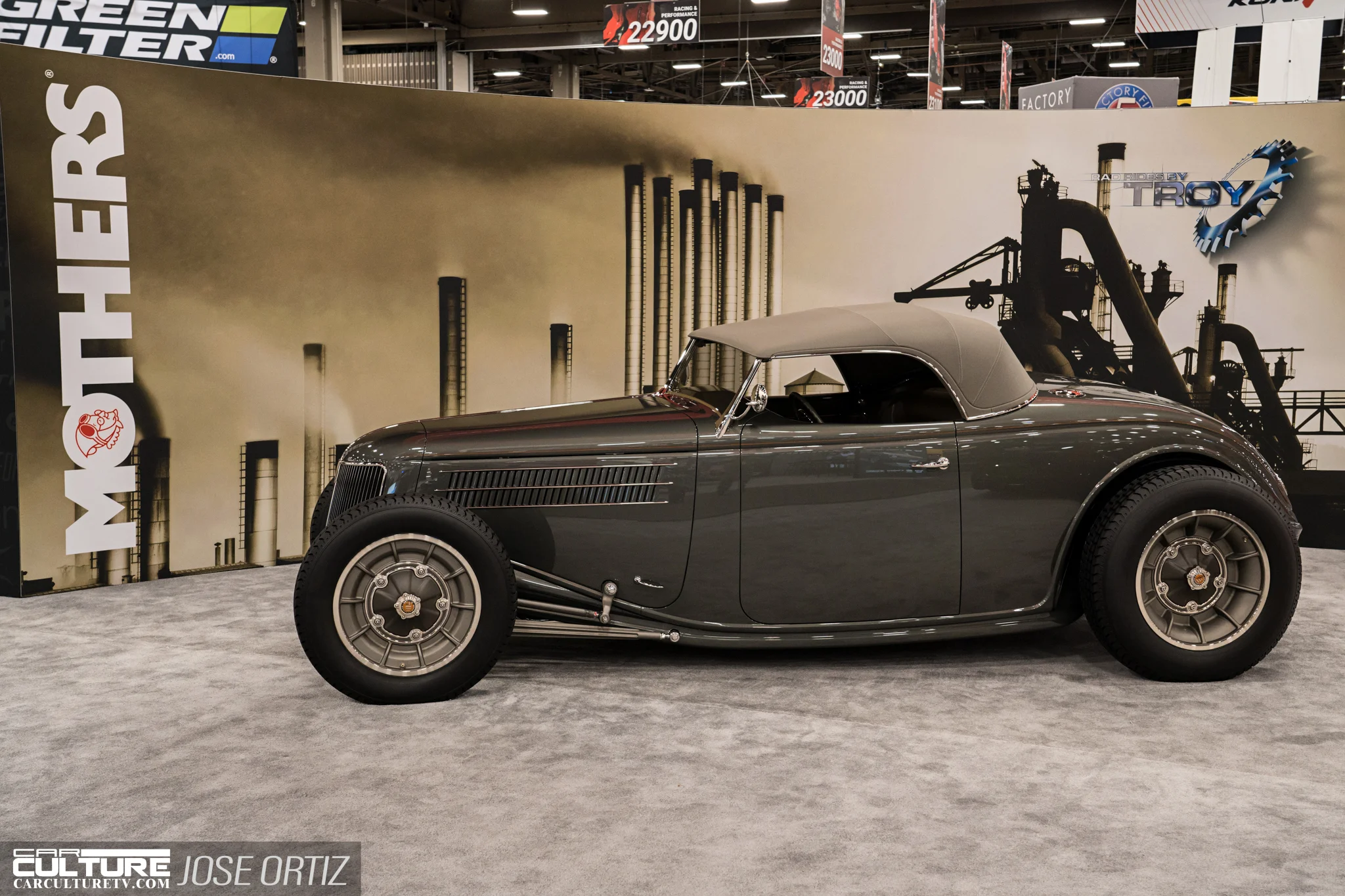
The winner was Troy Trepanier’s 1936 Ford Roadster, called “Fenderless,” completing his second Battle of the Builders title eight years after his first in 2017. The car is entirely scratch-built. Every major component fabricated in-house at Rad Rides by Troy in Manteno, Illinois: body, chassis, suspension, all machined parts. The engine is a 1957 McCullough-supercharged 312-cid Ford Y-block paired with a Bowler 4R70W transmission and a quick-change rear axle. The finish is a modified Porsche Aventurine Green Metallic, chosen specifically because it radiates rather than shouts. Trepanier’s team handled the bodywork, paint, and interior entirely in-house. When a car is described as scratch-built, it usually means most of it. Here it means all of it.
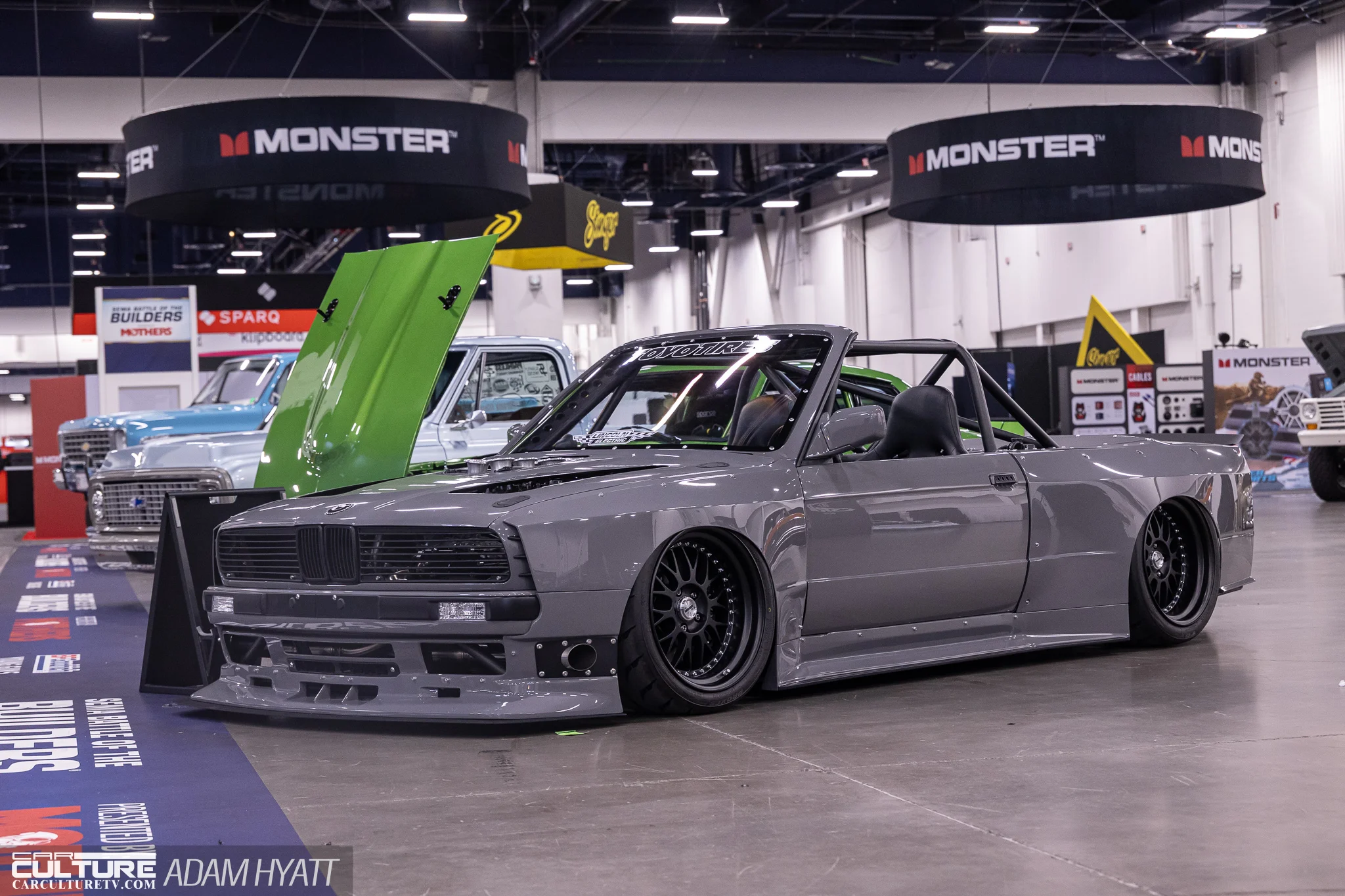
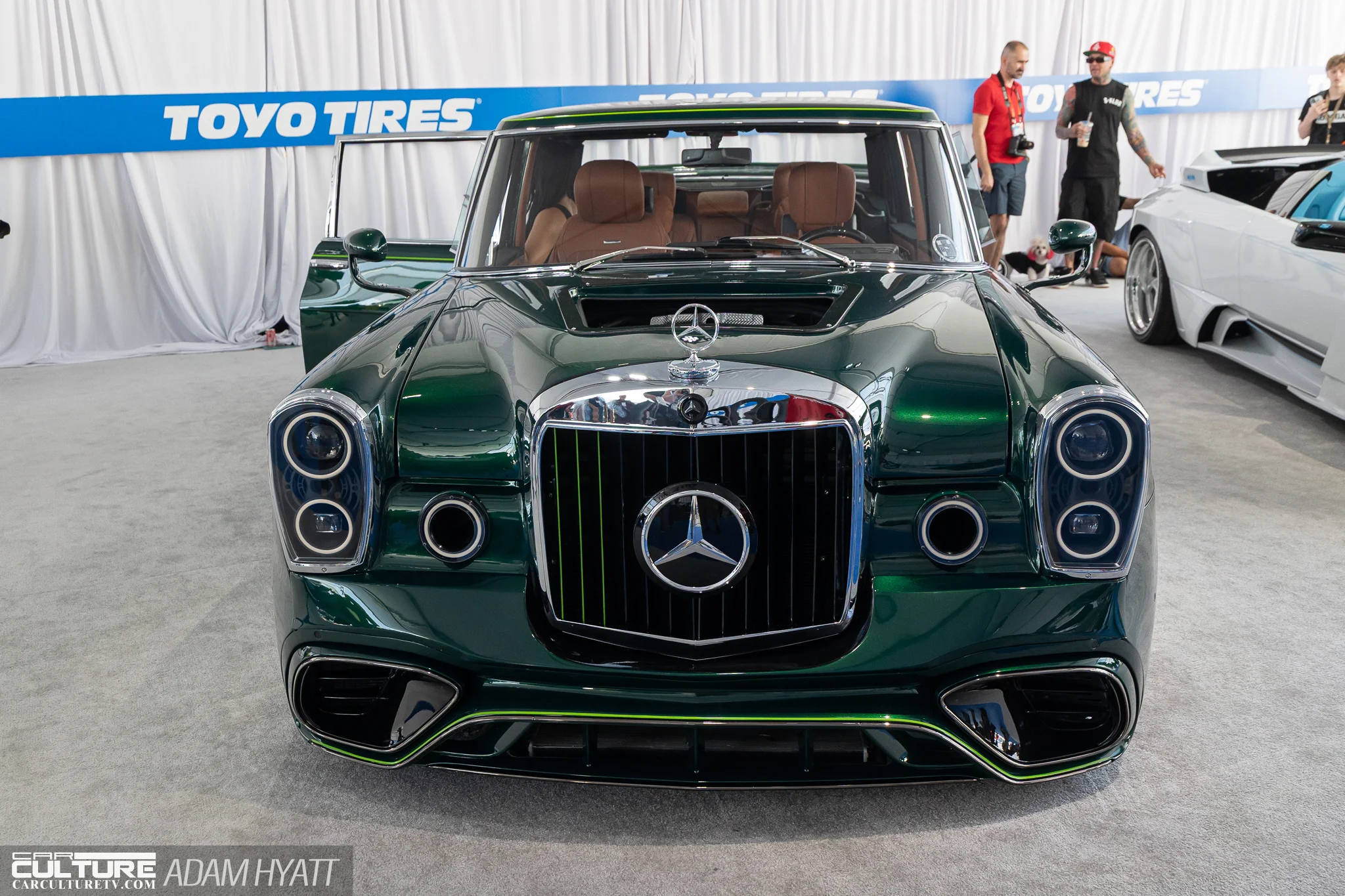
The category winners surrounding him were equally legitimate. Cameron Cocalis brought his ’88 BMW E30 325i, a car documented in the enthusiast community for years that earned its place on the BOTB stage through sustained commitment that short-timeline builds can’t replicate. John Sarkisyan’s ’71 Mercedes-Benz 600 Pullman arrived wearing a complete modern S63 AMG platform underneath its classic body, old world presence with contemporary capability.
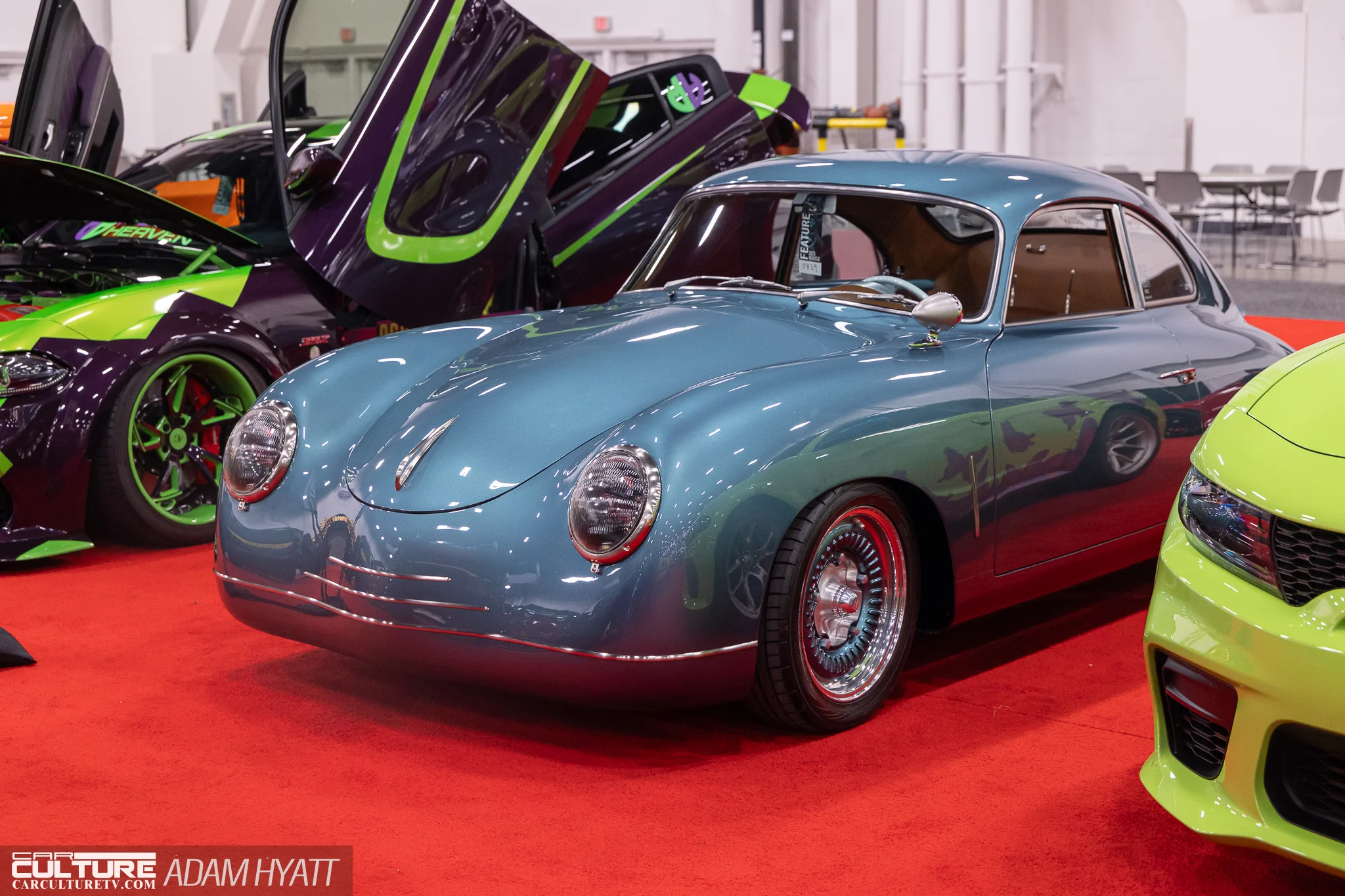
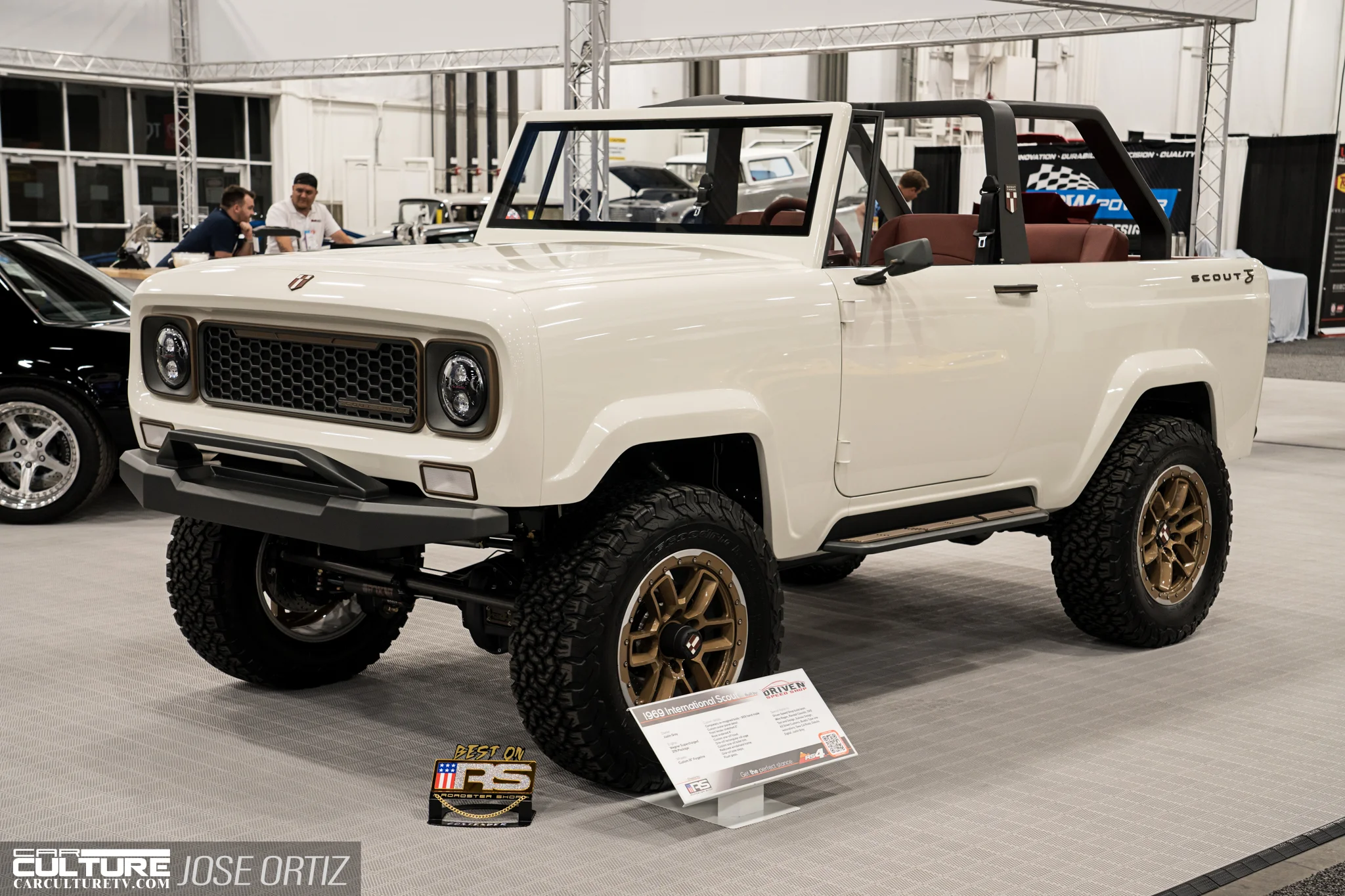
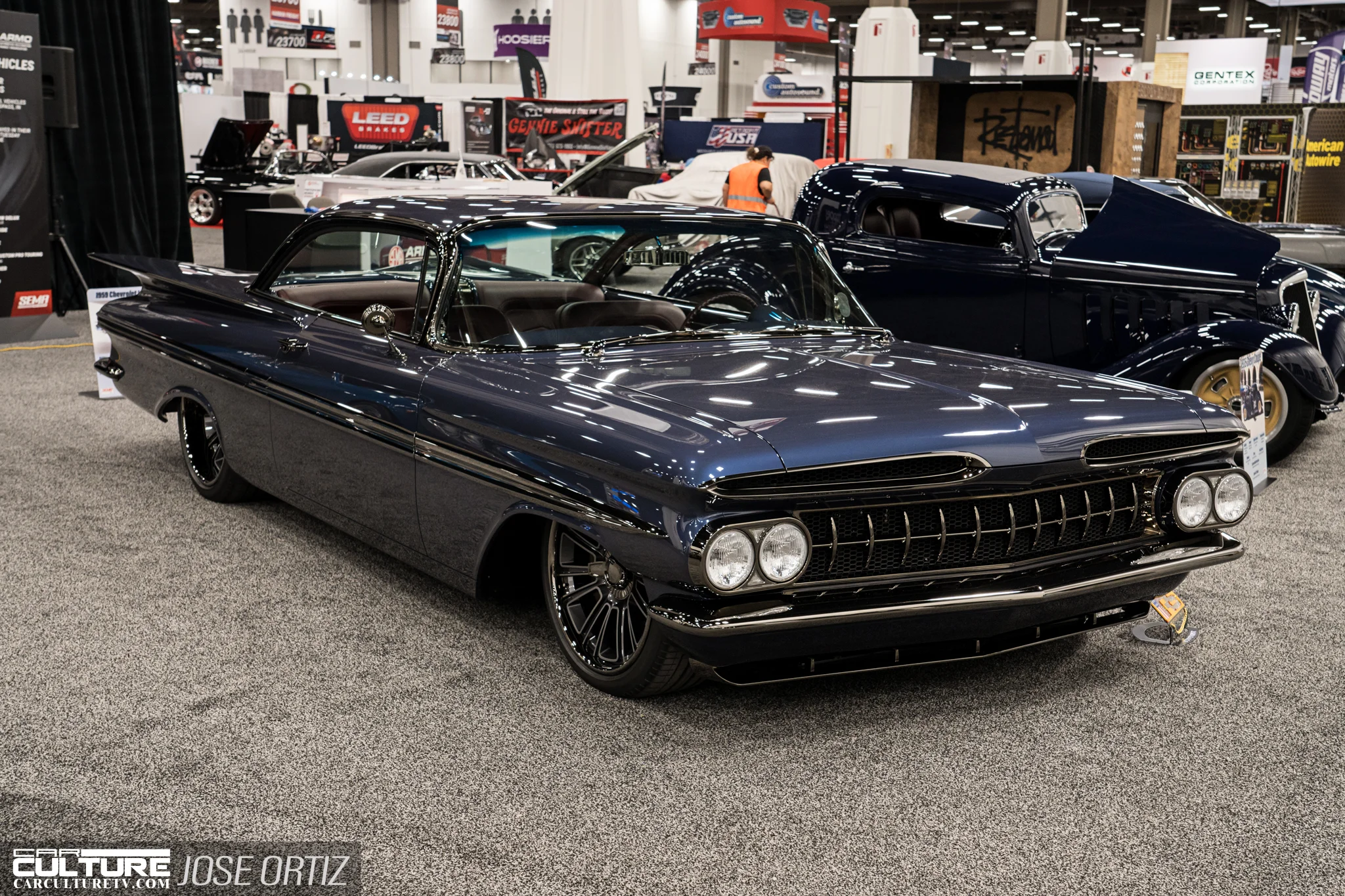
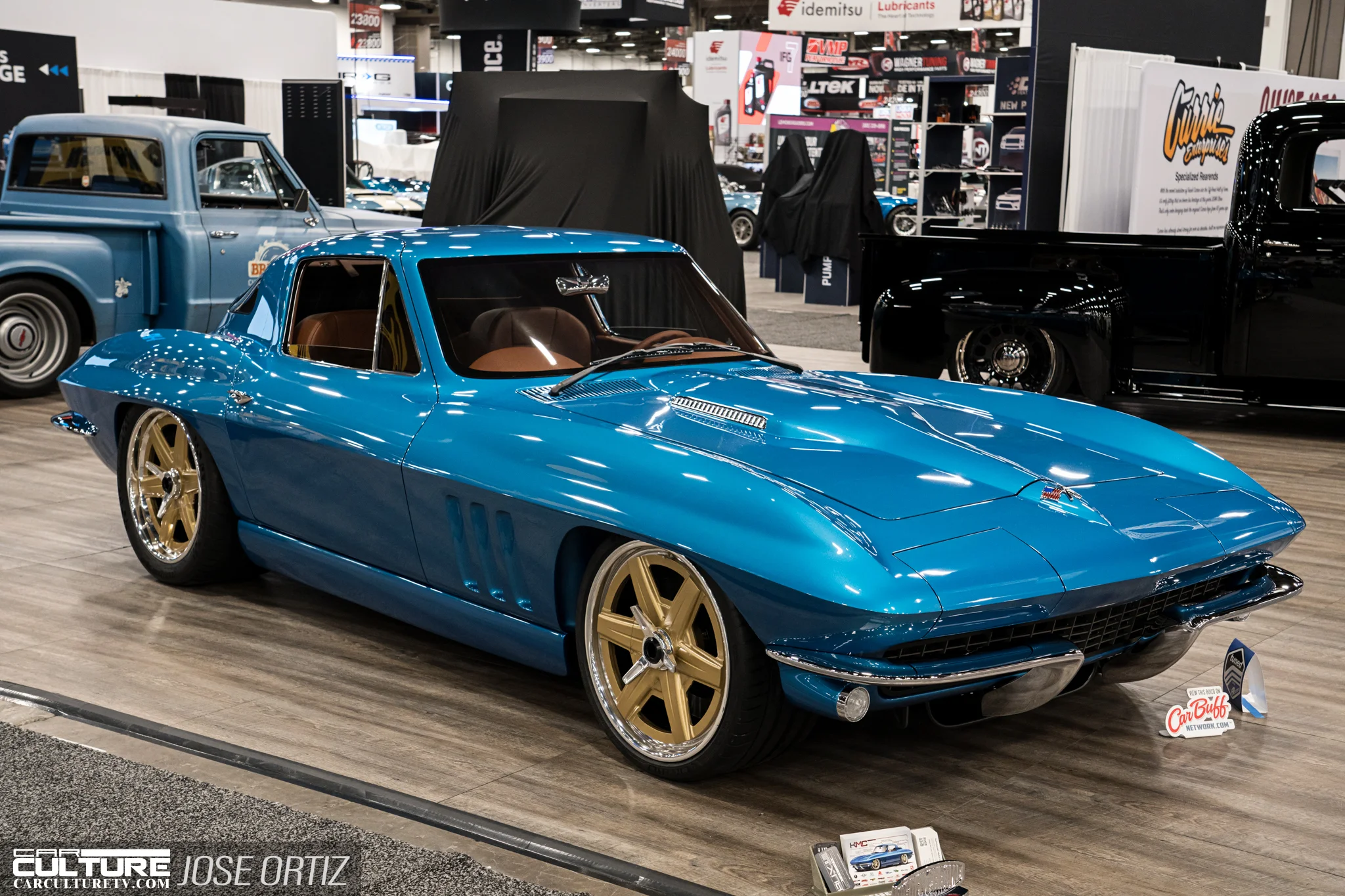
Tim Franklin’s ’60 Porsche Custom 356 took the Sport Compact/Import Performance category after a transformation that started with a car in genuinely terrible condition and finished with contoured bodywork and rolled rocker panels that reframed the original silhouette entirely. Michael Dascoli’s ’69 International Scout, Troy Gudgel’s ’59 Chevrolet Impala loaded with custom sheetmetal, and Kyle Kuhnhausen’s ’66 Corvette, a build the community had been following for years, rounded out the finalists we were able to document.
Thomas Dickerson’s ’67 C10 won Young Guns with a build he completed entirely on his own, which in competition context is always the detail that lands hardest.
What It Signals
SEMA 2025 said a few things clearly. The builder community is not slowing down, it’s getting more precise. The craft bar keeps moving. Technology is no longer a separate conversation from enthusiast culture; it’s embedded in it. Hydrogen, electric, and hybrid powertrains showed up not as novelties but as genuine engineering statements from builders and OEMs who’ve done the work.
The creator economy and the automotive industry have now fully merged at the show floor level. Brands build spaces for content. Creators fill them. The audience at home sees SEMA through those lenses more than through any traditional media outlet. That’s not a warning, it’s just the current reality, and the brands that understand it are building better booths because of it.
The global reach of the show continues to expand. Over 160,000 attendees from 140 countries across more than 2,400 exhibiting brands. These numbers reflect a community that has long outgrown any one country’s definition of car culture.
We’ll be back in 2026. The ideas that sparked this week are already in a garage somewhere, taking shape.
For past SEMA coverage, browse here.
Full Gallery Below.


