
More Than a Movie Museum
The Petersen Automotive Museum sits on Wilshire Boulevard in the Miracle Mile district of Los Angeles, its stainless steel ribbon exterior making it unmistakable from the street. From the outside it announces itself as something serious. Walk through the doors and it delivers on that promise in every direction.
Most people showing up right now are coming for the Fast and Furious exhibit, and they should be. But leaving after one floor would be a significant mistake. The Petersen is a multi-story institution housing hundreds of vehicles across permanent and rotating galleries, and its scope goes well beyond any single exhibit. This building is a document of automotive history in the broadest possible sense: from the earliest horseless carriages to modern hypercars, from Hollywood dream machines to motorcycles, from concept cars that never reached production to race cars that rewrote the record books.
Coming in as a photographer and a lifelong enthusiast, the challenge is not finding something worth shooting. It is choosing what to stop for. What follows is one of the most complete guides to the current Petersen experience you will find anywhere. Buckle up!
If You Came for Fast and Furious, Read This First
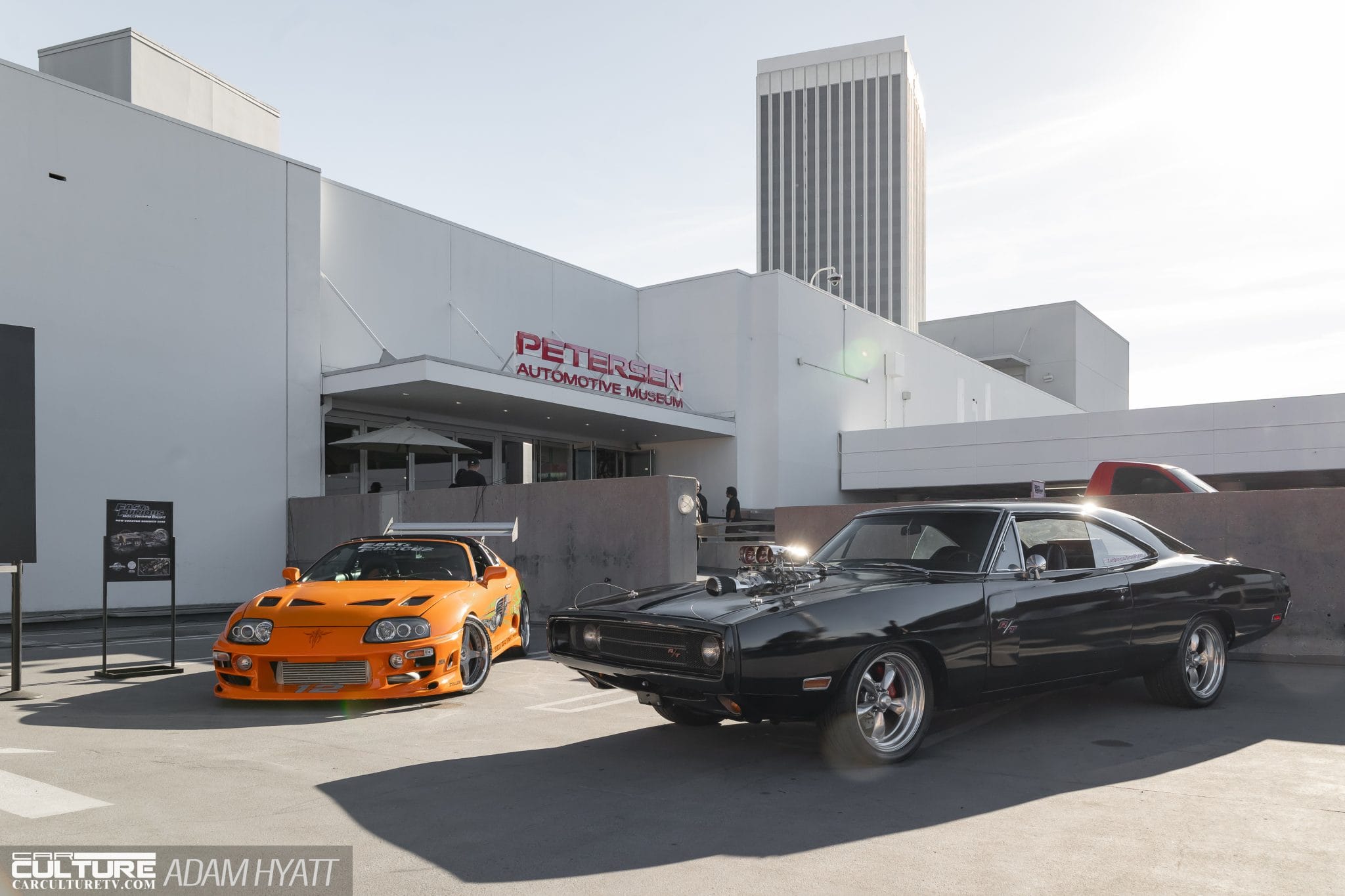
Before diving into the rest of the museum, a note for anyone whose primary reason for visiting is the franchise exhibit. We covered it in full detail in a separate article, including every major car on the floor, the origin story of how that film reshaped the automotive industry, and a full breakdown of what makes this particular collection worth the trip. You can read it here: A Fast and Furious Legacy: 25 Years of Automotive Icons at the Petersen.
What follows is everything else. And there is a lot of it.
The History Floors: From Horseless to Hypercar
The Petersen does not let you forget how recently all of this started. The early galleries trace the actual origins of the automobile, and the machines on display make the concept of a 1,250-horsepower hypercar feel almost incomprehensible by contrast.
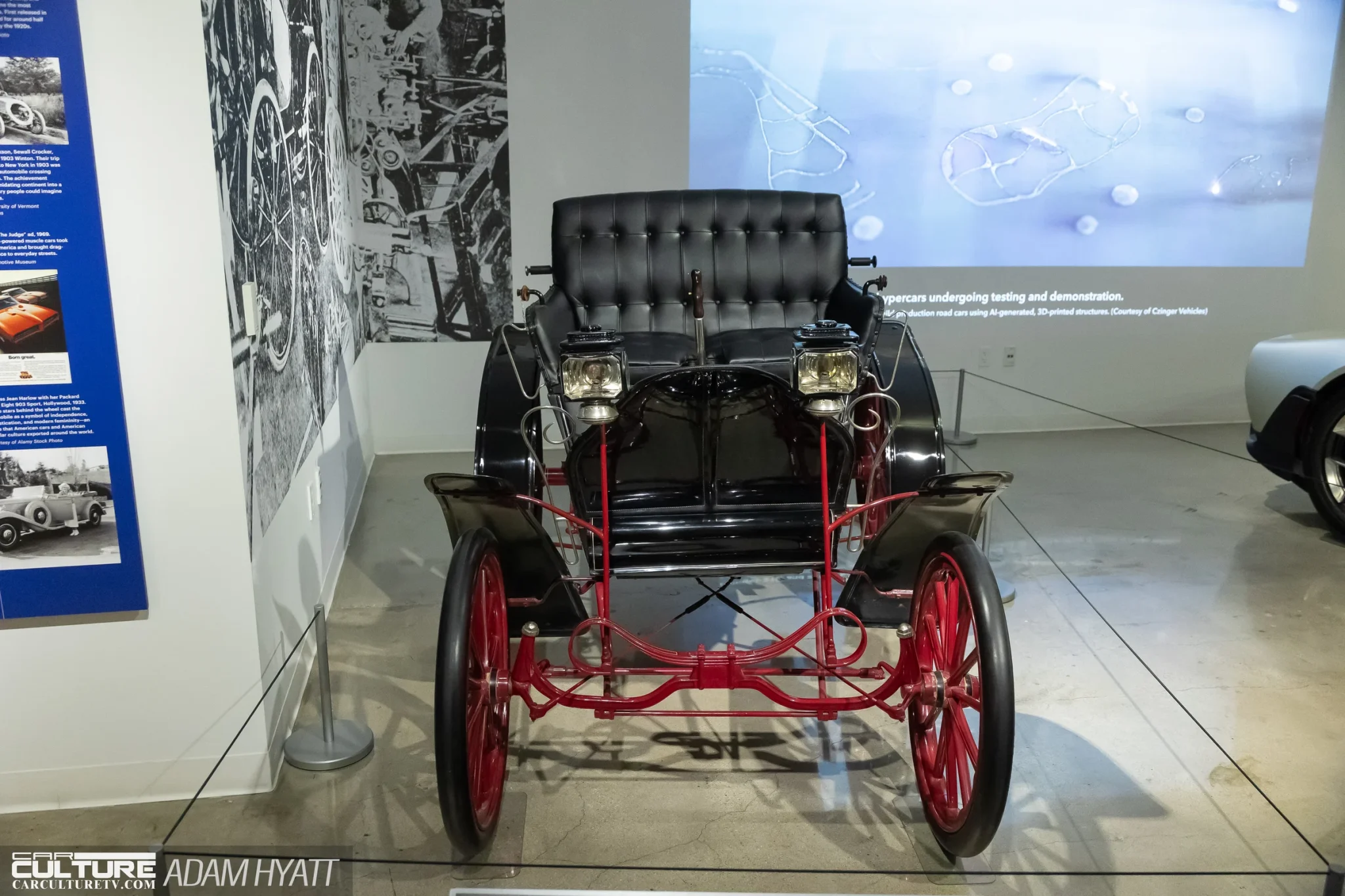
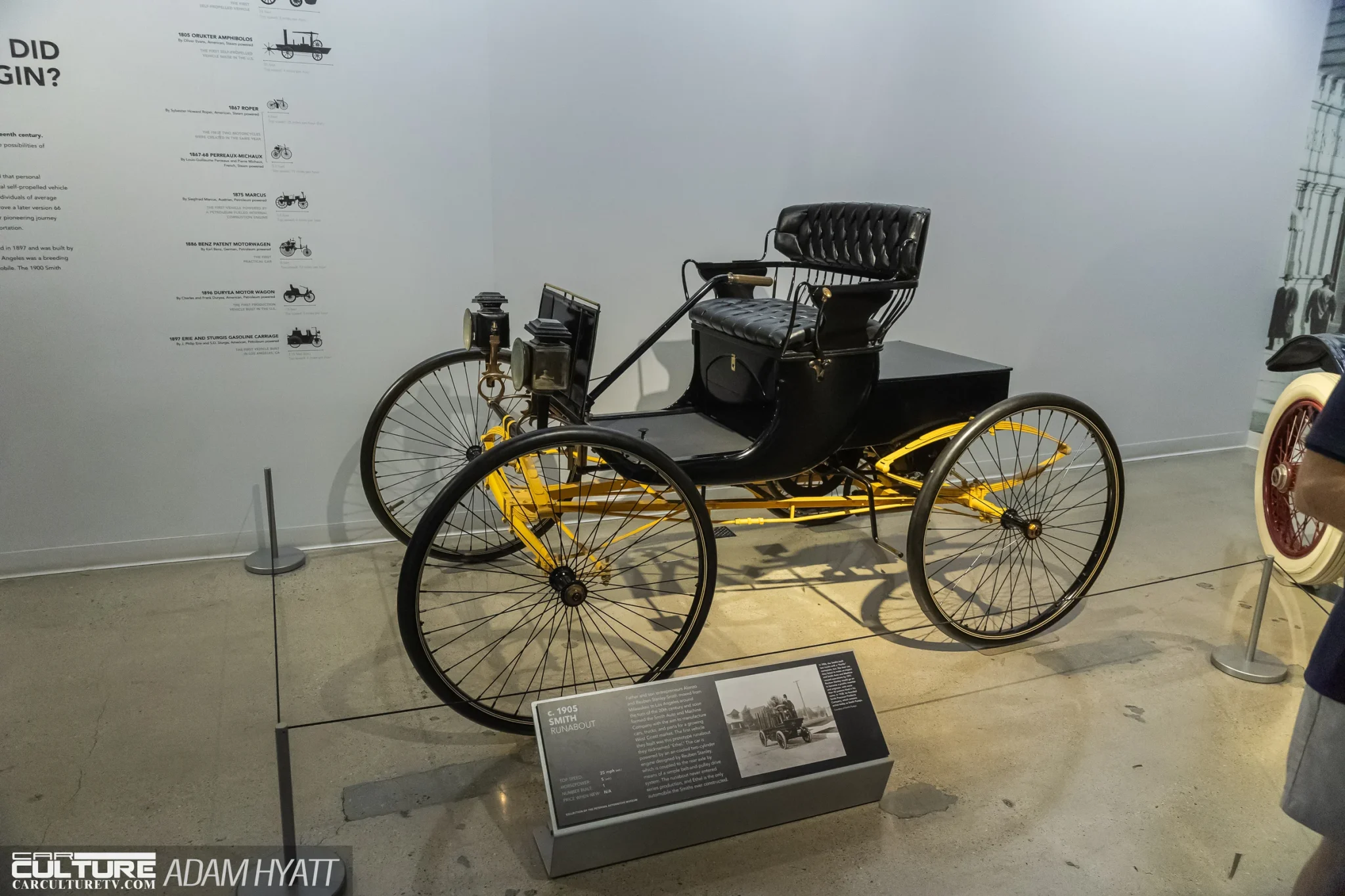
The c.1900 Duryea Phaeton represents the Duryea Motor Wagon Company, the first in the United States to produce automobiles in a planned production run. Nearby sits the c.1905 Smith Runabout nicknamed “Ethel,” the only automobile ever constructed by the Smith Auto and Machine Company of Los Angeles. Father and son entrepreneurs built it as a prototype for a growing West Coast market they never reached. Reuben Stanley Smith went on to file more than 40 patents and found what is today Smith Pumps. Ethel is the only automobile that carries their name, and it belongs to the Petersen’s own collection.
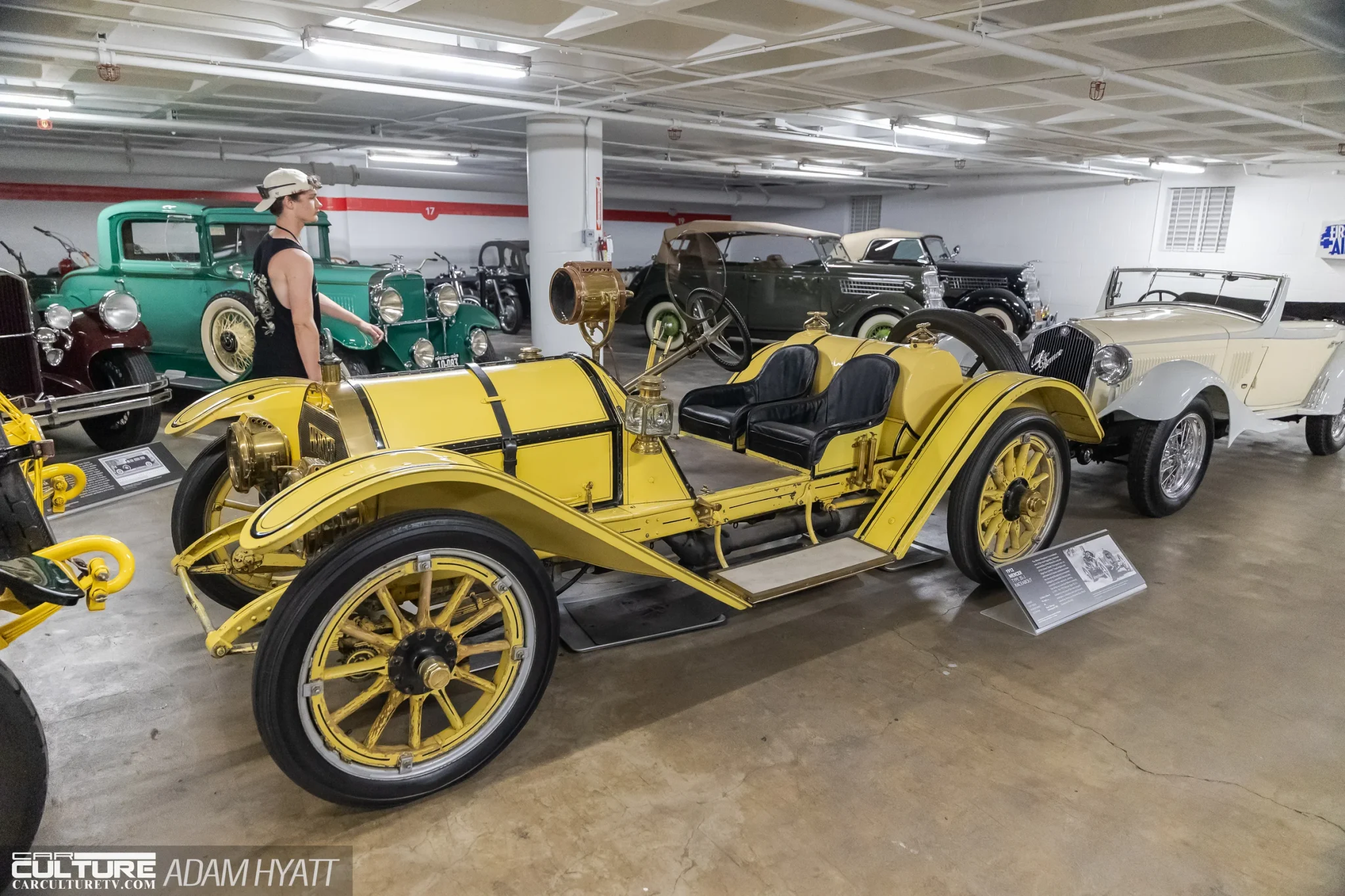
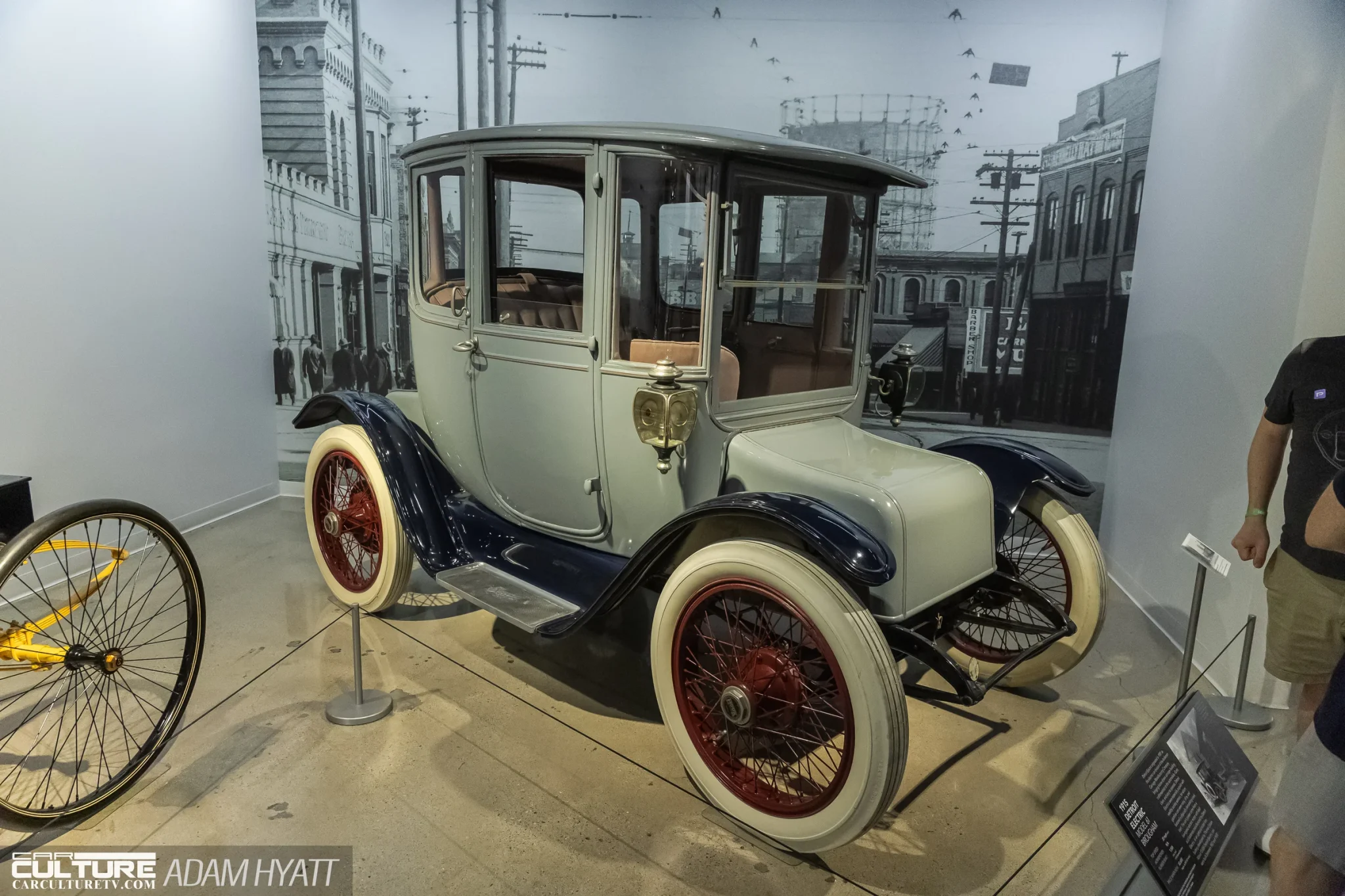
The 1913 Mercer Type 35-J Raceabout is considered one of the most legendary American automobiles of the Brass Era and one of America’s first true sports cars. This particular example was formerly owned by American Formula One World Champion Phil Hill. The 1915 Detroit Electric Model 61 Brougham offers something that feels surprisingly contemporary standing next to these gasoline pioneers. Detroit Electric produced about 13,000 electric cars between 1907 and 1939, popular particularly with wealthy women for whom the gasoline car’s noise, smell, and hand-crank start were unwelcome. Powered by lead-acid batteries or an optional nickel-iron battery developed by Thomas Edison, the EV conversation feels considerably less new after spending a few minutes with this car.
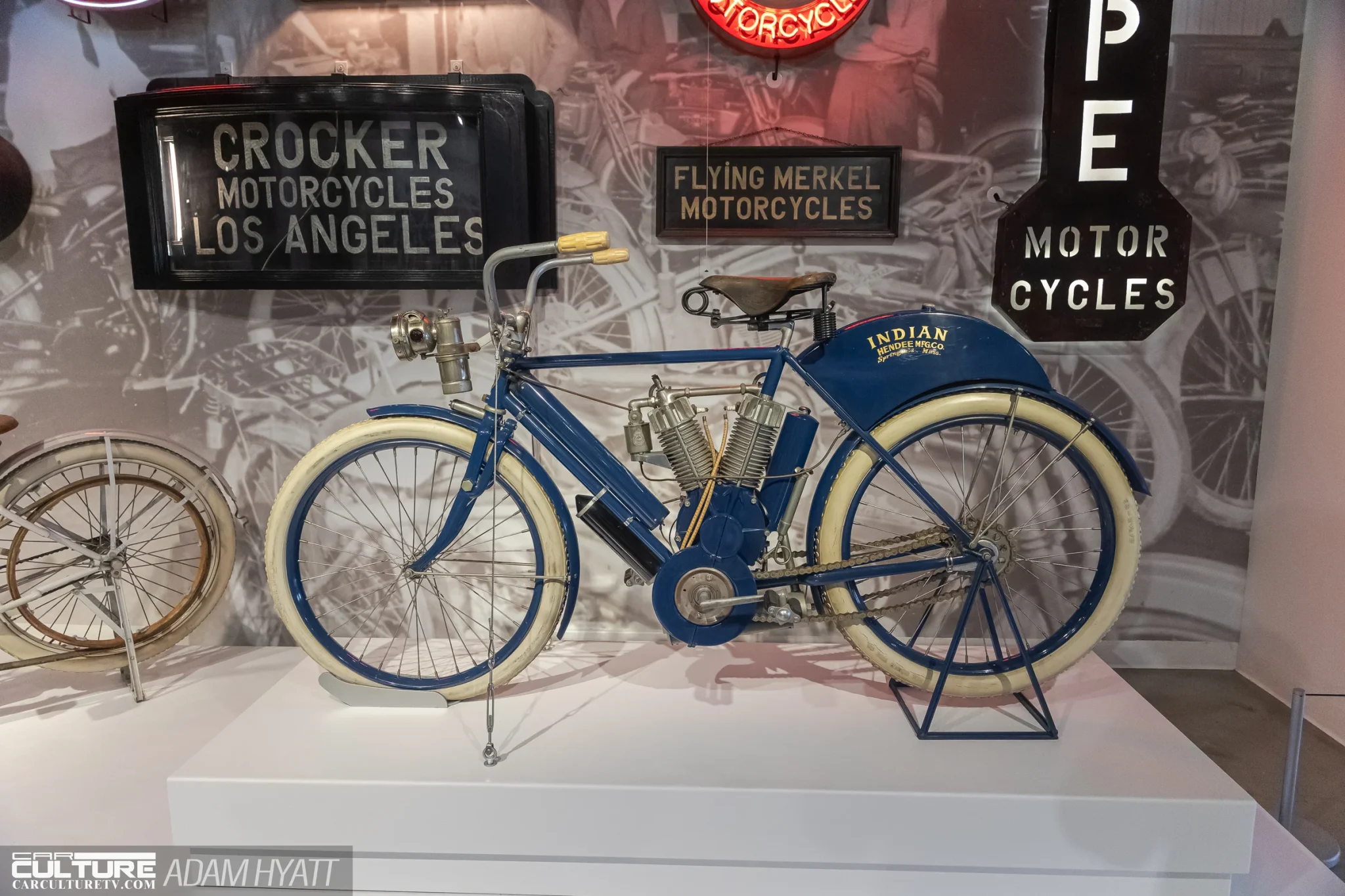
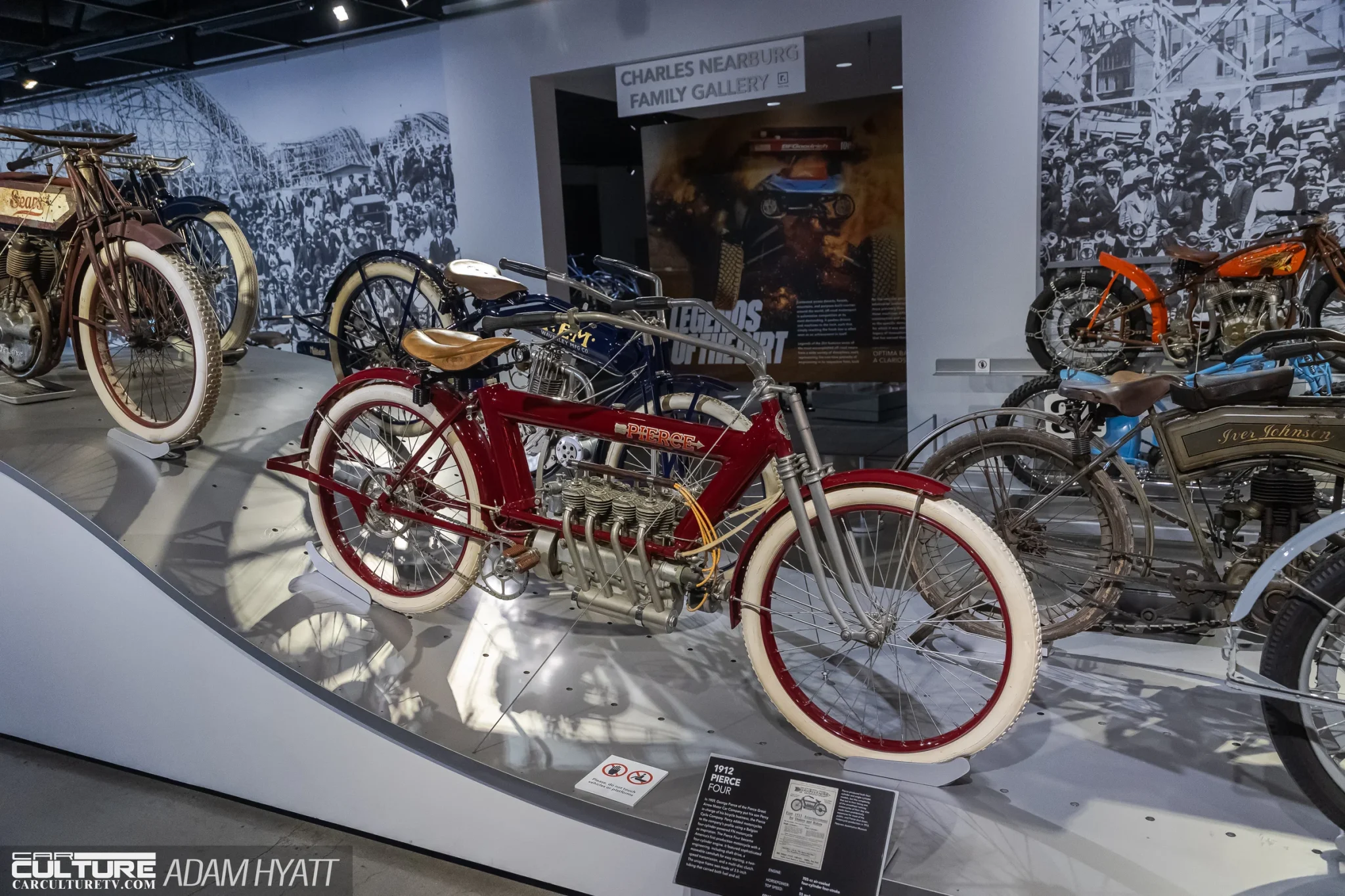
The motorcycle gallery earns its place alongside the cars. The Richard Bunch collection anchors this section with machines spanning the form’s entire early history: the 1898 Cleveland Tricycle, one of the first motorcycles with spring-fork suspension; the 1908 Indian Twin, which helped establish the v-twin as America’s preferred engine configuration; and the 1912 Pierce Four, America’s first production motorcycle with a four-cylinder engine. Pierce’s complexity made it exceptional and too expensive for most buyers. They shut down motorcycle production the following year.
Design, Supercars, and the Pursuit of the Impossible
If one section of the Petersen summarizes the museum’s editorial ambition in full, it is the galleries dedicated to automotive design and the supercar era. These floors make the case that car design is as legitimate an art form as anything hanging on a wall.
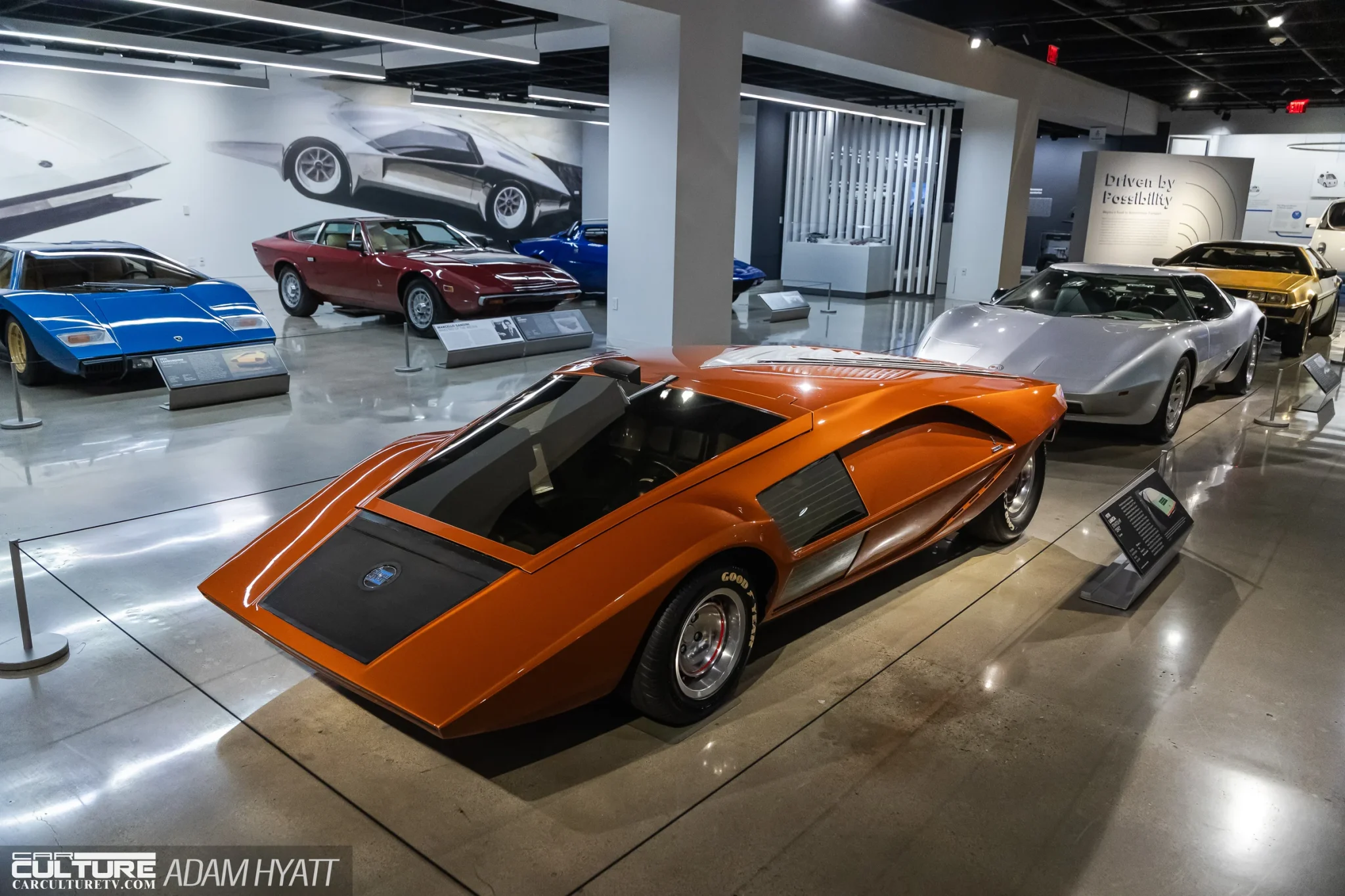
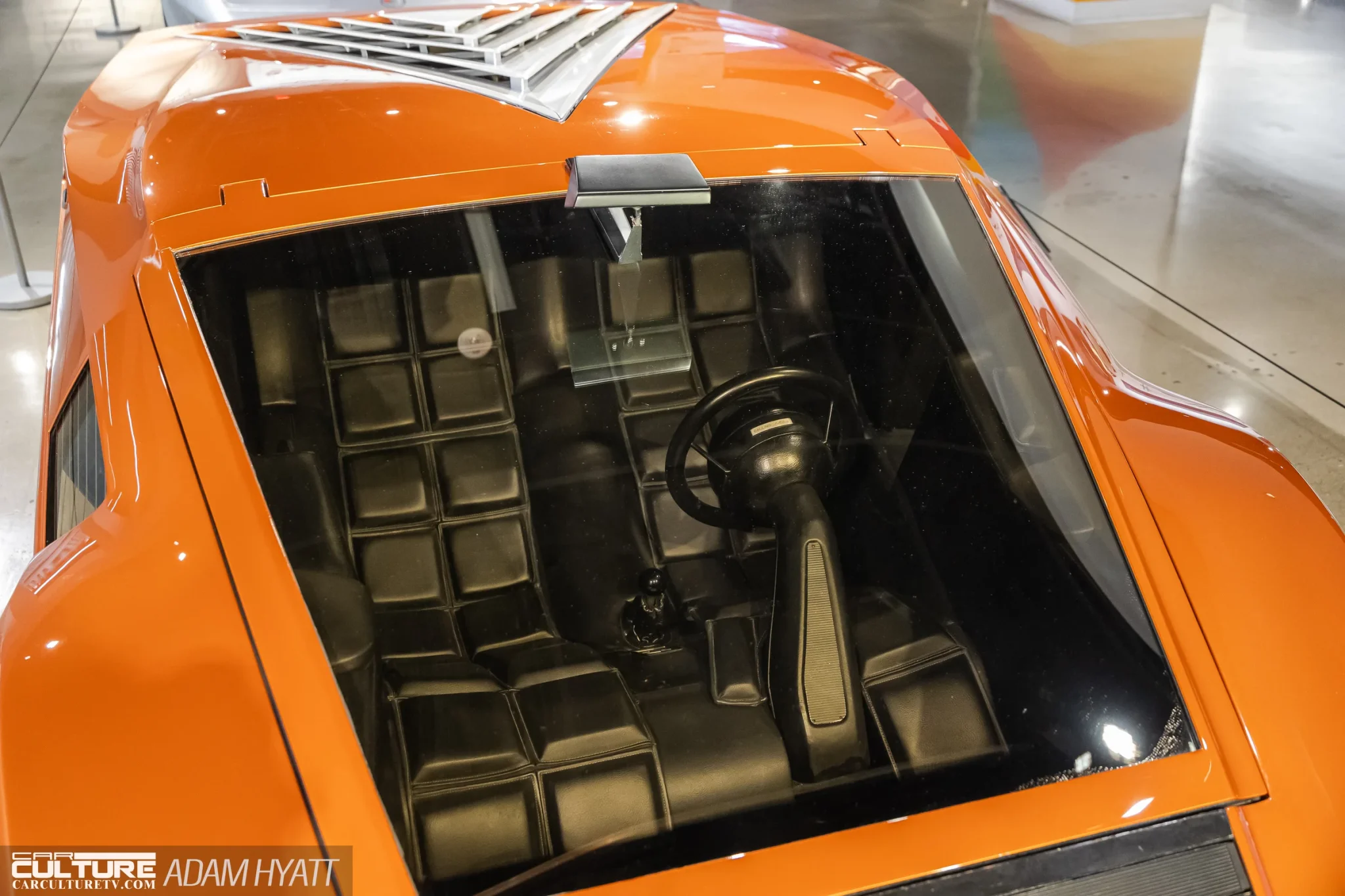
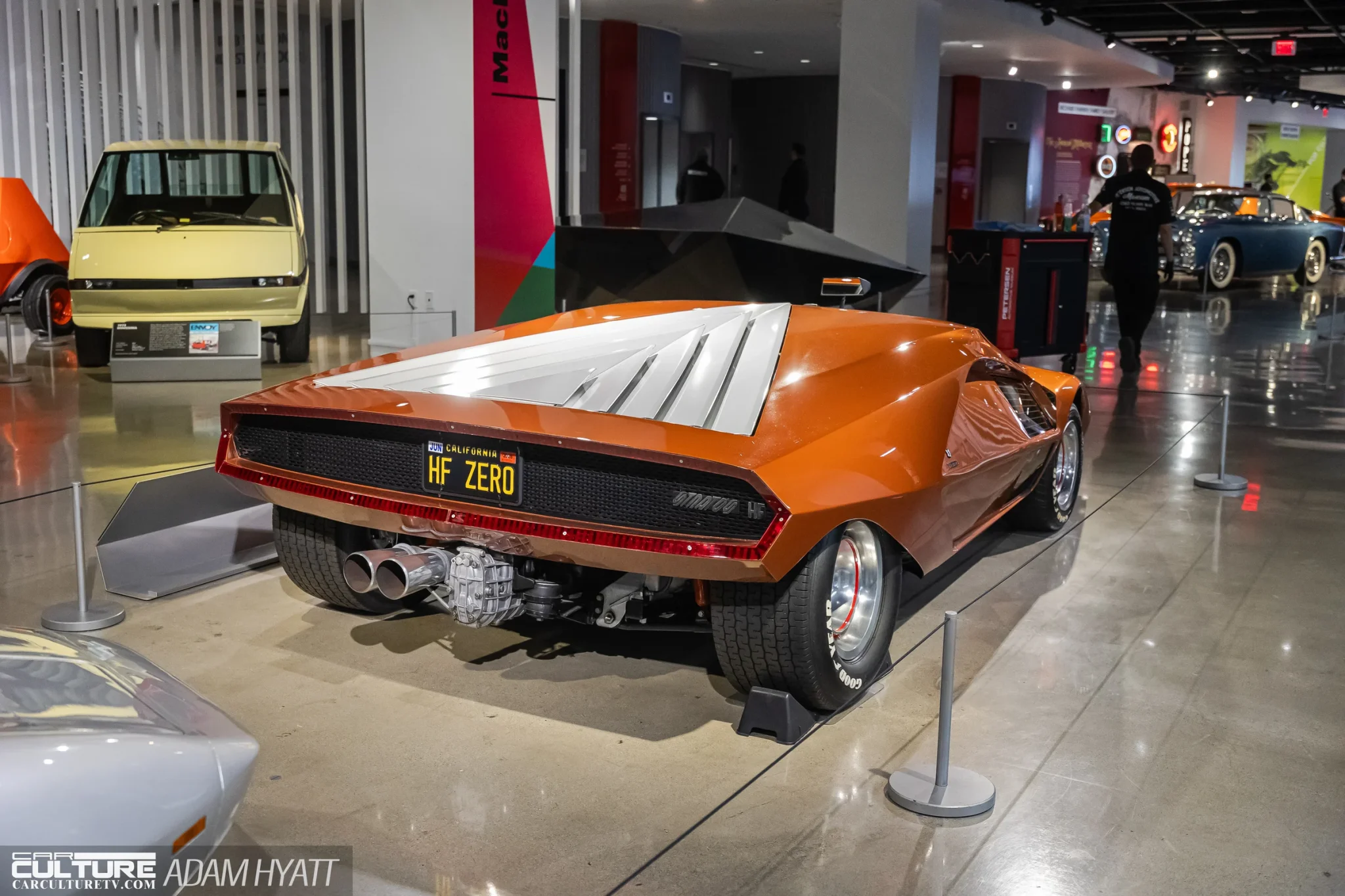
The wedge design gallery is built around a single thread: the work of Marcello Gandini. The 1970 Lancia Stratos HF “Zero” is the purest starting point, standing just 33 inches tall at its highest point with no conventional doors. Passengers enter through the windshield. Designed for Bertone, it is fully functional and one of the most daring applications of wedge design ever executed.
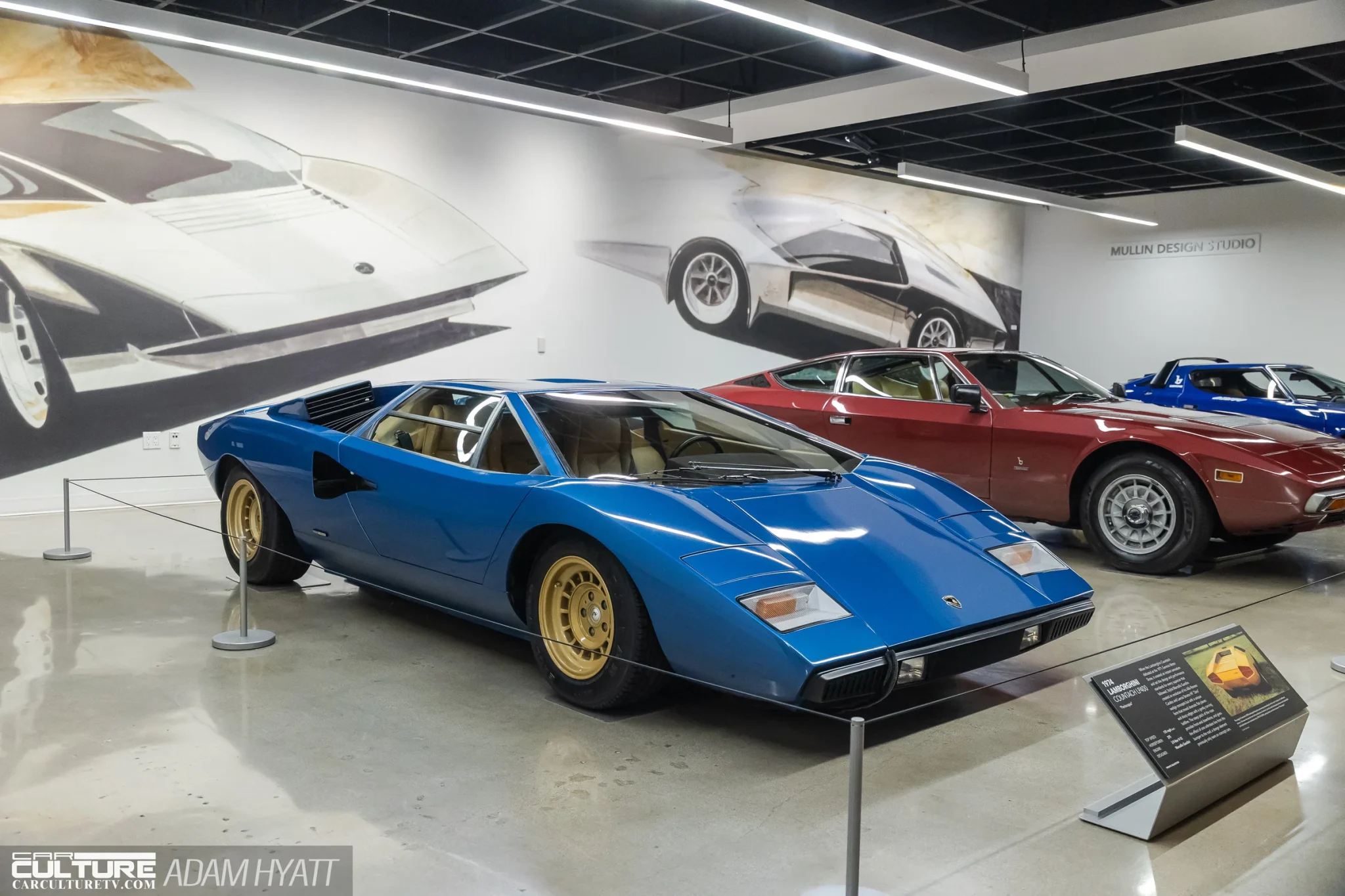
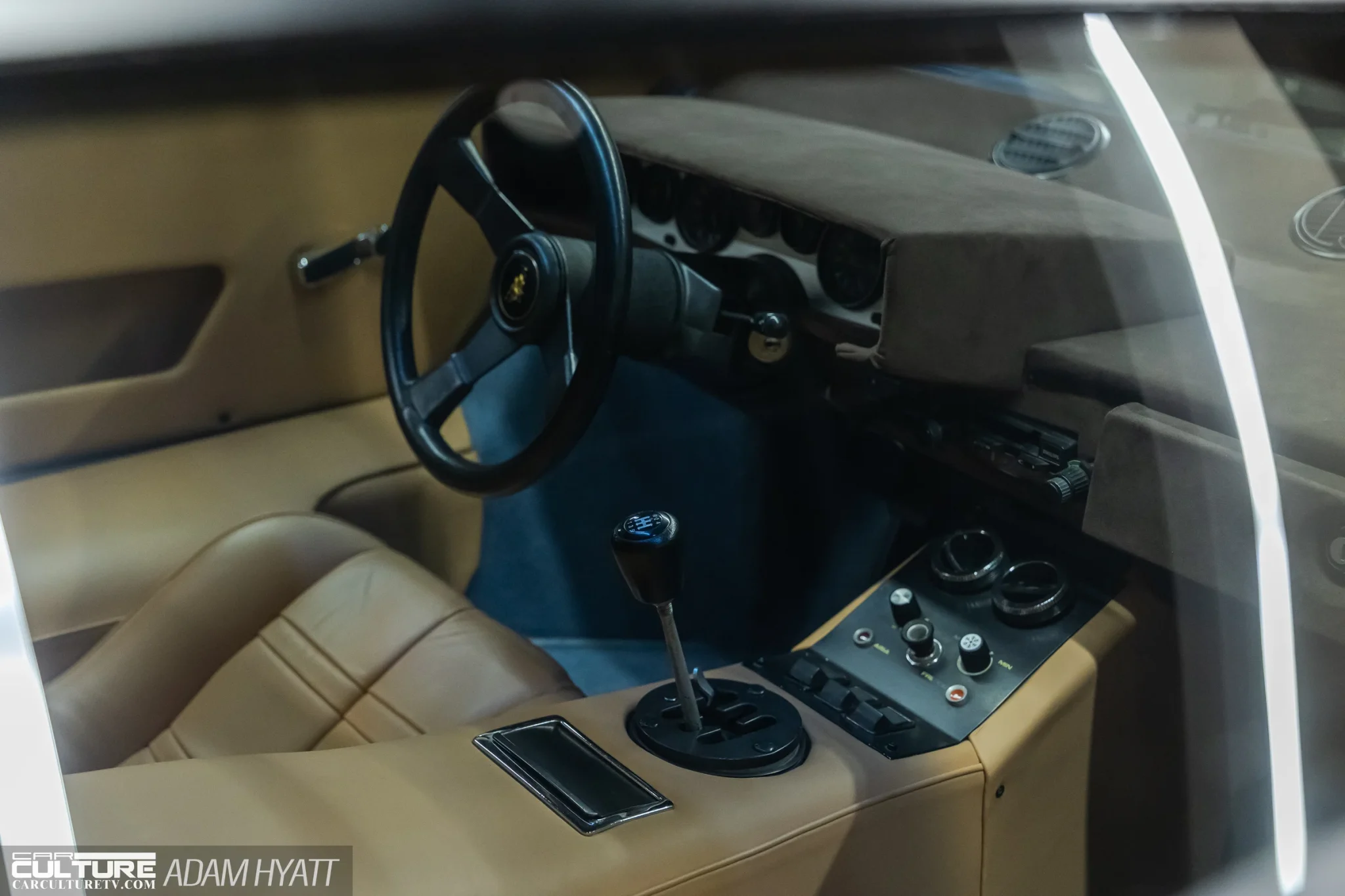
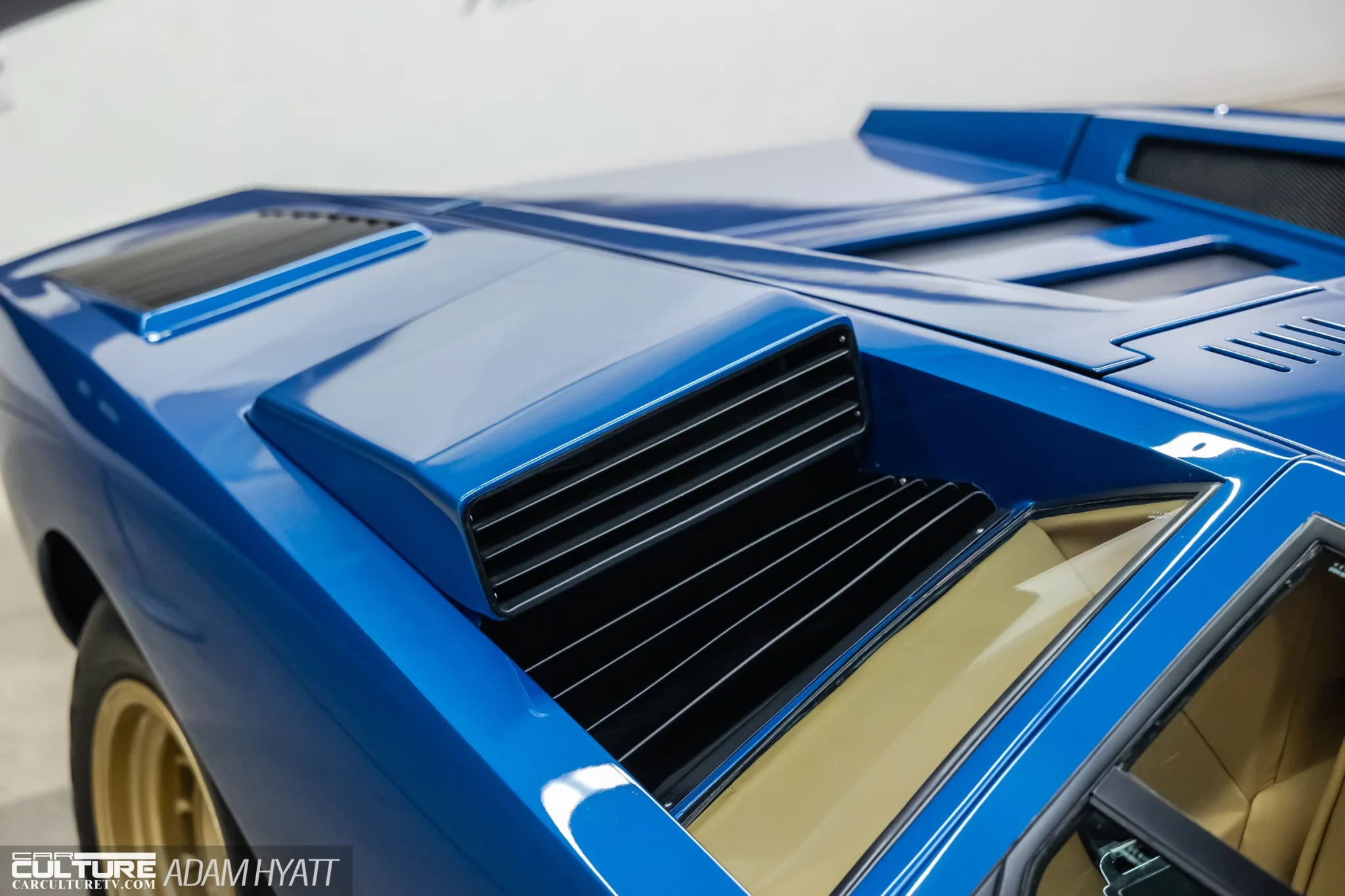
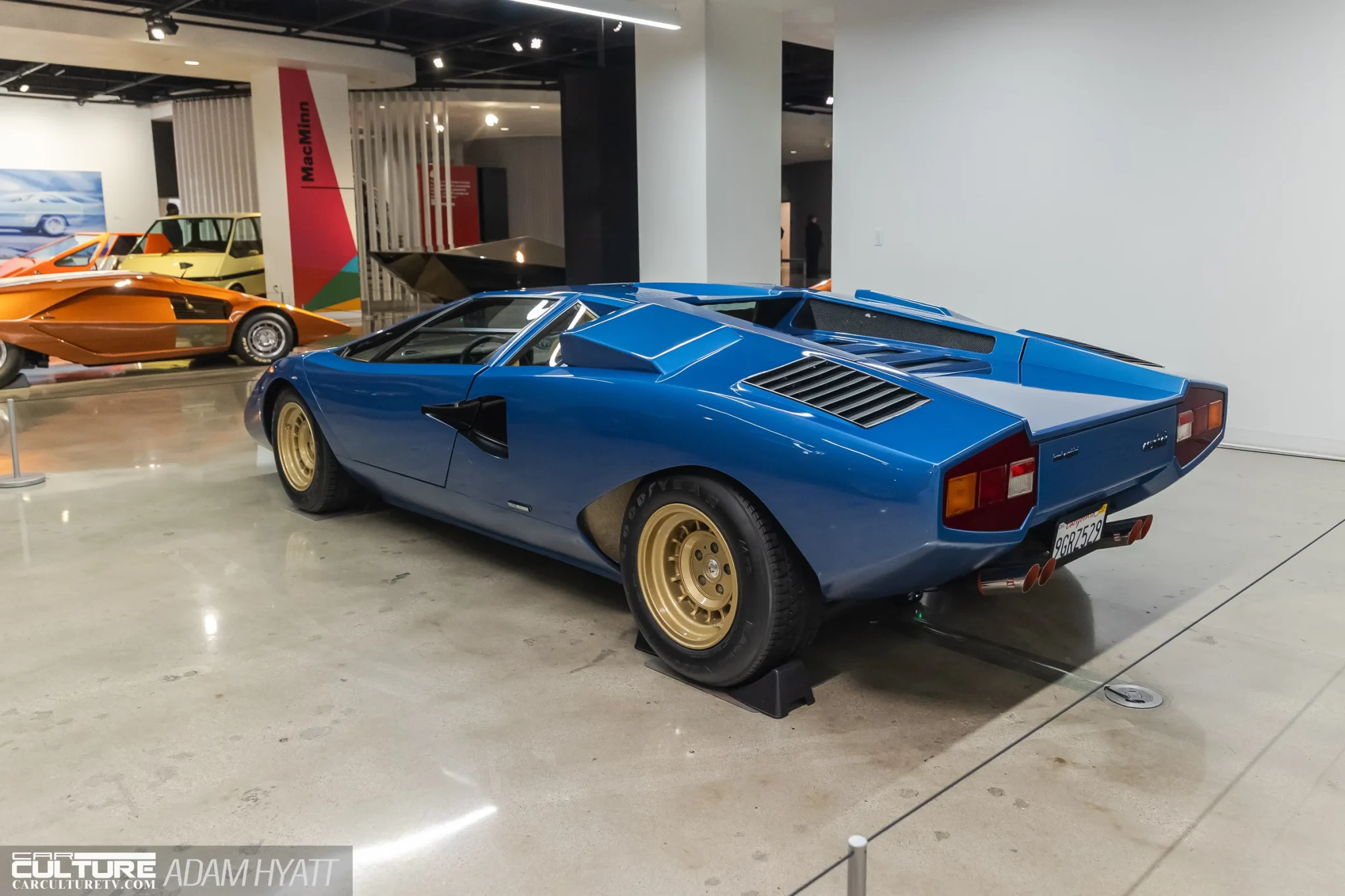
The 1974 Lamborghini Countach LP400 “Periscopio” follows directly, its dramatic flat planes and unbroken roofline producing one of the most recognizable automotive silhouettes in history.
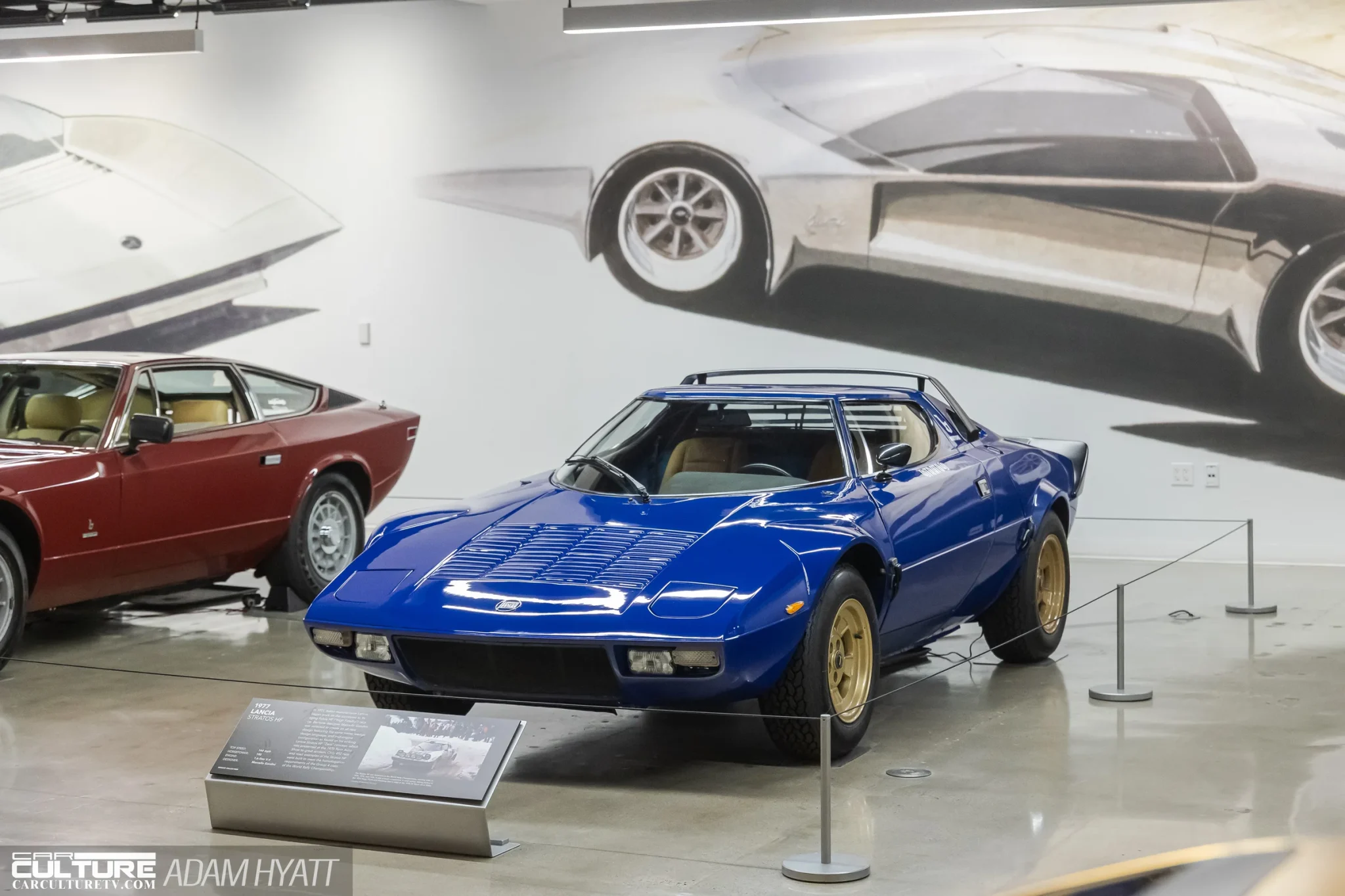
The 1977 Lancia Stratos HF took that same DNA to the World Rally Championship, winning the title in 1974, 1975, and 1976 with only 492 road and race examples built.
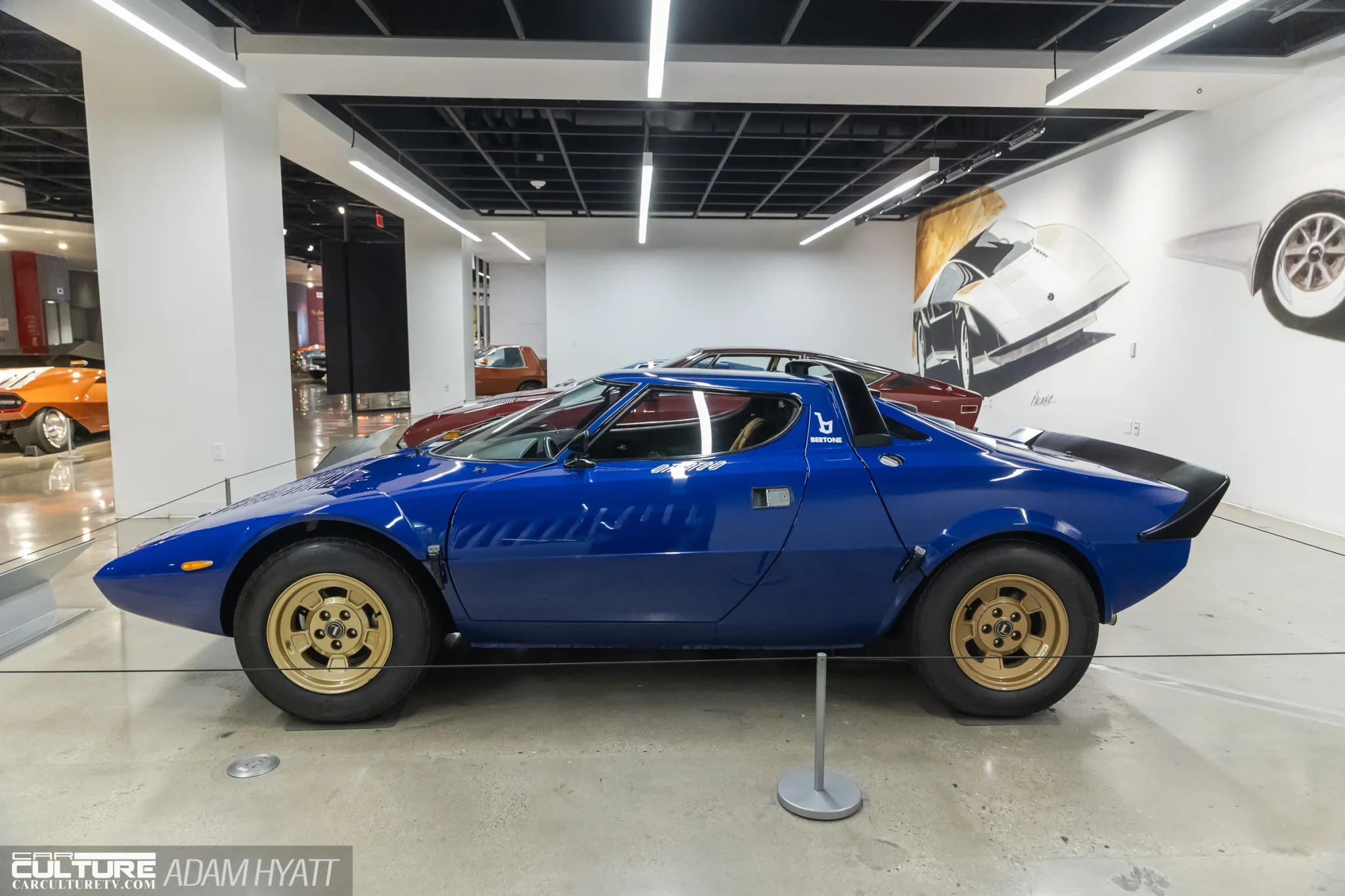
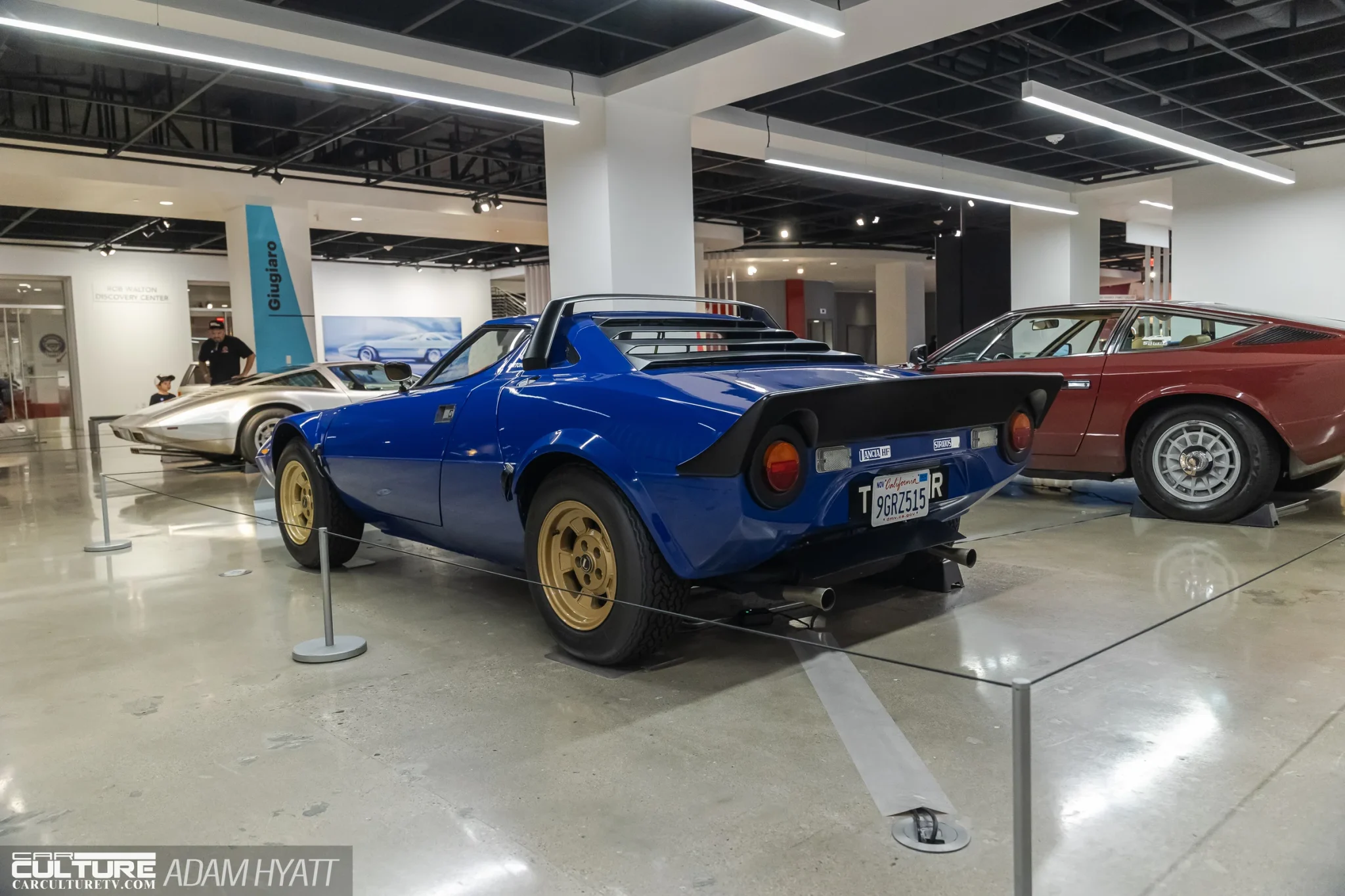
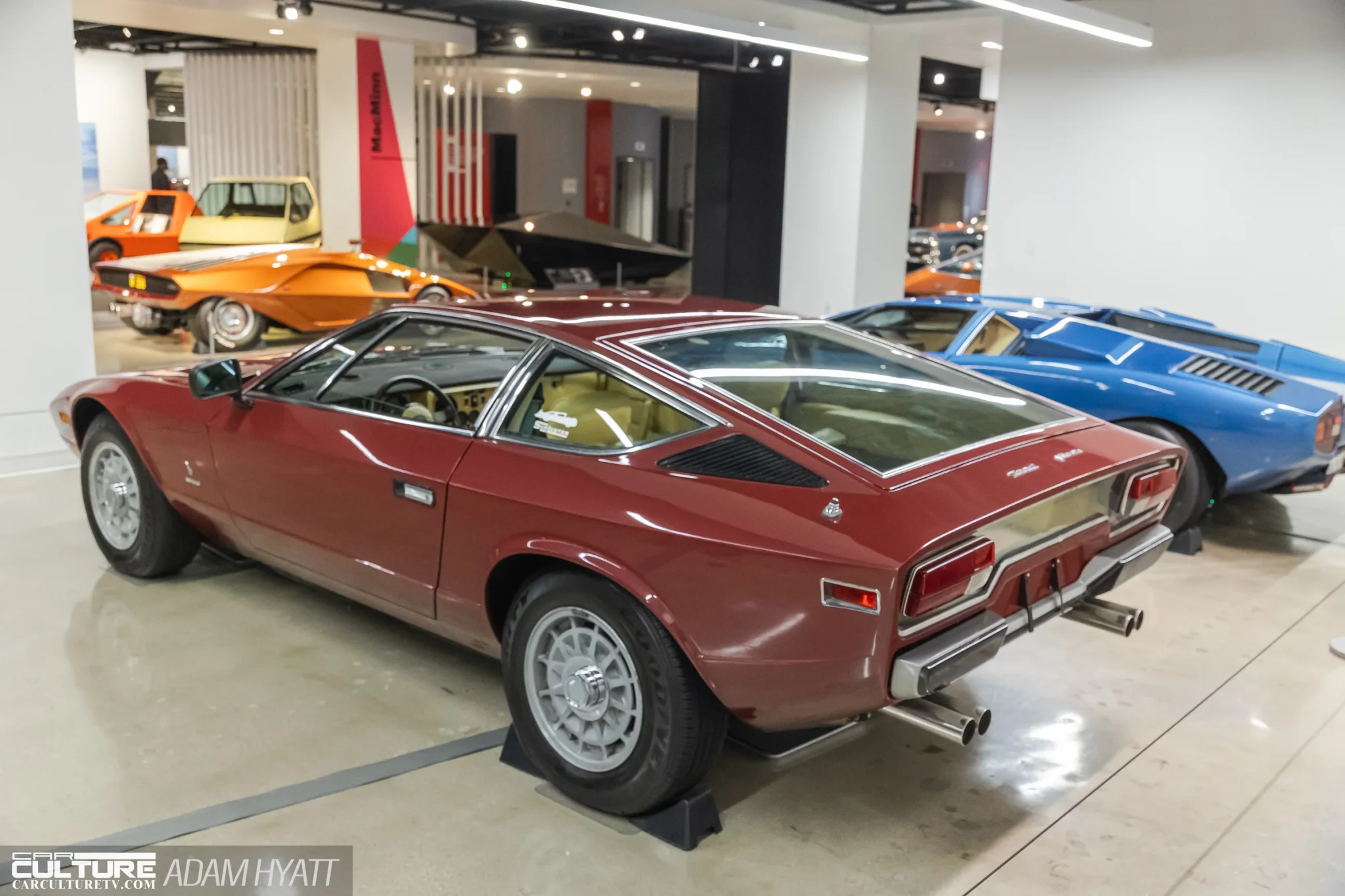
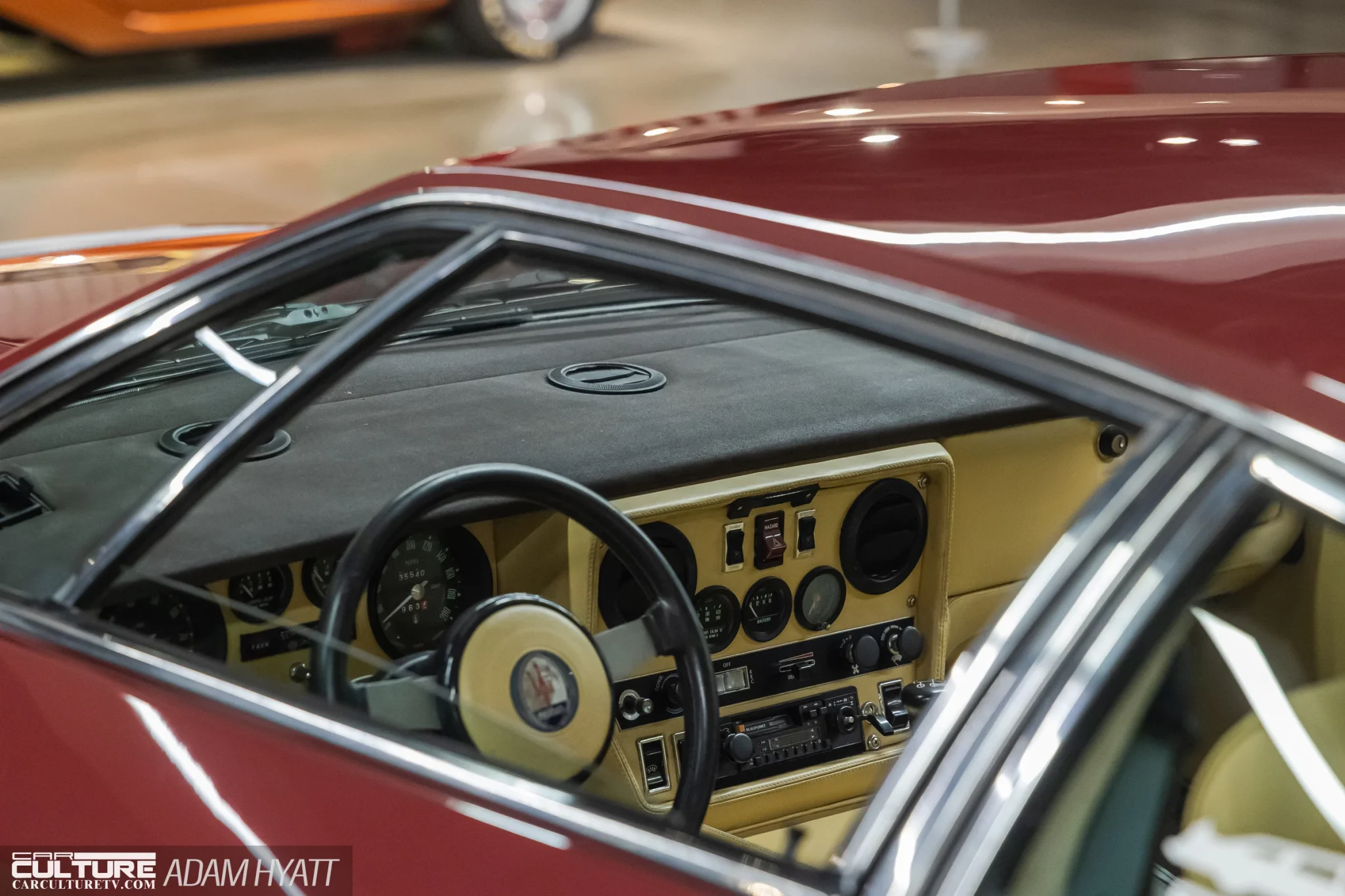
The 1977 Maserati Khamsin rounds out the Gandini run, one of the earliest wedge-design production cars with a front-mounted engine, with only 435 built.
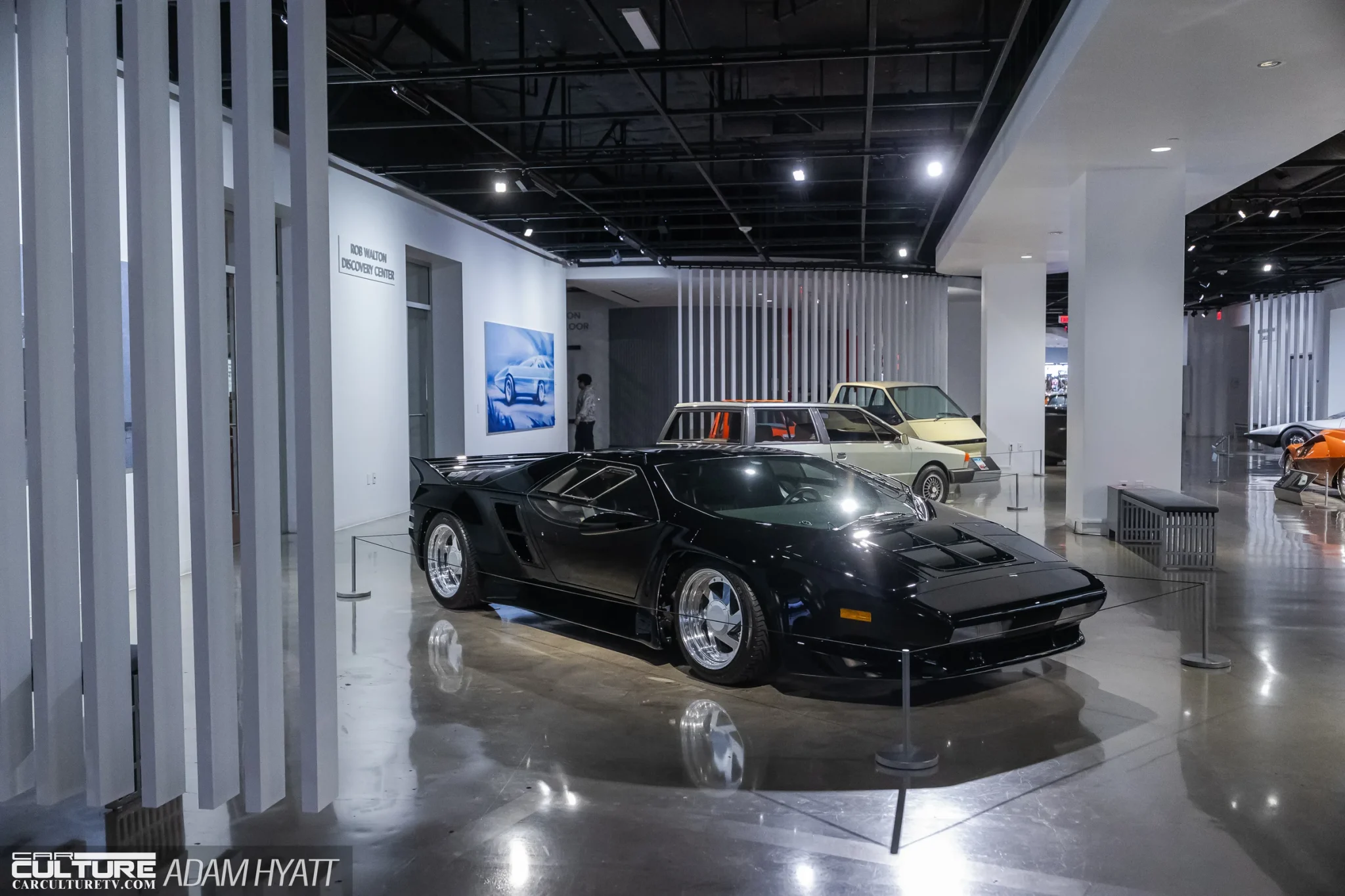
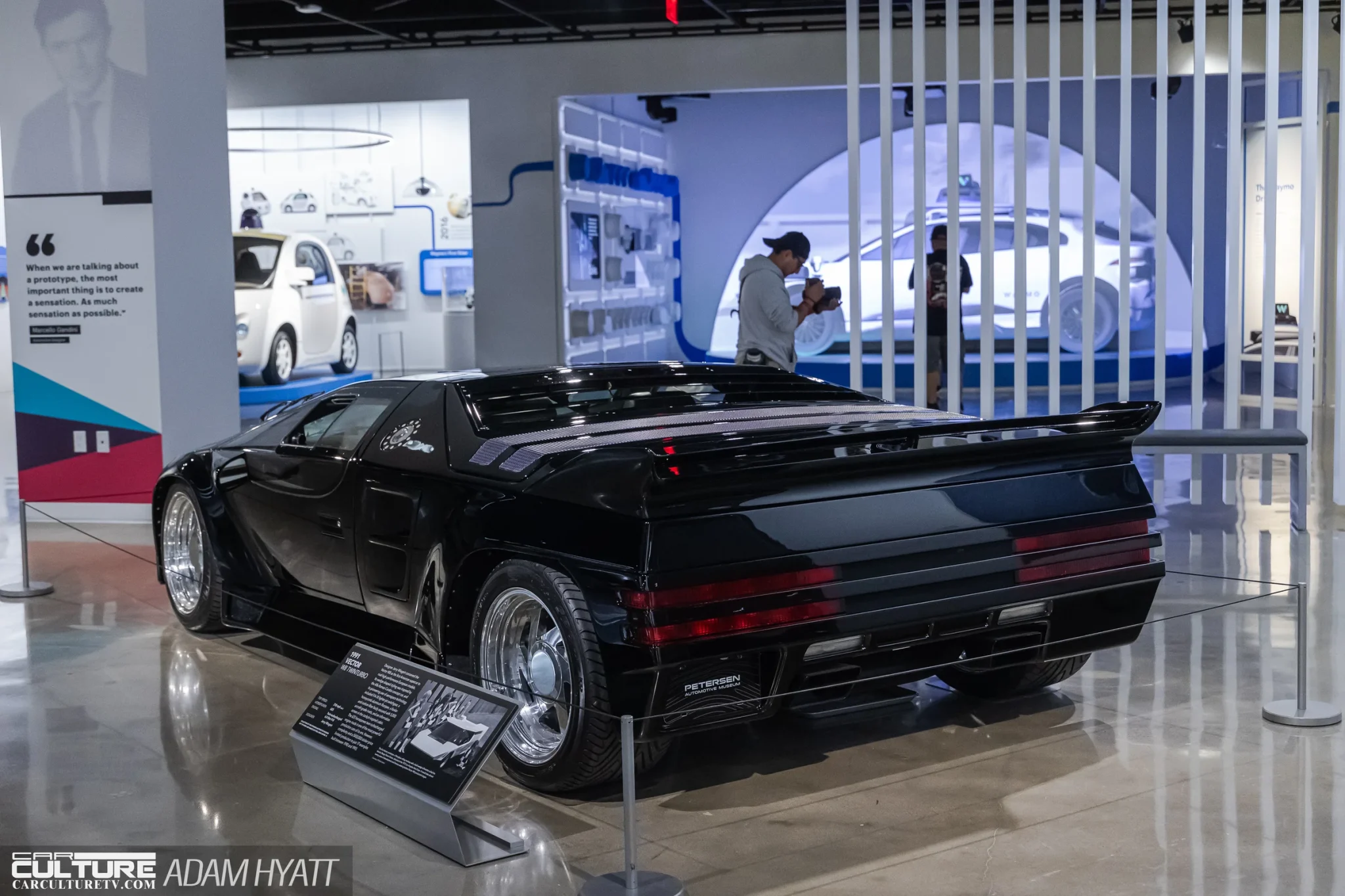
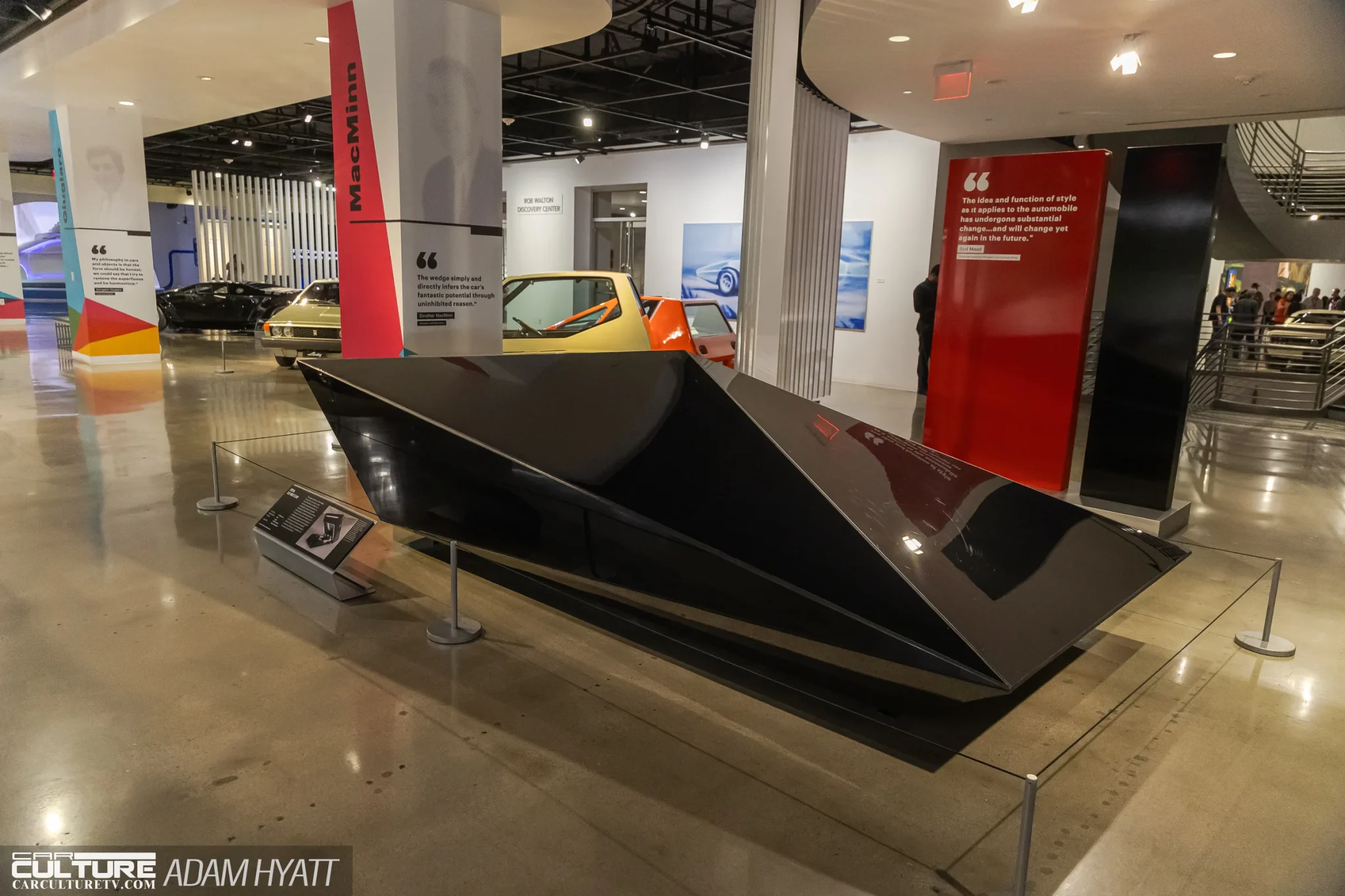
Then comes the 1991 Vector W8 TwinTurbo, which takes the wedge philosophy to American soil with aerospace-grade conviction. Designer Jerry Wiegert used F/A-18 fighter-jet switchgear, a honeycomb aluminum floorpan, and a Kevlar-and-carbon-fiber body secured with 5,000 aircraft-grade rivets. Its twin-turbocharged 6.0-liter V-8 produces 625 horsepower and the car tops out at an estimated 218 mph. Only 17 were built. The 2016 Lo Res Car by artist Rem D. Koolhaas closes the era from the art world side, a fully functional Lamborghini Countach digitally deresolved until it became 12 tinted polycarbonate panels over a 5-kilowatt electric motor. Top speed: 31 mph. Seeing the Countach and the Lo Res Car on the same floor is the Petersen at its best.
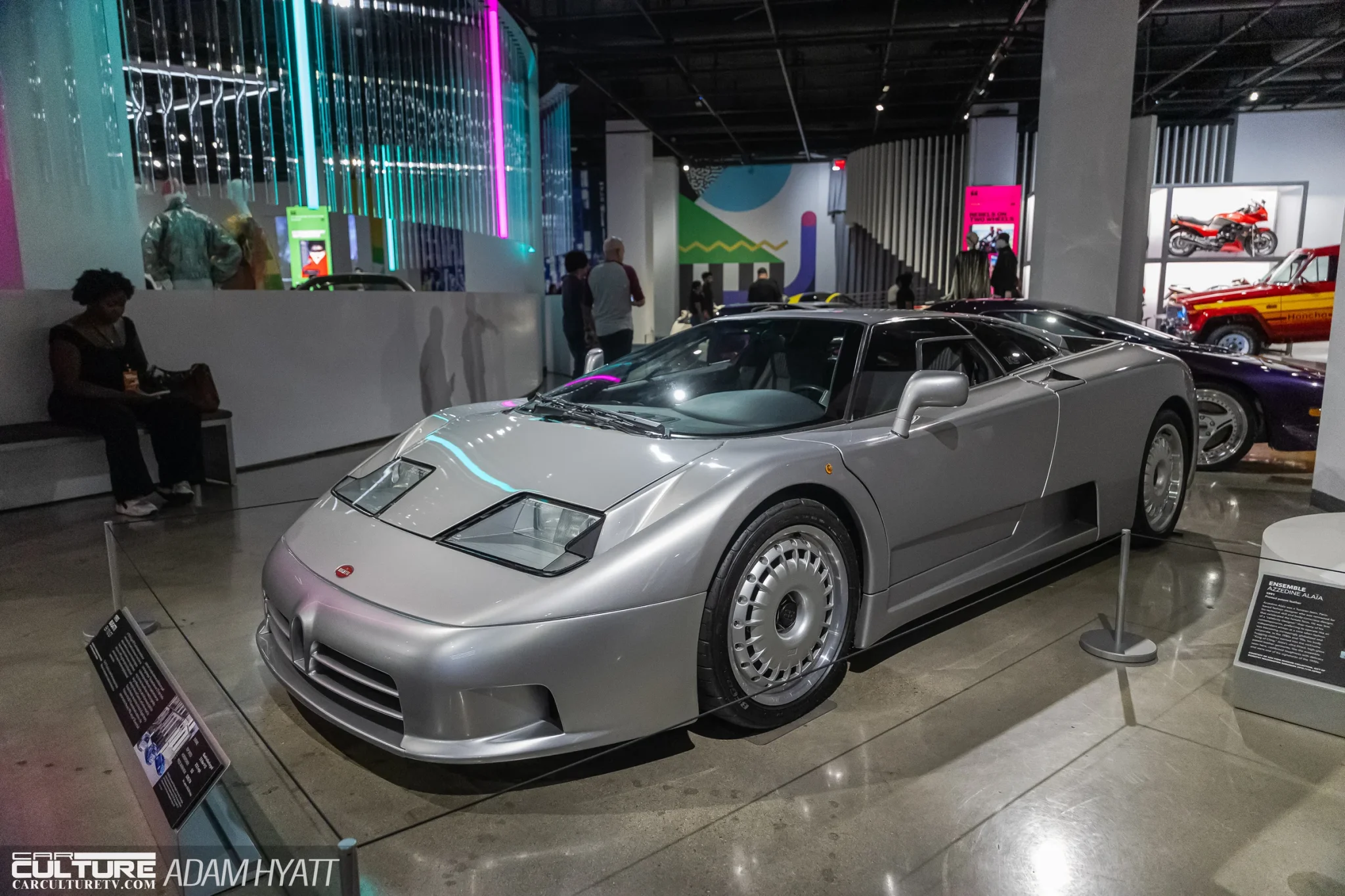
The supercar section documents an era of almost reckless ambition. The 1993 Bugatti EB 110 GT belongs to the Petersen’s own collection, gifted by Margie and Robert Petersen themselves. In 1992 it was the fastest production car in the world, a carbon fiber monocoque with a quad-turbocharged engine and a top speed over 210 mph. Only 126 were built before the early 1990s supercar market collapsed around it.
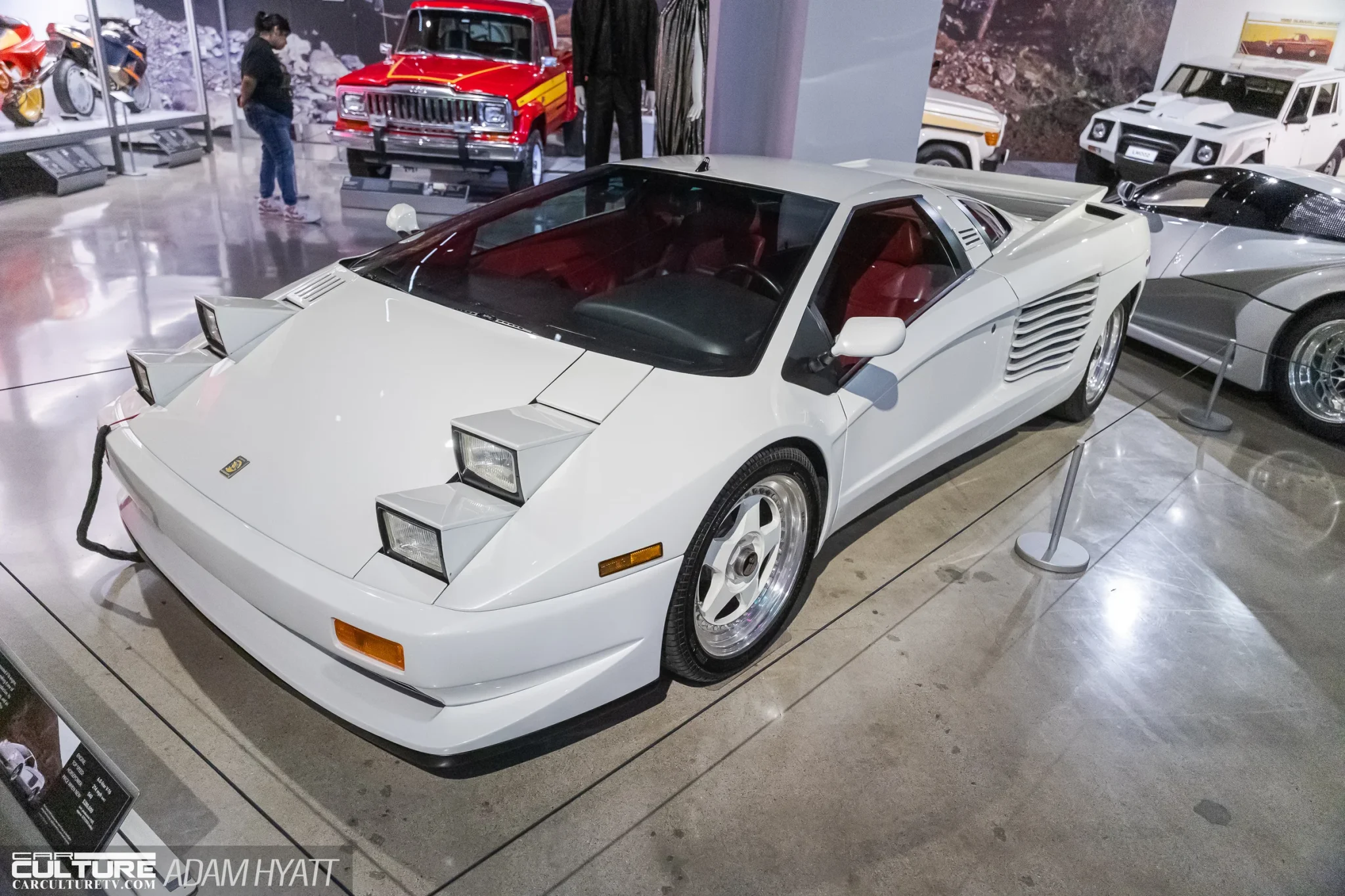
The 1988 Cizeta V16T, chassis 001, is the prototype and the only example to wear the “Cizeta-Moroder” badge, backed financially by renowned composer Giorgio Moroder. Its transverse-mounted V-16 paired with a five-speed manual makes it one of the very few postwar 16-cylinder vehicles put into production.
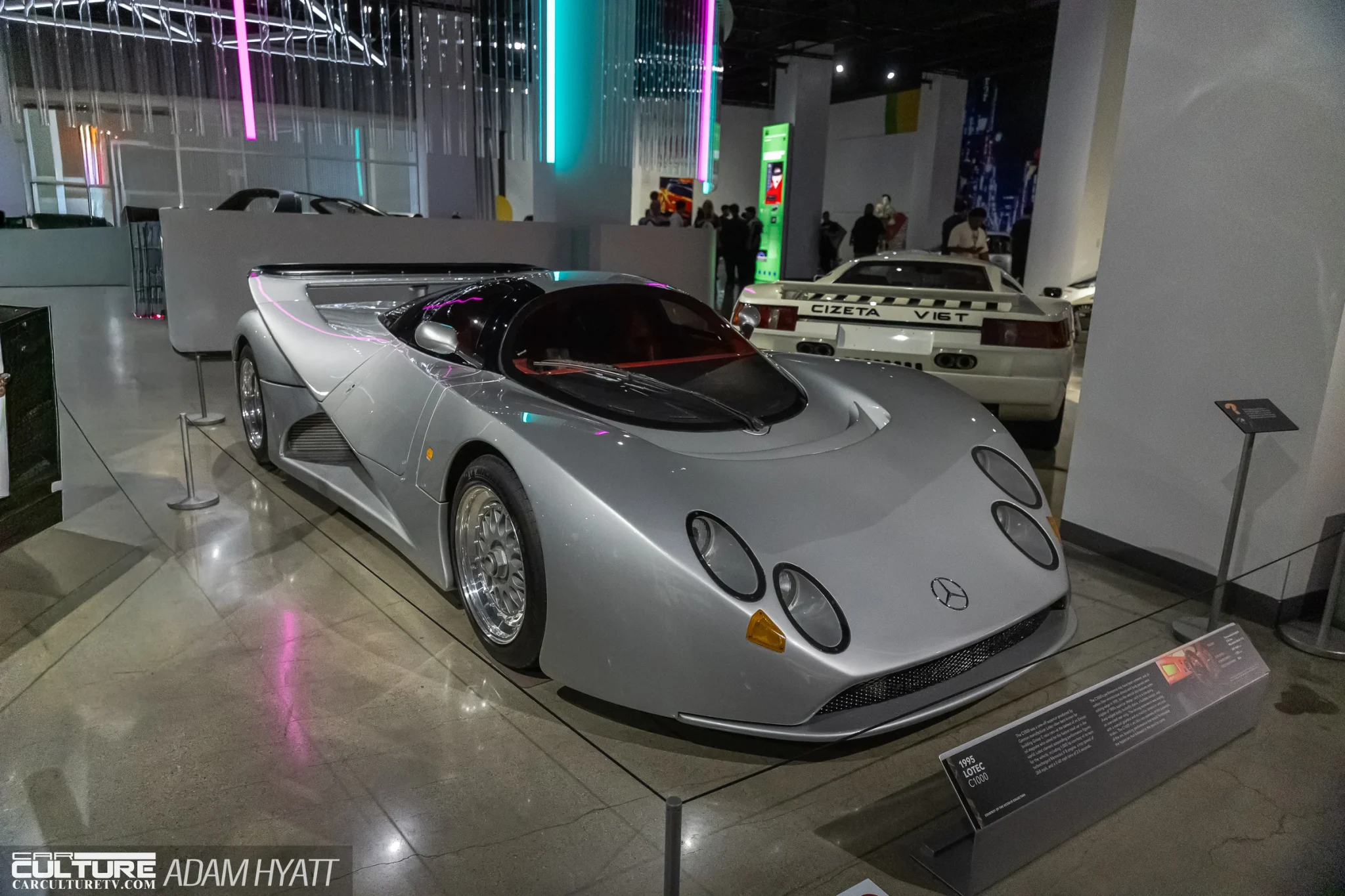
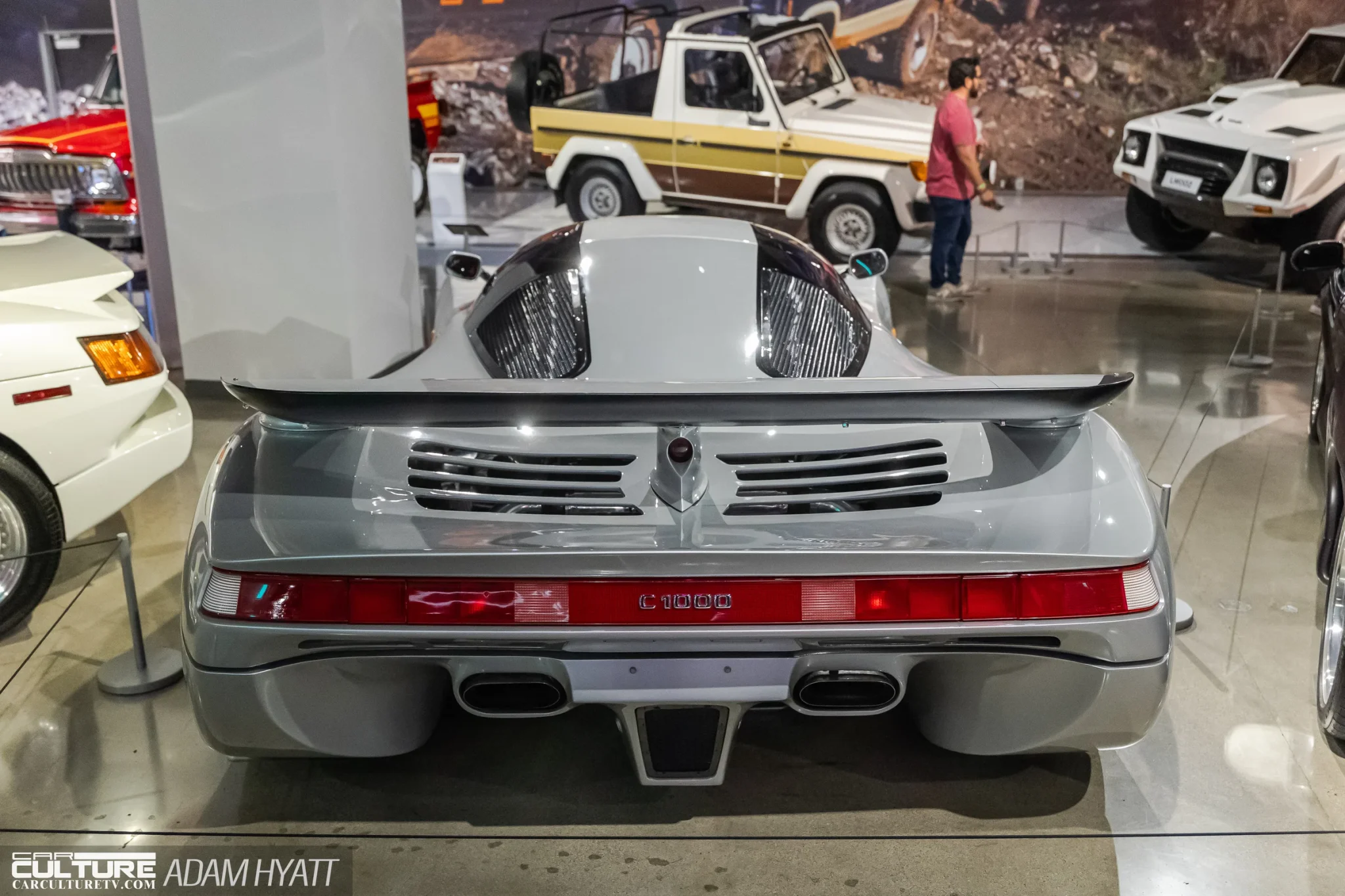
The 1995 Lotec C1000 was built at the request of an Emirati oil magnate who asked for the fastest road car in the world: a one-off carbon fiber supercar with a claimed 1,000 horsepower, 268 mph top speed, and no traction control or anti-lock brakes.
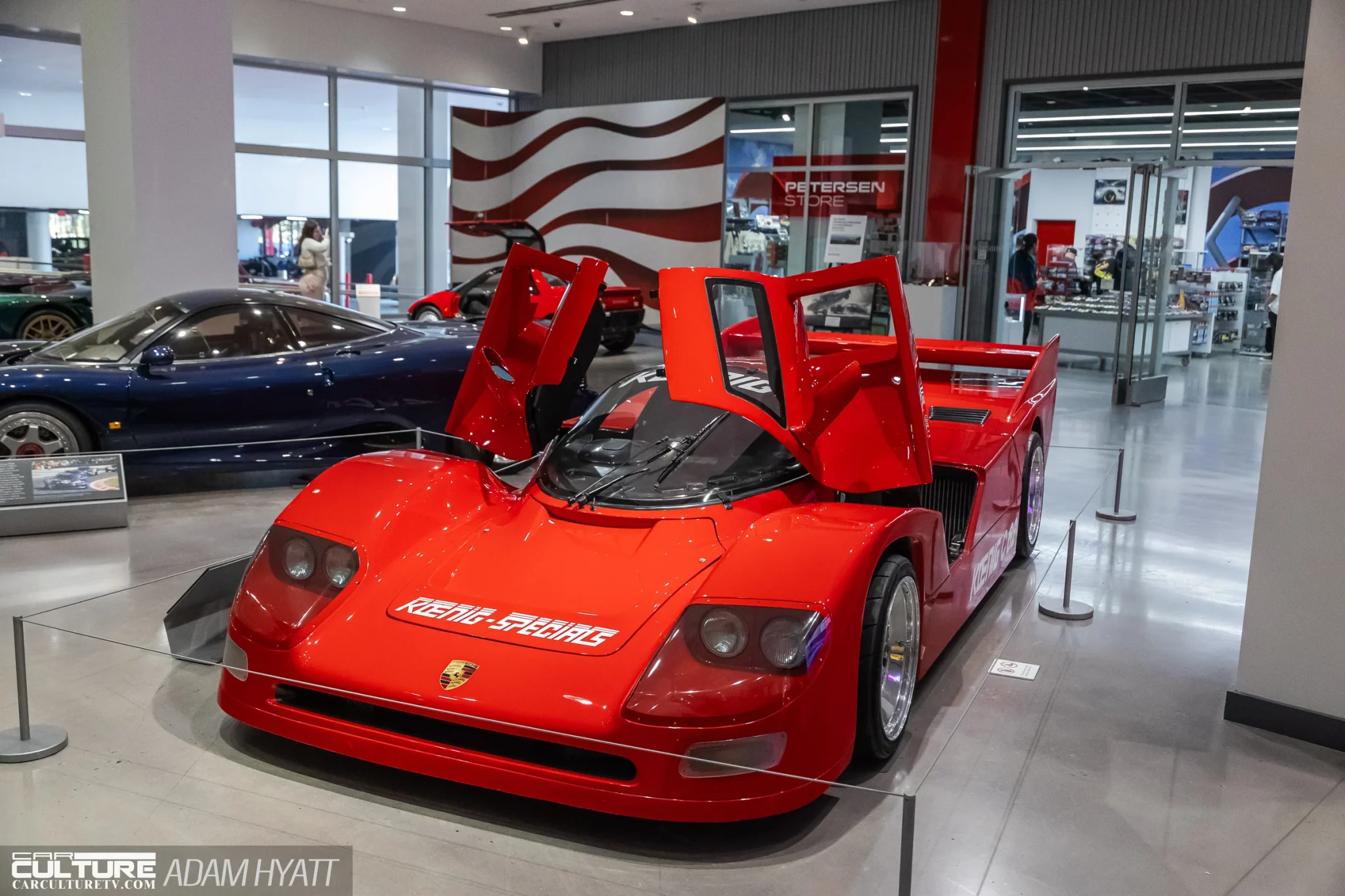
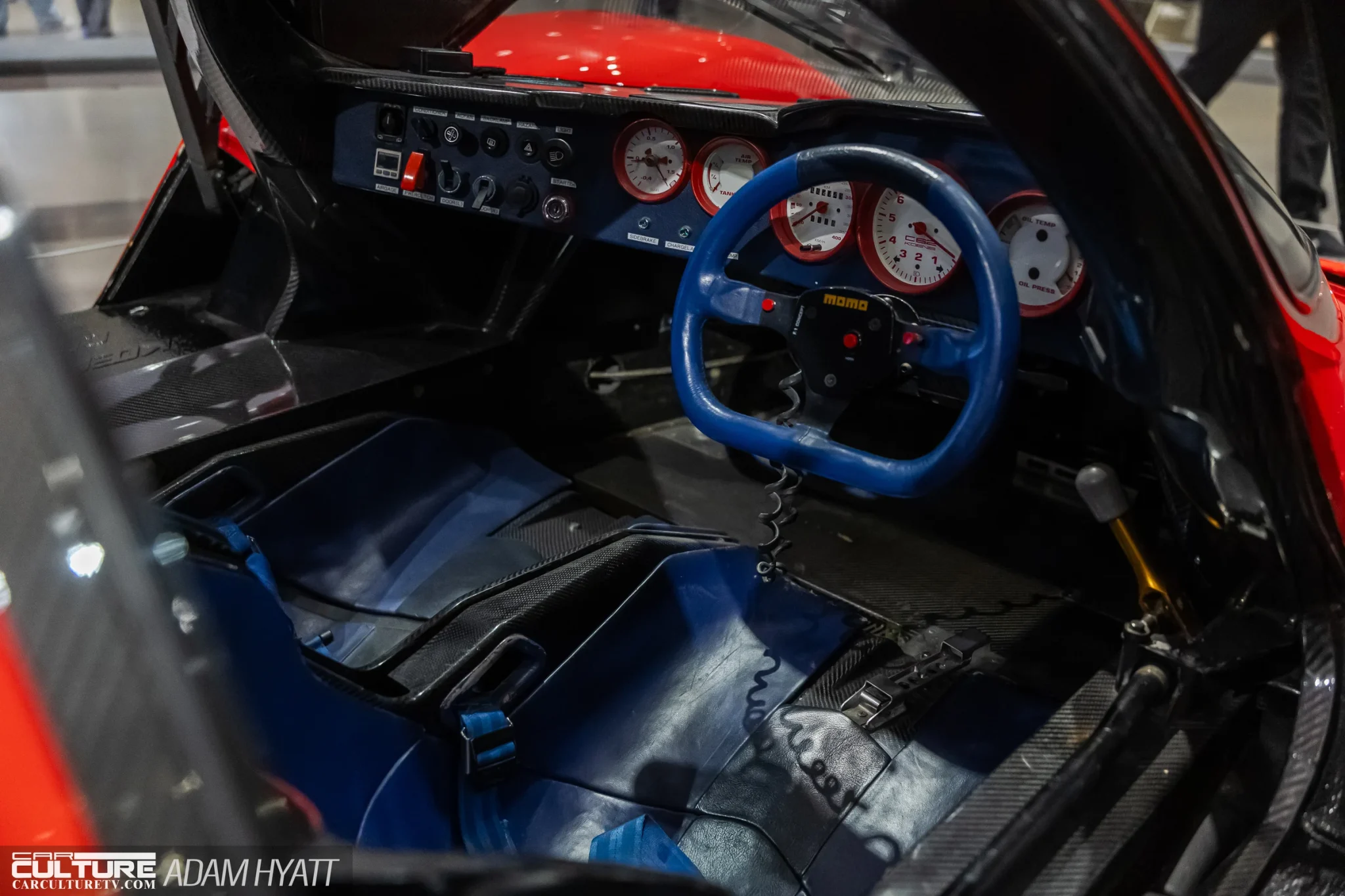
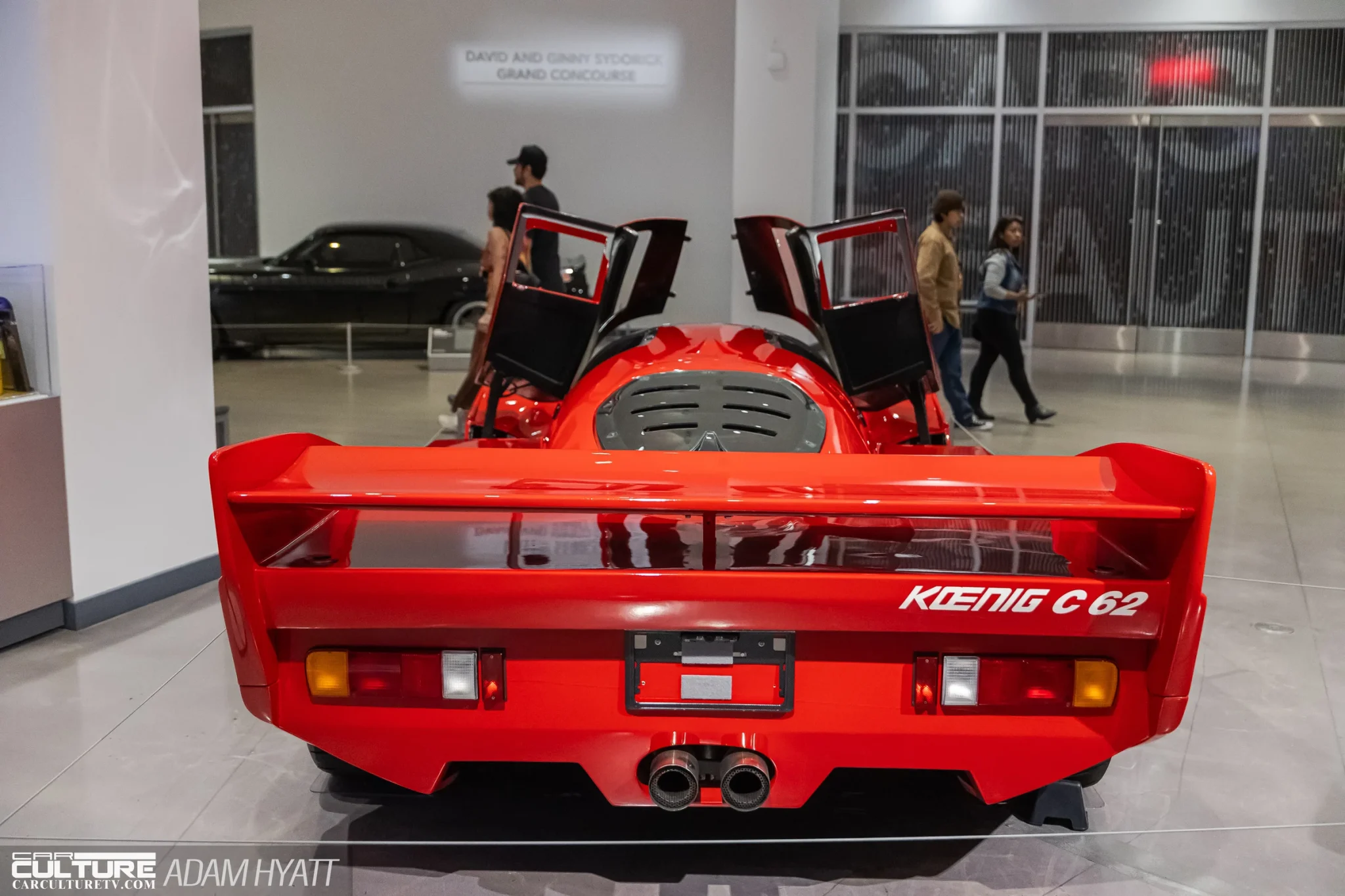
The 1991 Koenig-Specials C62 is a road-legal conversion of the Porsche 956/962 that won six 24 Hours of Le Mans races, of which only three of the 30 planned were ever built at $1.5 million each.
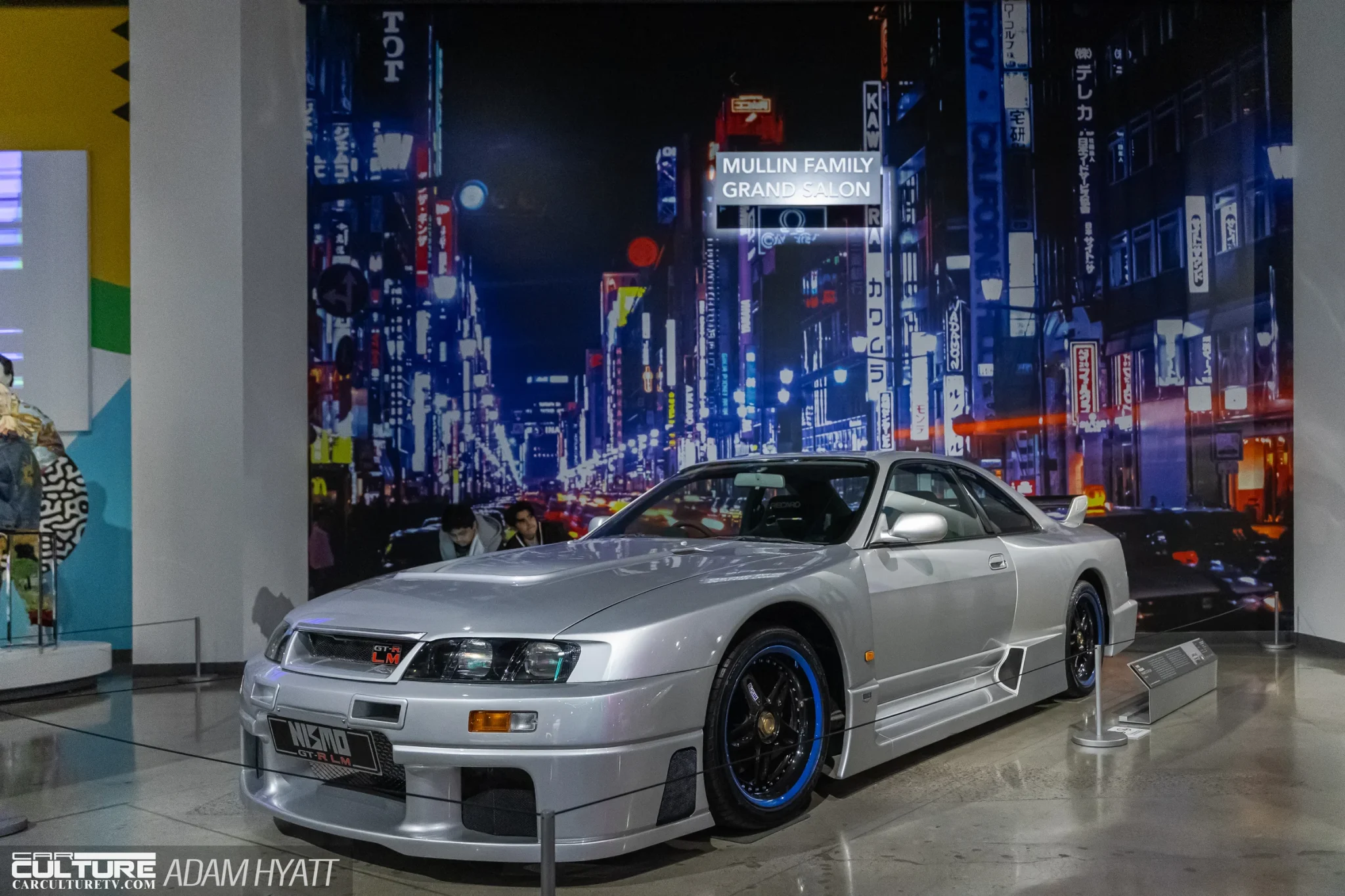
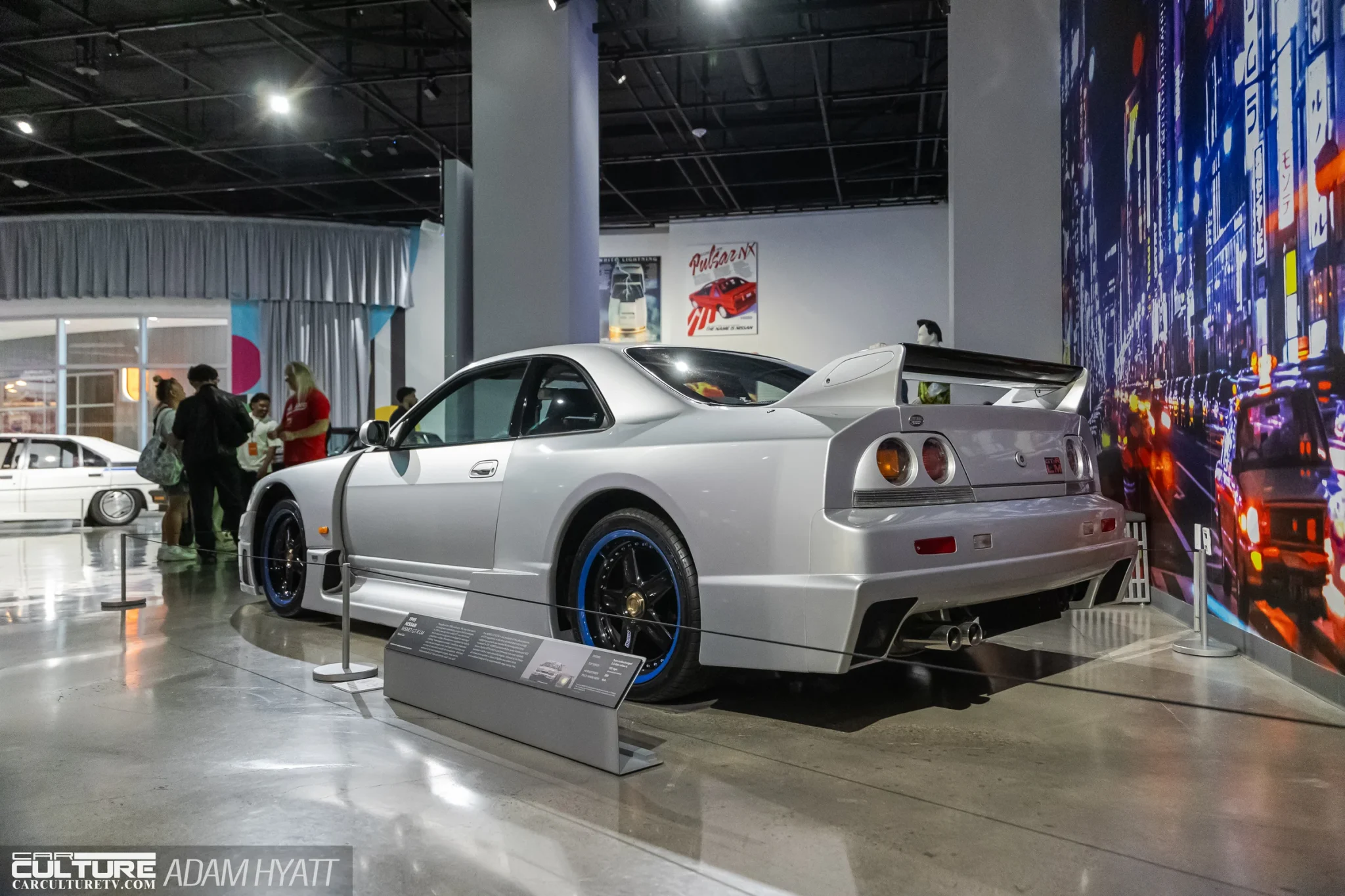
The homologation specials deserve their own moment. The 1995 Nissan NISMO GT-R LM Road Car, on loan from the Nissan Heritage Collection, is one of the truest race cars for the road ever built. GT1 regulations at the time required only a single road-going example for homologation. NISMO started with the R33 Skyline GT-R, removed its all-wheel drive in favor of rear-wheel drive, widened the bodywork for racing tires, and built just enough road-legal examples to qualify for competition. The result is essentially a Group GT1 race car with license plates.
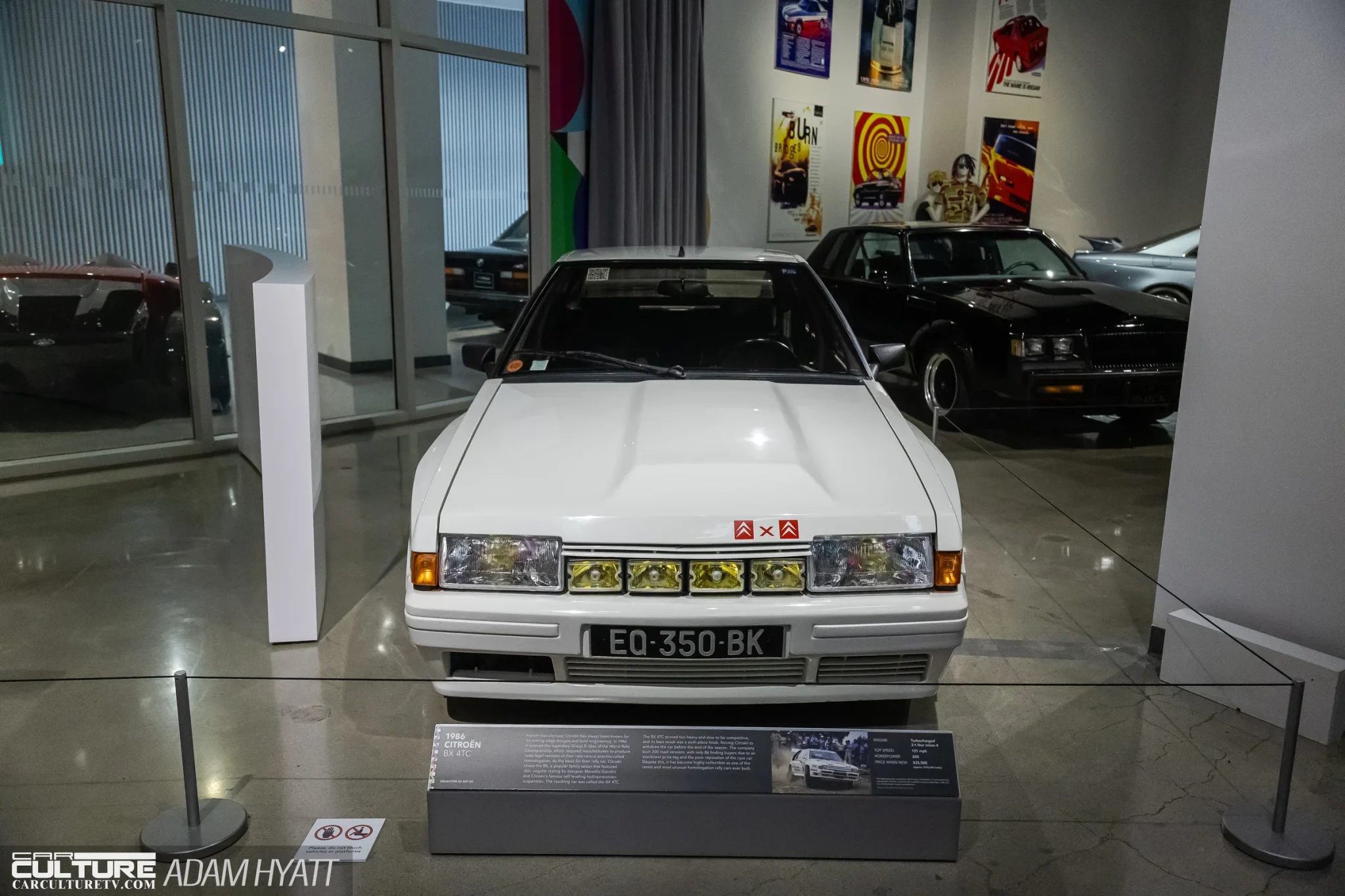
Nearby sits the 1986 Citroen BX 4TC, one of the rarest and most unusual homologation rally cars ever built. Citroen entered the legendary Group B class of the World Rally Championship using the BX, a popular family sedan styled by Marcello Gandini, as its homologation base. The BX 4TC proved too heavy and slow to be competitive, and Citroen withdrew before the end of the season. Of the 200 road versions built, only 86 found buyers. It has since become one of the most collectible Group B artifacts in existence, from the collection of Ady Gil.
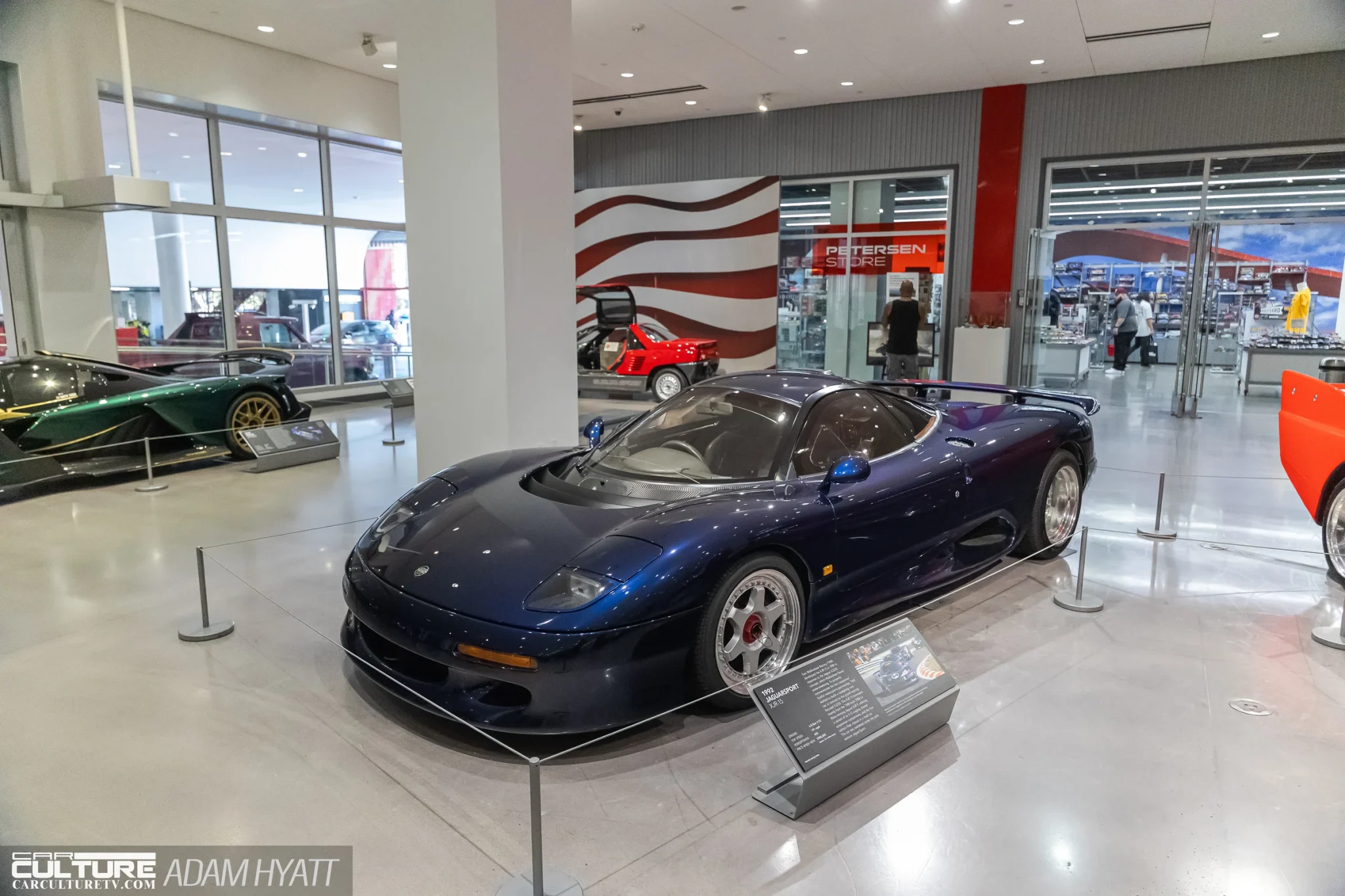
The 1992 Jaguarsport XJR-15 occupies its own territory entirely. Built on the platform of the XJR-9 that won Le Mans in 1988, the XJR-15 was a road-legal racing car with a carbon fiber monocoque body and a 6.0-liter V-12 producing around 450 horsepower. Only 53 were ever made, and buyers who wanted one were required to also purchase a racing version to compete in a one-make race series held alongside Formula One grands prix in 1991. It is one of the purest expressions of road-legal motorsport machinery ever produced.
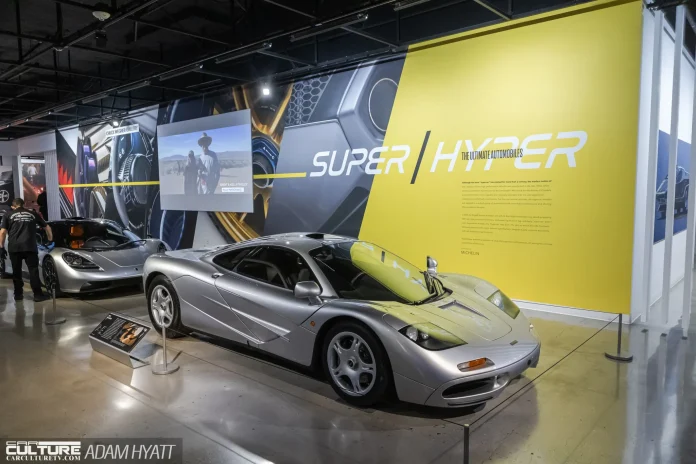
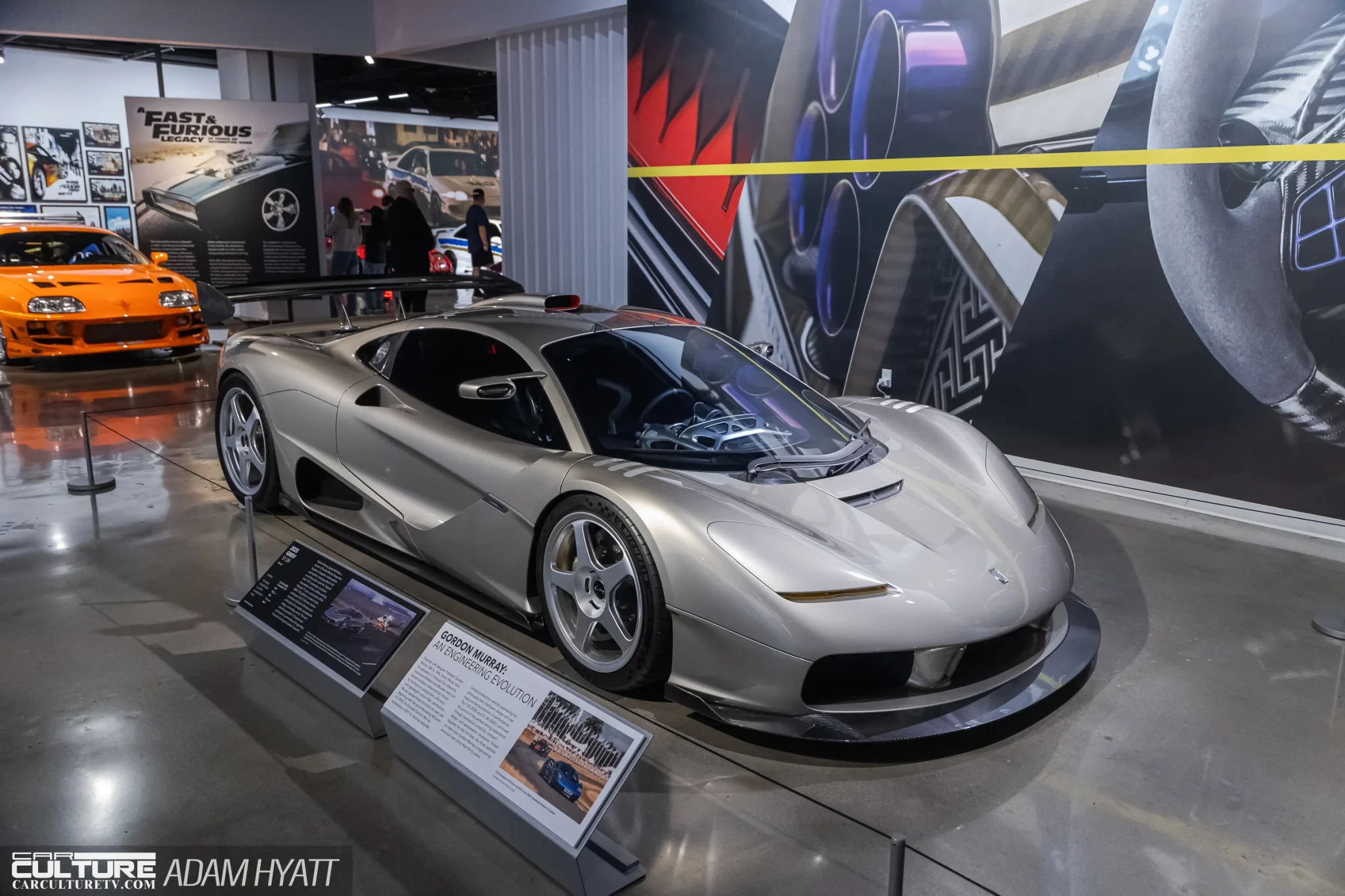
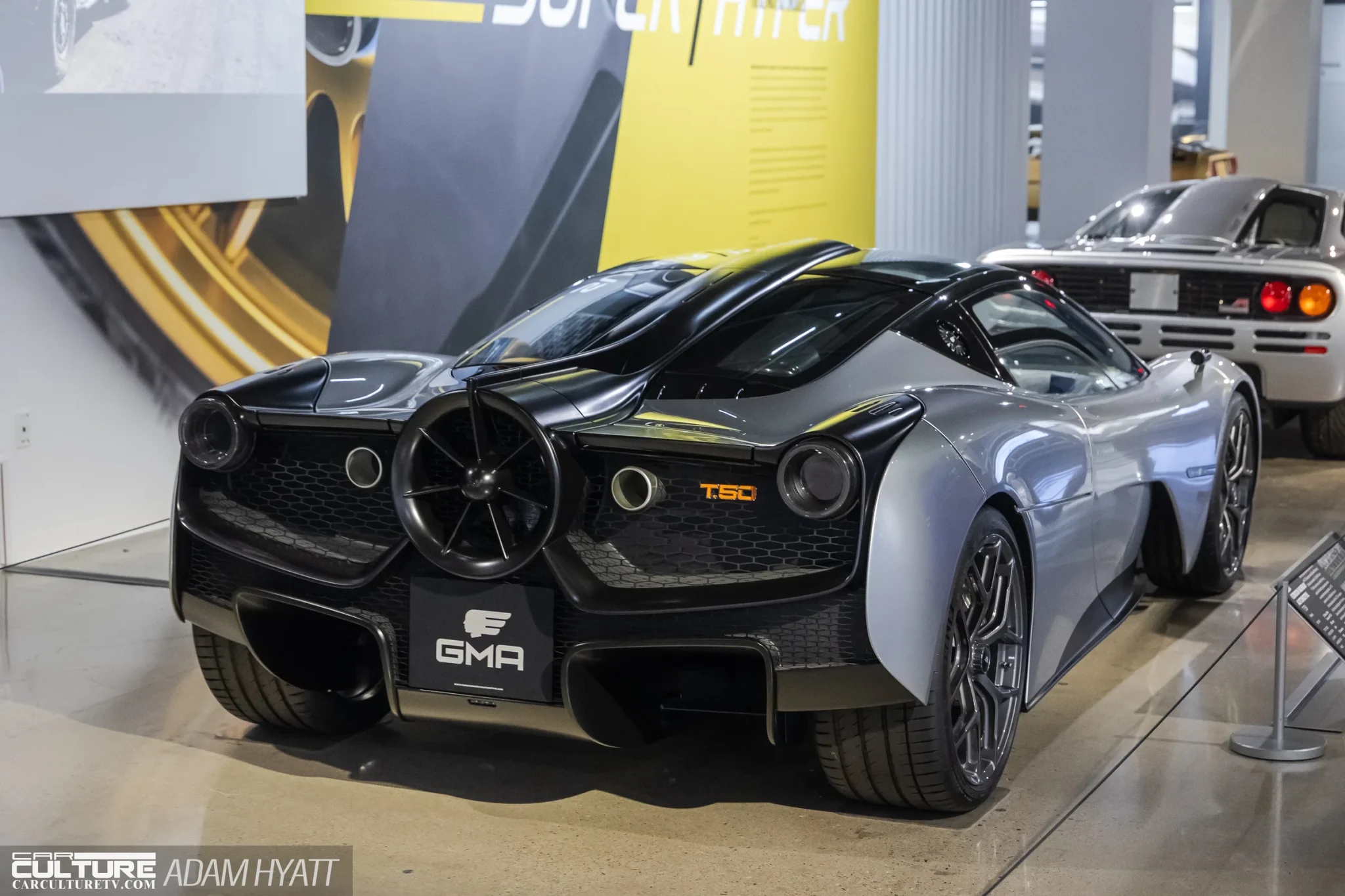
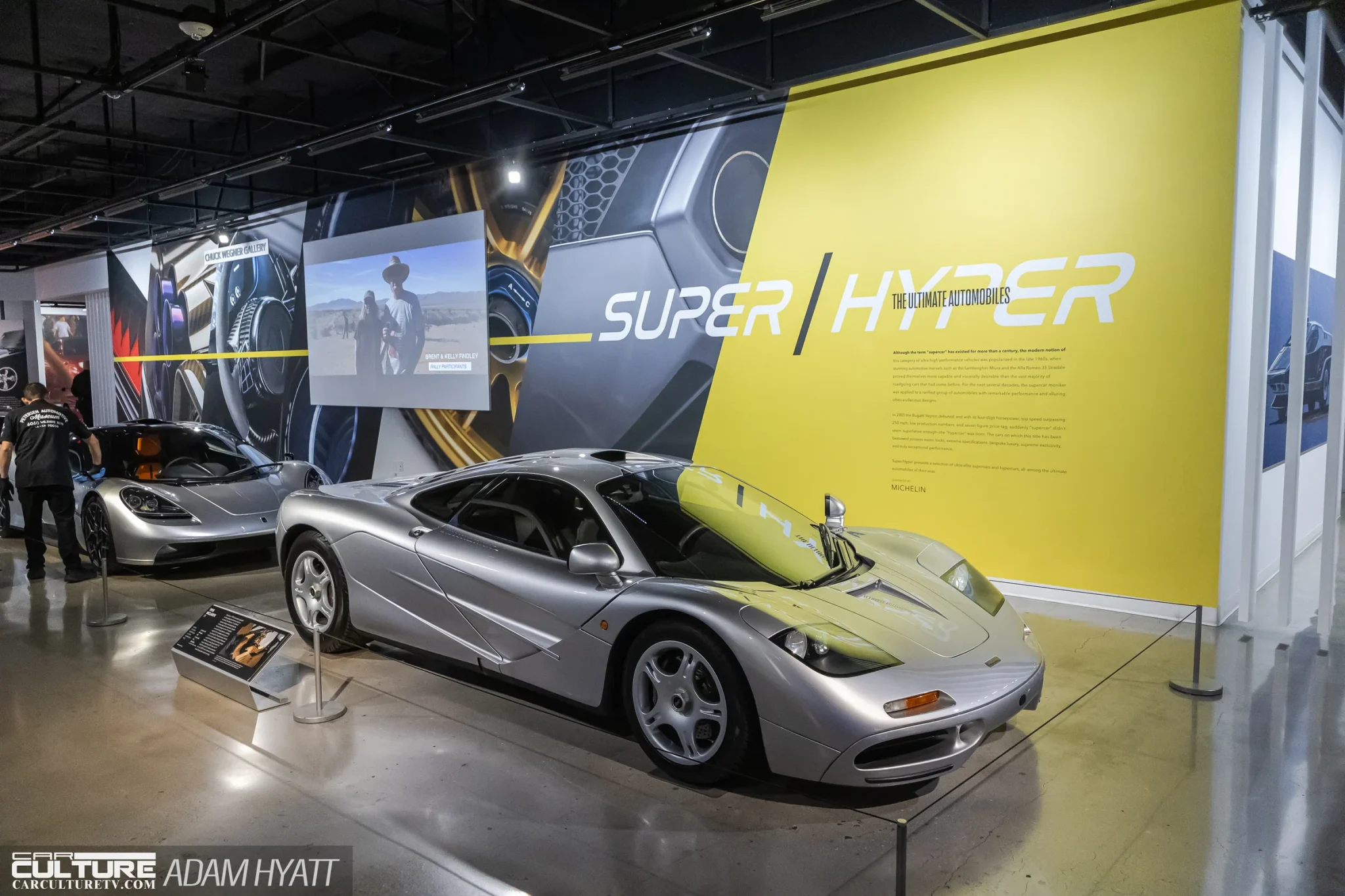
Then there is the McLaren collection, which stops you in your tracks. The main floor brings together three machines that represent the full arc of Gordon Murray’s vision for what a driver’s car should be. The 1995 McLaren F1, widely regarded as the greatest performance road car ever built, features a central driving position, carbon fiber chassis, gold-lined engine bay, and a naturally aspirated 6.1-liter BMW V-12 producing 620 horsepower with a 240 mph top speed. Only 106 were built at $815,000 each, equivalent to $1.7 million today. Alongside it sits the Gordon Murray Automotive T.50, Murray’s spiritual successor to the F1 featuring the same central driving position, a naturally aspirated V12 revving to 12,100 rpm, and a fan-assisted ground effect system borrowed from his Formula One work. Completing the trio is the 2025 GMSV S1 LM, the full racing version of the T.50, stripped of road equipment and producing significantly more power. Seeing all three together on one floor is the kind of moment that justifies the entire visit. Murray spent decades trying to build the perfect driver’s car twice, and both versions are here.
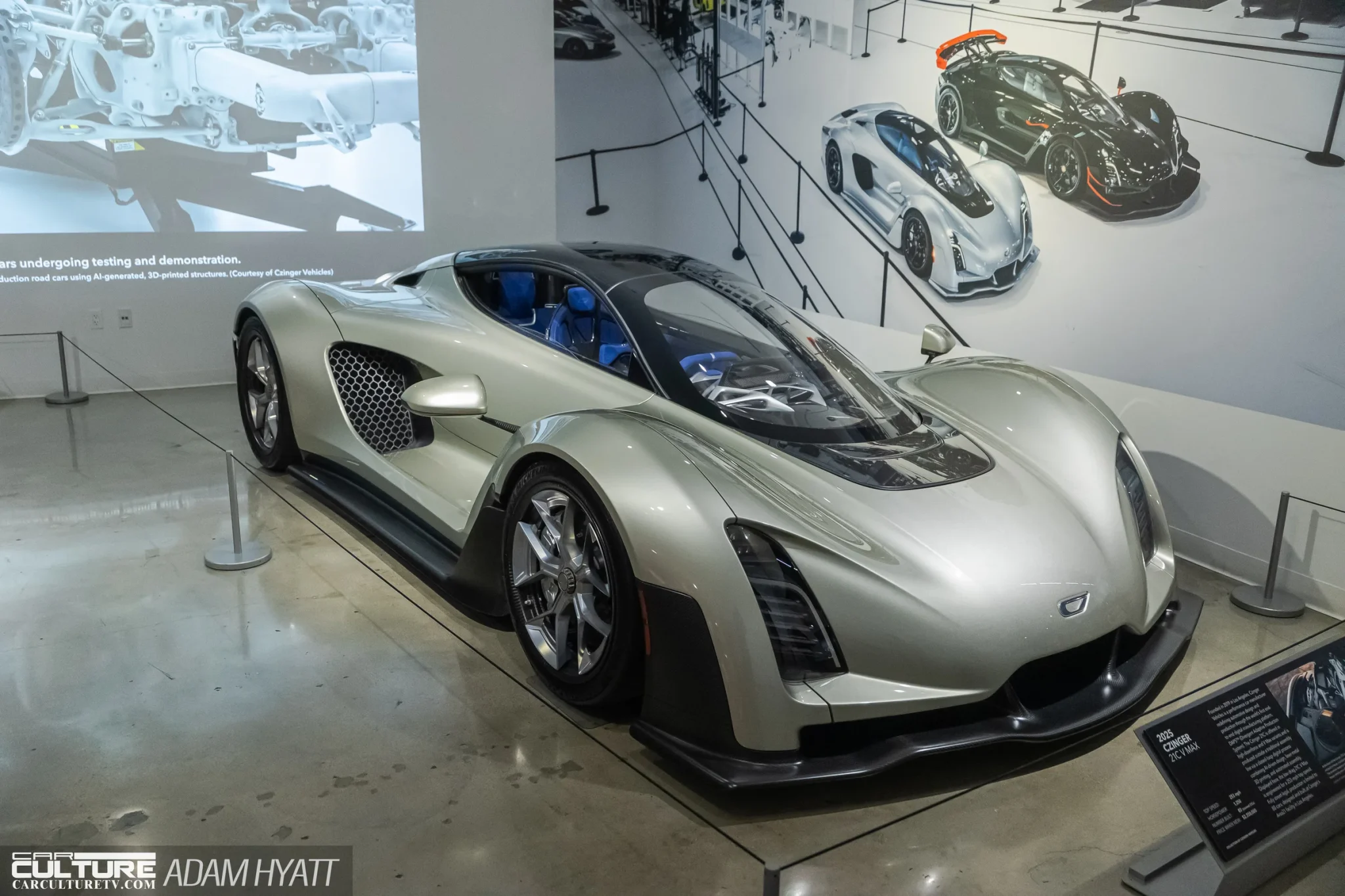
The 2025 Czinger 21C V Max brings the story to the present and makes a strong case that Los Angeles is still at the center of automotive innovation. Founded in 2019 and built at Czinger’s Area21 facility in the city, it produces 1,250 horsepower from a twin-turbo V8 paired with electric motors, with a 253 mph top speed and a $2.35 million price tag. The entire car is produced through AI-driven design, laser-metal 3D printing, and automated assembly. No traditional assembly line. This is what the next chapter of supercar production looks like, and it is happening here.
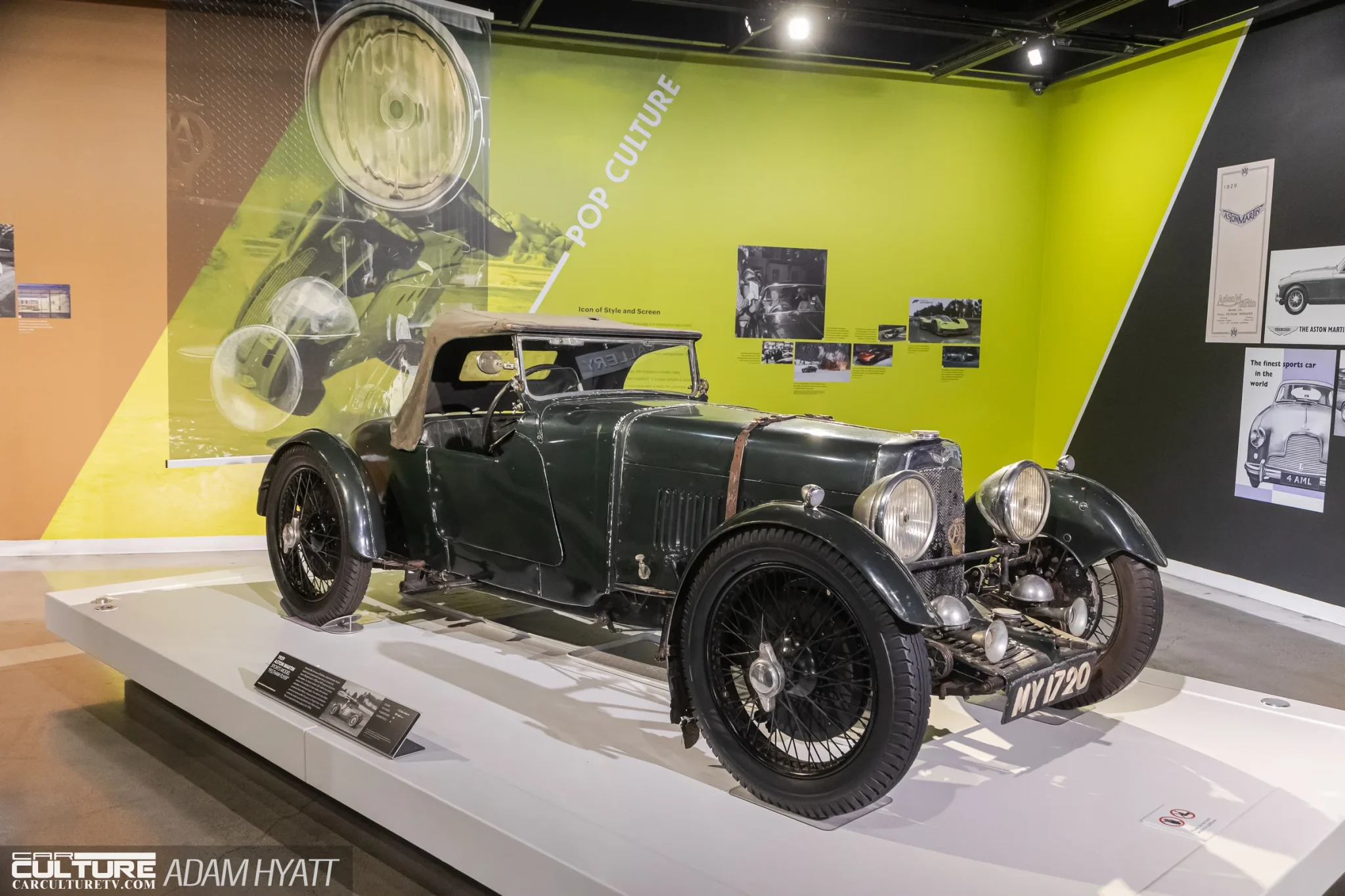
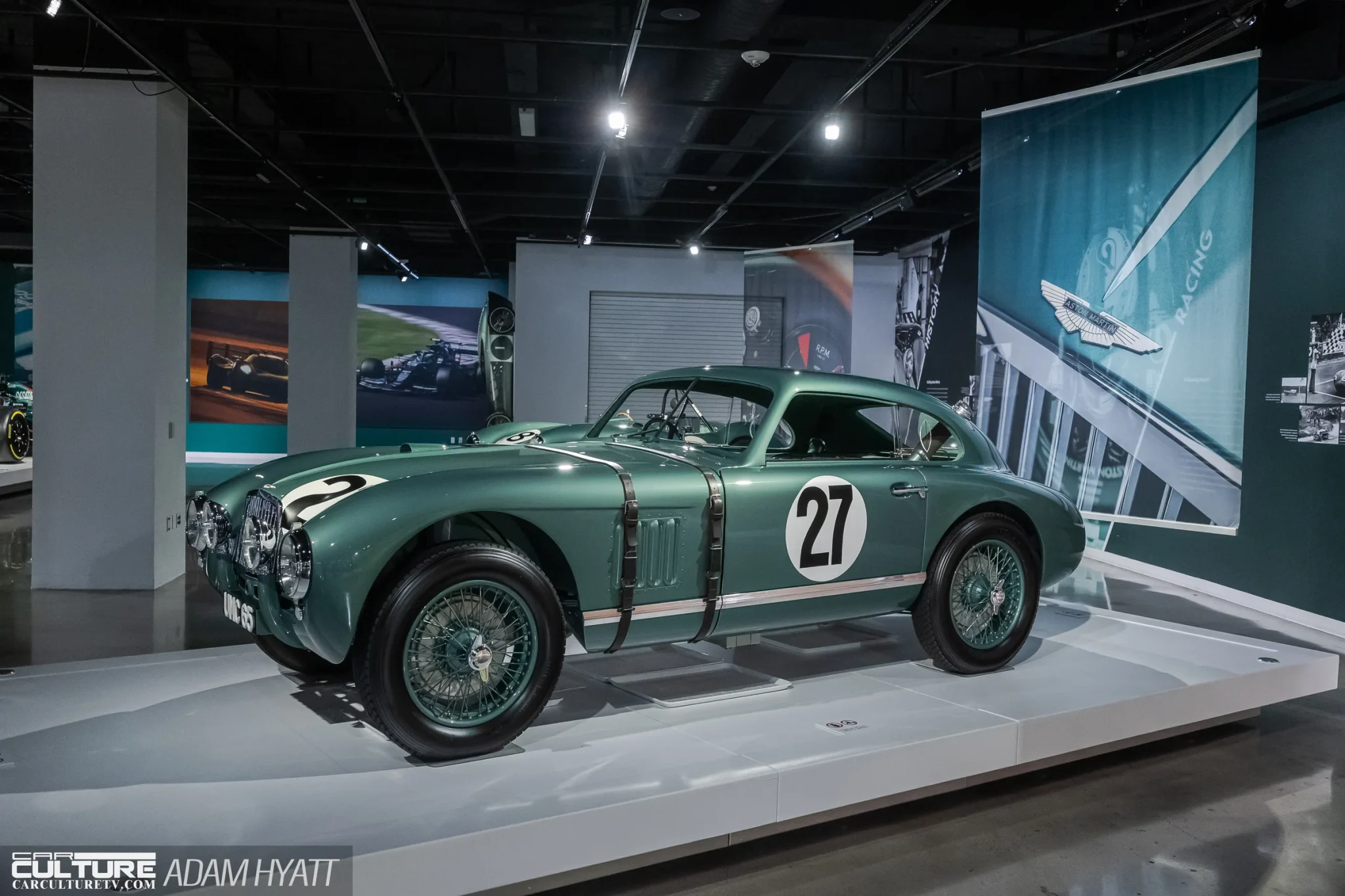
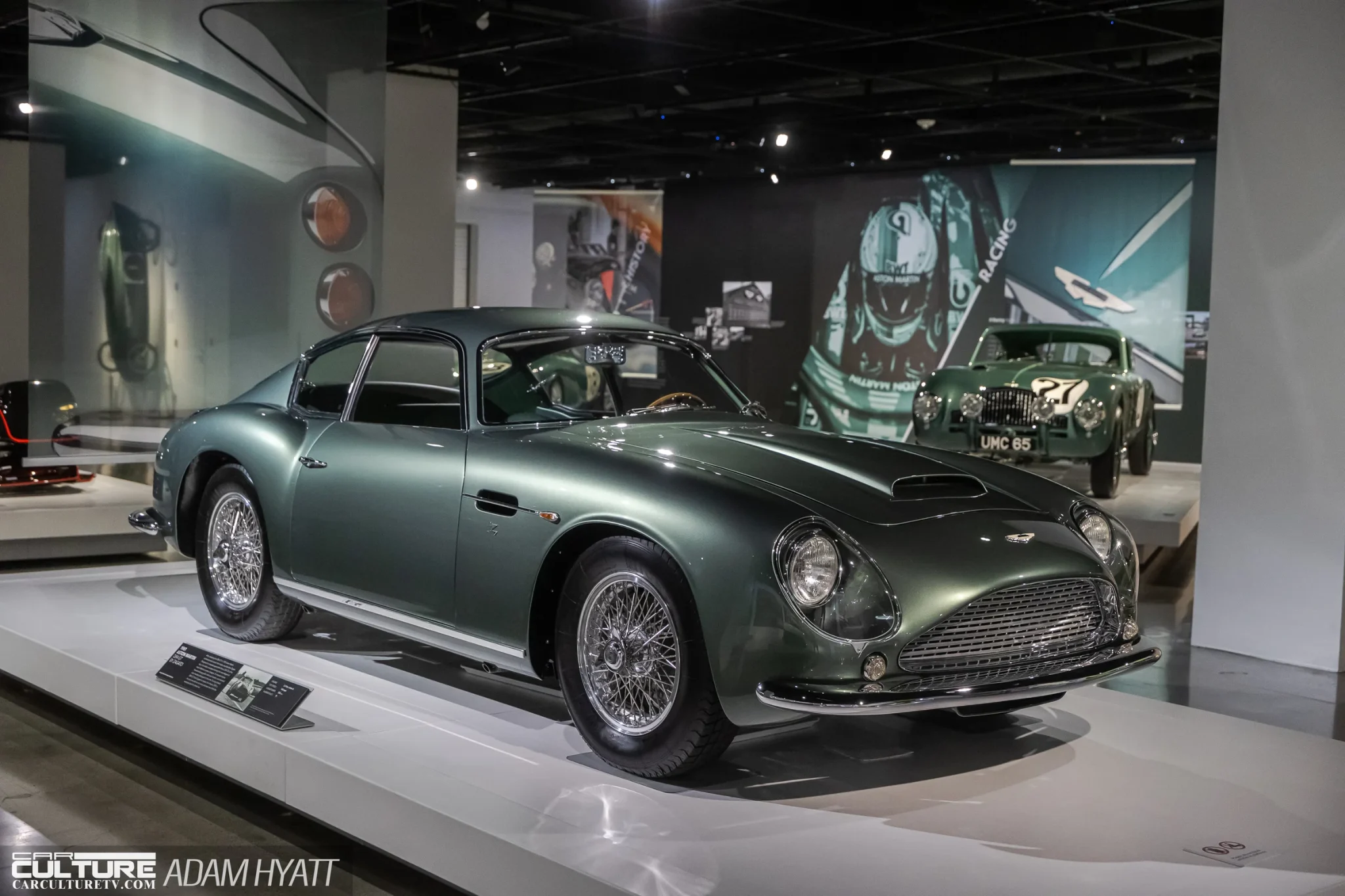
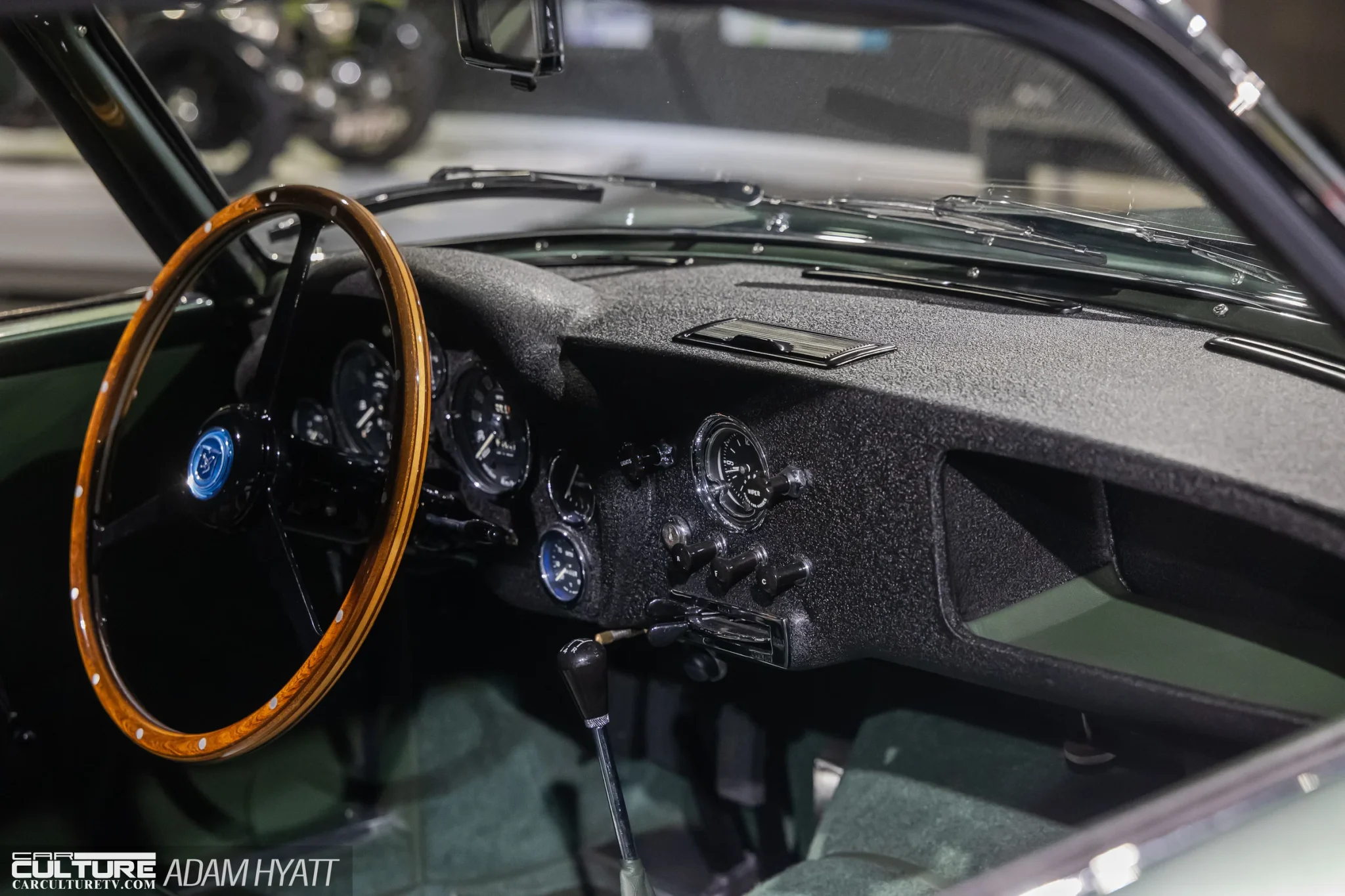
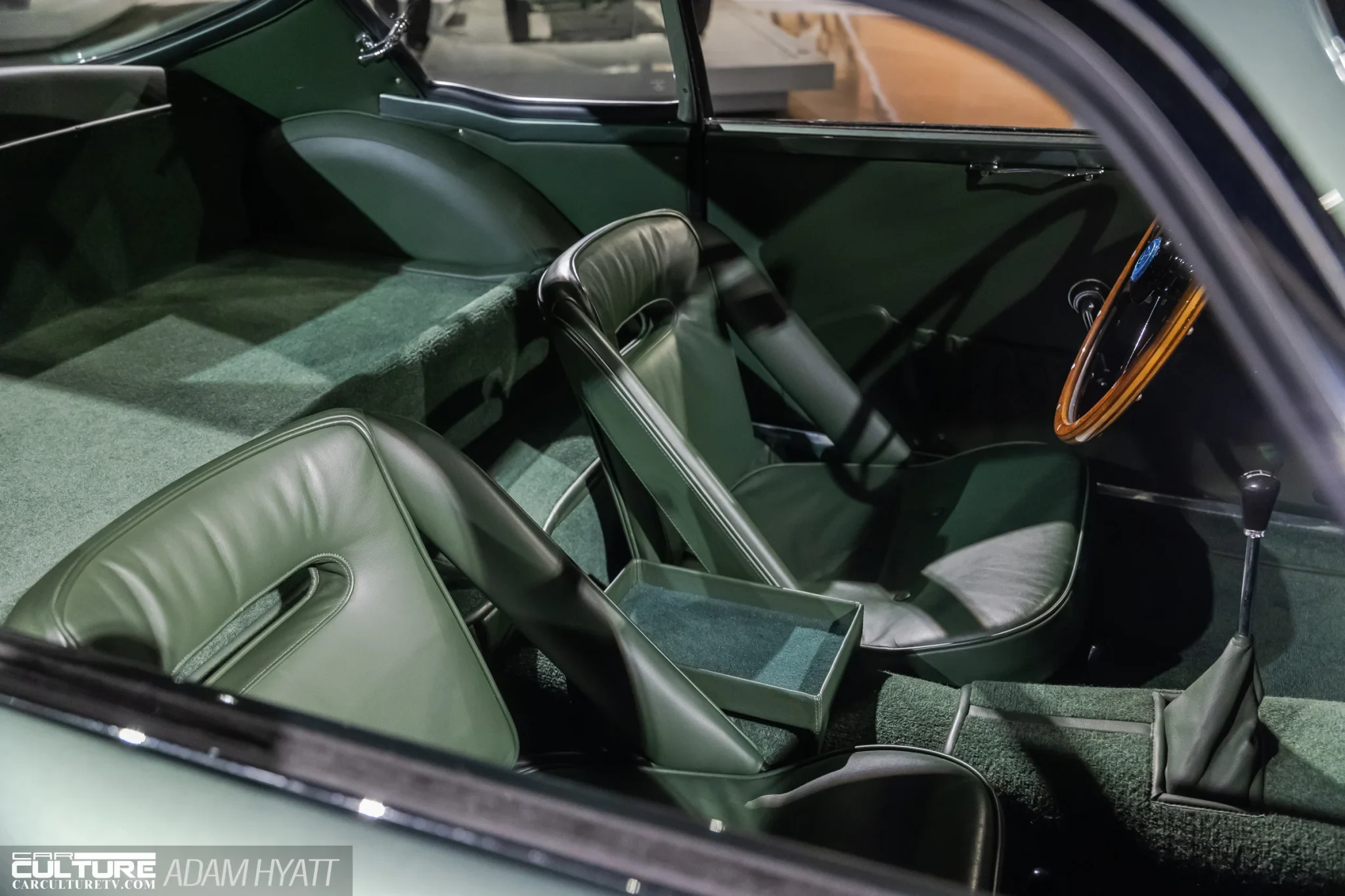
The Aston Martin retrospective deserves its own mention. The gallery traces the brand from the 1929 Sports Model “Feltham Flyer,” among the oldest unrestored Aston Martins in existence and one of just two two-seat Sports Models built in 1928 and 1929, through the 1949 DB2 Prototype works racing car, the 1955 DB3S that won 15 of 35 major races it entered with Jack Brabham among its drivers, and the 1961 DB4 GT by Zagato, one of only 19 built and the only chassis with an air scoop.
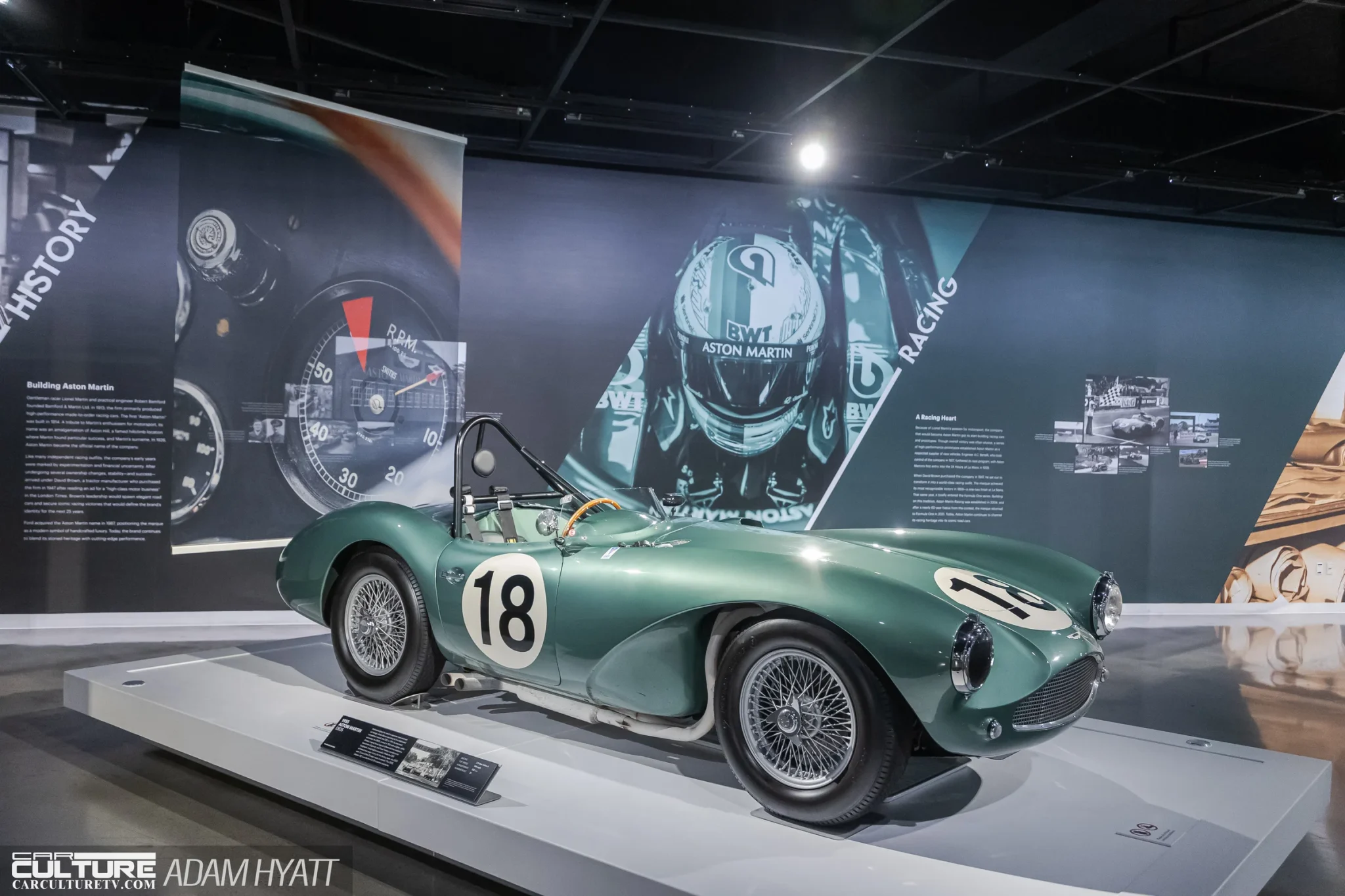
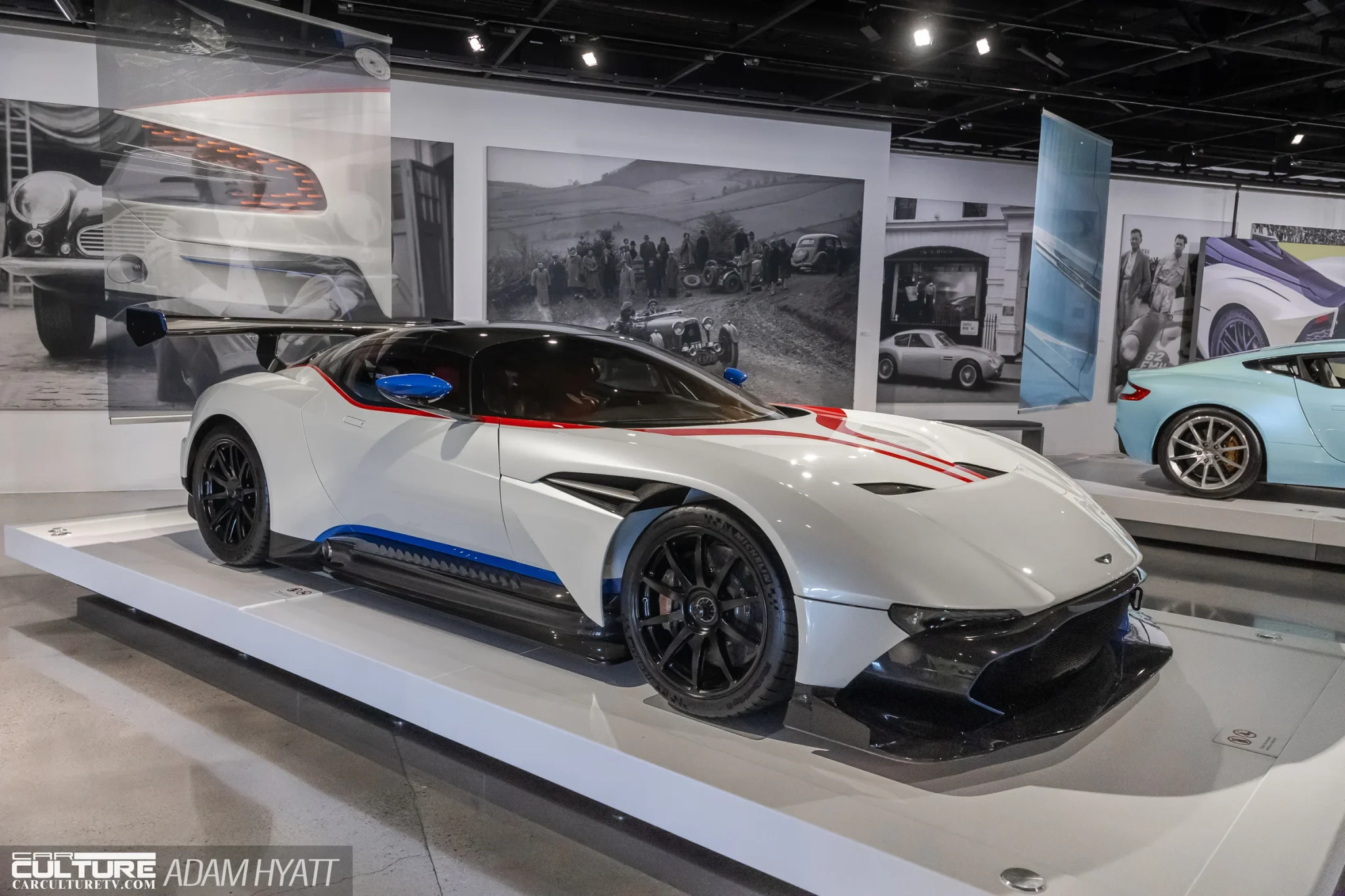
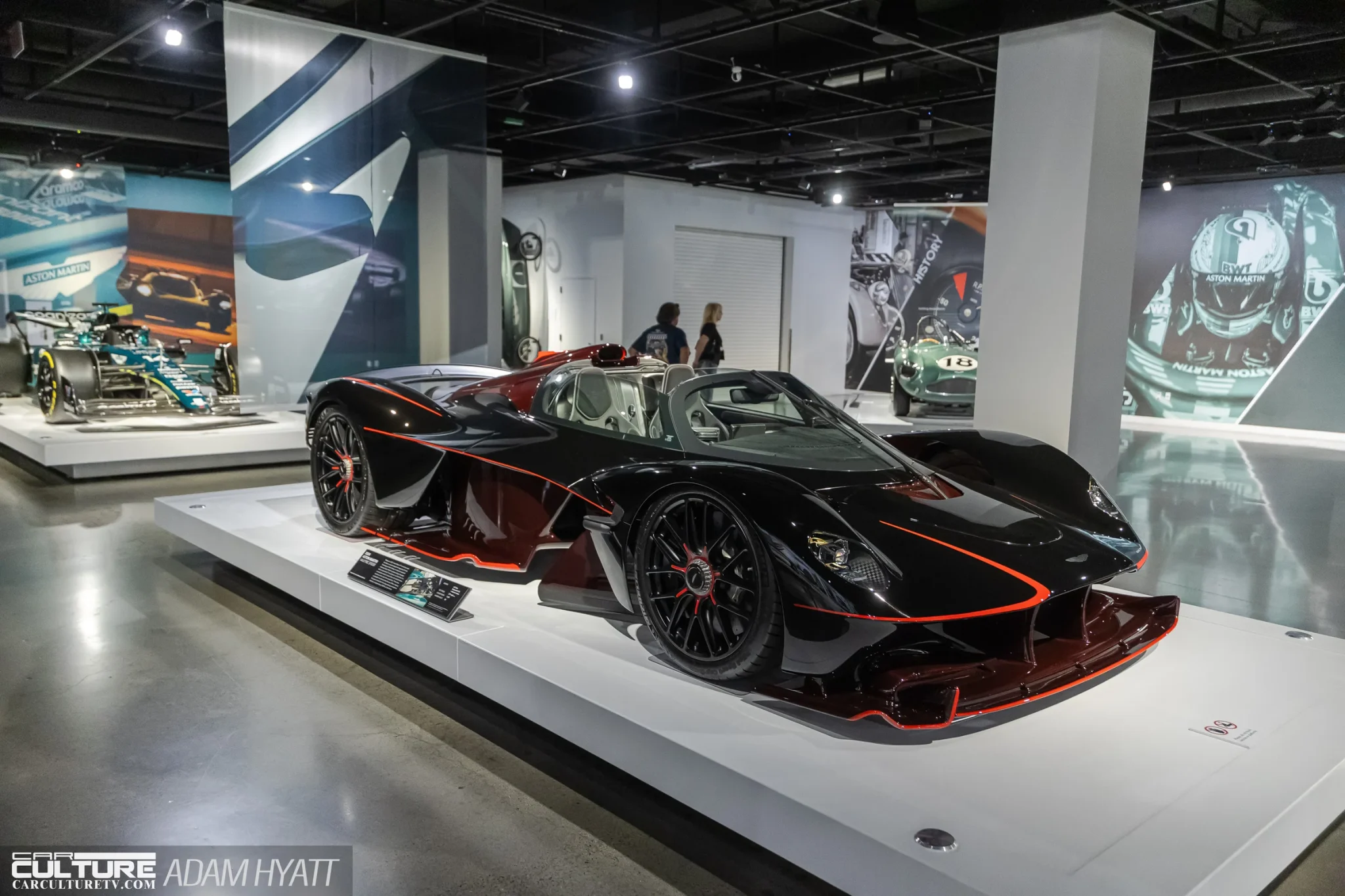
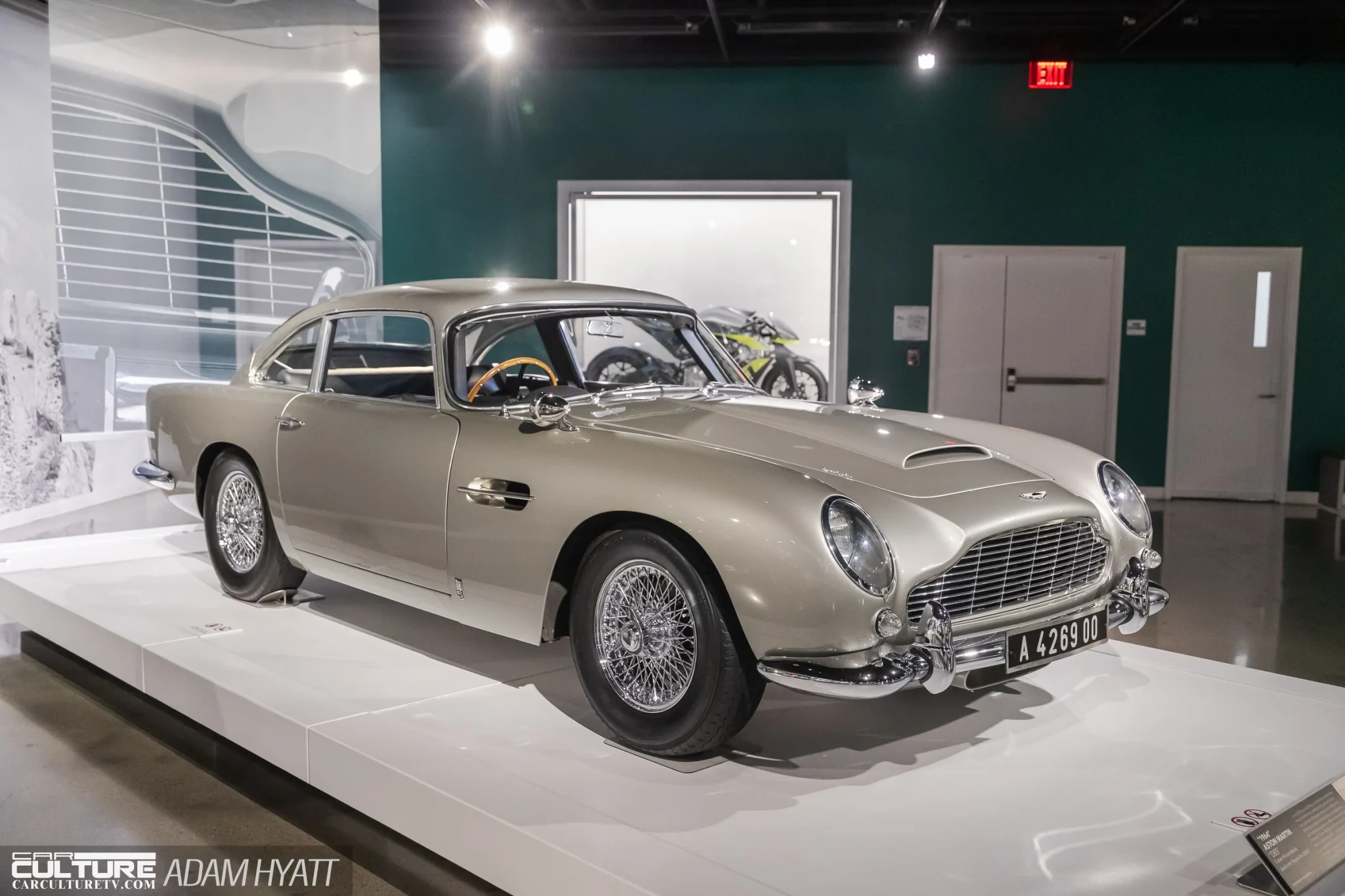
At the other end of the timeline sits the 2015 Aston Martin Vulcan, producing 820 horsepower from a 7.0-liter V-12 and designed exclusively for private track use, freed from road legality requirements to strip out comfort features in favor of a lightweight interior, aggressive suspension, and full aerodynamic elements. Only 24 were built, from the collection of Wheelie Fast LLC. Beyond even that sits the 2024 Aston Martin Valkyrie Spider, developed with Adrian Newey, producing 1,139 horsepower from a Cosworth V-12 and electric motor combination, generating 2,400 pounds of downforce with only 85 built. The Vulcan was already pushing the boundary of what a road-adjacent car could be. The Valkyrie made the Vulcan look restrained. Seeing both alongside the Feltham Flyer in the same gallery is a more effective argument for a brand’s longevity than any marketing campaign.
The Racing Collection: Decades of Competition Under One Roof
The motorsports section of the Vault is where the scale of the Petersen’s racing collection becomes fully apparent. IndyCars, Formula One machines, Can-Am prototypes, drag racers, and land speed cars occupy the same floor, spanning nearly a century of competition across every discipline.
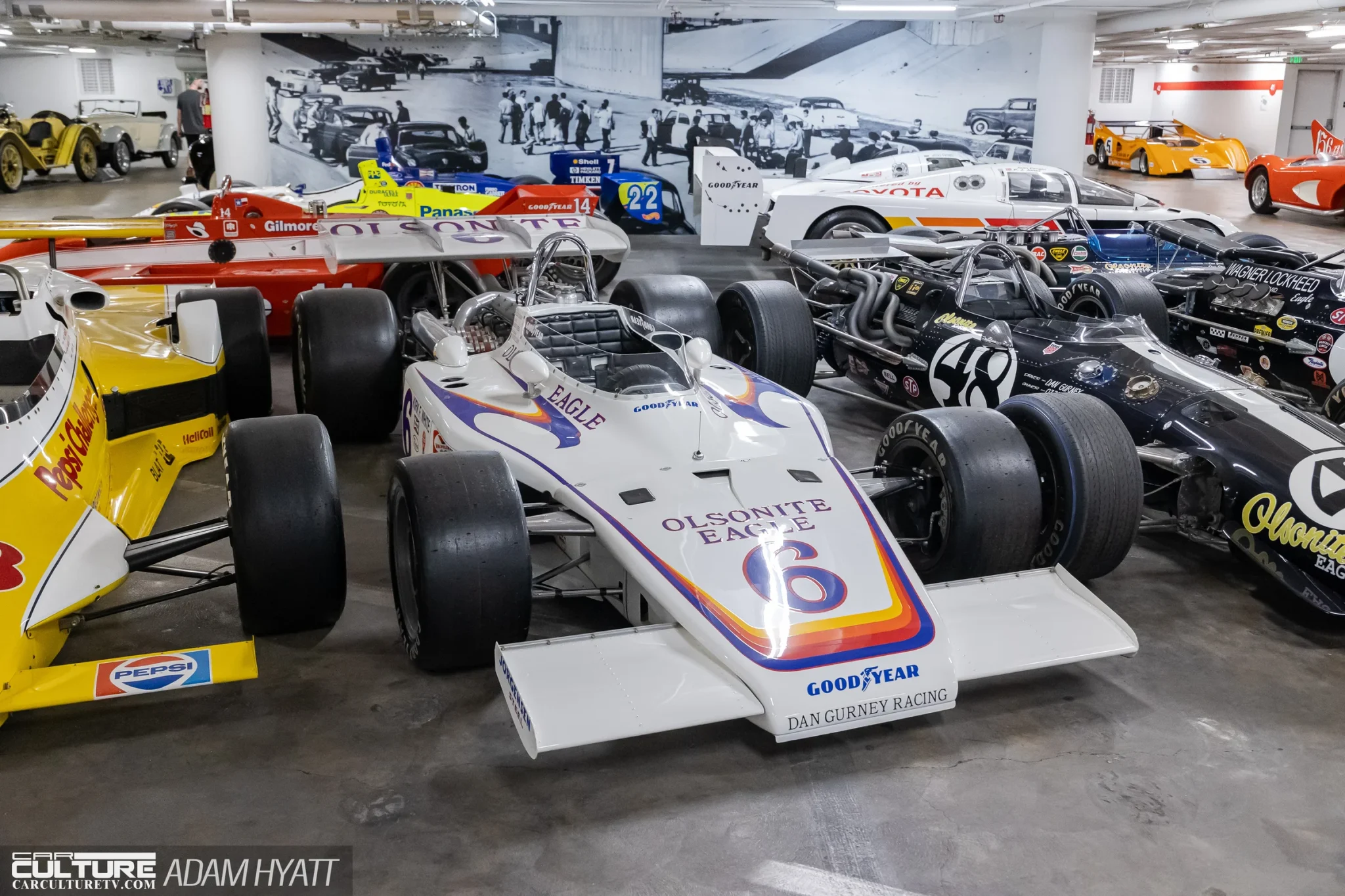
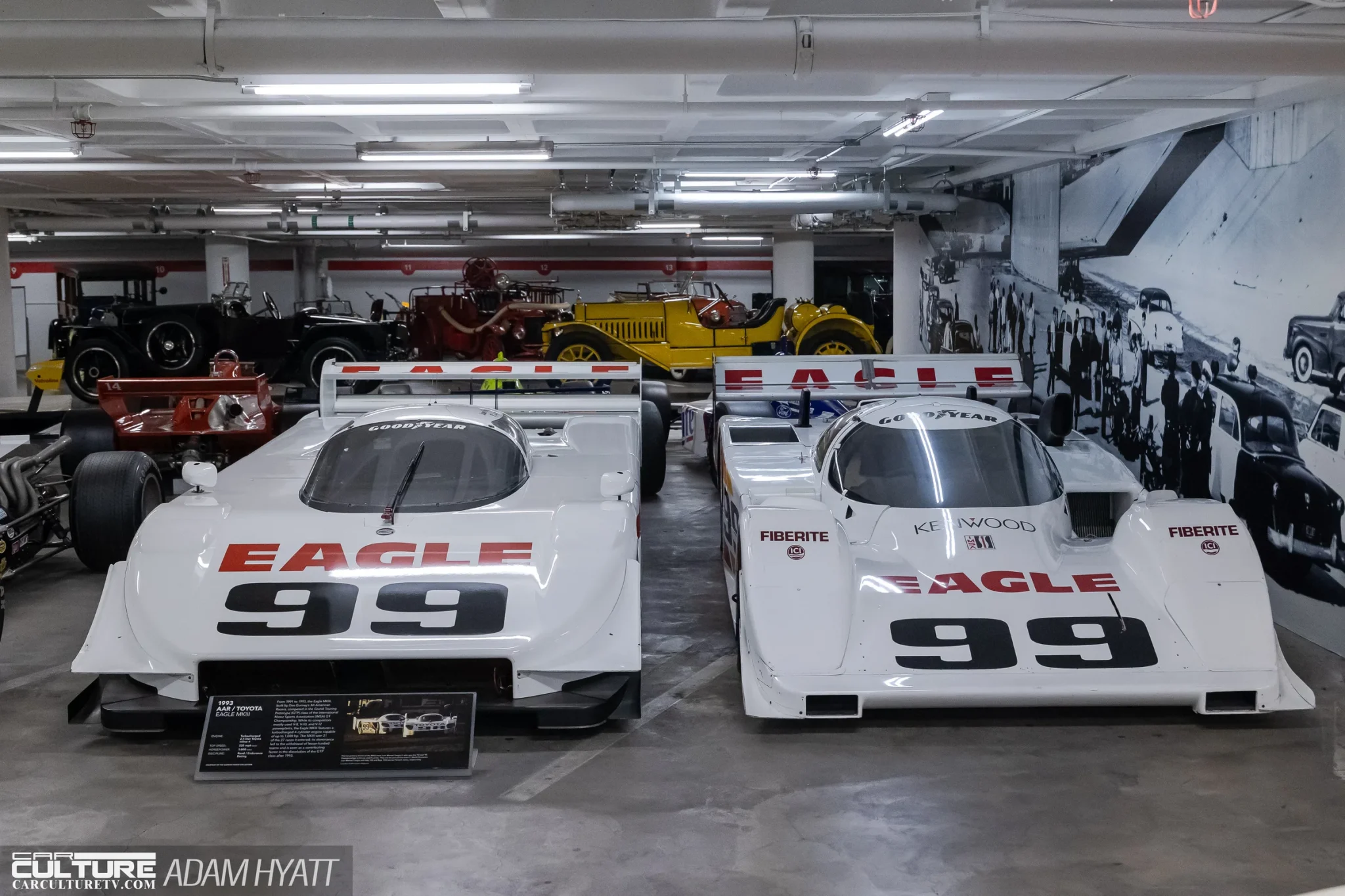
The Dan Gurney Olsonite Eagle #6 is one of the most visually arresting cars in the space. The 1993 AAR/Toyota Eagle MKIII #99, also from the Gurney family collection, is one of the most dominant purpose-built race cars in any collection. Powered by a turbocharged 2.1-liter Toyota inline-4 making up to 1,000 horsepower, the MKIII won 21 of the 27 races it entered. Its dominance was so complete it contributed to the dissolution of the GTP class after 1993.
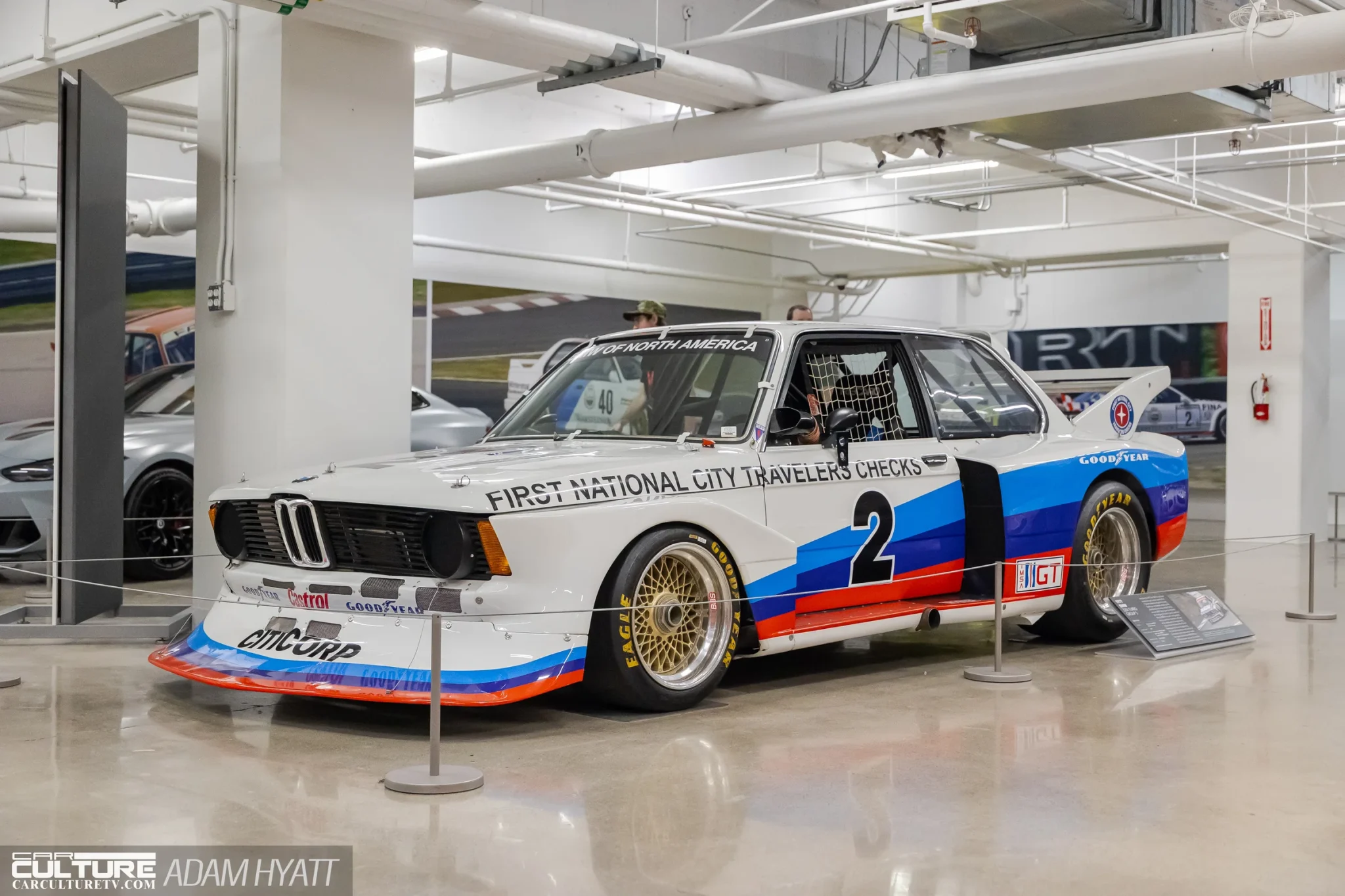
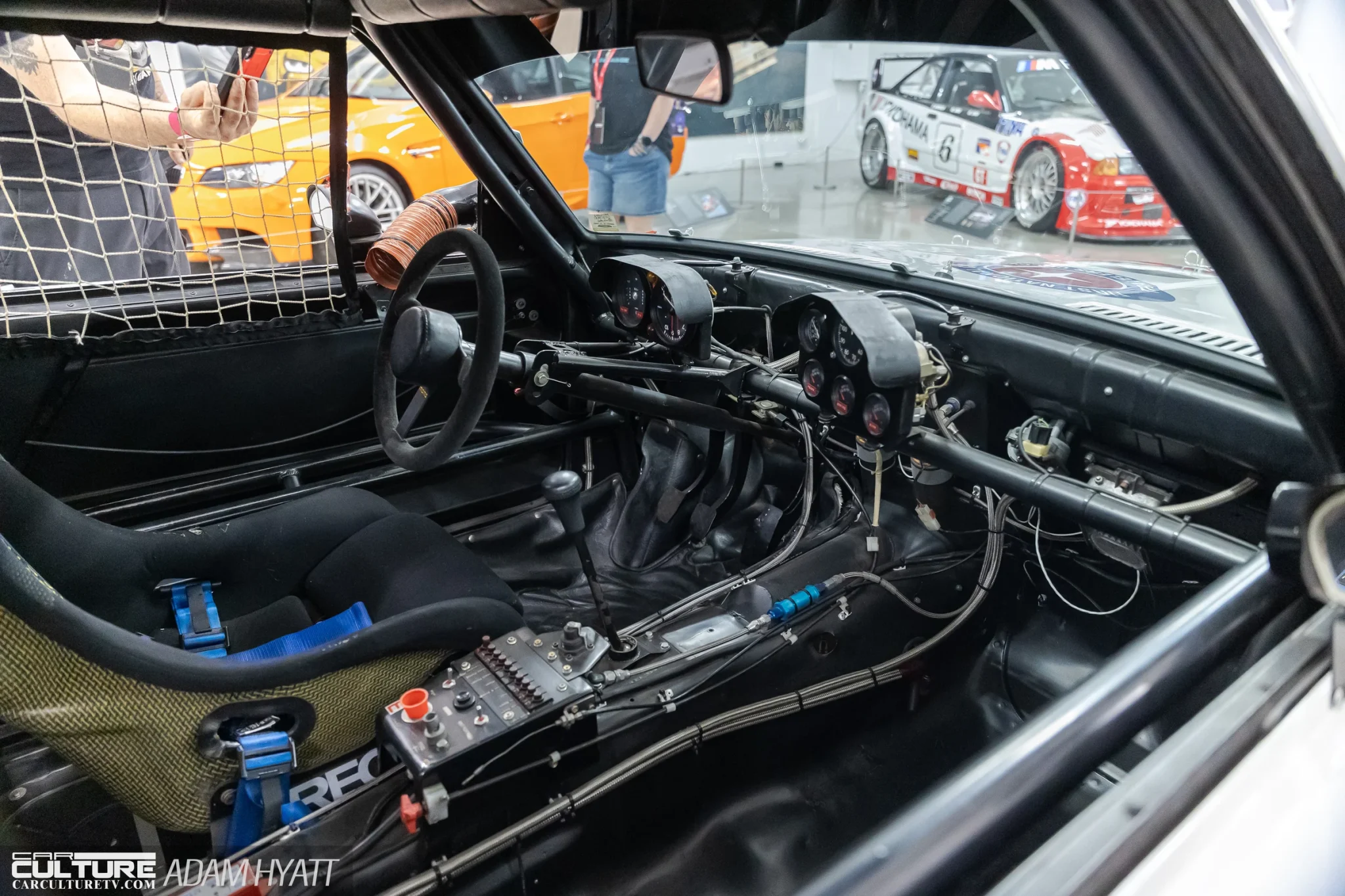
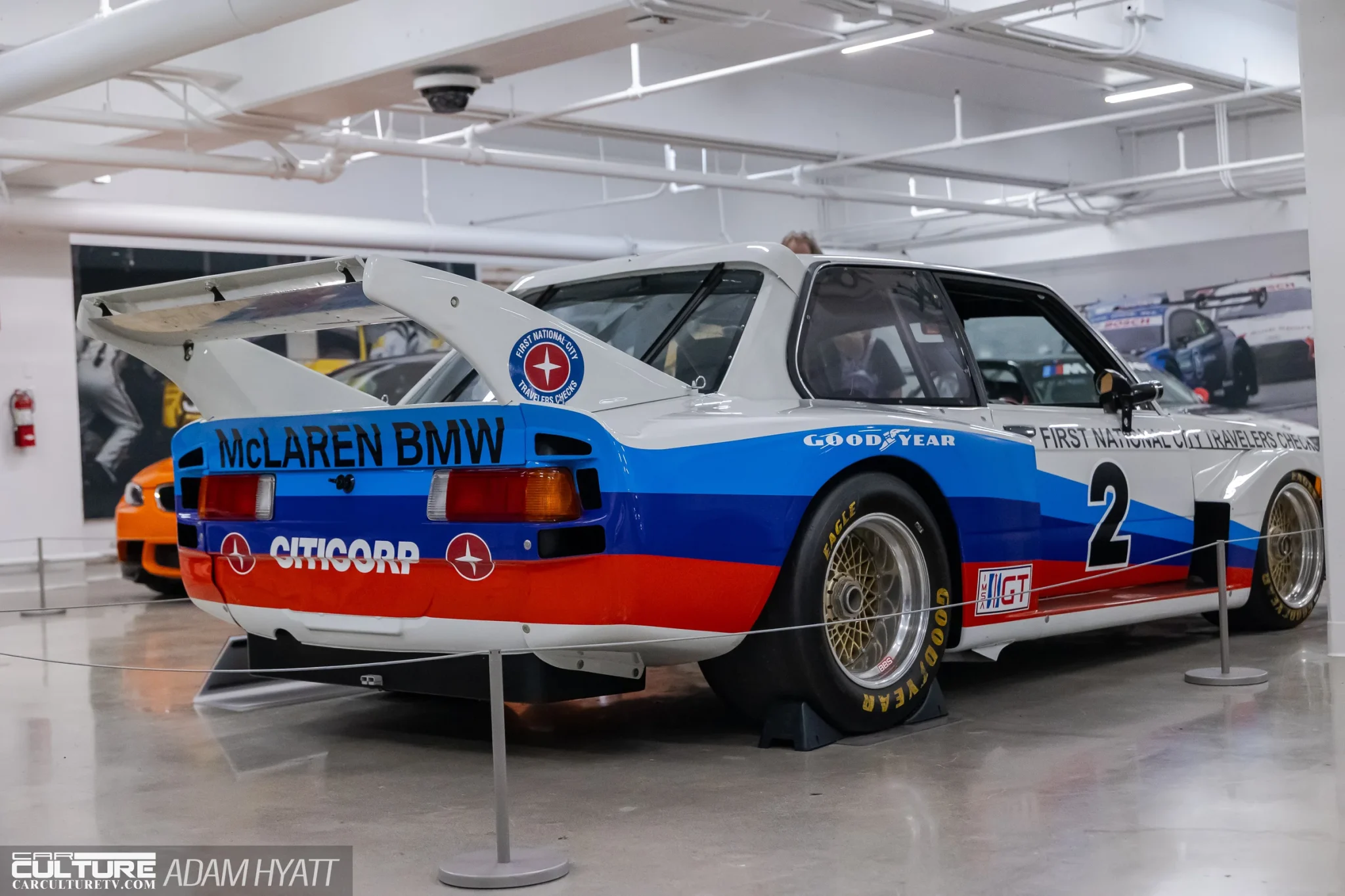
The BMW racing gallery covers ground that even serious BMW enthusiasts rarely see in one place. The 1977 BMW 320i Turbo Group 5 was transformed from a roadgoing 3 Series into a competition car in just 12 weeks. Its turbocharged engine was an early version of the unit that later powered the Brabham-BMW BT52, the car that won the 1983 Formula One World Championship.
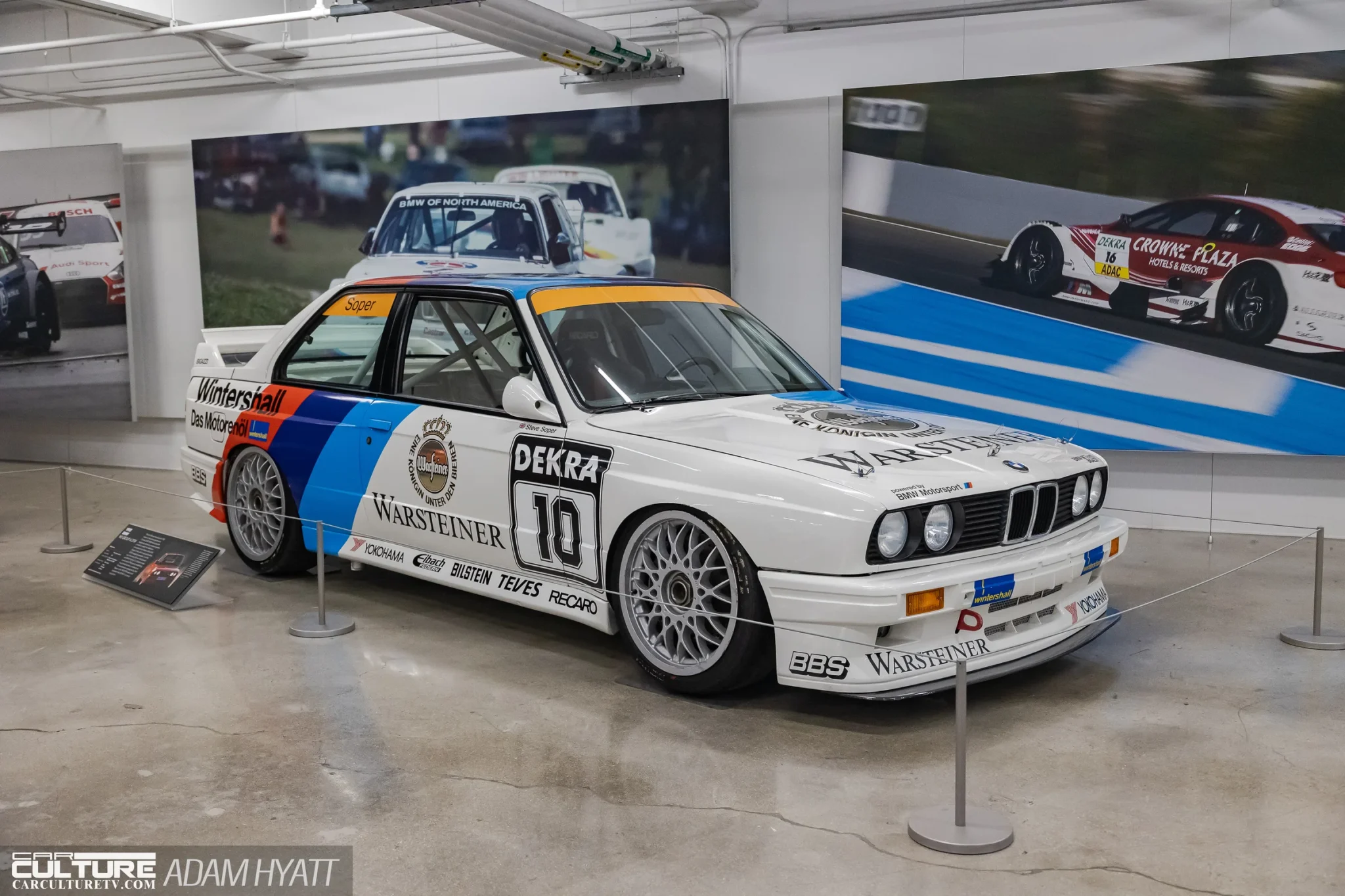
The 1990 BMW M3 Group A DTM, campaigned by Team Bigazzi in the 1992 DTM season, represents the E30 M3 in its purest racing form. BMW developed the roadgoing and racing versions simultaneously to satisfy FIA Group A homologation rules requiring 5,000 road cars, and in its first year of competition the M3 won the European and World Touring Car Championships as well as the DTM.
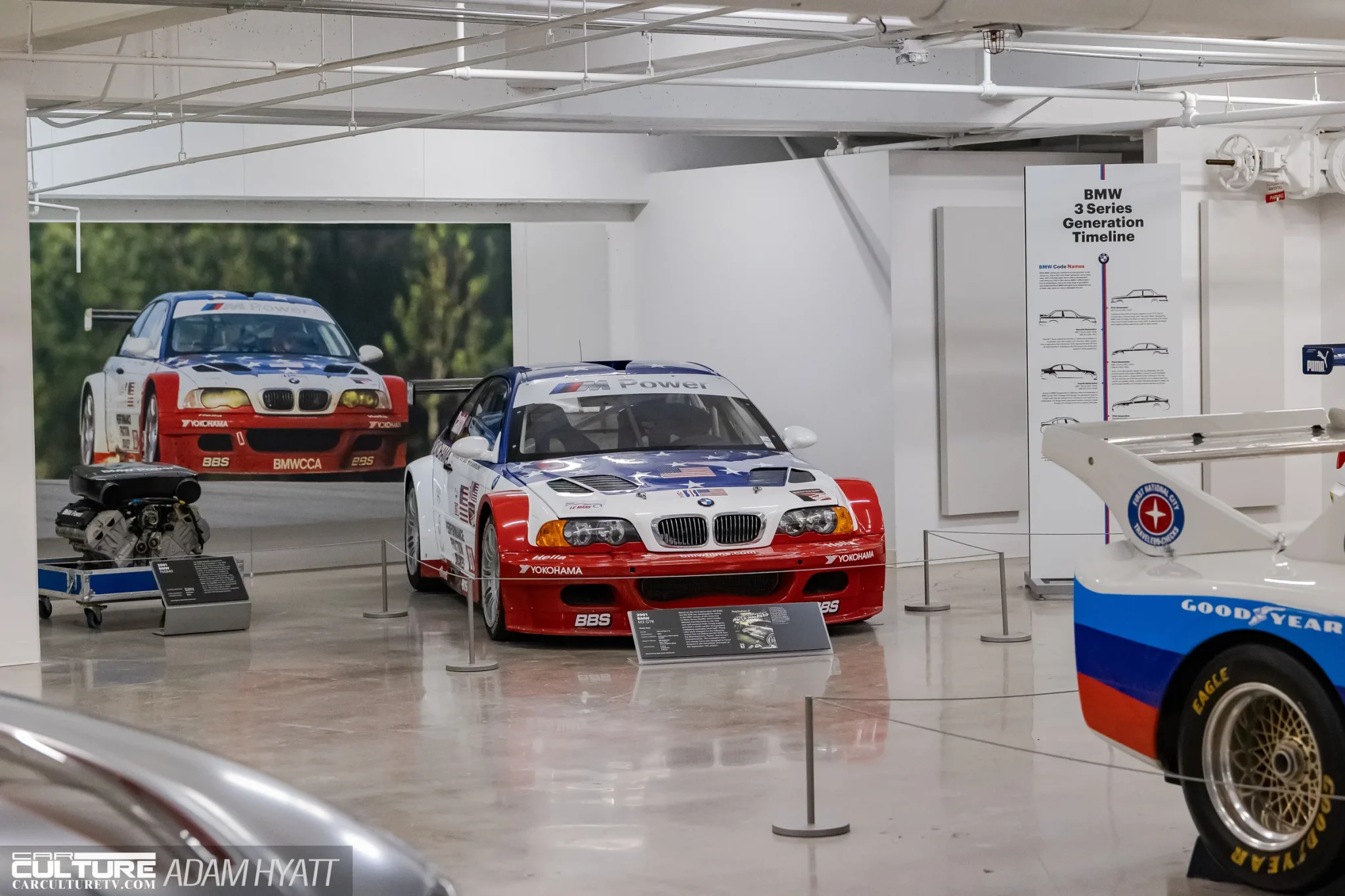
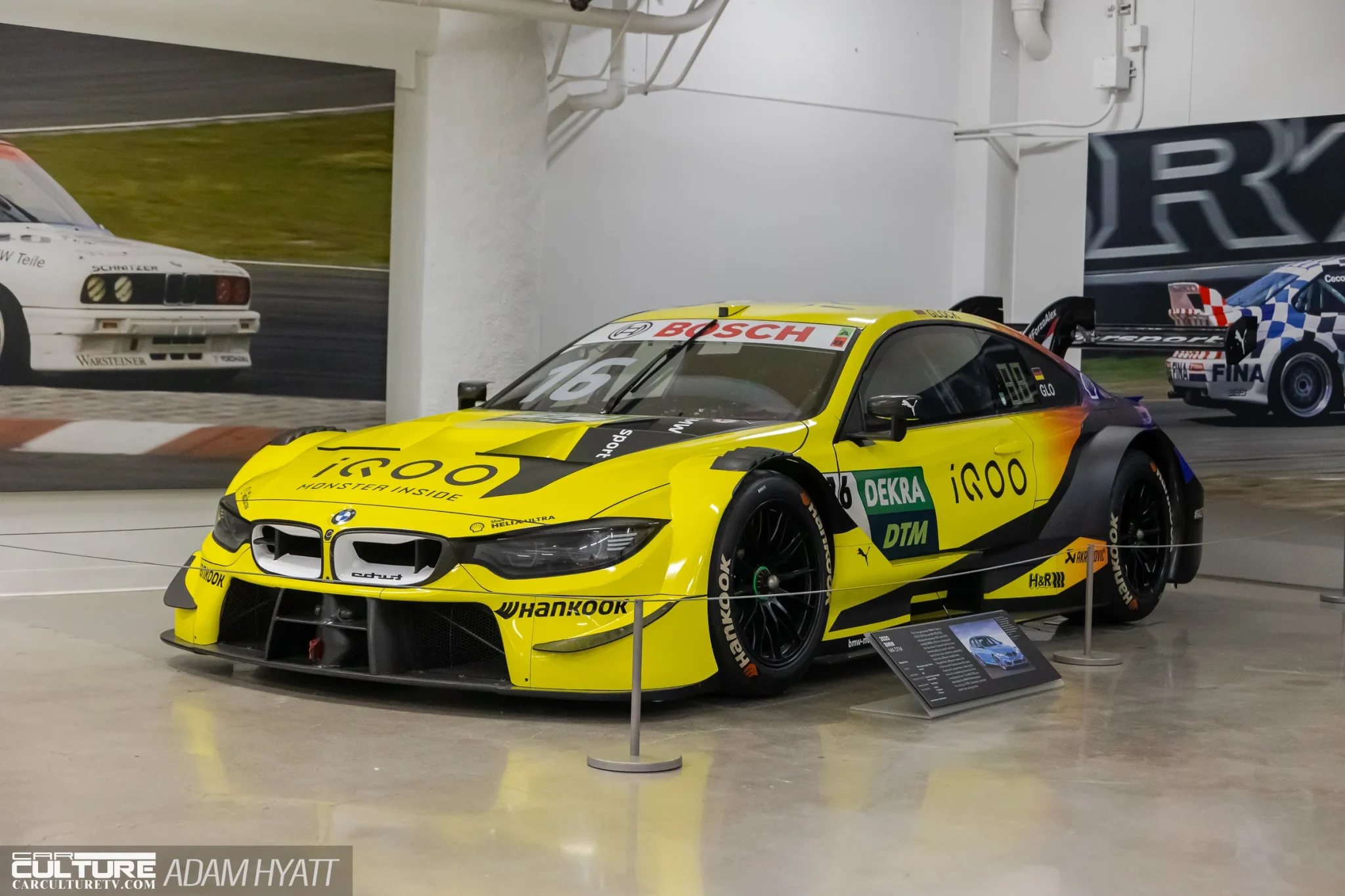
The 2001 BMW M3 GTR earned the ALMS Manufacturers’, Teams’, and Drivers’ Championships in its first season. This example’s stars-and-stripes livery was designed in honor of America following September 11th, and it appeared prominently in Need for Speed: Most Wanted, a detail the museum acknowledges directly on the placard. The 2020 BMW M4 DTM, driven by Timo Glock and producing 630 horsepower from a turbocharged 2.0-liter inline-4, represents the modern chapter of BMW’s DTM commitment before the series transitioned to GT3 regulations.
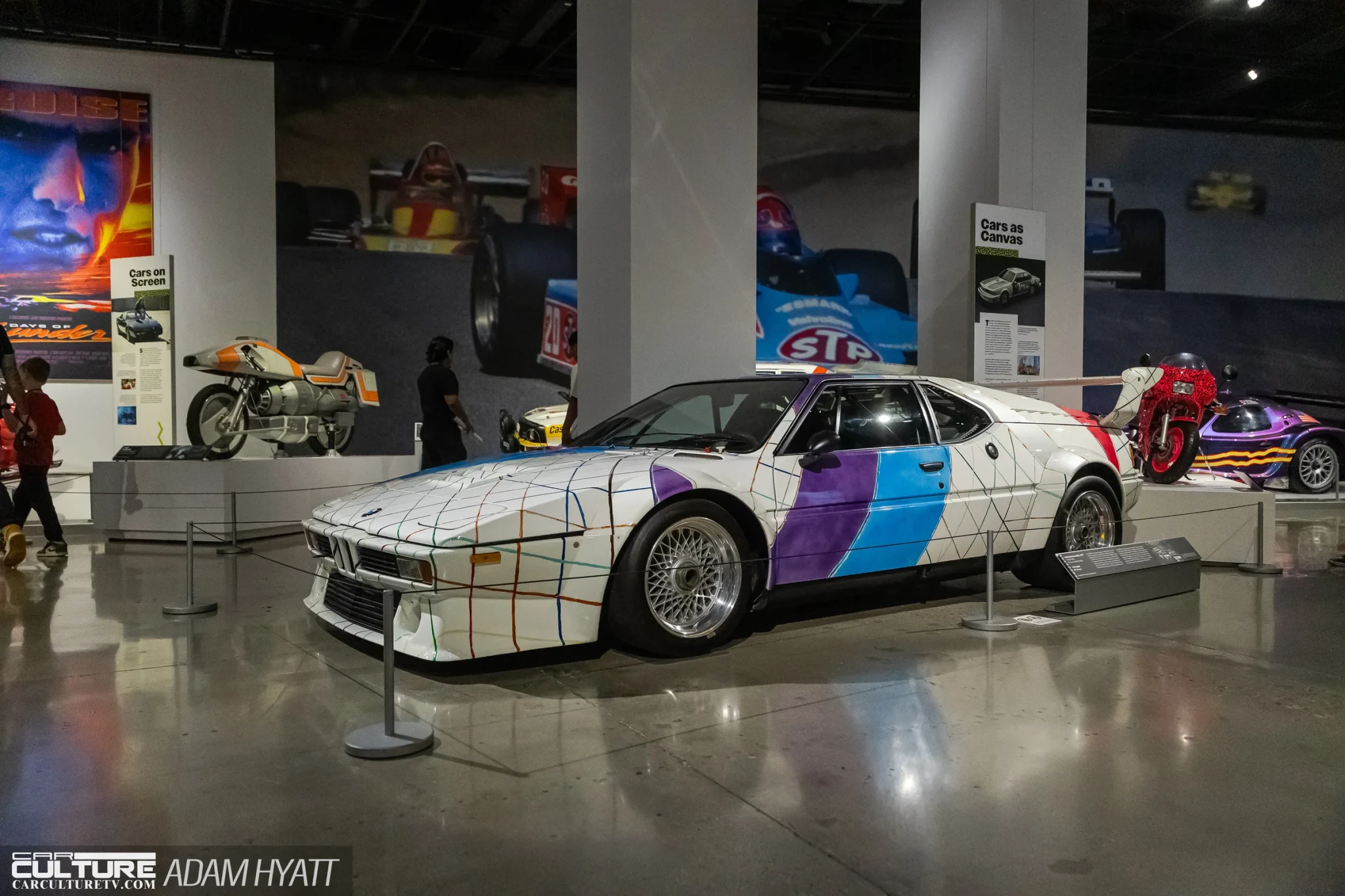
The 1979 BMW M1 Procar painted by Frank Stella is part of the BMW Art Car series that began when Hervé Poulain asked Alexander Calder to paint his 3.0 CSL at Le Mans in 1975. The series now includes 20 vehicles by artists from around the world. It is simultaneously a legitimate race car and gallery-worthy fine art.
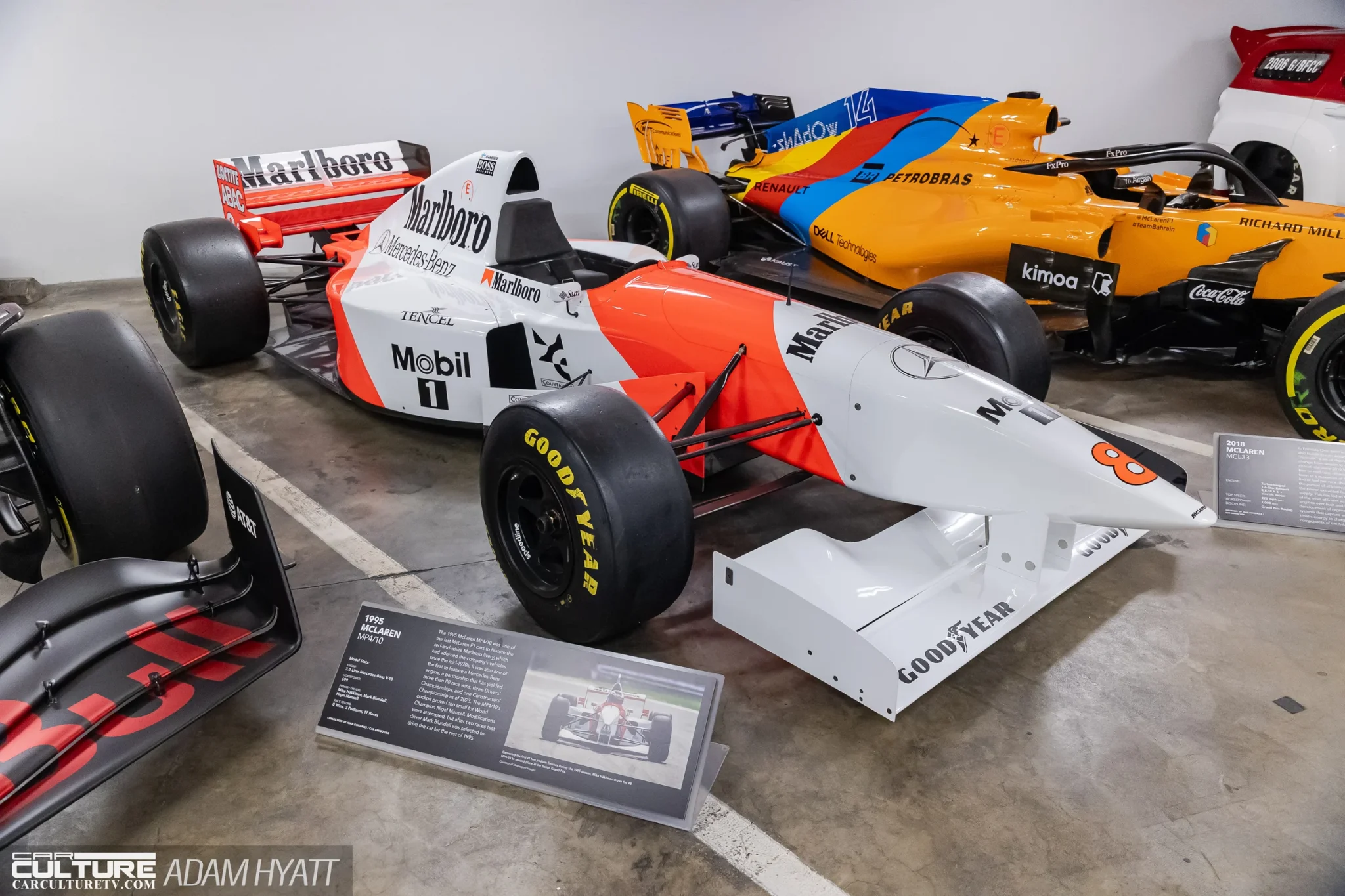
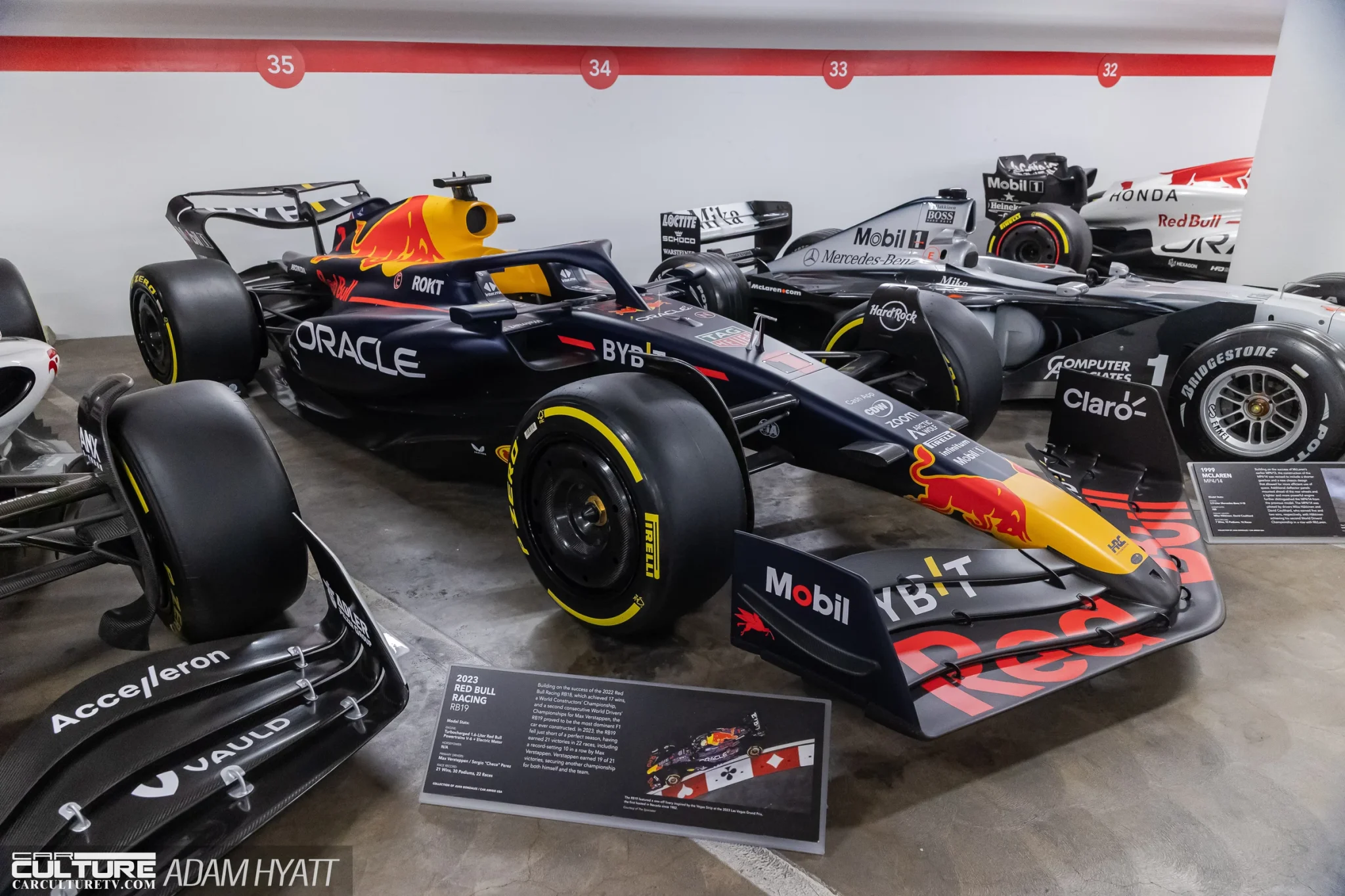
The F1 section spans from the 1995 McLaren MP4/10 in Marlboro red and white, one of the last McLarens to carry that livery and one of the first with a Mercedes-Benz engine, to the 2023 Red Bull Racing RB19, Max Verstappen’s championship-winning car that took 19 of 21 races in a season that came within a hair of perfect.
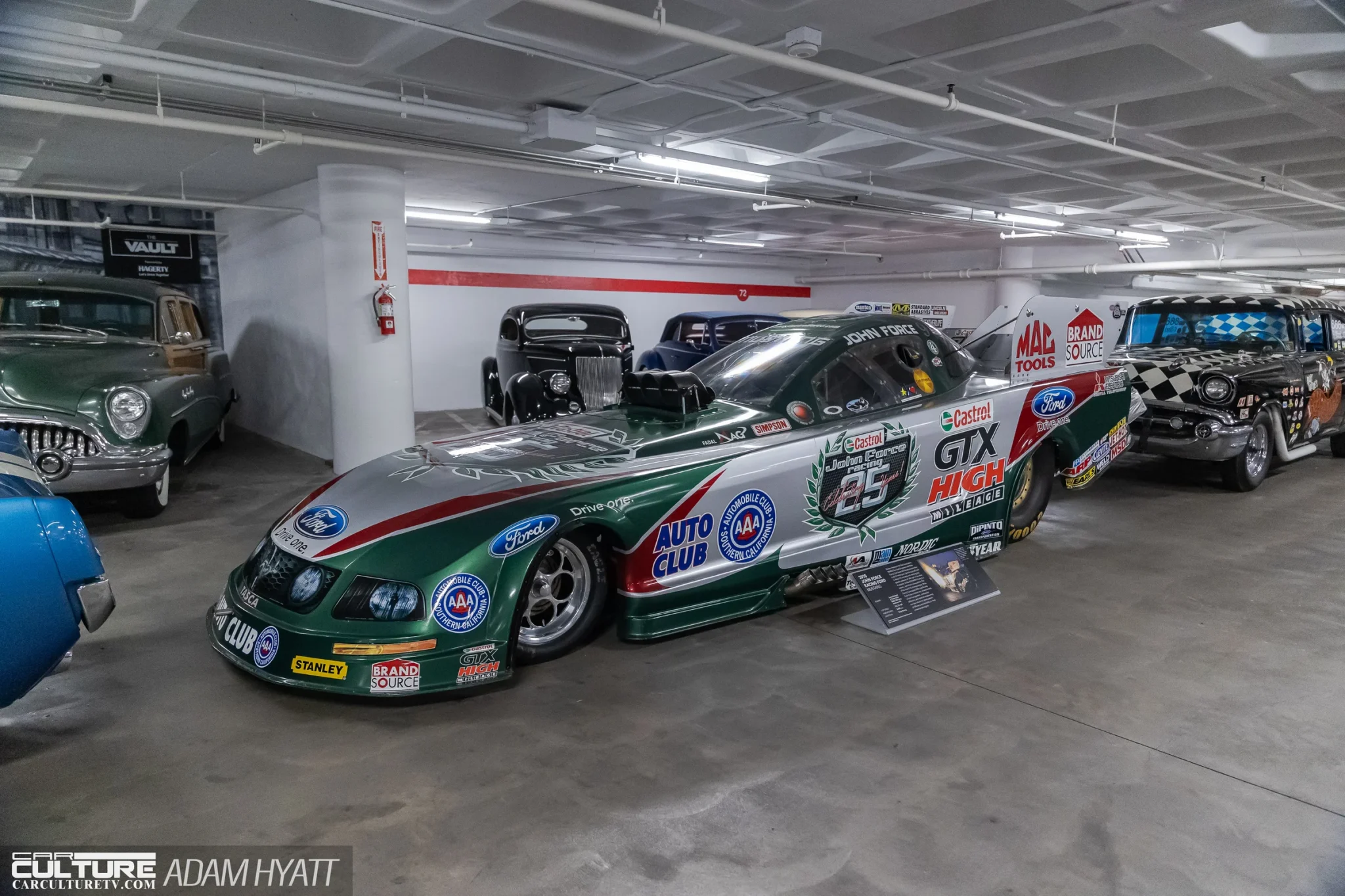
The 2010 John Force Racing Ford Mustang Funny Car, gifted to the Petersen by John Force himself, is a reminder of what the fastest acceleration in motorsport looks like up close. Its supercharged 8.2-liter nitromethane V-8 produces an estimated 8,000 horsepower and reaches speeds over 316 mph in under four seconds.
The Hollywood Cars and Pop Culture Collection
The Vault’s entertainment vehicle collection hits differently when surrounded by legitimate race cars and historically significant machines. These are not replicas. They are the actual vehicles used during production, and the context reframes what they represent.
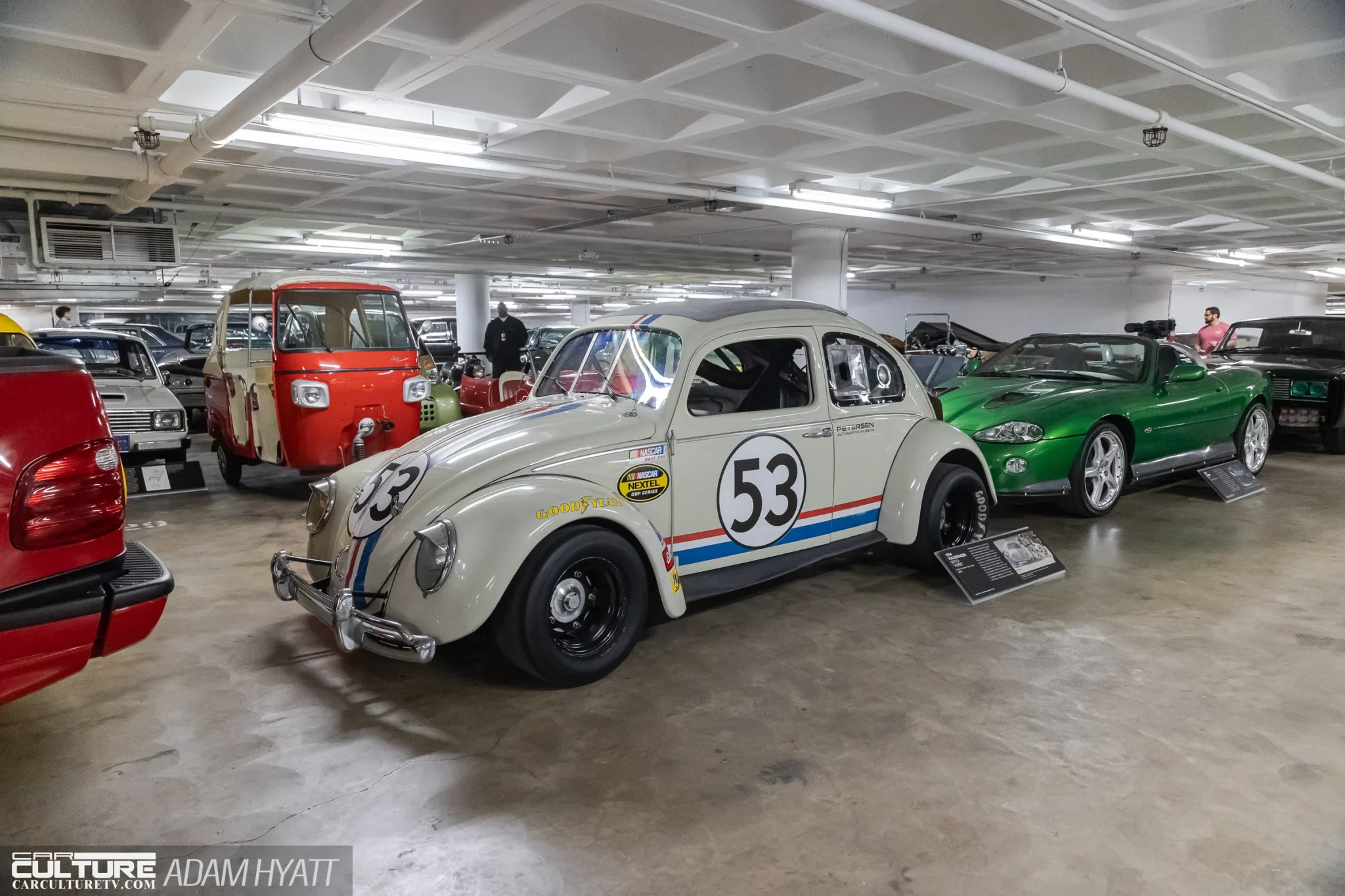
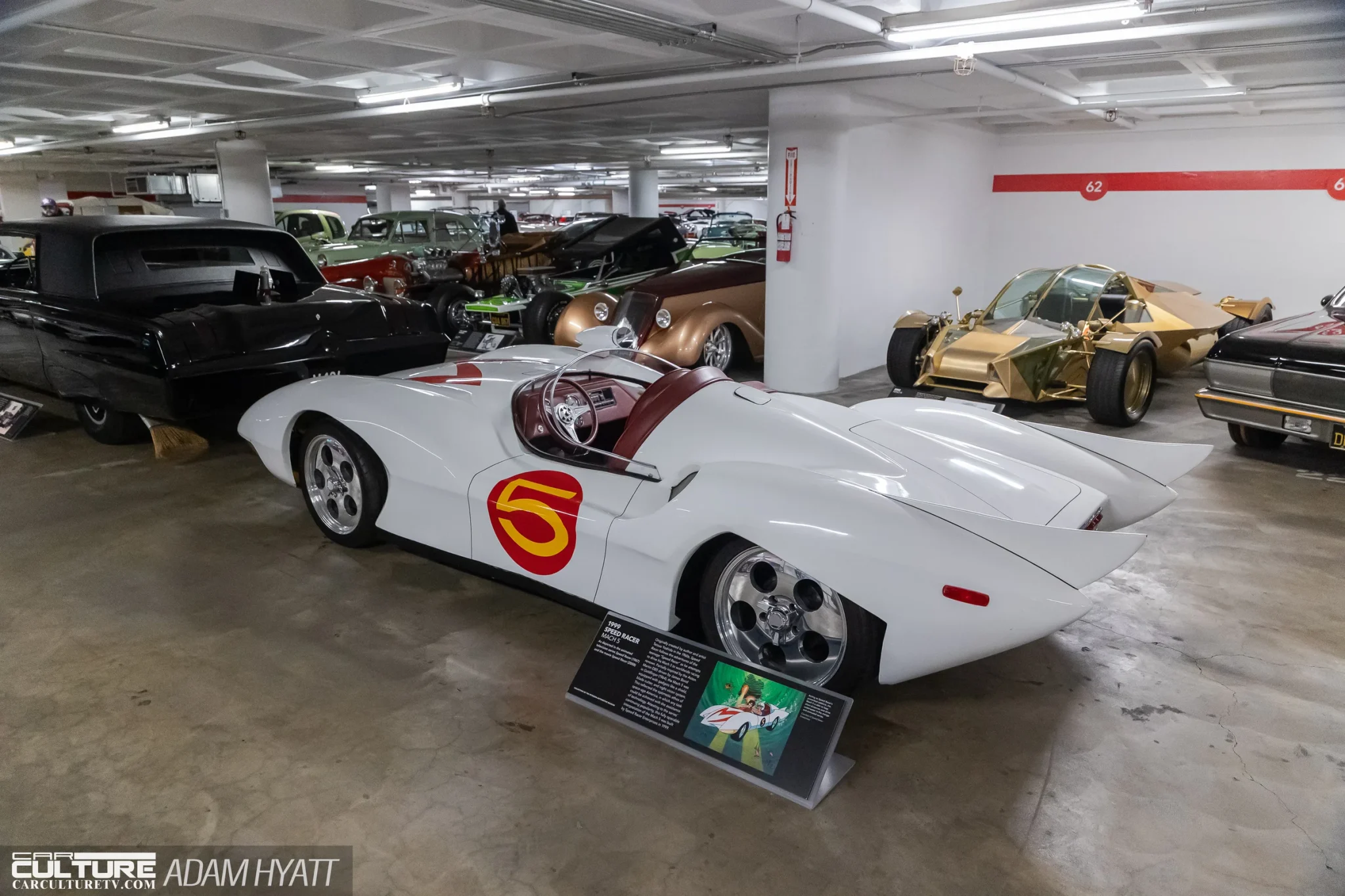
The 1966 Volkswagen Beetle “Herbie” from Herbie: Fully Loaded (2005) was driven by Lindsay Lohan’s character in the film’s racing sequences. Thirty vehicles were used in production. This example was modified for the track with a roll cage, disc brakes, and Goodyear racing slicks and belongs to the Petersen’s own collection. The 1999 Speed Racer Mach 5 is a fully operable interpretation built by Speed Racer Enterprises, partially inspired by the Aston Martin DB5 driven by James Bond in Goldfinger, and equipped with a shield, blade cutter, and night vision system.
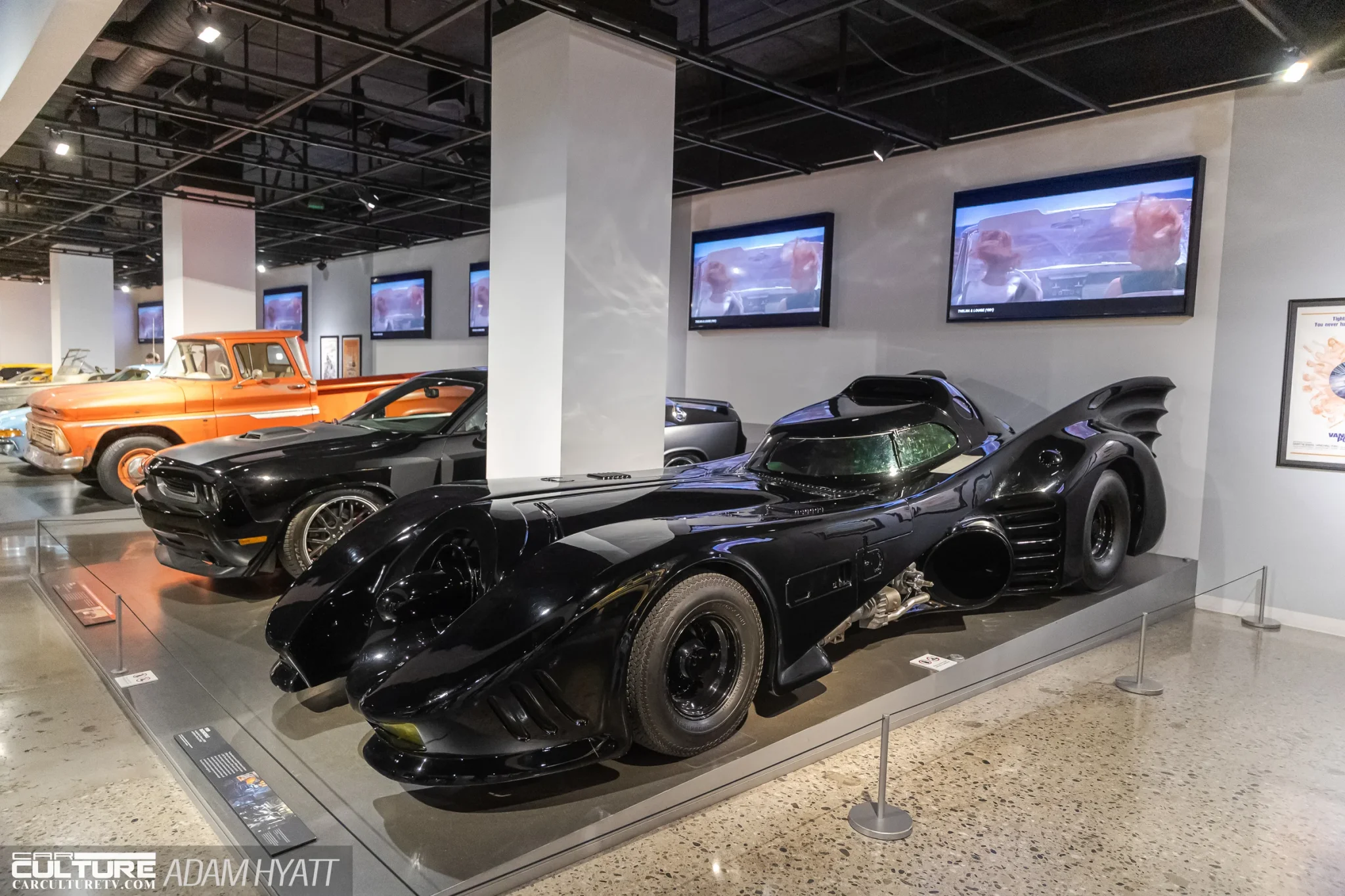
The Batmobile on display is the Tim Burton-era version, the brooding, jet-turbine-styled machine from the 1989 and 1992 Batman films that defined what a Batmobile looked like for an entire generation. It remains one of the most visually striking movie vehicles ever built and commands the room the moment you see it.
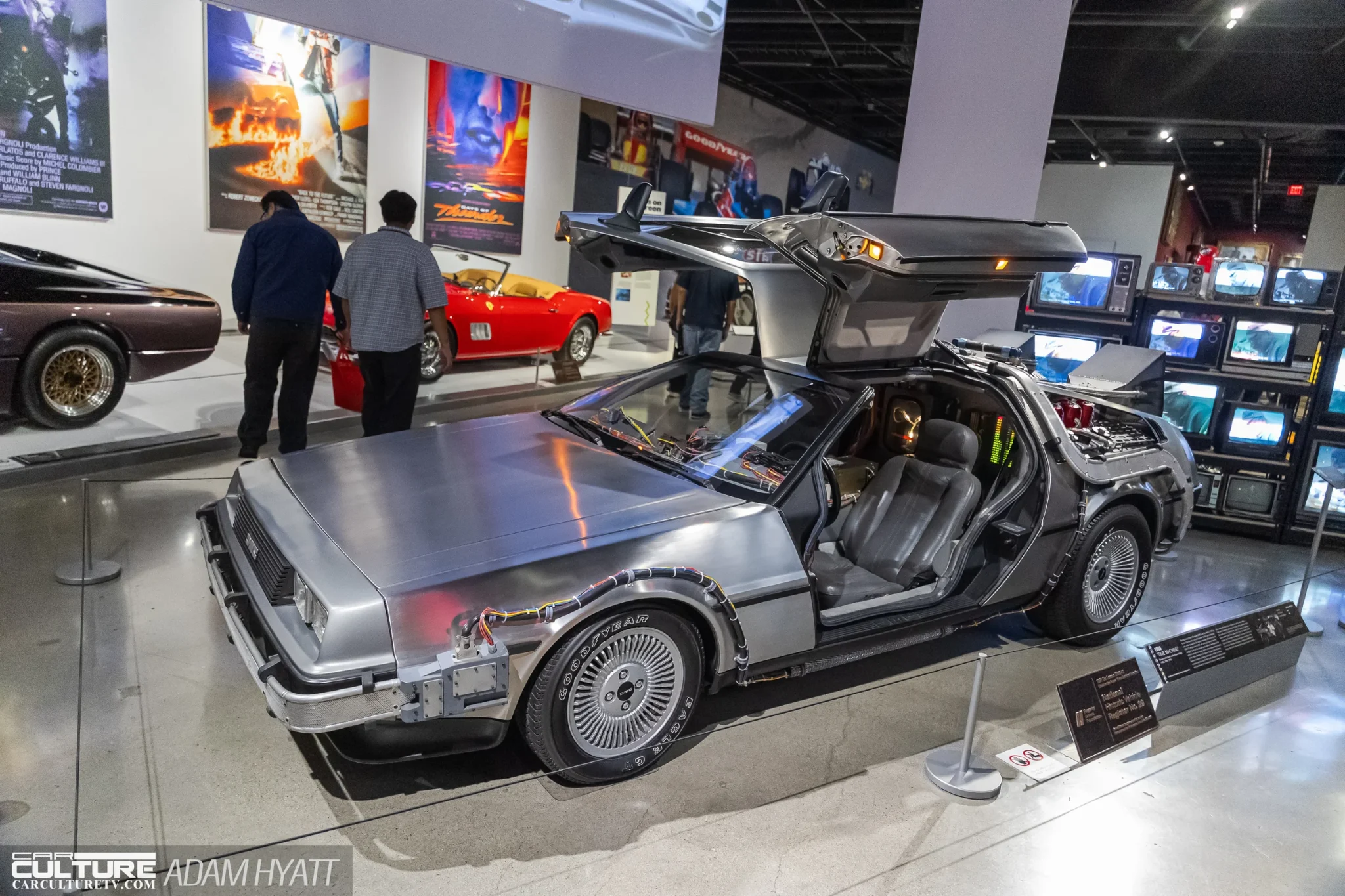
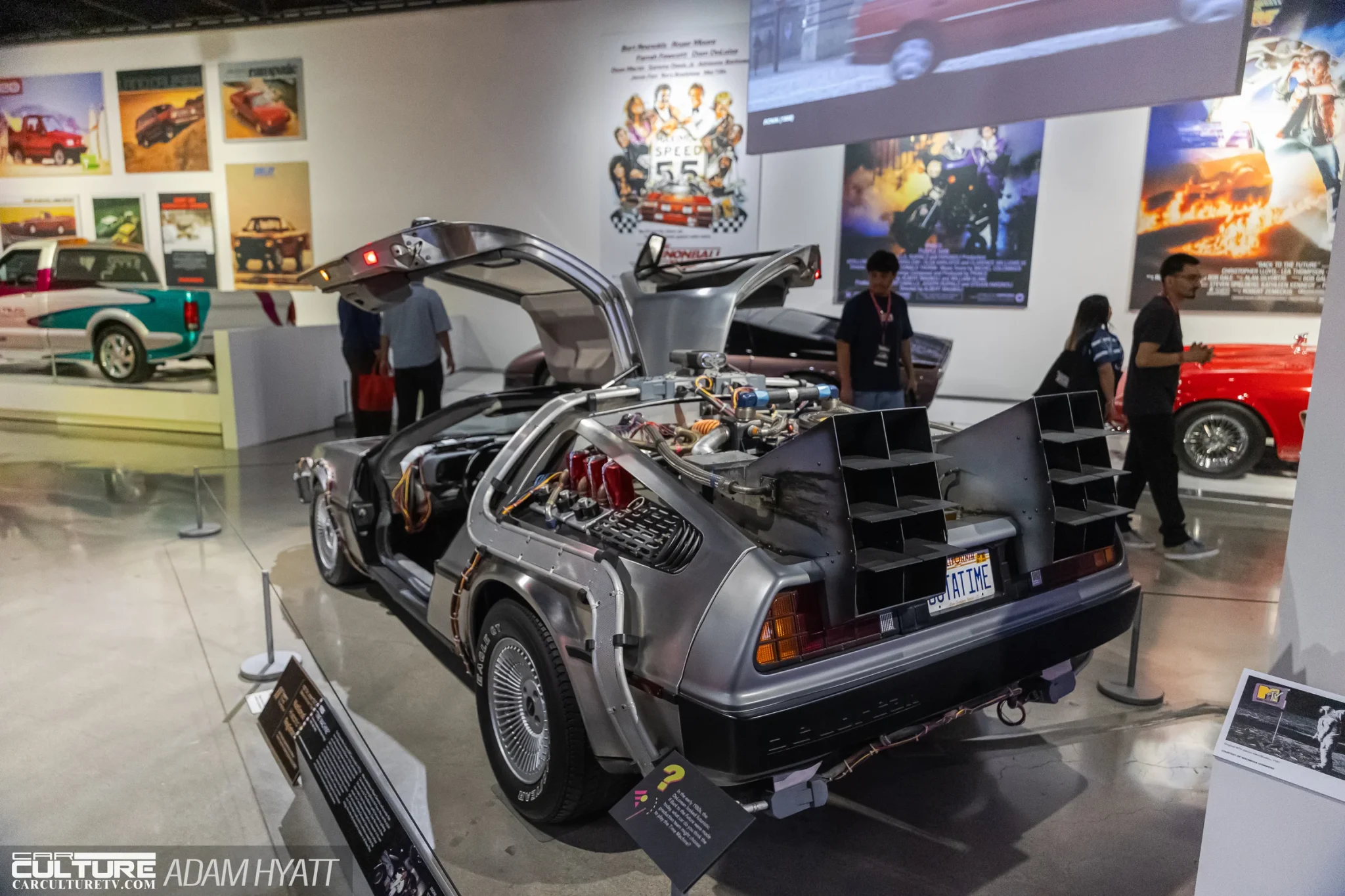
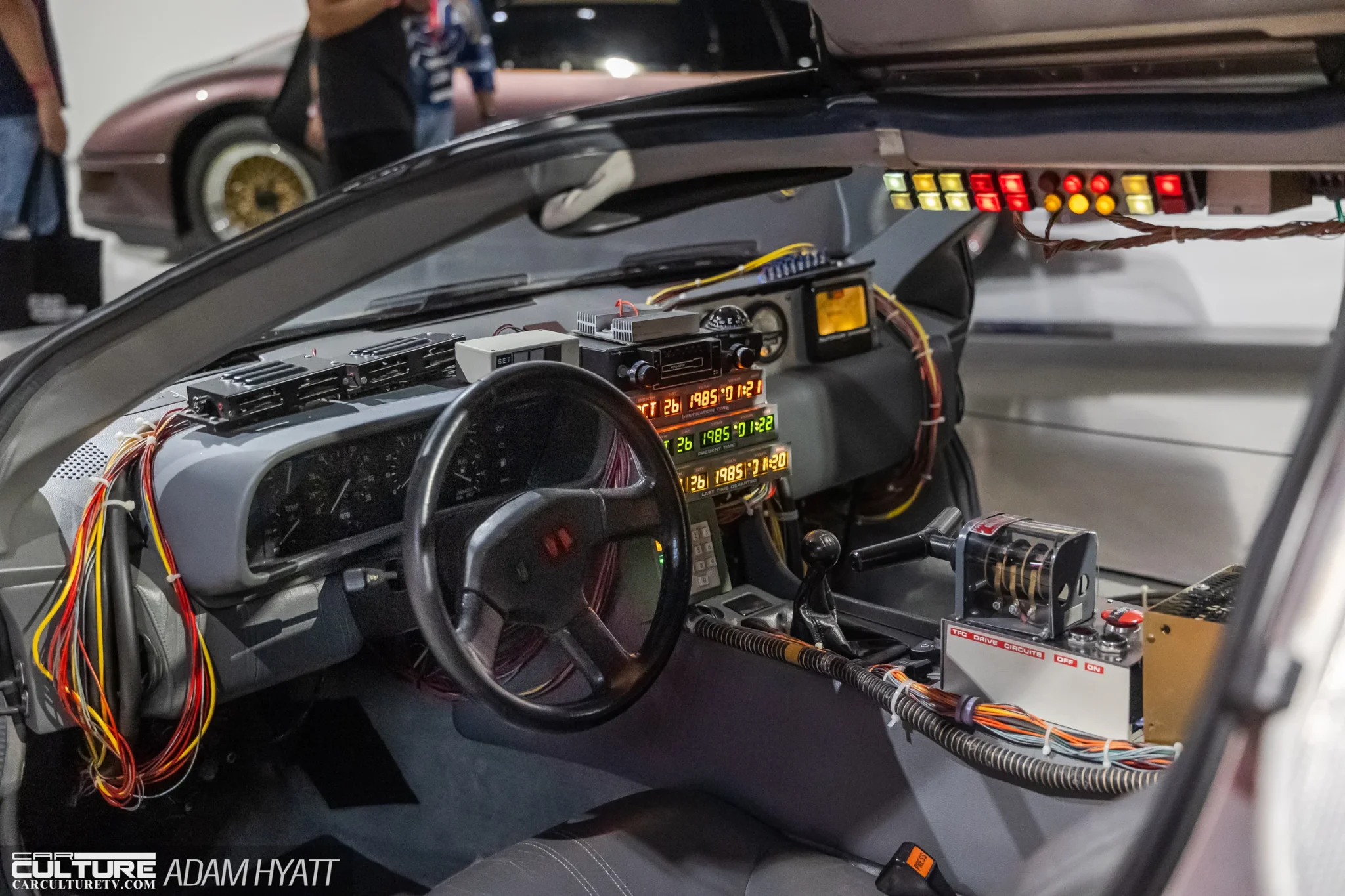
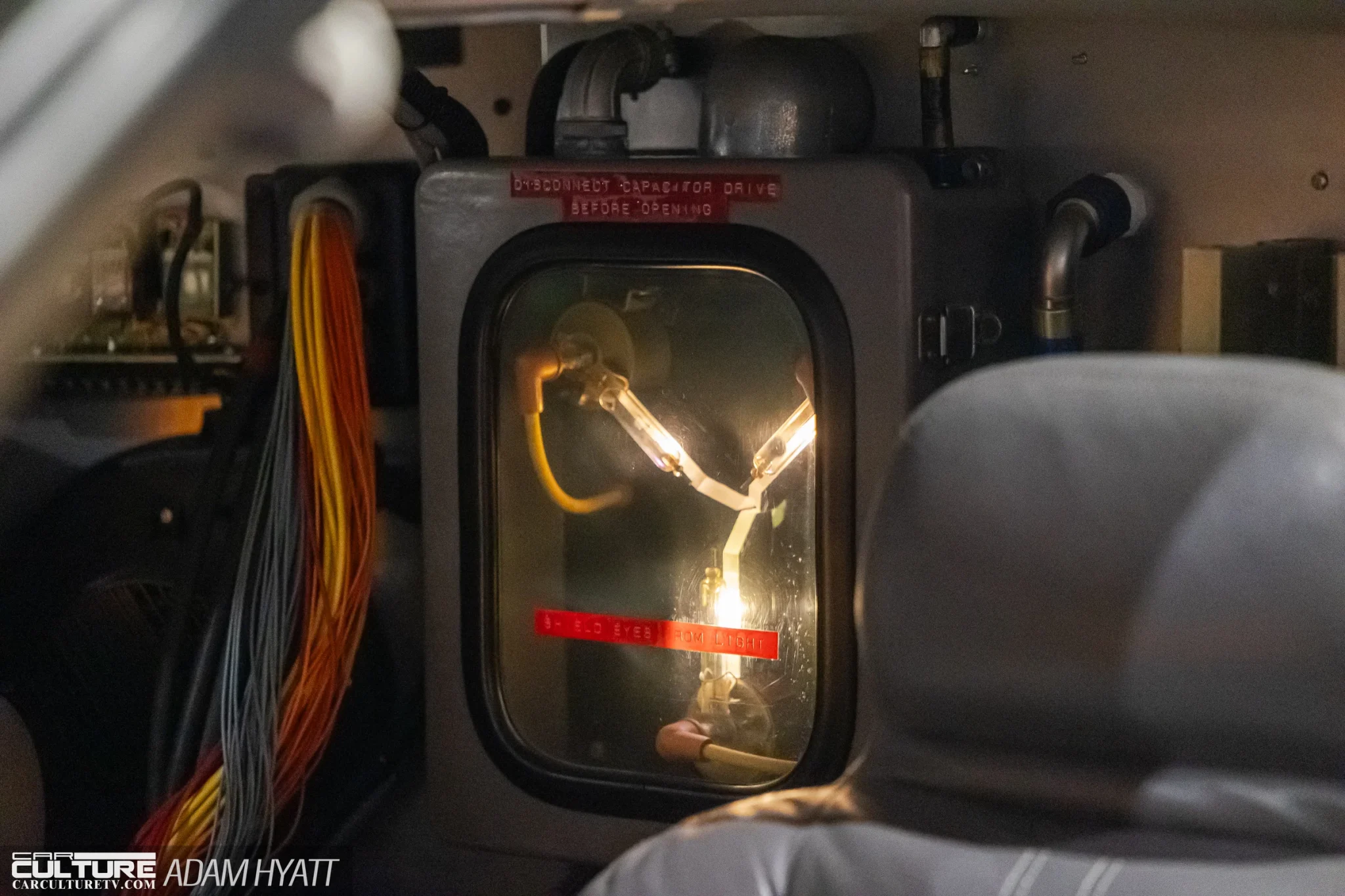
The 1985 DMC-12 DeLorean is the Back to the Future time machine, and this is not just any screen-used example. It carries National Historic Vehicle Register designation number 29, one of only a small number of automobiles in the country to receive that recognition. That designation puts it in the same category of cultural significance as presidential vehicles and land speed record cars. Seeing a DeLorean with that kind of official standing next to a McLaren F1 and a Ferrari Enzo is one of those only-at-the-Petersen moments.
The fact that the Mach 5 was inspired by the Bond DB5, and the Bond DB5 stunt car from No Time to Die is in the Aston Martin gallery upstairs, is a connection the museum lets you make on your own.
The Vault: Presented by Hagerty
Everything above ground is worth the admission price. The Vault is why you book in advance.
Located beneath the museum in a secured underground facility, the Vault houses more than 300 vehicles from the Petersen’s permanent collection on a rotating basis. Access is not included with general admission and requires a separate booking. The tour is guided, group sizes are small, and the experience is categorically different from anything happening on the floors above.
The atmosphere shifts immediately. The lighting is more intimate, the pace is slower, and you are standing in front of machines that most people will never see in person anywhere else on earth, with someone next to you who can explain exactly why each one matters.
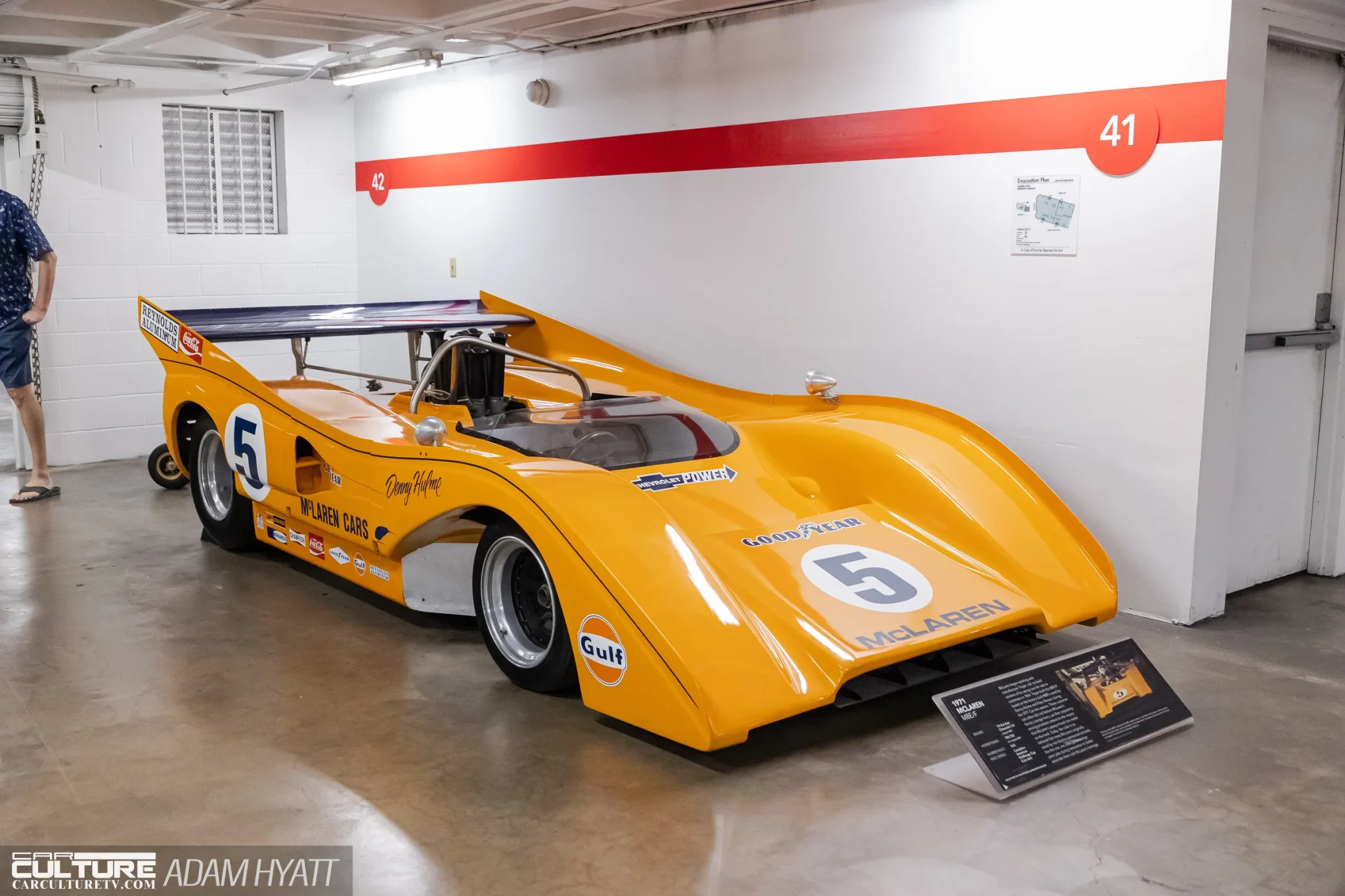
The 1971 McLaren M8E/F Can-Am car, from the Petersen’s own collection, represents the papaya orange McLaren era that defined Can-Am racing. Built by Trojan Ltd. based on the factory-built M8Fs raced by Denny Hulme and Peter Revson during the 1971 Can-Am season, it is powered by a 7.9-8.4-liter Chevrolet V-8 making 700-720 horsepower. The papaya orange color became so synonymous with McLaren that many non-factory cars originally raced by privateers, including this one, are often repainted orange during restoration to better associate them with the marque’s heritage. The 1971 Can-Am season culminated in a first-place finish at the Los Angeles Times Grand Prix in Riverside, California, making this car particularly fitting for a Los Angeles museum.
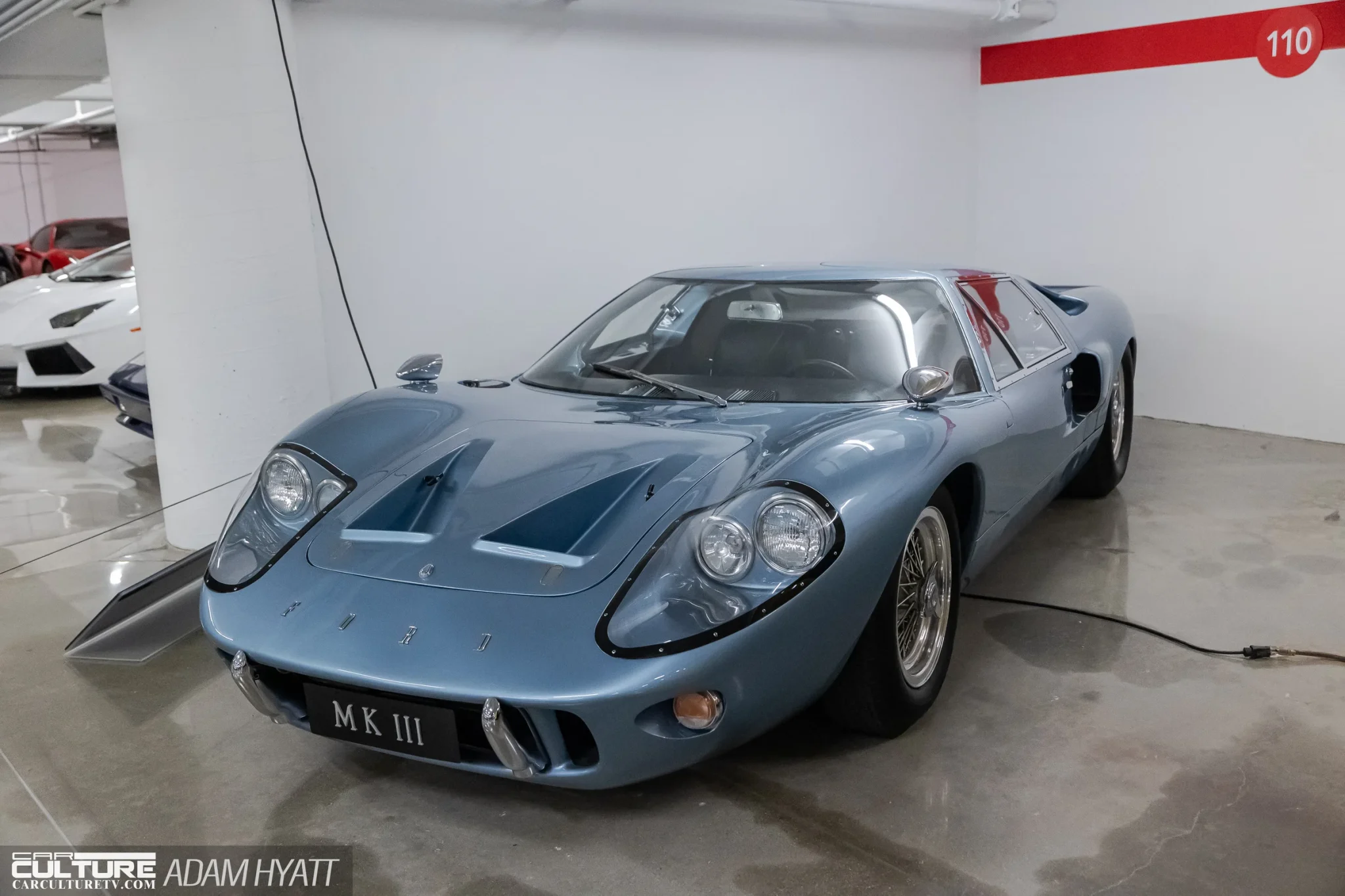
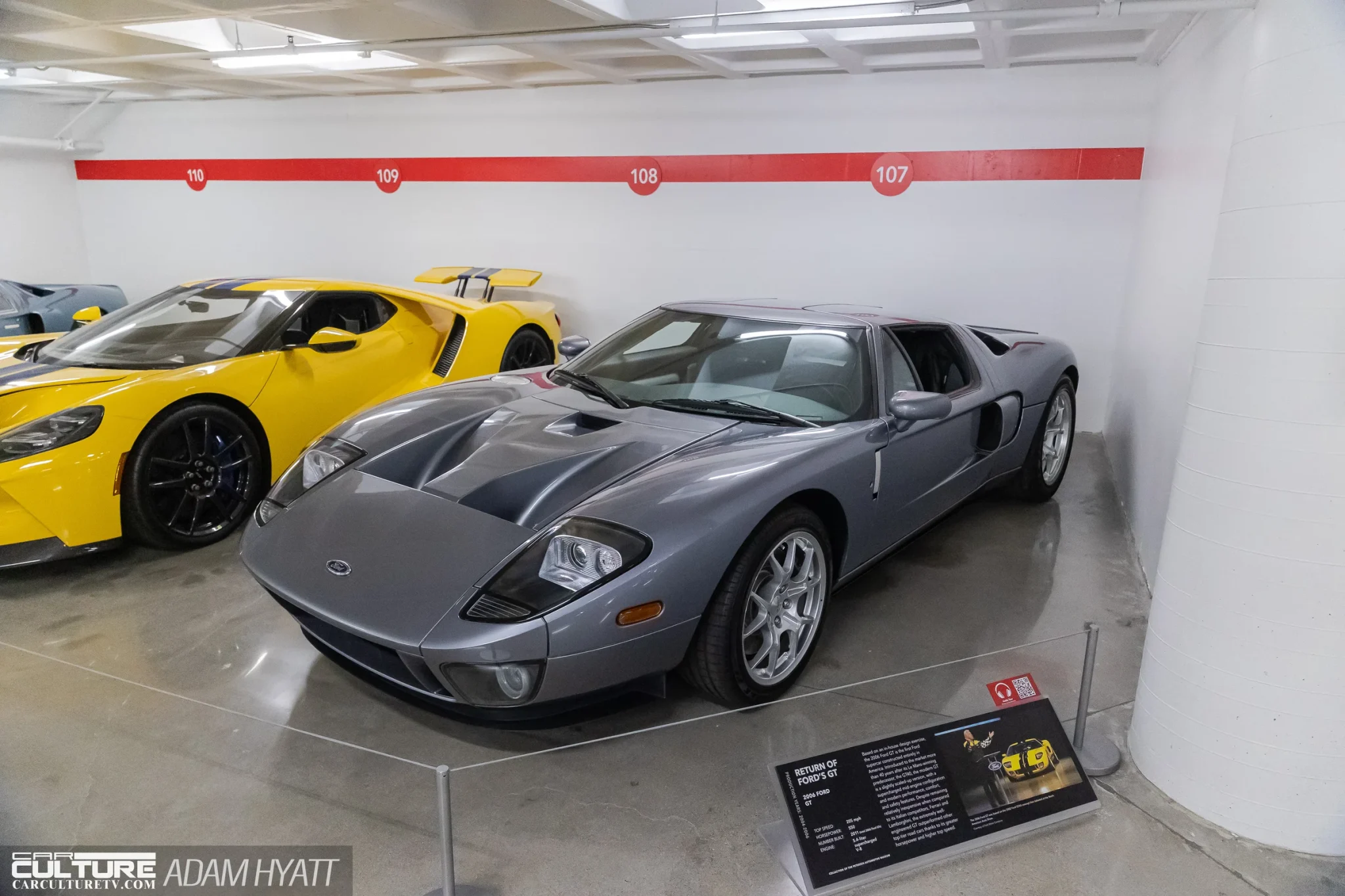
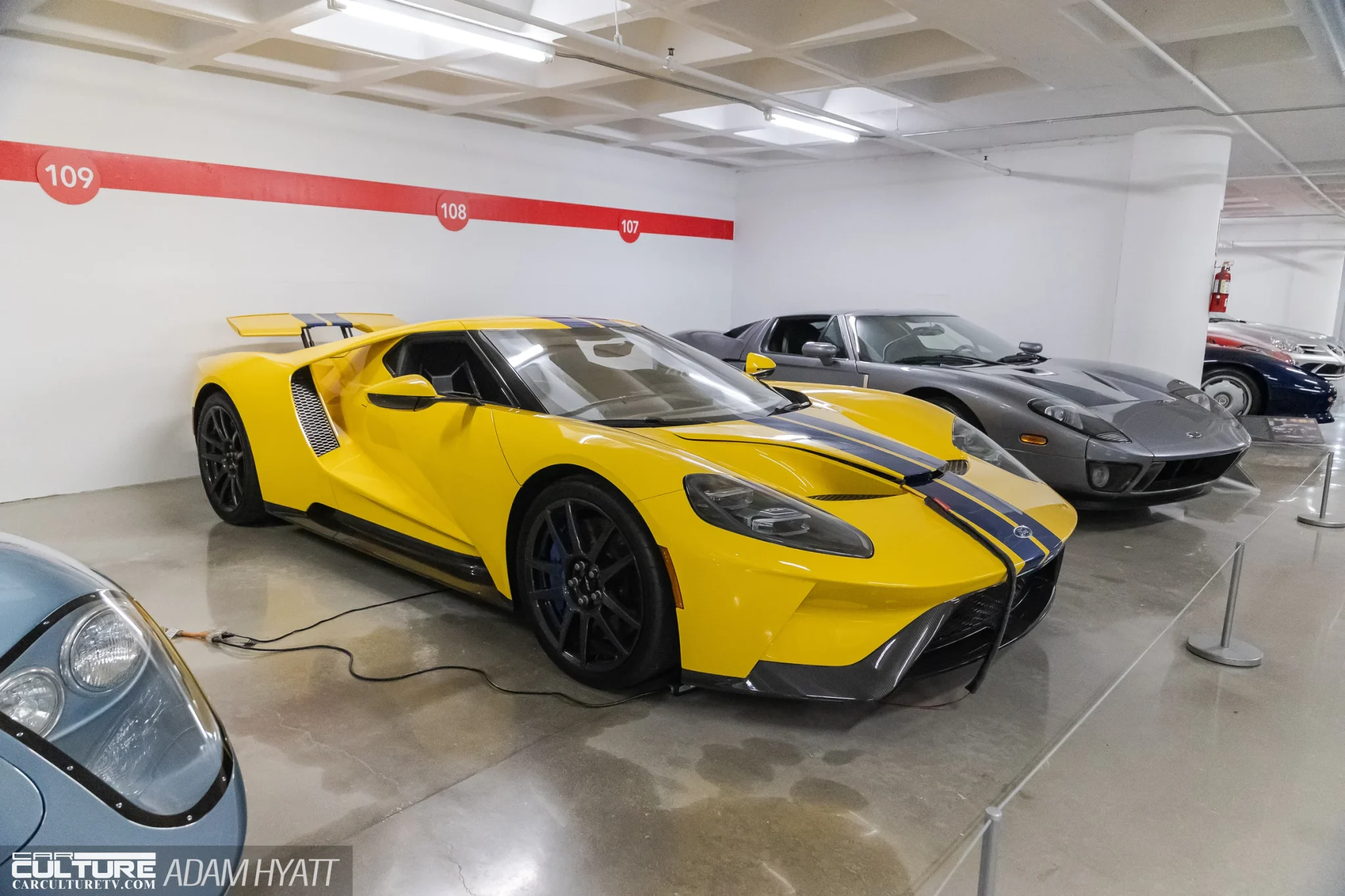
The Ford GT lineage is represented across three generations in the Vault, and seeing them together tells one of the great stories in American automotive history. The Ford GT40 MK III is the road-going version of the car that beat Ferrari at Le Mans four consecutive years from 1966 to 1969, one of only seven MK IIIs ever built and the most street-focused interpretation of the GT40 platform. Next to it sits the 2004 Ford GT, the retro-inspired superstar built to celebrate Ford’s centennial and honor that Le Mans legacy, powered by a supercharged 5.4-liter V8 producing 550 horsepower. The newer generation Ford GT completes the trio, its twin-turbocharged EcoBoost V6 and active aerodynamics representing a complete philosophical departure from the supercharged V8 of its predecessor while still chasing the same Le Mans pedigree. Ford actually returned to Le Mans with the new GT in 2016 and won its class on the race’s 50th anniversary. Three generations, one obsession.
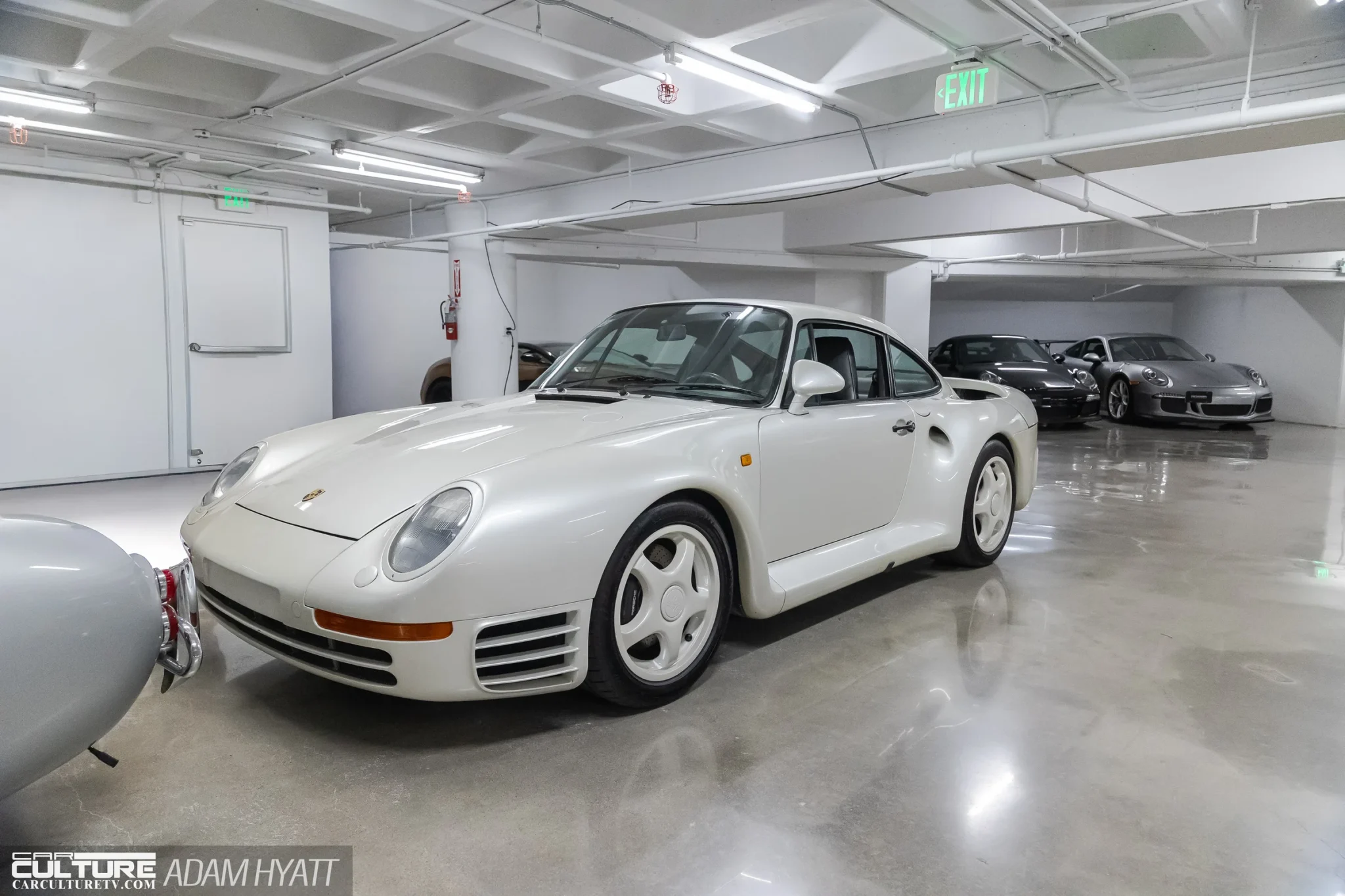
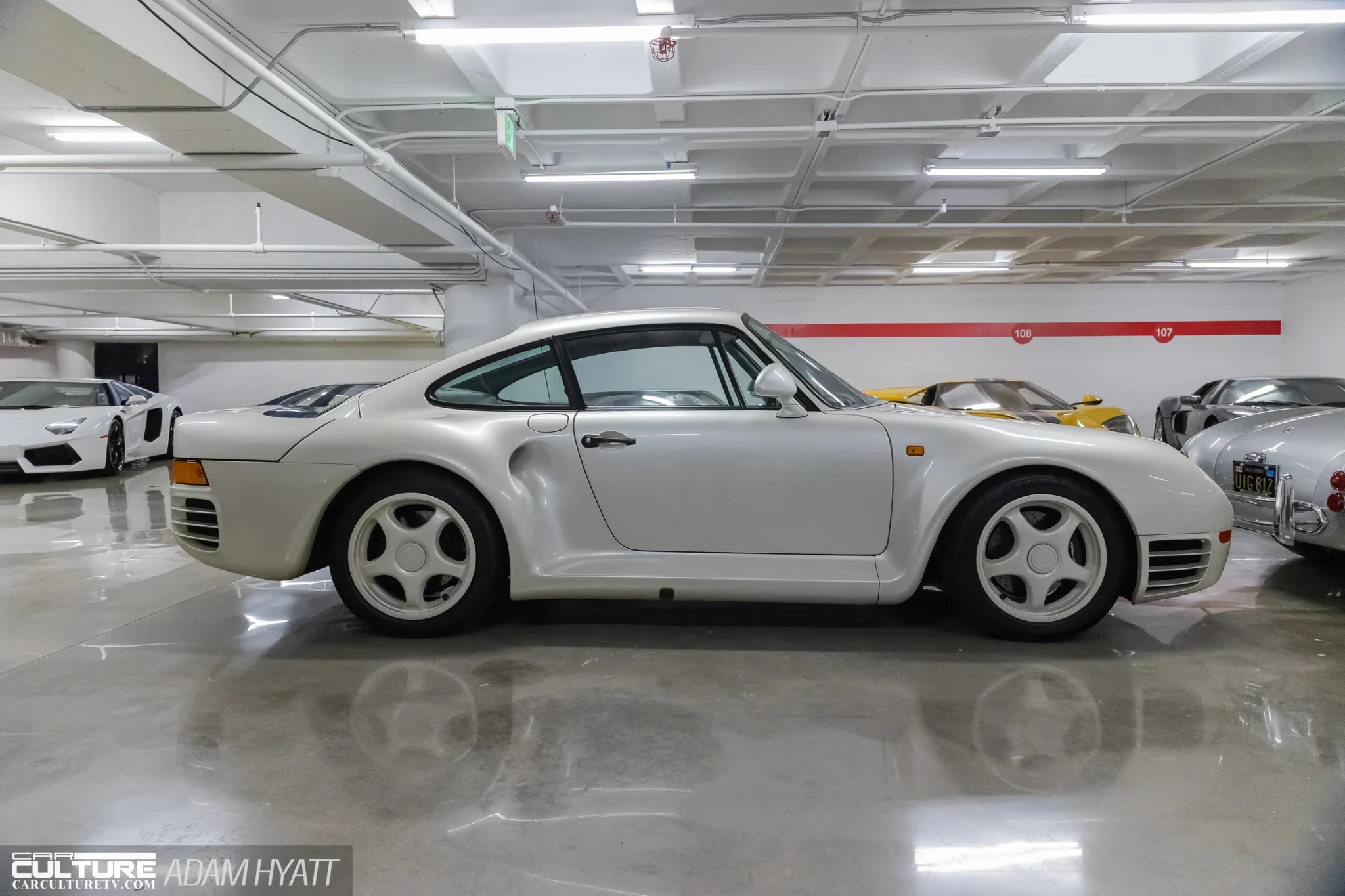
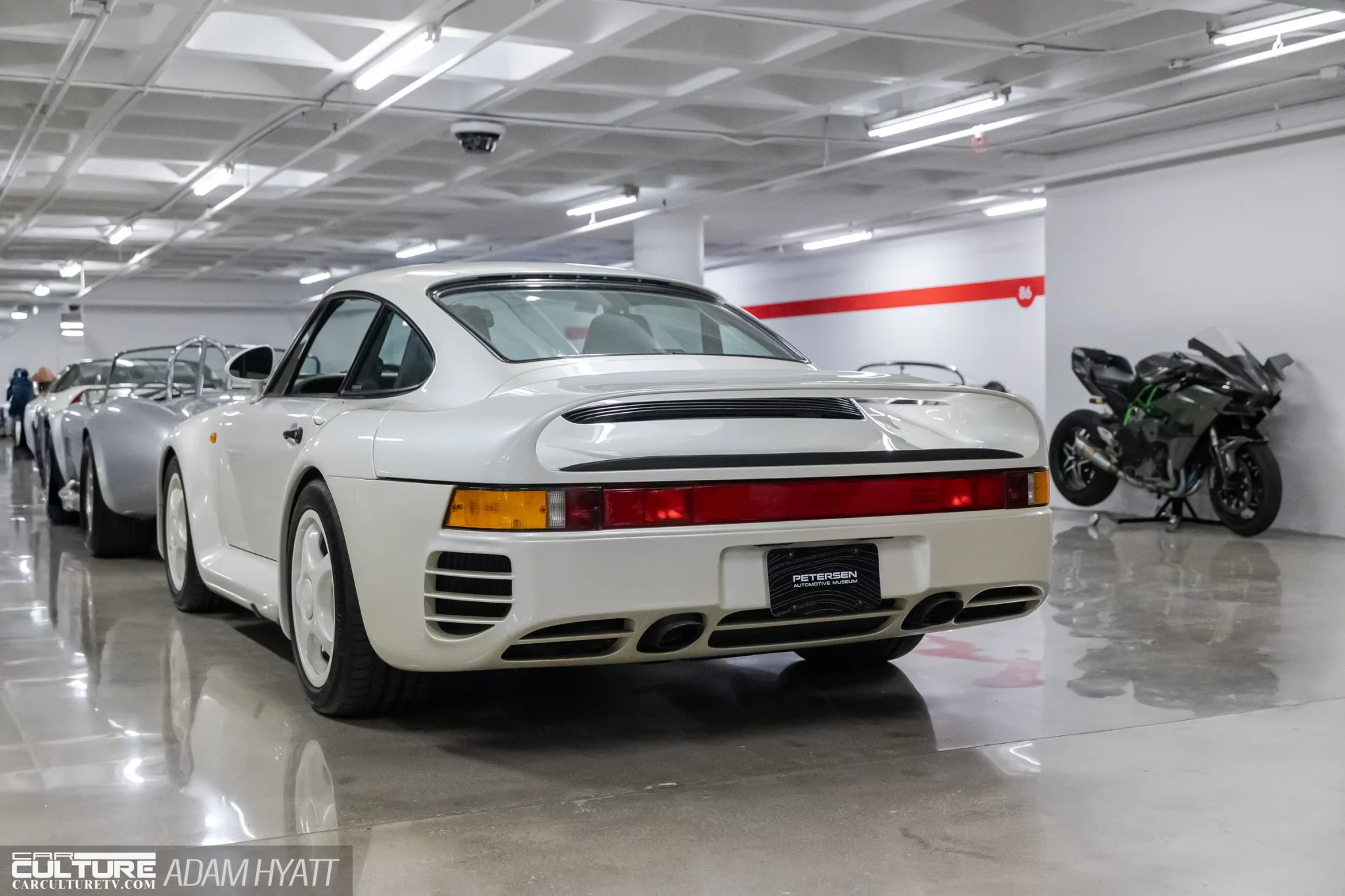
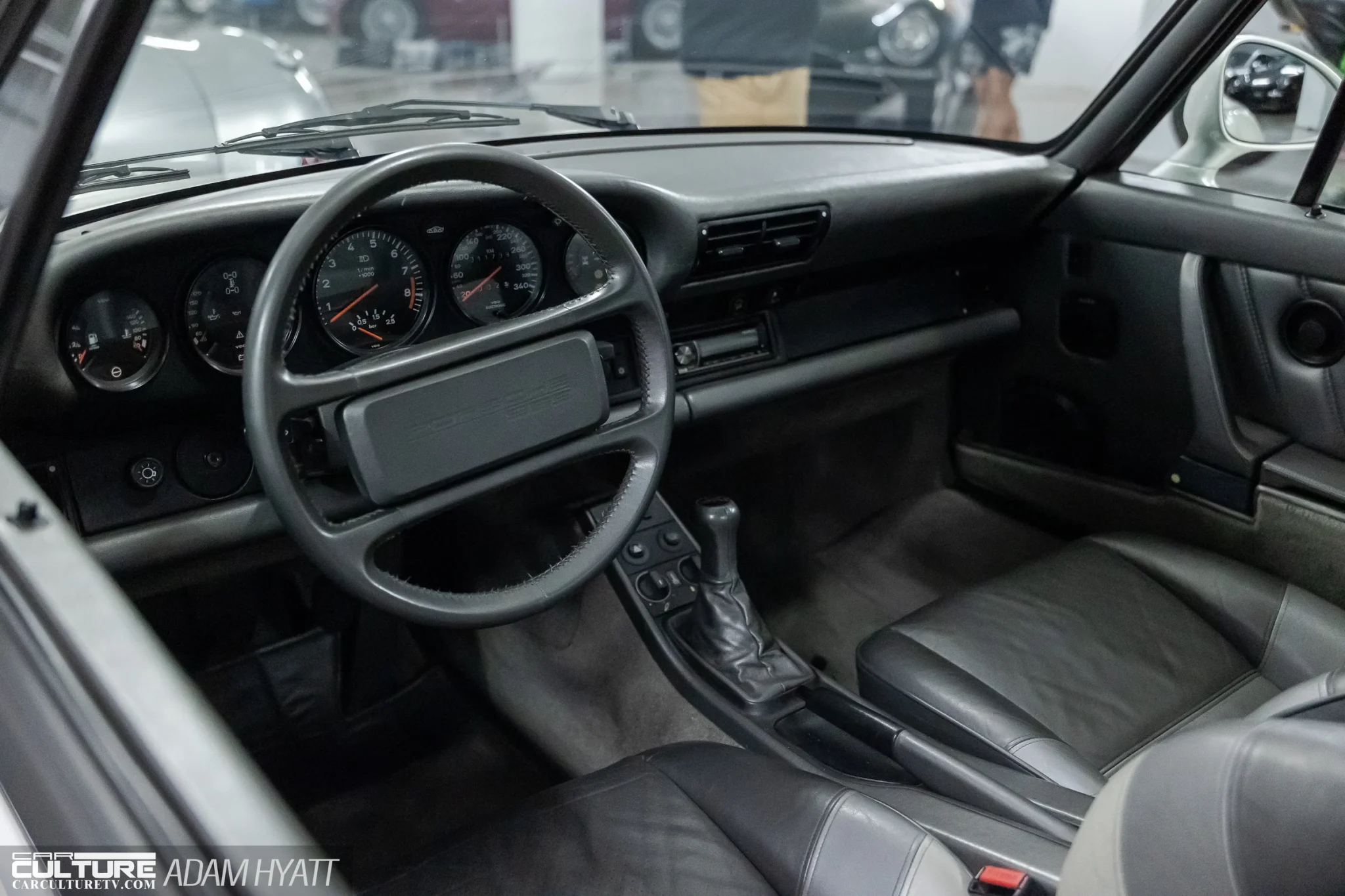
The Porsche 959 deserves its own moment. Only 292 were built between 1986 and 1988, and at the time of its release it was the most technologically advanced production car in the world. Its twin-turbocharged flat-six with sequential boost, combined with a sophisticated all-wheel drive system with adjustable torque distribution, pioneered technologies that are now standard across the automotive industry. Seeing one in person, especially in white, is a reminder of how far ahead of its time it was.
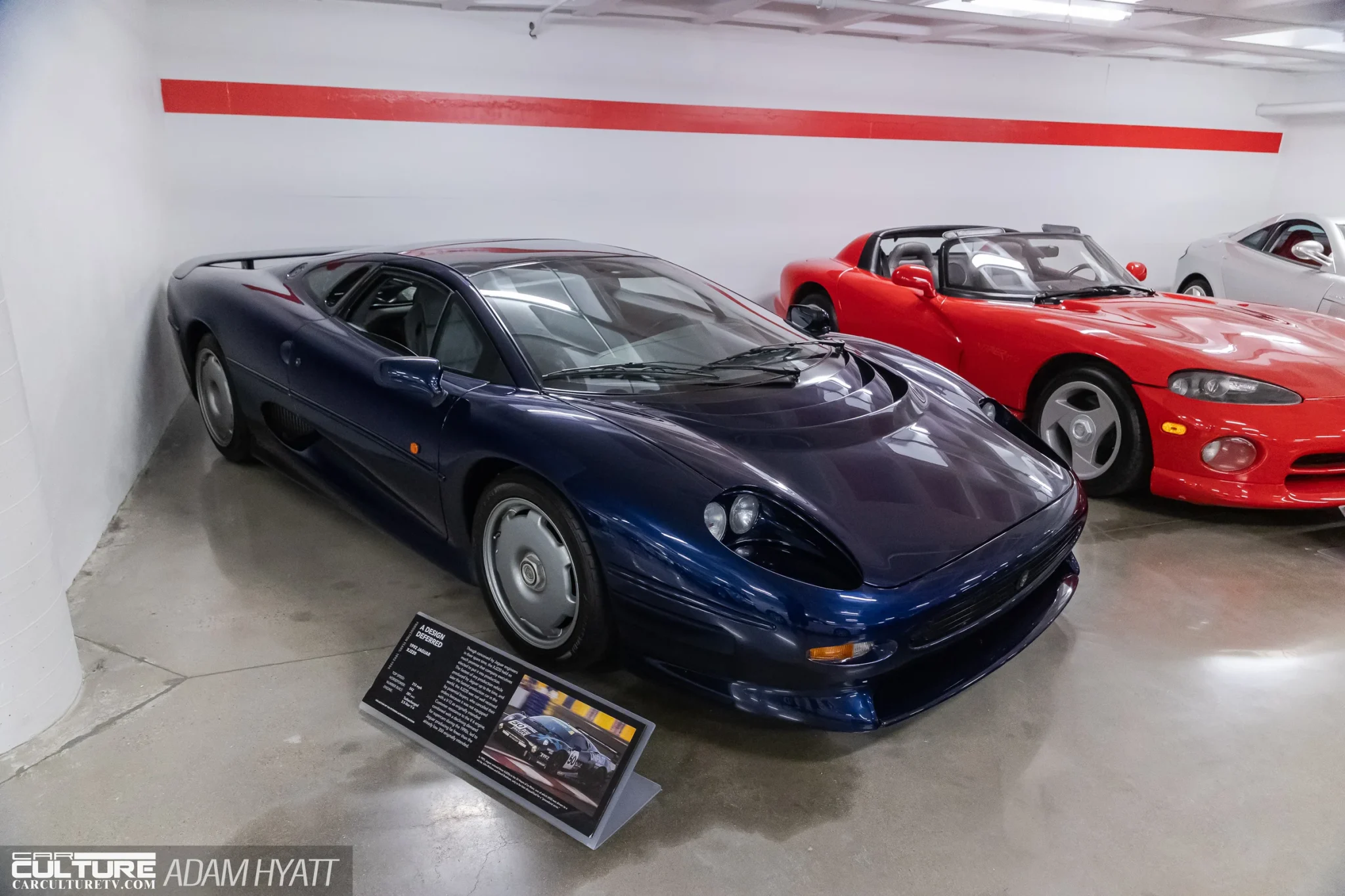
The 1992 Jaguar XJ220 tells a harder story. Conceived by Jaguar engineers in their spare time, it briefly became the fastest production car in the world and then failed commercially when buyers canceled orders upon discovering the production version used a V-6 instead of the V-12 originally promised. Only 281 were built. It belongs to the Petersen’s own collection, and its placard is labeled “A Design Deferred.”
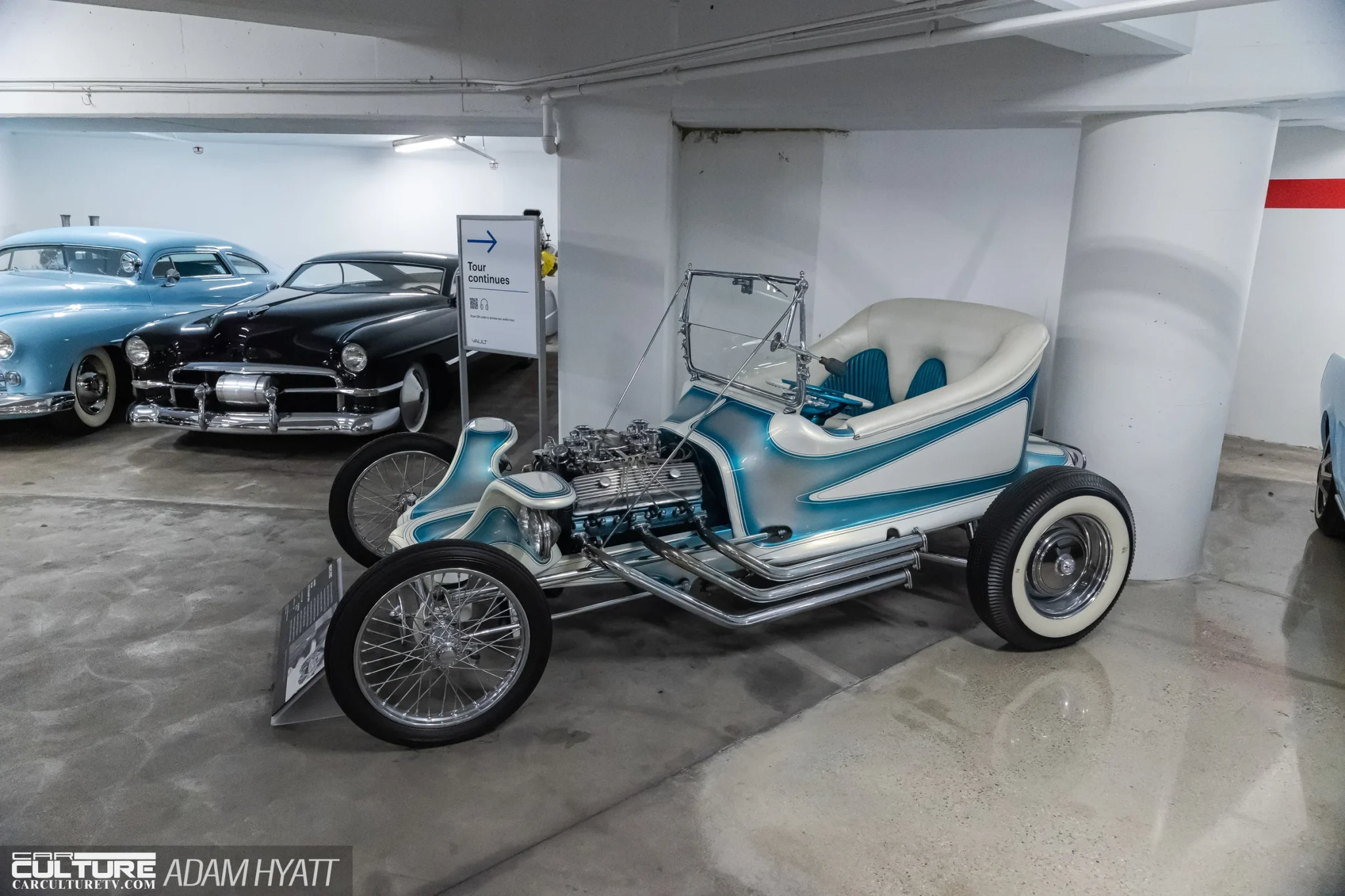
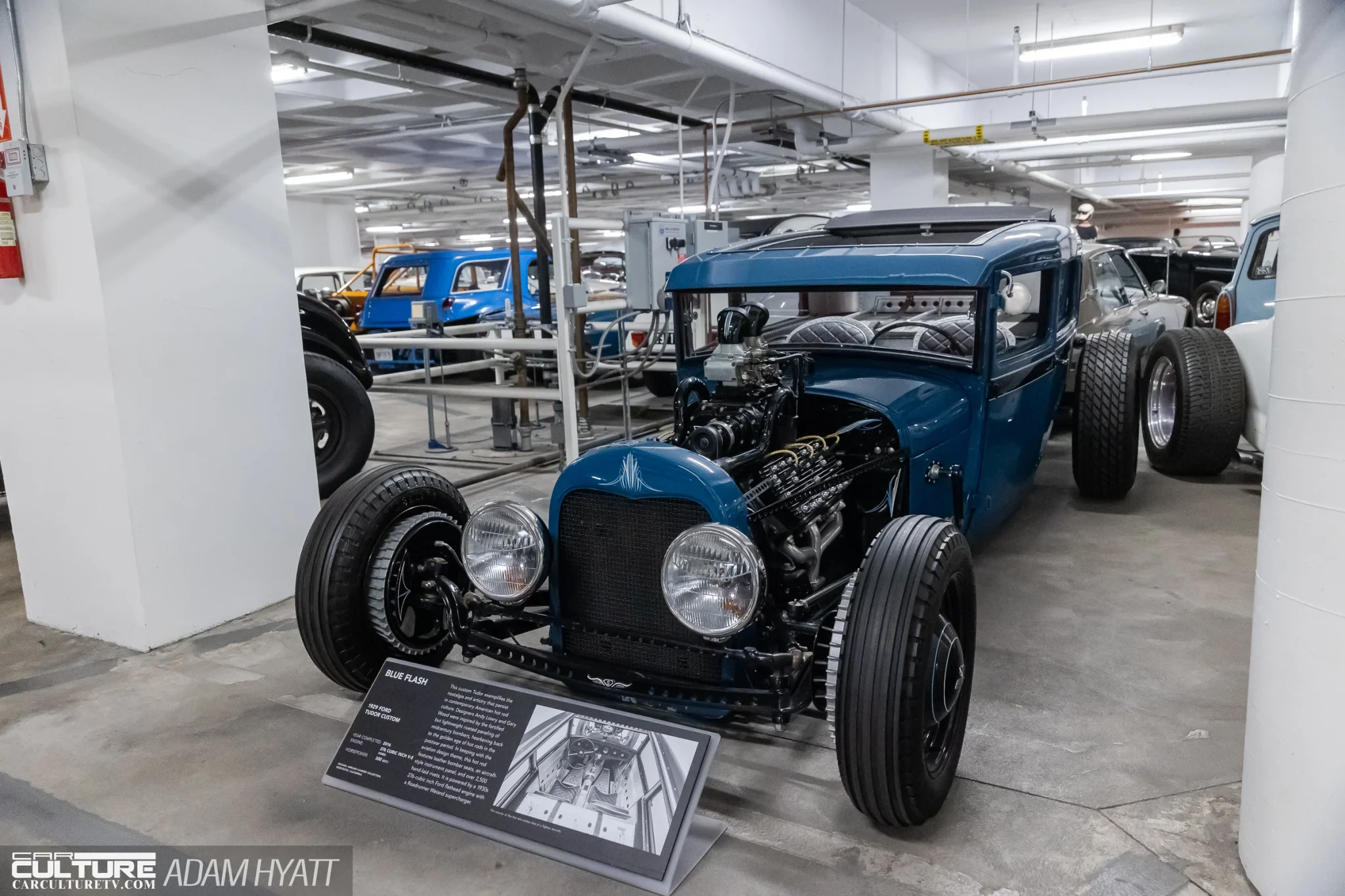
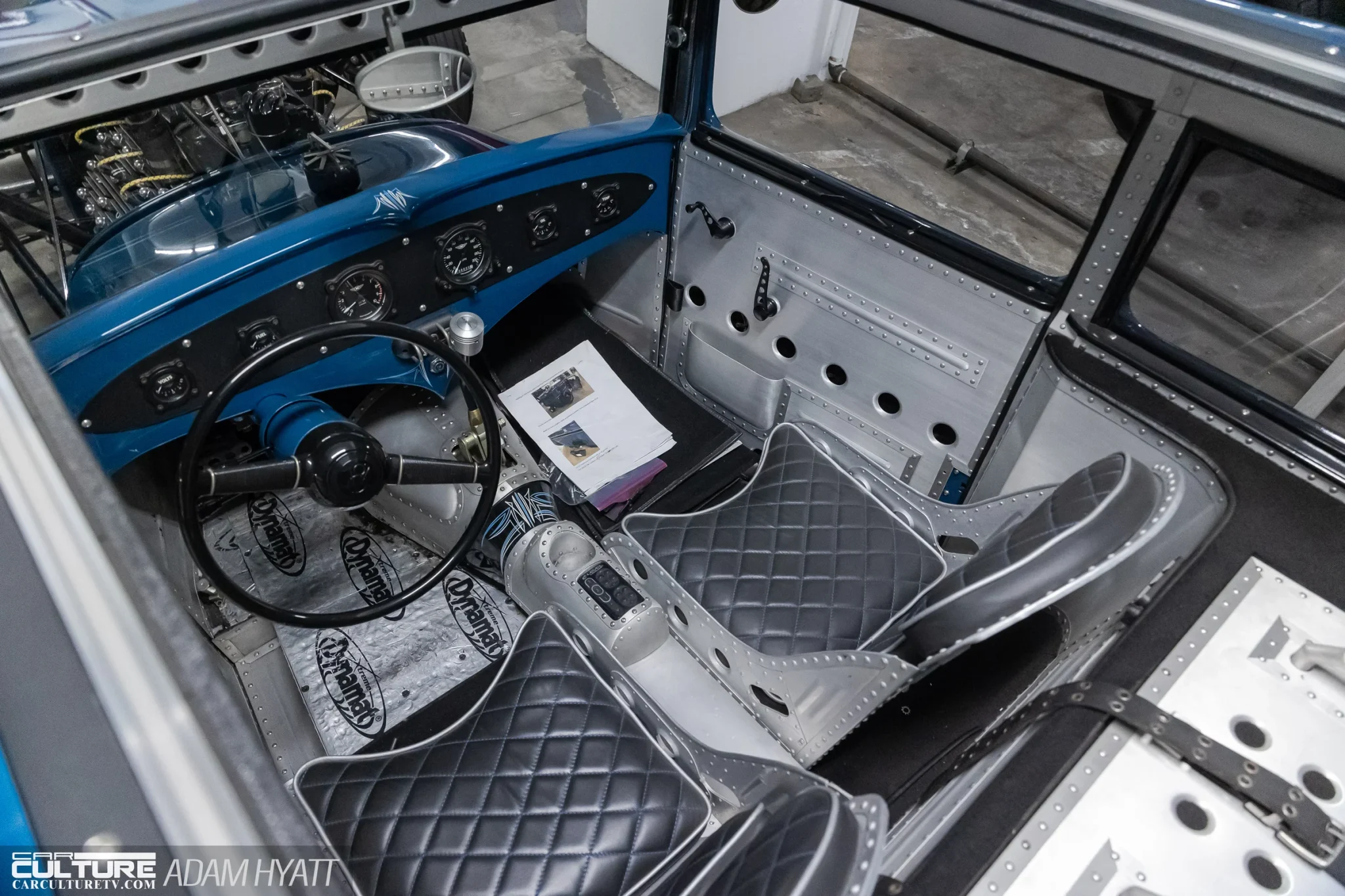
The custom car tradition is also represented down here. The 1929 Ford Tudor Custom “Blue Flash,” completed in 2016 and from the Michael Armand Hammer Collection in Montecito, features leather bomber seats, an aircraft-style instrument panel, and over 2,500 hand-laid rivets powered by a supercharged 1930s Ford flathead V-8. Alongside it sits the 1959 Roth Outlaw by Ed “Big Daddy” Roth, the car that launched the mod rod movement. His one-of-a-kind fiberglass body over a 1949 Cadillac engine helped thrust Roth to celebrity status in the 1960s and reshaped what custom cars could look like. Seeing both of these alongside prewar Bugattis and a McLaren F1 is a reminder that the Vault does not have a narrow definition of what belongs here.
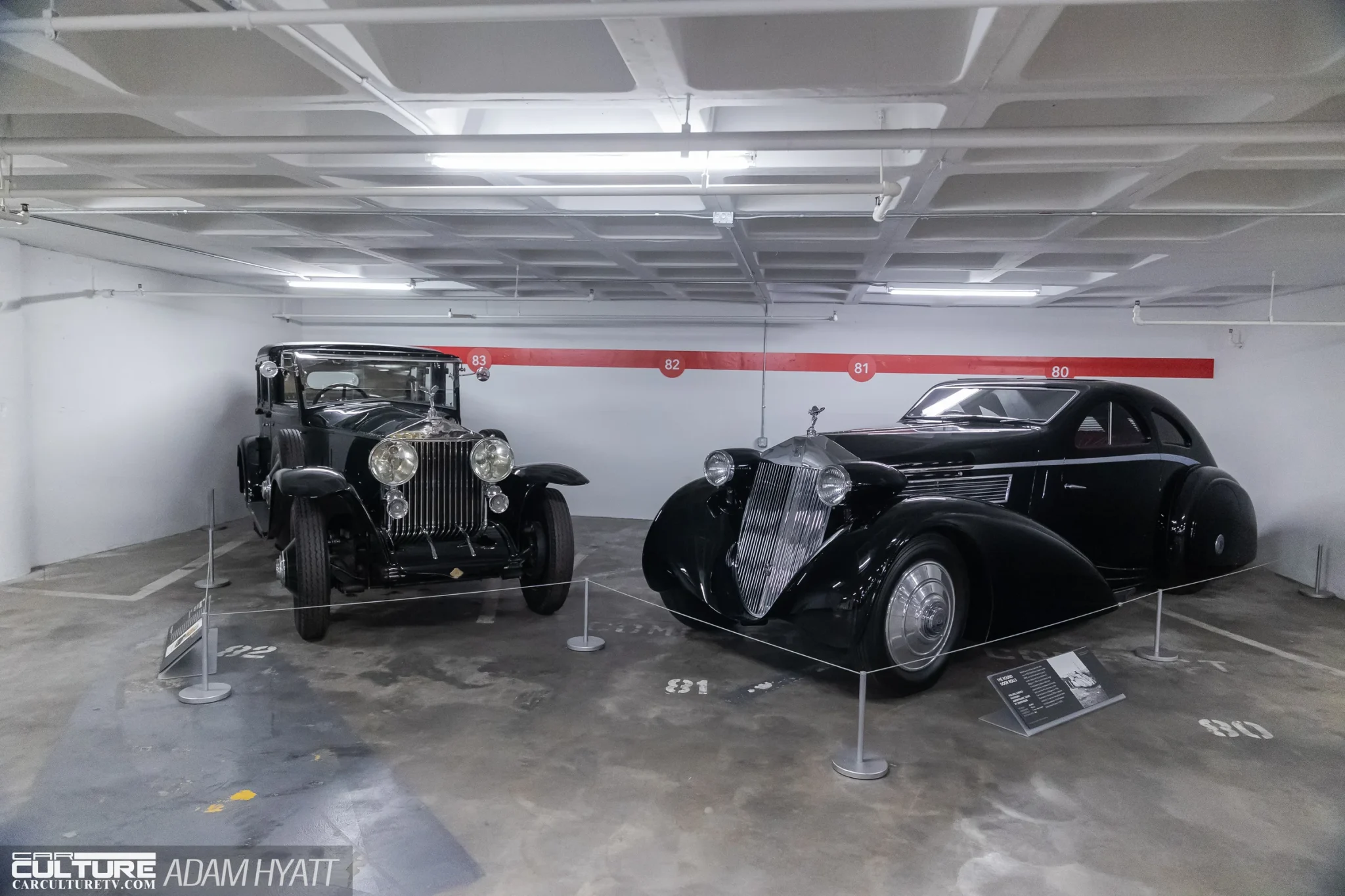
The prewar and coachbuilt machines in the Vault belong to a different world entirely. The 1925 Rolls-Royce Phantom I “Round Door Rolls,” re-bodied by Belgian firm Jonckheere in 1934, won the Prix d’Honneur at the Cannes Concours d’Elegance in 1936 with its round doors, large fin, and sloping radiator shell. Discovered derelict in the early 1950s, it came into the Petersen’s possession in 2001. There is only one. Parked alongside it is the 1927 Rolls-Royce Phantom I Town Car, the more formal counterpart to the Round Door Rolls and a reminder of just how different two cars built on the same platform can be. Where the Jonckheere coupe is aerodynamic and theatrical, the Town Car is upright, authoritative, and deeply traditional. Together they make the case that coachbuilding was not just craftsmanship, it was artistic expression on a rolling chassis.
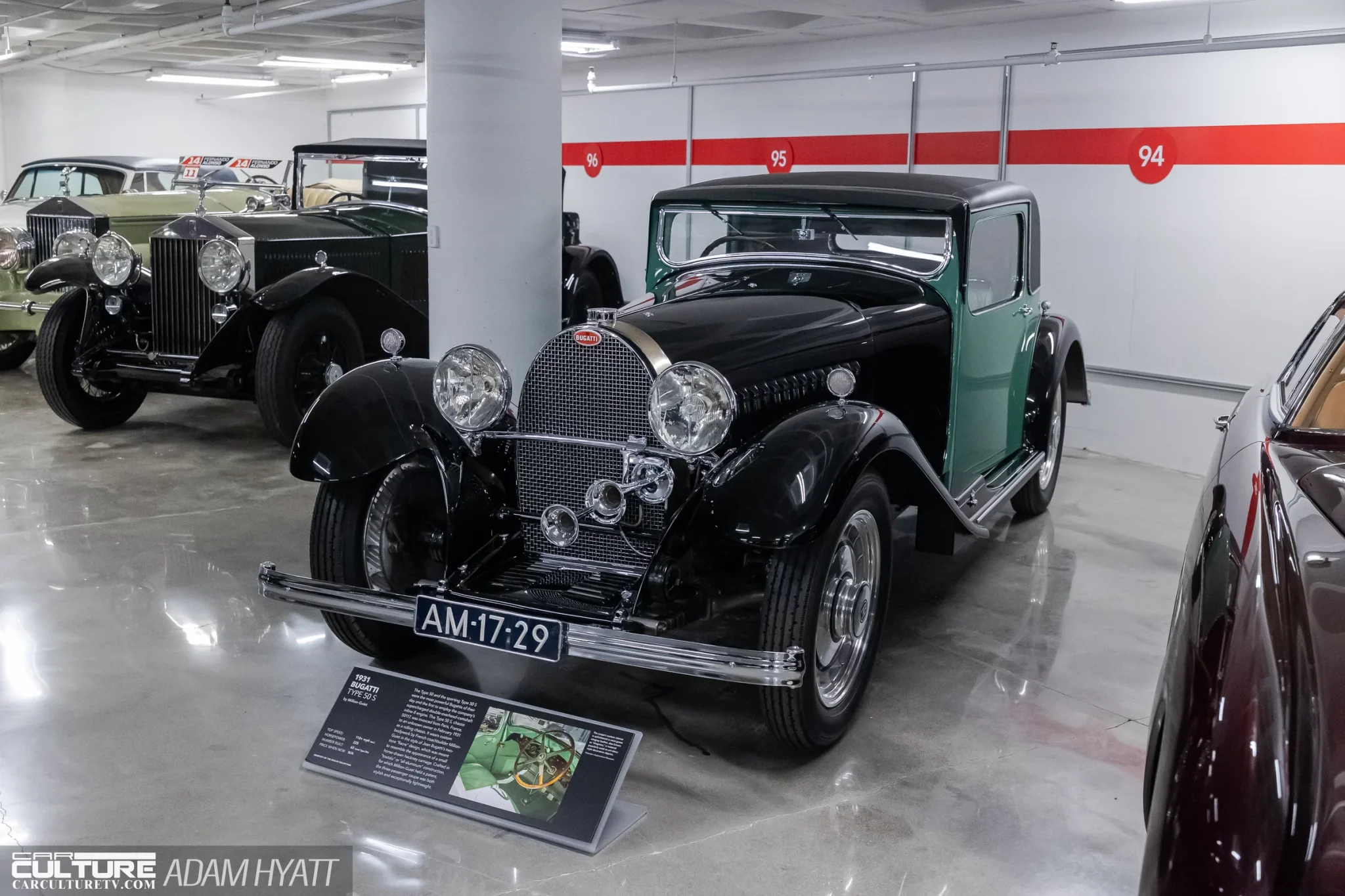
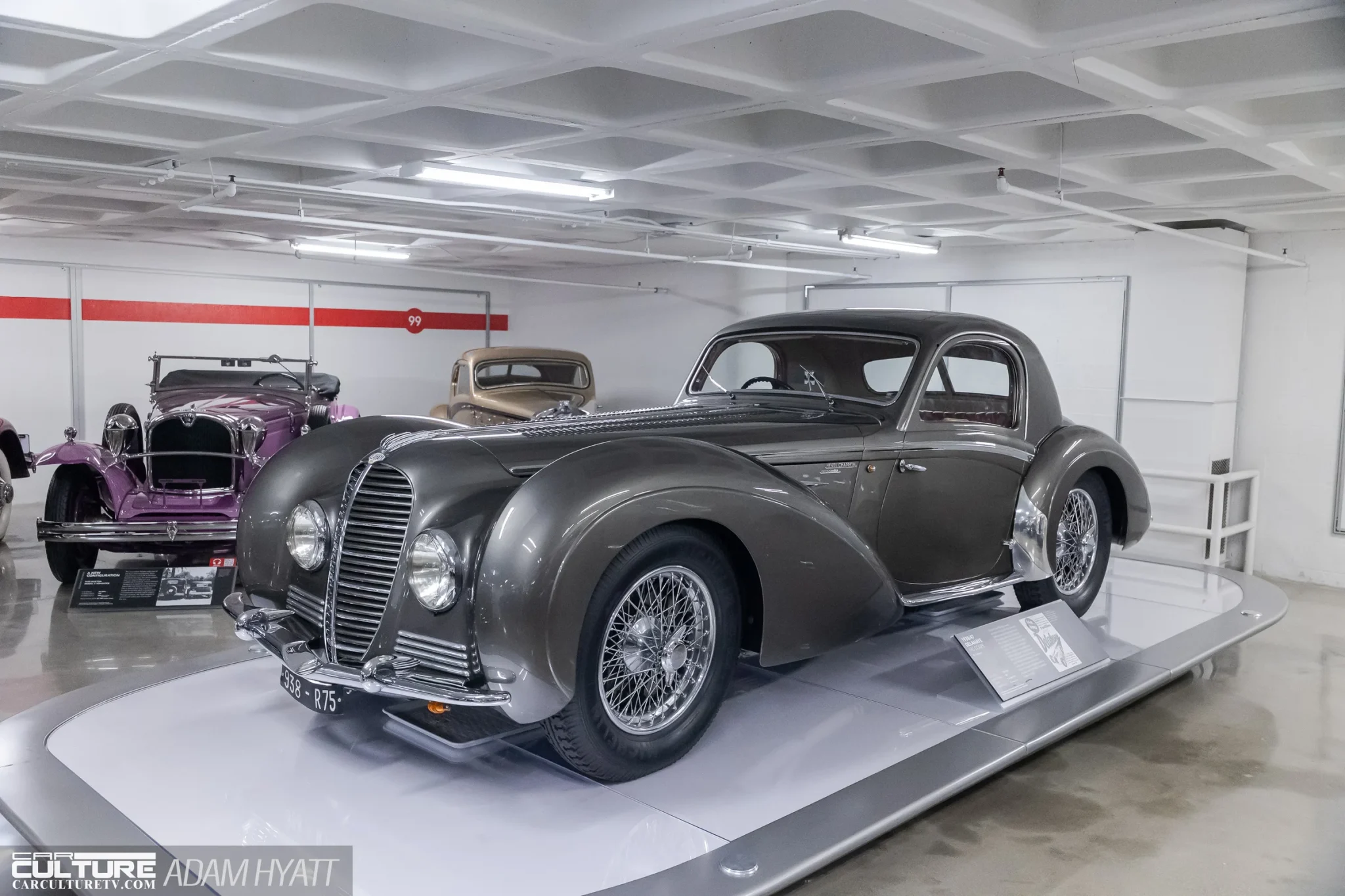
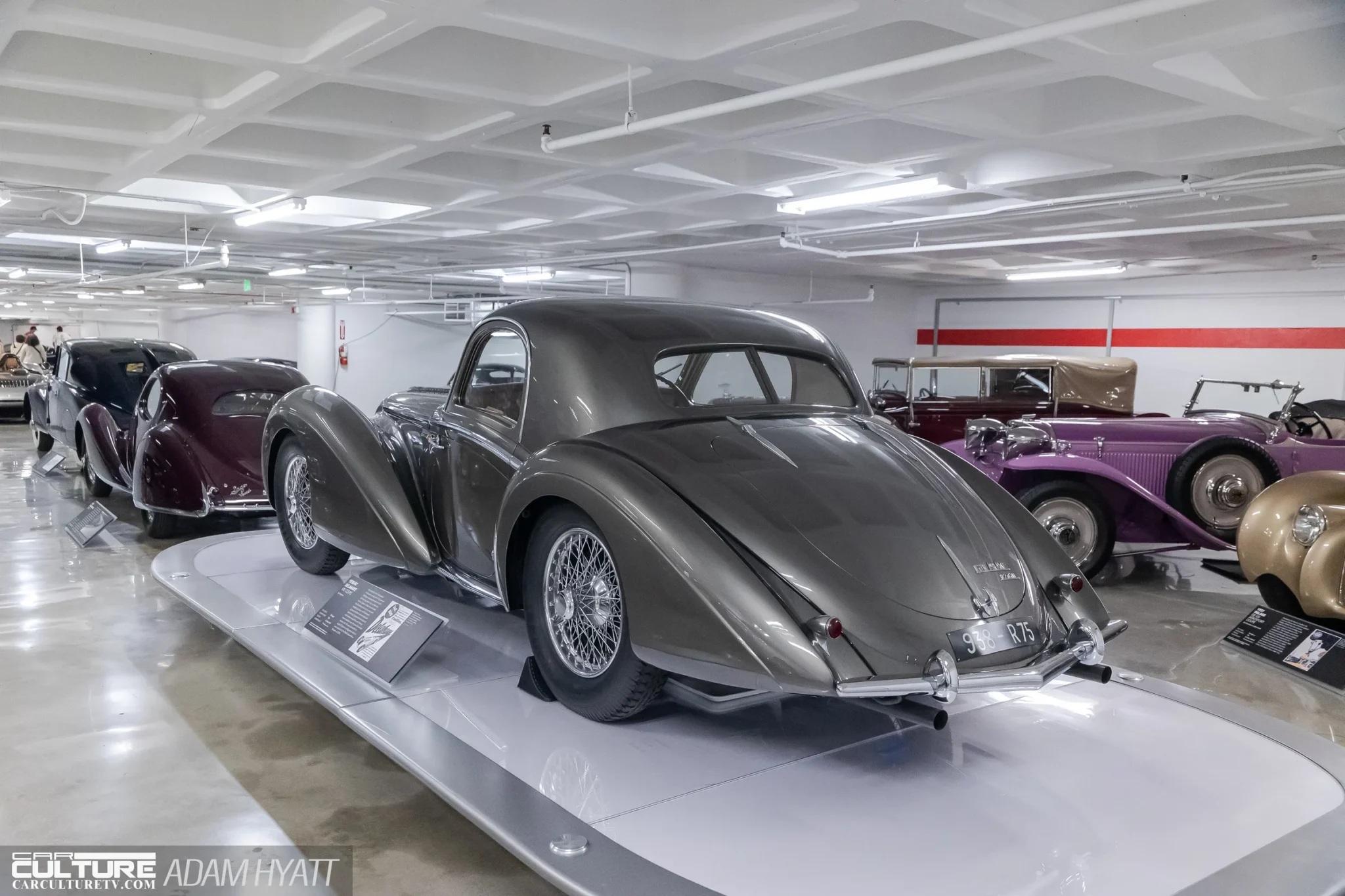
The 1931 Bugatti Type 50 S by Million-Guiet, on loan from the Mullin Collection, wears all-aluminum coachwork in the style of Jean Bugatti’s two-tone “fiacre” design meant to resemble a small horse-drawn hackney carriage. The 1938/47 Delahaye 145 Coupe by Chapron was originally built for high-speed endurance racing before being purchased and re-bodied as a roadgoing coupe. Only four Delahaye 145s were built. This example is now part of the Petersen’s own collection.
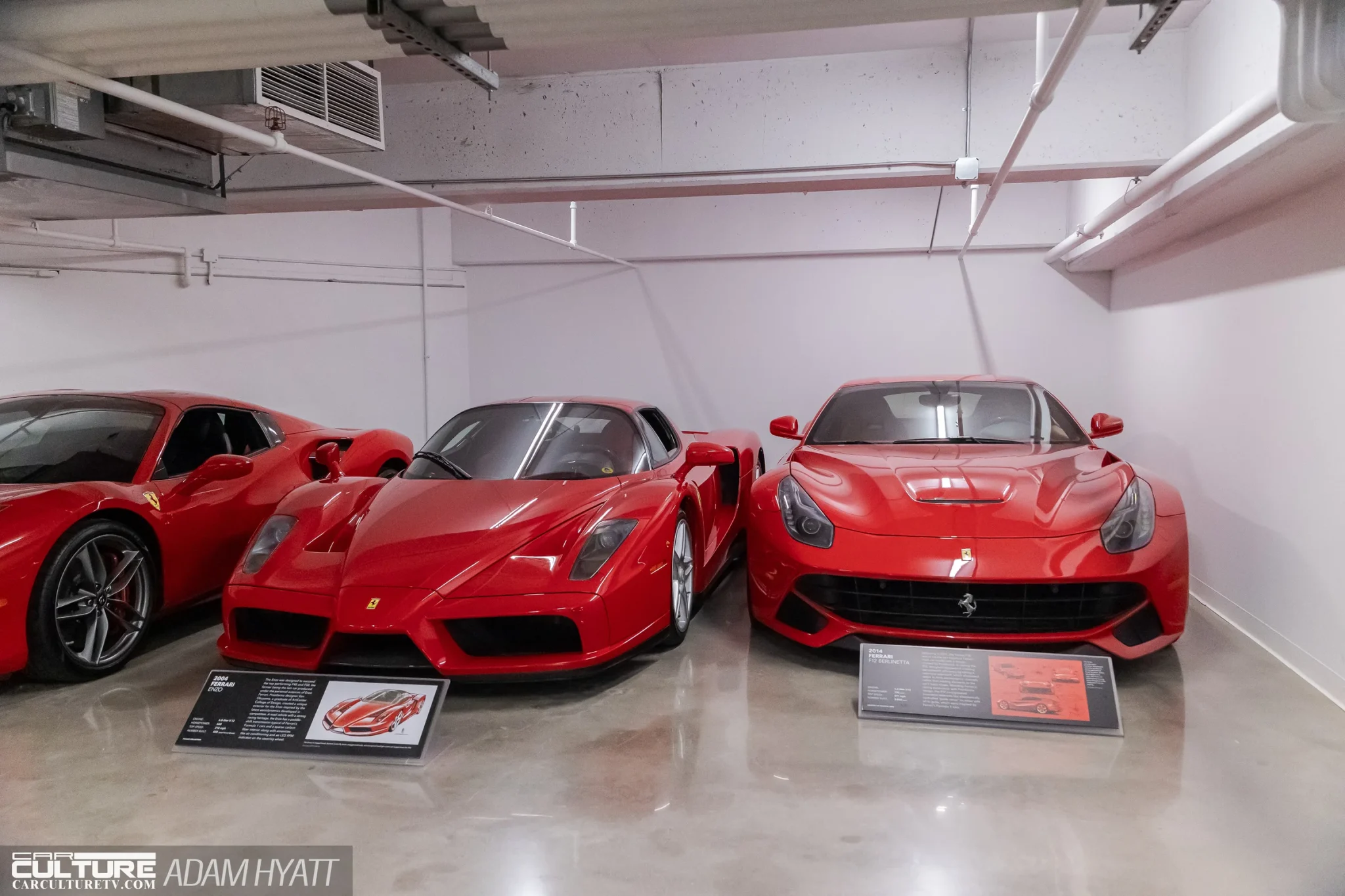
The Ferrari presence in the Vault is strong. The 2004 Ferrari Enzo, from a private collection, was designed to succeed the F40 and F50. Its 6.0-liter V-12 produces 660 horsepower and 218 mph. Only 400 were built. The 2014 Ferrari F12 Berlinetta was the last standard Ferrari road car designed by Pininfarina, using a reductive aerodynamic approach that eliminated space to form channels rather than adding elements. About 5,000 were built.
The Vault collection rotates constantly. What remains constant is the caliber. No car down here is almost significant. Every vehicle has earned its place, and the staff who walk you through know why.
If the Vault tour is available on your date, book it before you book anything else. It is not an upsell. It is the part of the visit you will talk about afterward.
Plan Your Visit
The Petersen Automotive Museum is located at 6060 Wilshire Boulevard in Los Angeles and is open seven days a week from 10am to 6pm. General admission covers the permanent galleries and any currently running special exhibits. The Vault requires a separate ticket and advance booking, and it sells out. Do not assume availability on the day of your visit.
Parking is available on-site with complimentary validation with the garage entrance on Fairfax Avenue. Budget more time than you think you need. A serious walkthrough of the main floors takes the better part of two to three hours. Add the Vault and you are comfortably into a half-day visit.
Tickets and Vault bookings are available at Petersen.org.
Why the Petersen Gets It Right
There are automotive museums that display cars. The Petersen tells stories about what cars mean, where they come from, and why the people who built and drove them made the choices they did. That distinction sounds small and is actually enormous.
Walking through this building as a lifelong enthusiast and photographer, what stays with you is not any single car. It is the accumulated weight of the collection as a whole. The 1905 Smith Runabout “Ethel” and the 2025 Czinger 21C V Max exist in the same building, and neither one feels out of place. The argument the Petersen makes, across every floor and every gallery, is that cars are worth taking seriously as cultural objects. Not just as machines, not just as collectibles, but as reflections of the times and places and people that produced them.
Los Angeles is the right city for this museum. And the Petersen is the right museum for Los Angeles.
See The Full Gallery Below!!


